Back again for my regular Sunday roundup of quick-fire reviews and impressions of everything under the spotlight at Retro Arcadia this week, old and new and a bit of both. Away from gaming, we’ve once again been dealing with transport problems following a late night scrape with a parked car, but nothing that can’t be fixed this time and no one hurt, so just a bit of inconvenience and a load of ferrying our son around, having recently sold my car because apparently we didn’t need three on the driveway… In better news, his player’s license has finally come through following his US college soccer transfer (and you would not believe the hassle that was as well!) so he’ll be off over there in a couple of weeks for preseason training anyway, meaning no more accidents until Christmas at least! Right, you didn’t want to know any of that, so let’s find out what I’ve been playing!
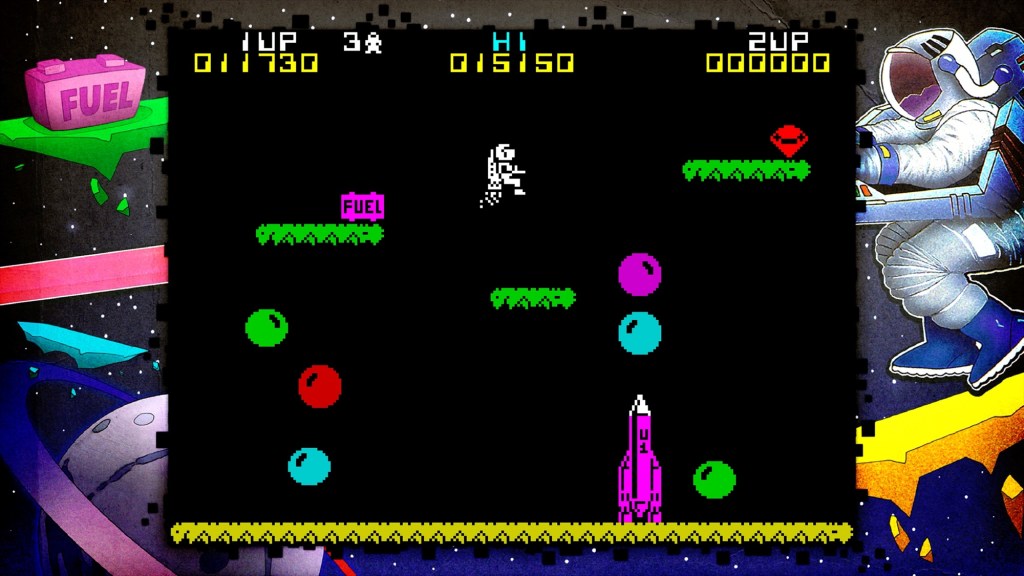
We’ll start with a proper oldie… I’ve been hovering between the definitive ZX Spectrum version of multidirectional single-screen shoot ‘em up Jetpac and the VIC-20 miracle I actually owned first since 1983, when it was originally released on both platforms by Ultimate Play The Game! Of course, they went on to become Rare, and that’s how I’ve ended-up playing it handheld all week on Rare Collection 1 for Evercade (which you can see below, while the picture above is a nicer one from Rare Replay on Xbox). You play as Jetman, an astronaut with a jet-pack and a blaster who’s crashed on a planet far, far away and has to rebuild his rocket from the bits strewn about the place, then fuel it up and start making his way home. All of this happens on one wraparound screen, with three vehicle parts that have to be dropped on top of each other in order, which you’ll find lying on the ground or on mid-air ledges, whilst fending off the planet’s deadly locals that randomly fly around the place. Once you’ve put the rocket back together, fuel starts falling out of the sky, which you collect and drop onto it until it’s full up, also looking out for jewels for extra points.
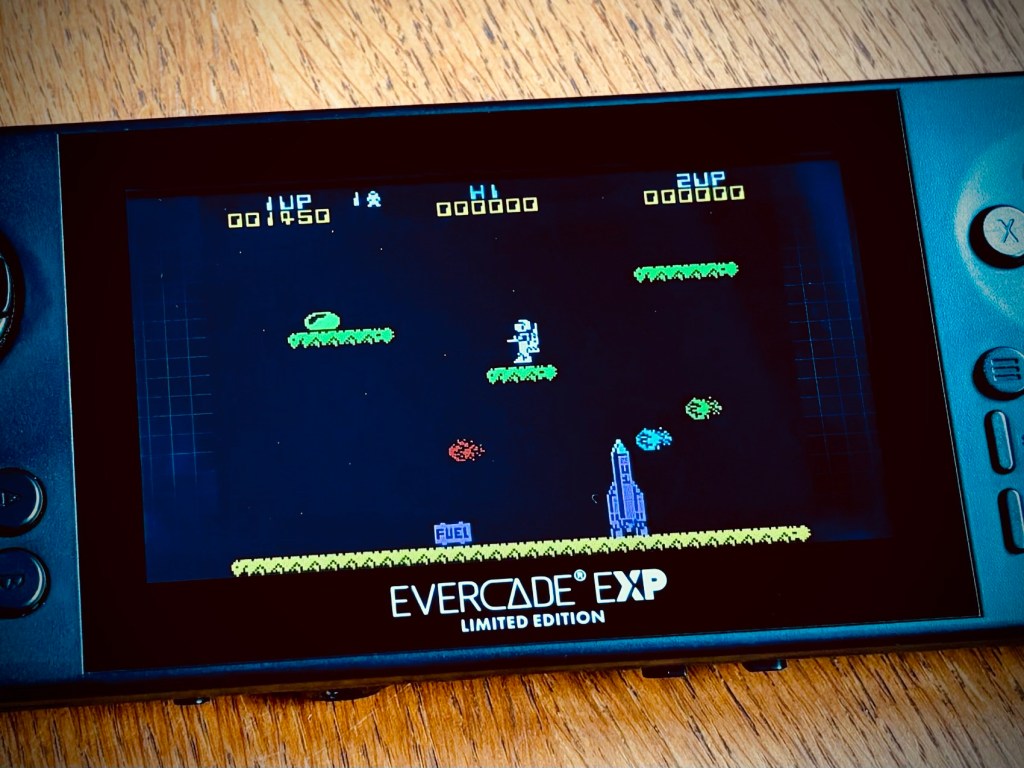
Then you head into the rocket yourself, it takes off for the next planet, and you do it all over again in the face of even crazier aliens, from shiny spheres to sinister geometries to bug-eyed fuzzy things that wouldn’t look out of place on The Muppets, and seeing what the next batch will be is as much a reason to want to play again as bettering your score! They’re ruthless too, but so is your laser fire, as it spreads out in huge pulses across the screen as you alternate between walking and hovering, panicking and pointlessly trying to hide out, if only for the briefest respite while you work out the best route to where that fuel has just awkwardly dropped. Thankfully, Jetman controls great (even if the extra-button modern controls here will always feel weird to me) with some game-changing inertia at play in the air, and the little flame effect from his jet-pack doesn’t hurt either! Then there’s explosions and more flames, and so much character and colour everywhere, with the resulting colour-clash adding to the chaos rather than being an annoyance… Which is lucky when the sound effects are as shrill as they are! Jetpac is a masterclass in shooting everything everywhere, and the more the years go by, the more I reckon isn’t far off the likes of Bubble Bobble and Tetris as being as close to perfect as a video game can get.

I’m a bit hesitant every time I cover a chess game here, not least because I remember perfectly well how mind‑numbingly dull it once seemed to me too, but after spending so much time with The Chessmaster 3‑D and Chessmaster II on the original PlayStation, it was inevitable that I’d eventually end up with a copy of their PlayStation 2 successor as well! It was first released in 2002, which would have made it an ever harder sell, dumped as it was right in the middle of that era’s blockbusters, but this instalment classily refines everything the earlier games were going for, dropping the novelty of spinning 3D boards and atmospheric flourishes in favour of a sharper-looking and more mature presentation that simply gets on with being a really good place to play chess. There’s a new elegance about the way you move pieces, as well as how you navigate the menus, and just the general ambience, leaving the game modes and computer personalities to shine, with a deep roster of opponents and their distinct play styles, a nice set of tutorials and training tools and, as usual, a load of customisations, which are also far less fussy this time. And that’s not to say I won’t continue enjoying the two PS1 titles for exactly what they are, but now I’ve got another place to play another proper game of chess. Wonder if there was a PlayStation 3 game…
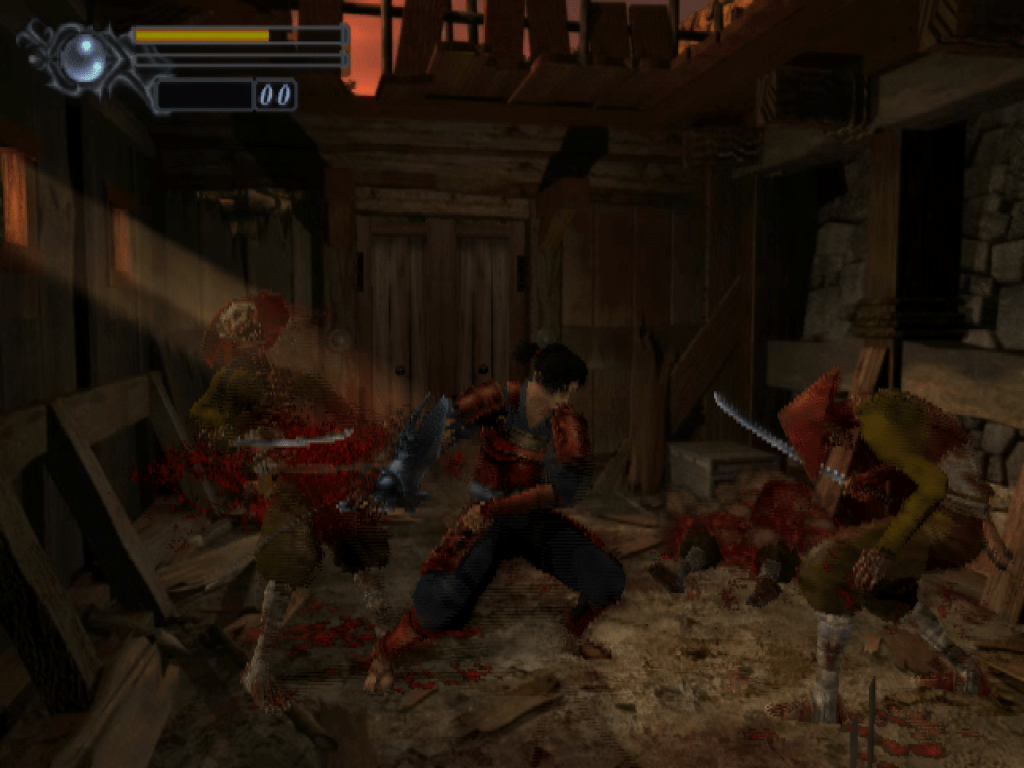
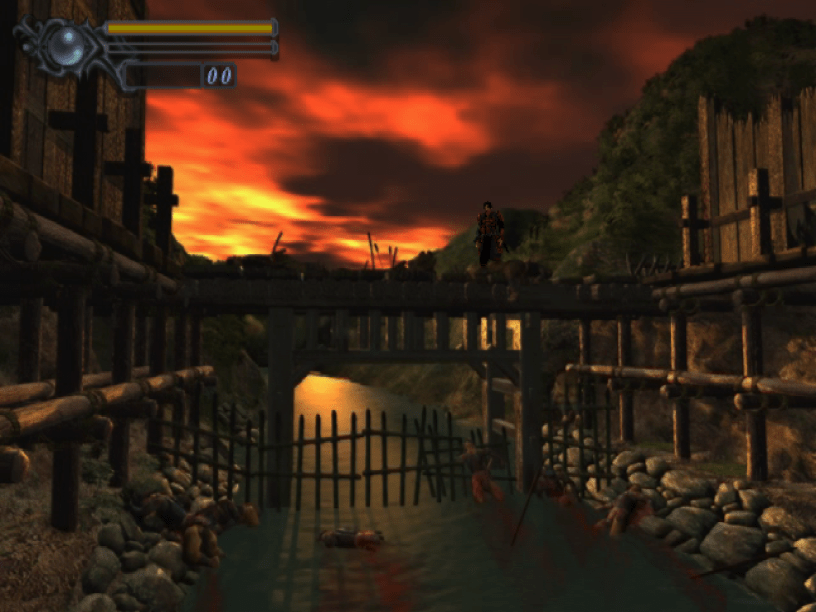
The Onimusha series has never really held much interest for me, but a typically knowledgeable and passionate recent deep‑dive on the Cane and Rinse podcast finally pushed me to pick up Onimusha: Warlords on PlayStation 2. What I hadn’t appreciated until I listened to the show was how closely it sits alongside the old Resident Evils in lineage, with its 2001 release effectively acting as Capcom’s attempt to translate its fixed‑camera, pre‑rendered survival‑horror template into a Sengoku‑era samurai fantasy. It resulted in a world built from meticulously staged backdrops, forcing deliberate movement through carefully framed corridors, but with a completely different vibe thanks to the weighty swordplay and the myth‑tinged atmosphere. The story mixes period Japanese over-dramatics and supernatural menace, as you try to rescue a princess from a demon-lord thing, involving lots of surprisingly fluid melee combat in confined spaces, given the inherited tank controls, and a counter system that also works a lot better than it should, given the stiff animation you’re timing it against! It’s aged pretty well to look at otherwise though, often beautifully lit and with some big-budget cutscenes. The sound design is theatrical enough too, and you’ve got predictably hammy voice-acting and a soundtrack that swept me along very nicely even if it never really blew me away. It all ends up right between the Resident Evil structure and the more expressive action Capcom would continue to pursue for many years to come; it’s also worth noting it arrived the same year they’d take that formula in a completely different direction with Devil May Cry. For something I’d always thought of as not really my thing, it turned out to be a fun few hours, made all the more interesting by that missing bit of historical context, thanks to Cane and Rinse, so do check them out if you haven’t before.
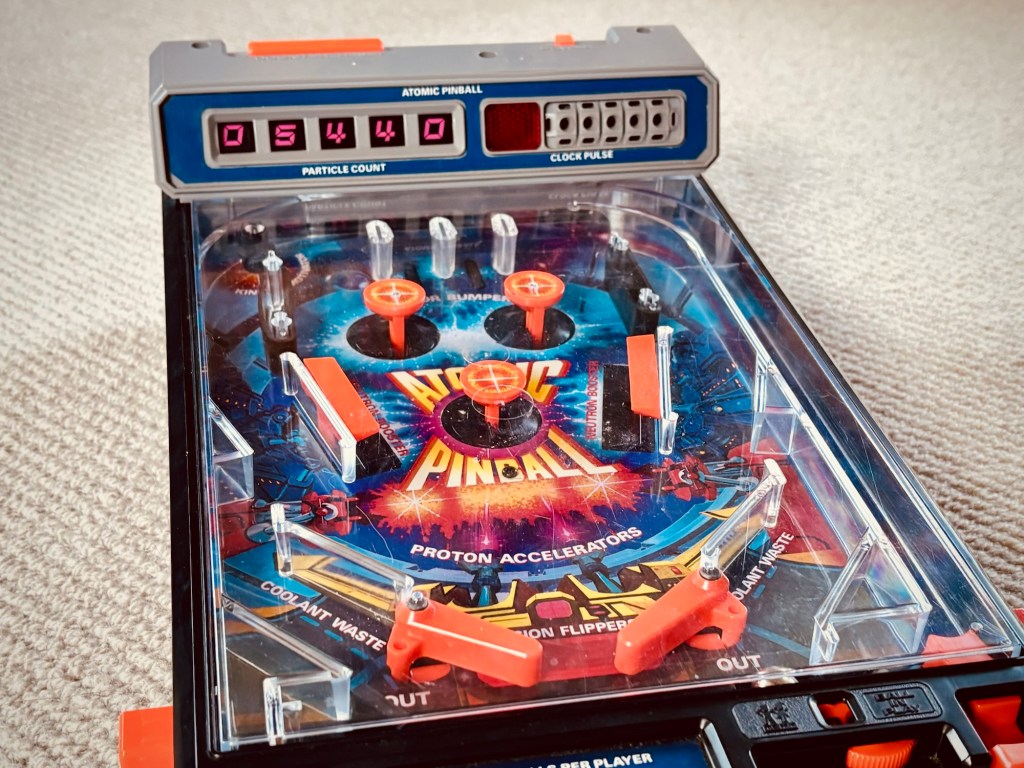
I did also finish Fatal Frame II: Crimson Butterfly Remake on Xbox again, and unsurprisingly it’s still a masterclass in J-horror meets survival horror video gaming, but you can find out more about that if you want from my first time around, here in the recent Retro Arcadia Game of the Year 2026 Halfway Hotlist! That’s about it from me otherwise for this time, but do check back next Wednesday, when we’ll be going proper old-school and rediscovering Tomy’s Atomic Pinball tabletop electronic game… A true childhood icon too, but is it really pinball? I hope to see you then to find out, and I also wish you a good week ahead!
As always, I’ll never expect anything for what I do here but if you’d like to buy me a Ko-fi and help towards increasingly expensive hosting and storage costs then it will always be really appreciated! And be sure to follow me on Instagram, X (formerly Twitter) or Threads for my latest retro-gaming nonsense, and also on Bluesky, which is under my regular name but most of it ends up there too if you prefer!

