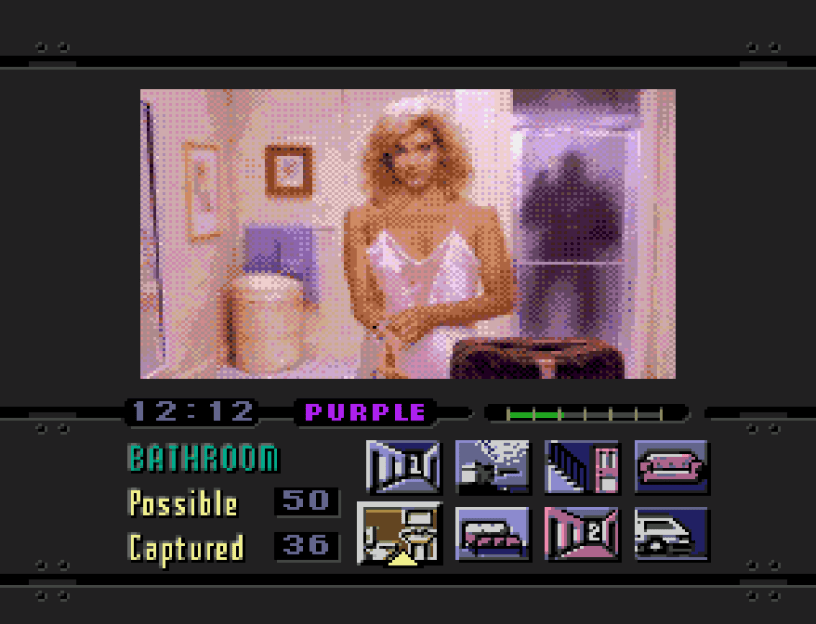
As much as I’ll forever be an apologist for the likes of Sewer Shark and Yumemi Mystery Mansion, even I’d forgotten quite how rough this looks nowadays!!! Here’s the thing… For all my memories of playing Night Trap – as well as the controversy surrounding it – when it first came out, that’s nowhere near the way I’ve played it the most today. That dubious honour belongs to Night Trap – 25th Anniversary Edition on Nintendo Switch from 2018, but as is so often the case with this kind of thing, until I went back to the original Sega Mega-CD (or Sega-CD if you prefer) version of it far more recently, the spruced-up, uncompressed majesty of that rerelease is exactly what I remembered it looking like first time around! I’ll come back to all of that stuff later, but Night Trap also holds another dubious honour for me – it’s one of just a very small handful of video games I’ve ever genuinely obsessed over – across the best part of five decades of playing them as I write – to the point that until about twenty minutes before putting this very paragraph together, I’ve genuinely not dared to go back to it in any form during the intervening eight years!
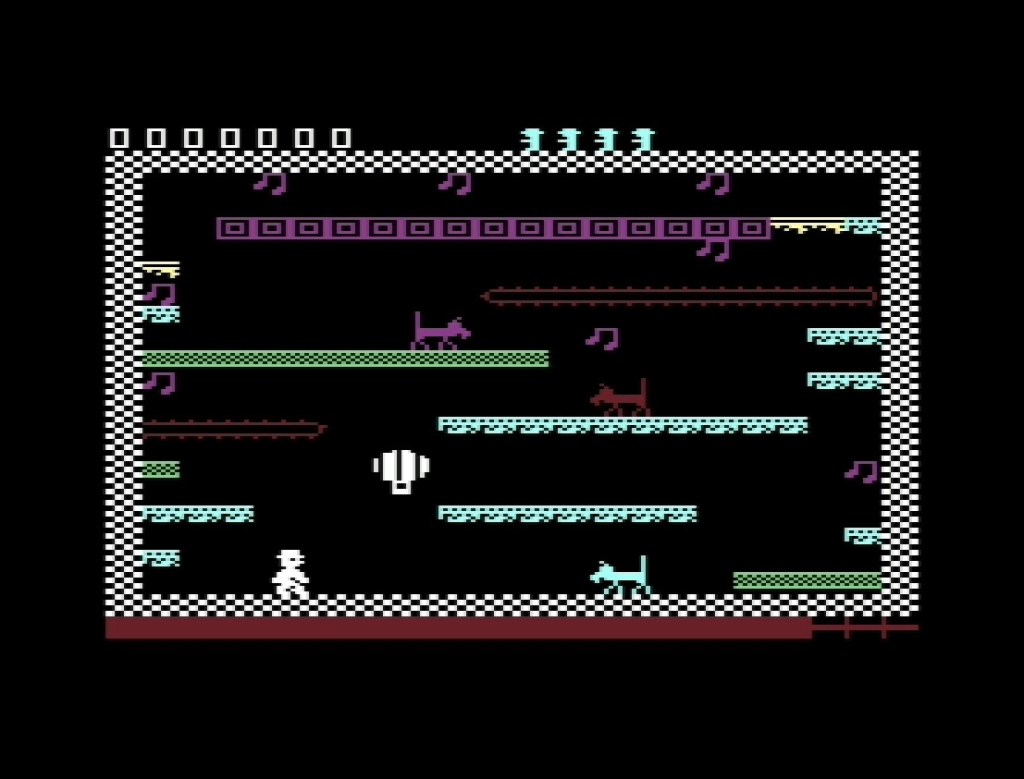
Of course, there were games like The Perils of Willy (pictured above) that I loved so much I left my poor old VIC-20 secretly running for days at a time to try (and fail!) to see the end of. And there was the seemingly endless, safe combination-like back and forth screen-mapping of tunnels and treasures in Pitfall on the Atari 2600. Then there were epics like Football Manager on the ZX Spectrum and Elite on the Atari ST, as well as long-term multiplayer stalwarts like Kick-Off on there too, that spread across hundreds and thousands of hours over the course several years, well beyond its lifespan for any other games in the case of the latter. If only I still had that kind of time to spare! And more recently (although weirdly now also approaching “retro” territory), insanely addictive mobile stuff like New Star Soccer and Clash Royale came along to literally dominate my spare time at every opportunity (when I really didn’t have that kind of time to spare)! Oh yeah, I almost forgot, one-hundred percenting Super Mario World on the SNES, and winning everything on Atari Karts on the Jaguar too… What was I thinking??? But I don’t think any of those really reached a point of real obsession, where I thought this is getting a bit unhealthy! No, that small handful of games I just mentioned were on a whole different level, and pretty much involved me promising myself I’d never go back to any of them ever again when I eventually decided to go cold turkey, and for the most part, I think I’ve kept that promise…
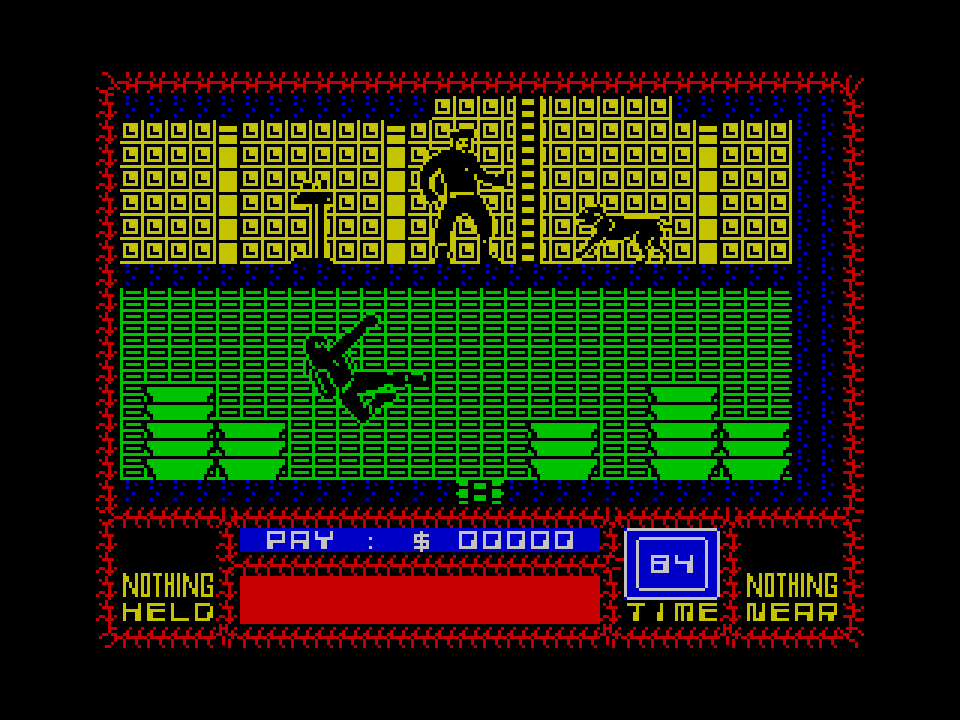
Saboteur! on the ZX Spectrum from 1985 is the oldest of the four games I have in mind. It was a groundbreaking stealth action-adventure that realistically didn’t directly influence the likes of Metal Gear a bit later, but certainly predates it and introduces a remarkably sophisticated mix of infiltration, dealing with guards (and dogs), managing resources and non-linear exploration in a very similar fashion. Even had sound-based detection! A real pioneer of the genre before it was even a genre. Looked absolutely stunning too – cinematic and incredibly atmospheric, as you negotiate this sprawling enemy base in an almost open-ended, James Bond-style (but obviously in the mid-eighties you’re a ninja instead), trying retrieve a stolen disk, before planting a bomb and getting out in a getaway helicopter. And mastering this thing just turned into a kind of ritual, first mapping out the base on a bit of graph paper over the course of hundreds of attempts (by which time it was embedded in your brain anyway), then memorising which guard turns when, learning exactly how close you can get to a dog before it hears you, and rehearsing this perfectly timed route from rooftop to disk to bomb to helicopter that I reckon I could still pretty much go back and repeat on-demand today! Which I can confirm for going back for that screenshot you can see above, intentionally only from about four screens in, and that’s really where I should have just left it!
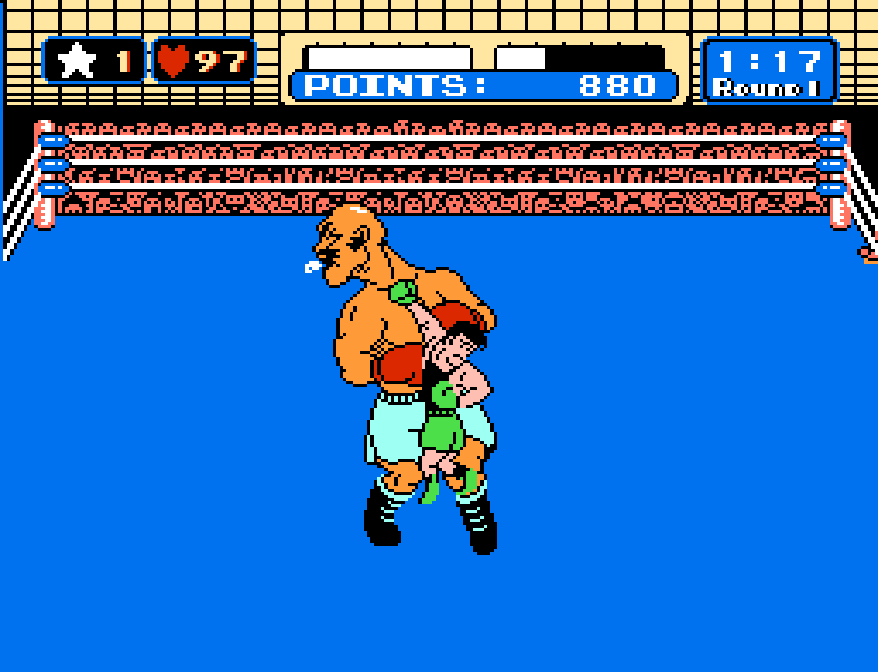
I did learn my lesson for this one though, so what you can see here was simply grabbed from the attract mode! And as you no doubt already worked out from the picture above is that Mike Tyson’s Punch-Out!! on the NES is chronologically the next game I need to tell you about, arriving a couple of years later, but as with most games on there, it wasn’t until the “Nintendo Classic Mini” came along in 2016 that I first got my hands on it, albeit in non-licensed form by then, which was also originally the case for the 1984 arcade game it’s based on. Not that I wasn’t aware of it before then, but I’d never been particularly interested. Anyway, I finally found myself diligently going through all thirty games included on the Mini in alphabetical order, so I’d already totally fallen for stuff like Balloon Fight, Dr. Mario, The Legend of Zelda and Mega Man 2, and I’d also discovered stuff like Kid Icarus, Kirby and Metroid, and reacquainted myself with stuff like Super Mario Bros. that I was already familiar with from the first time around… And with the NES port of Pac-Man duly played and out of the way, here was “Punch-Out!! Featuring Mr. Dream” (replacing Iron Mike as the final boss), an over-the-shoulder boxing game where you’re playing as Little Mac, an up-and-coming young boxer fighting his way through the ranks of the World Video Boxing Association. And it’s like crack, with every opponent (often of questionable taste!) you come up against playing to this unique rhythm that you need to puzzle out from their twitches, pauses and tells, and then perfect offensively in an incessant loop of replay and refinement. It’s brutal by the end too, but I couldn’t leave it alone until I saw that final ten-count, after which I didn’t just not touch it again, but to this day haven’t touched what I assume is a bigger and better sequel on my SNES Mini, despite displaying the same diligence when trying and enjoying everything else on there!
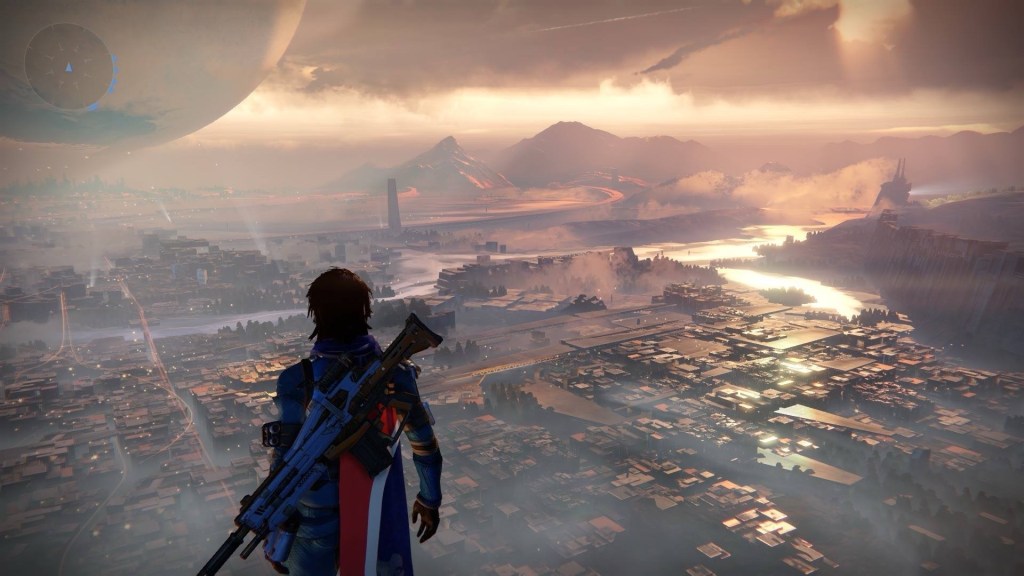
Sorry, I wasn’t planning on getting into any of these in quite so much depth, but just thinking about them has already turned me into a gibbering wreck! Thankfully, only one more to mention before we get into Night Trap, and we’re heading all the way forwards to 2014 now, for sci-fi MMO looter-shooter Destiny on PlayStation 4. And I have a very specific memory of the moment I realised it was a problem… My son’s best friend’s dad was a very well-known footballer back then – I’m talking former-England player – but also a very nice, very normal guy, and we ended up spending a lot of time together, even to the point of going on holiday with them a couple of times. Anyway, although we didn’t start out with much in common, he was into his PlayStations as well, and one day he asked me what I was playing. I told him about this new Destiny game, and didn’t think much more of it, but then a couple of weeks later, he asked me if that was all I ever did because every time he was on his PS4, I was also on there playing that! He then asked me how long I’d spent on it so I said I’d have a look… Oh dear! Hundreds of hours in little more than a few weeks, but I loved the thing, and unusually for me, every aspect of it too – the story missions, the PvE 3-player strikes and 6-player raids, as well as the objective-based and deathmatch PvP modes. Probably the last time I played multiplayer anything, certainly with anyone I knew. Eventually that ran out of steam by itself, and when the sequel came I did all the story stuff but it was never the same. I did recently buy a copy of the first one again (having sold my original at the time in a bid to get my life back) in CEX for £1 but haven’t fired it up yet. I know it won’t be the same either though, so that’s probably for the best!
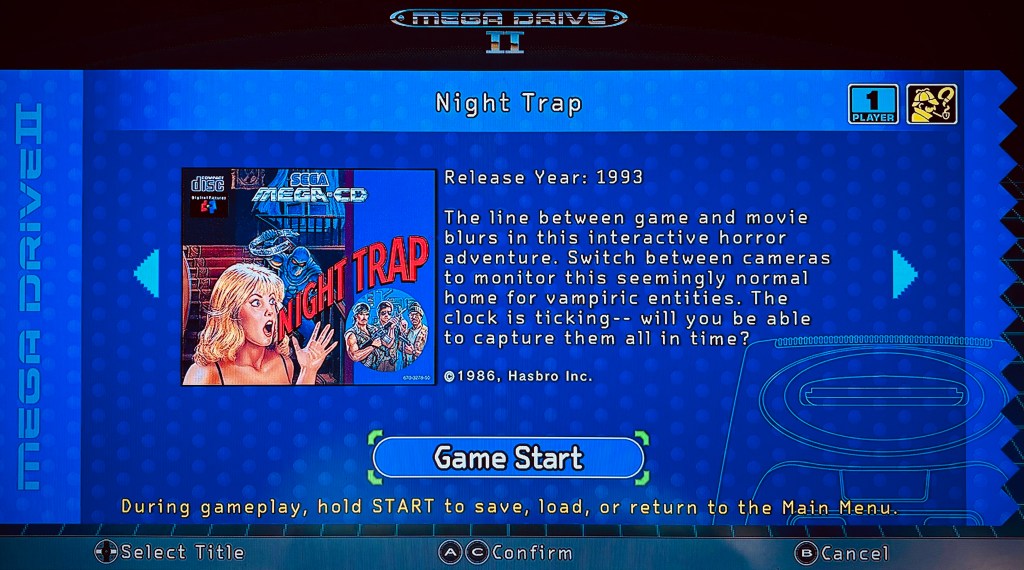
And that brings us to Night Trap! Before we get into any more of my own sorry addictions though, we should set the scene a bit because it really was quite the scene… If I was offered the chance to return to any point in history then it’s 1984 without any hesitation, but in reality, the early nineties were the time of my life – leaving school, access to cars, holidays with friends, music festivals, concerts in London two or three times a week, going to university, all the booze and other things… It might not have been the eighties anymore but what a time to be alive! And in the world of gaming, which honestly was taking a back seat for me at this time, I’m still packing an Atari ST but my brother’s got a Mega Drive by now, and although we’d have to wait until around 1993 for the likes of Night Trap and Mortal Kombat to cause the moral panic around the hobby to really explode, there were certainly grumblings well before then. We’re not even in an era yet where you could say your parents had grown up with the likes of Pac-Man and Frogger, but if they had any reference points, that’s about all they were. Yes, there’d been a couple of intentionally self-inflicted blips before now, with the likes of Dracula and Wolfman on the ZX Spectrum positioning themselves as video nasties in a bid to get an 18-certificate with what are now laughable depictions of blood and violence slapped onto a text adventure of all things, but almost overnight, video games had now suddenly gone from blocky cartoon sprites to what looked like real actors getting punched and shot and, er, dragged away by vampires in bin-bags! Thanks to introduction of digitised actors, live-action FMV, CD-quality audio and, of course, the increasing parity between what was in the arcade and your bedroom, video games weren’t toys anymore.
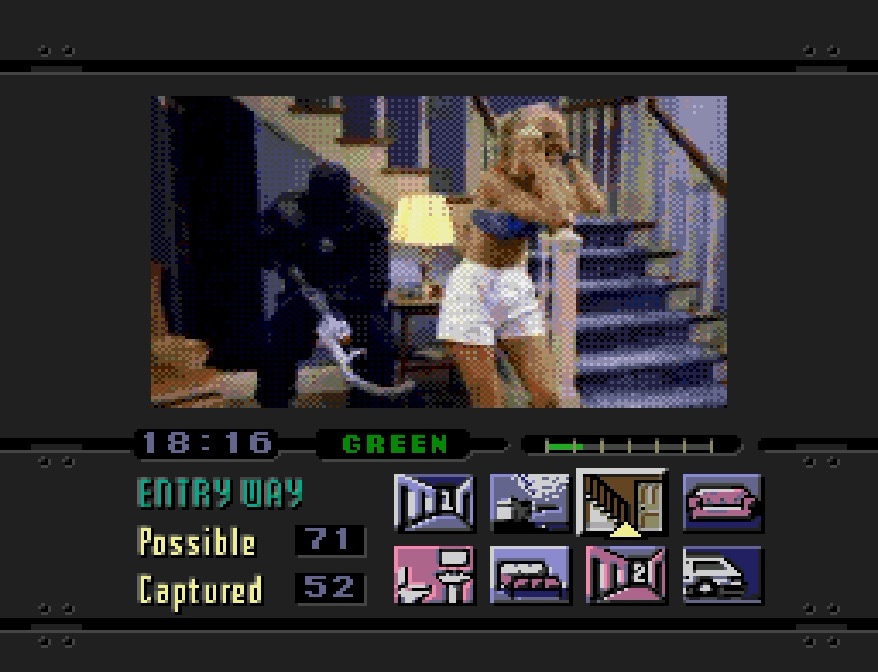
All the same, as much as maybe a bit of backlash might have been expected from this, there was a actually lot more behind the intensity of that backlash when it came! Despite it being a very US problem in the early nineties, even here in the UK we were very aware of the political anxiety around “protecting children” going on over there (while we continued to enjoy Jim’ll Fix It every Saturday in our millions)! There was the growing concern about gang violence, an epidemic of crack addiction, Tipper Gore and friends still up in arms about sex, violence, profanity and Satanism in pop music – with rap a particular problem at this point – and of course, VHS horror movies and cable TV in general. And with the Clinton administration wrapping all of this up in its family values agenda, video games were a perfect new cultural threat to rally around – new, poorly understood, and visually shocking too! Again, maybe US-centric at this point, but there was something else adding fuel to this fire – the news media was in this transitional and massively competitive new phase. CNN was now providing news coverage twenty-four hours a day, other news outlets were attempting to keep up, and they all needed sensational stories to keep their audiences occupied! Night Trap in particular was uniquely positioned to be this sensation when it first came along in November 1992 – the terrible visual of a girl in a bathroom in her nightie being grabbed by masked intruders with no context or narrative to worry about explaining; just undulated outrage you could play on an endless loop! It wasn’t the only one though – FMV games in particular were always vulnerable to this, using real actors that looked like film clips and could just be played to shock without explanation, which is undoubtedly why the controversies surrounding Wolfenstein 3D or Resident Evil, for example, never really compared to Night Trap’s.
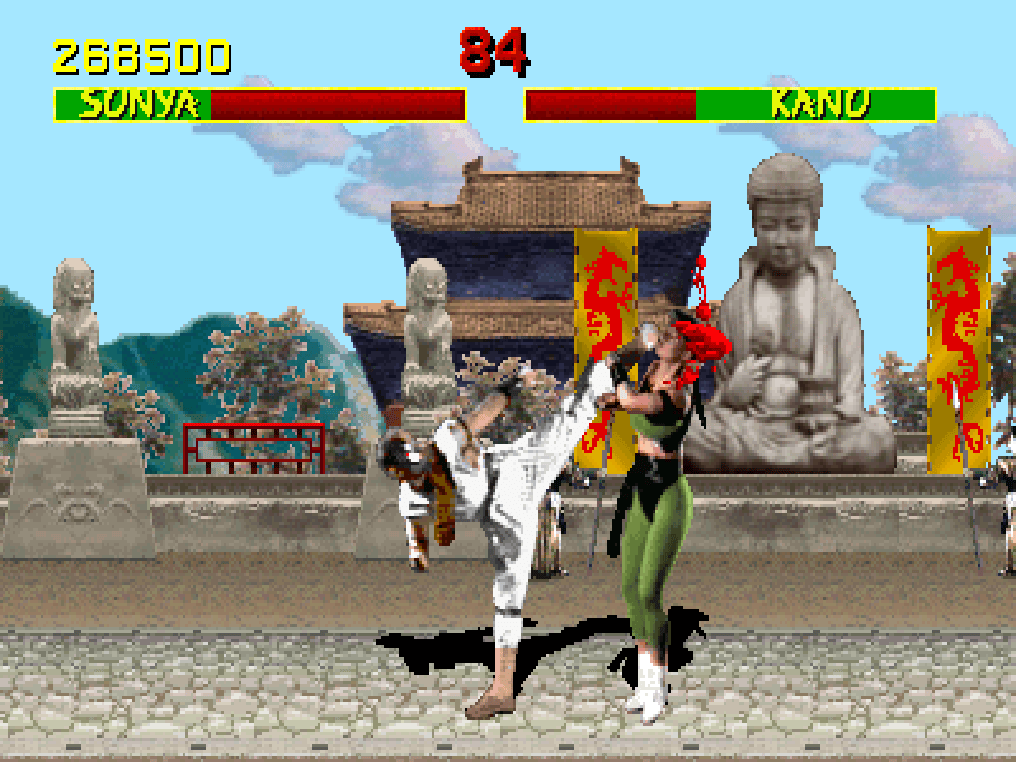
There were other reasons why things like narratives, gameplay mechanics or any kind of artistic merit or intent never got a look into the argument – teenagers were playing them and adults weren’t! Technology was now moving way faster than cultural understanding, and this left a moral vacuum that disturbingly still seems pretty familiar today, with parents not knowing what their kids were playing, politicians having no clue how any of this stuff worked, and regular journalists having no idea how to cover it! So not for the first or last time in pop culture history, they just defaulted to fear instead, like they had done ever since the fifties with comic books, rock and roll, Dungeons & Dragons, heavy metal, rap music, Marilyn Manson and so on. Video games were just the 1990s chapter of the same story. And as the summer of 1992 progressed, what would soon turn into the main villain entered the stage. Mortal Kombat arrived in the arcades in August – a few months before Night Trap hit the Sega-CD add-on for the Genesis – bringing with it digitised martial arts violence, blood spraying all over the place, and the infamous Fatalities that I can still remember crowding around a cabinet to witness! However, while it stayed confined to nerds like me in dingy arcades, it also stayed mostly under the radar as far as the mainstream was concerned, at least until the announcement of its home conversions in early 1993… And then it blew up and went totally nuts because now there was a sickeningly violent game on its way right into your child’s bedroom!
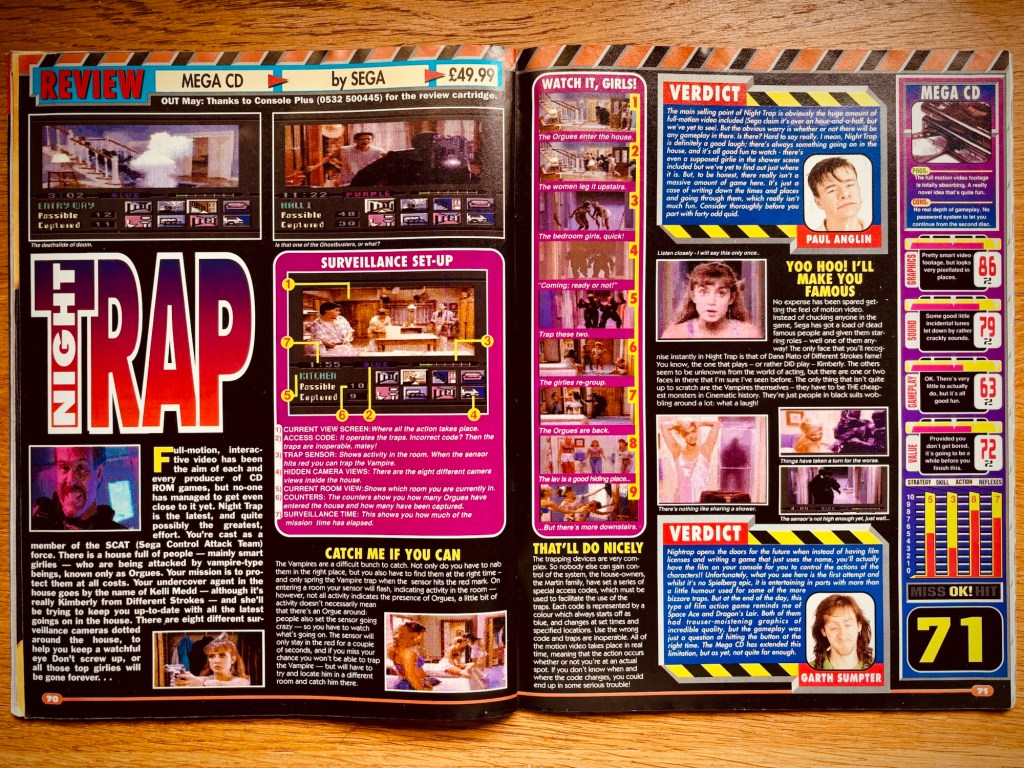
Around the same time, there was a bit of scrutiny being demanded for these new “interactive movies” starting to appear as well, and although Night Trap was now being reviewed as campy, trashy nonsense (as can be seen in the review in my copy of Computer & Video Games magazine from May 1993 above), it wasn’t long before that bathroom scene was being picked up and getting attention elsewhere, culminating in a US Senate hearing on violent video games that December, where it appeared (alongside Mortal Kombat and light-gun shooter Lethal Enforcers) as an example of “gratuitous violence and sexual aggression against women.” At which point retailers stopped selling it and Sega soon stopped making it. Although it was never banned in the UK (in its Mega-CD guise), we got all the news reports showing the bathroom scene, and plenty of imported moral indignation followed, and it certainly contributed to what would eventually lead to the BBFC’s involvement with games later in the decade, by which time Doom had succeeded a bunch more FMV games, MK sequels and the general rise of 3D violence as the new scapegoat. The same happened in Canada, Australia and across Europe, but the irony is, of course, that Night Trap was always comparatively tame wherever you were, more like an ancient old b-movie from the 1950s than the sexploitation horror it was portrayed as! And as the developers would often state, it was about protecting the girl, not harming her…
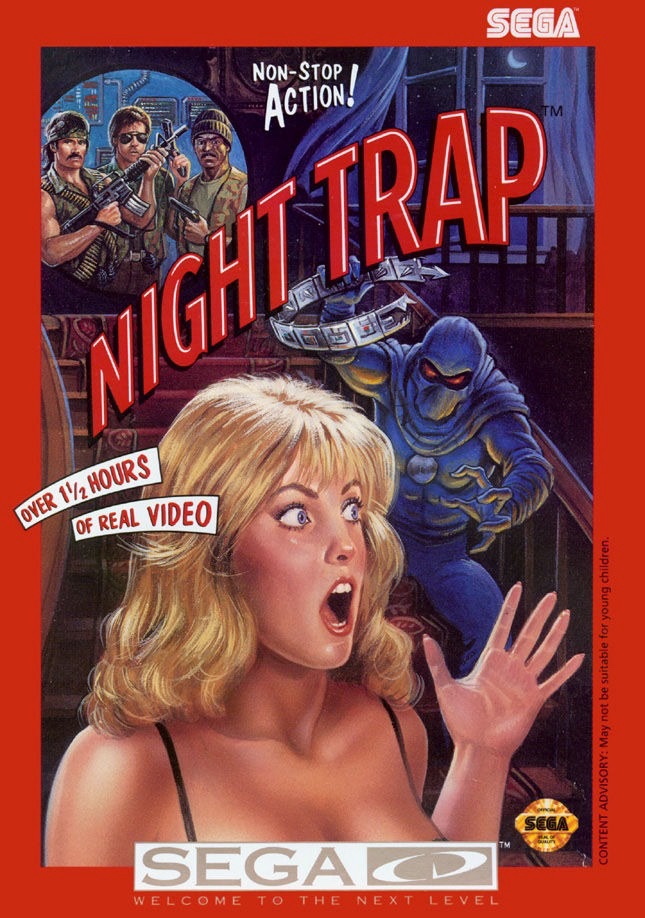
I know I got a bit carried away there but before I get into the what it’s all about, I want to take a quick look at Night Trap’s development. That story actually goes back to the mid‑eighties, when Rob Fulop (of Demon Attack fame) and James Riley were working with Atari-founder Nolan Bushnell on a VHS‑driven prototype called NEMO that could juggle several video streams at once. To show what it could do, they built a demo called Scene of the Crime, a surveillance‑camera mystery where the player hopped between rooms to follow different characters. That basic idea, with a house full of activity, and the player choosing which thread to watch, will soon become very familiar if it isn’t already! Hasbro backed the project, and the team started turning the concept into a full interactive movie. The early versions looked more like a heist thriller, but after endless discussions about what counted as “safe” for younger players, the burglars morphed into the slow, rubber‑suited Augers we will also be meeting endlessly very shortly. The footage was shot in 1987 over sixteen‑days, with Diff’rent Strokes actress Dana Plato in the lead role, and Riley choreographing actors across multiple rooms so the timings would line up with the player’s camera switches. Because everything was pre‑recorded, the game had to be built around fixed timings (and don’t I know it…) with no reshoots, no tweaking, just whatever the film delivered. The NEMO hardware was eventually cancelled before launch, but Tom Zito bought the rights, founded Digital Pictures and brought Night Trap to the Sega-CD. By which time it was a curious relic of a different era reborn on CD‑ROM, and I think that’s what I love about it the most!
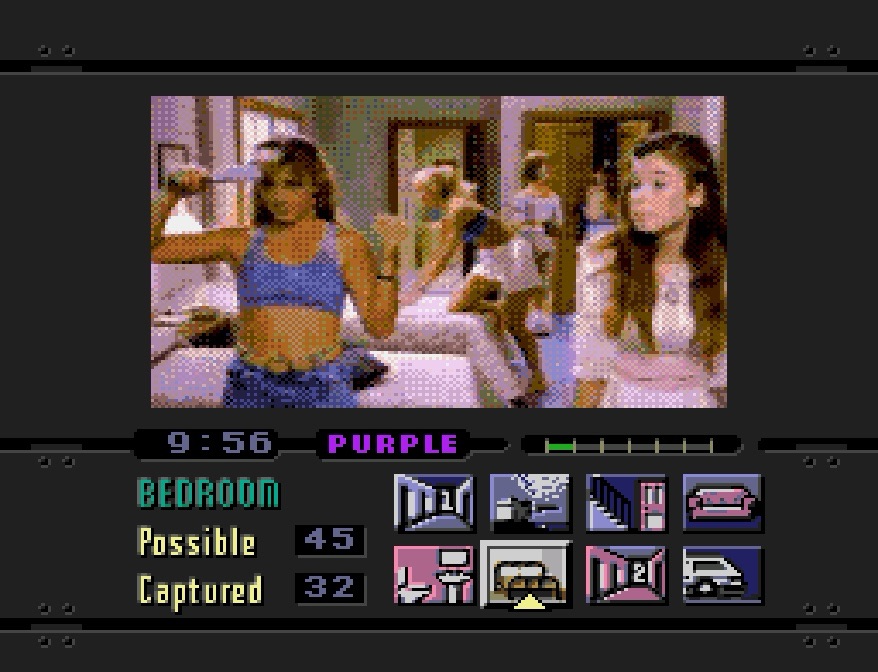
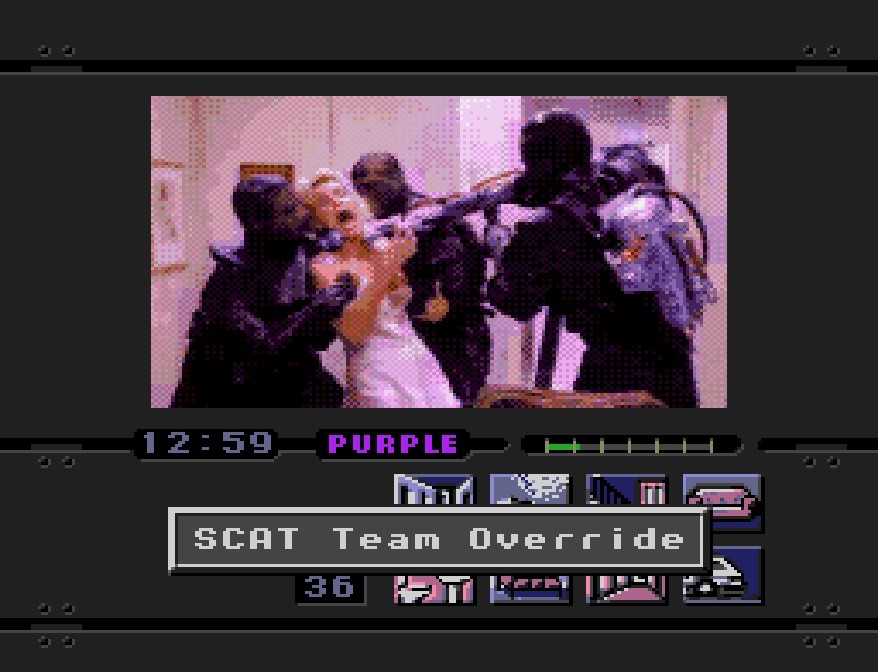
“Five teenagers have disappeared in the vicinity of the lakeshore winery house of Mr. and Mrs. Victor Martin. S.C.A.T. undercover intelligence has determined that the teenagers were reported missing after spending the night as invited guests at the Martin’s house. The Martins claim the missing teenagers left the Martins’ home Sunday night. Police investigation failed to turn up any evidence of their whereabouts. The case was then turned over to S.C.A.T.” It turns out that in a previous undercover operation, a S.C.A.T. (Special Control Attack Team) agent had been inside the house and discovered something unusual. Hidden surveillance cameras had been installed in eight locations – the guest bedroom, the bathroom, the upstairs hallway, the entrance, the downstairs hallway, the living room, the kitchen and the driveway. More curious though were the traps also hidden throughout these locations, leading S.C.A.T. to believe they were all part of an elaborate security system controlled from a secret panel in the basement. As part of the covert infiltration, the agent managed to splice in an override cable, allowing remote control of the cameras and traps. The trap controls are protected by an access code based on six colour variations, and the correct colour code has to be in play to get the traps to work. And anyone in the house can change that code at any time, which – like many things in this game – becomes a very simple but very effective means of adding some tension. We’ll come back to that as we go, but for the time being, the current situation is five more teenagers are on the way to the Martins’ winery house. Unknown to anyone else though, is that one of them is S.C.A.T.’s best undercover agent, Kelli Medd. “Control of the hidden cameras and traps has been routed to your Sega CD and Genesis 32X remote unit” and your mission is to use it to protect Kelli and the other kids from any danger inside the house.
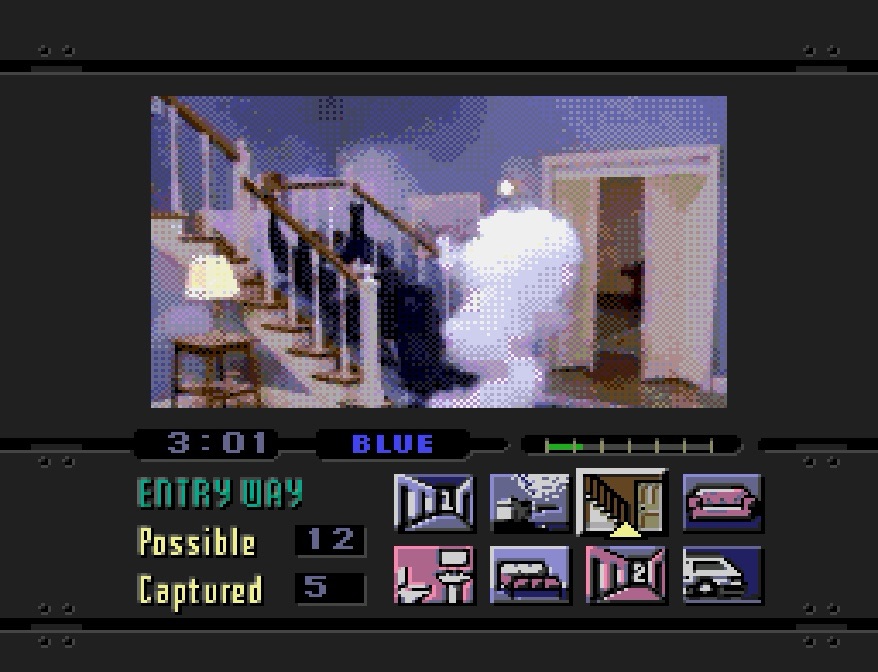
You need to switch cameras from room to room to keep tabs on the teenagers, looking out for any danger. When you come across some, you then need to use the traps as necessary to capture anyone or anything causing it. Just make sure you don’t capture any of the teenagers or fellow S.C.A.T. team members, although as we’ll see shortly, that’s sometimes easier said than done! Together with Kelli, you need to find out what happened to the missing teenagers and whatever else is going on in the house, monitoring all of its occupants and listening out for conversations that might provide clues, as well signalling imminent changes to those access codes. In a perfect reflection of the gameplay, the controls (on a regular three-button Genesis or Mega Drive controller) are as simple as can be – use the d-pad to move the marker between the room icons for the camera you want to view, press A to switch to it, then press B to trigger a trap. Alongside the room icons – which each come with a motion detection alert – and an indicator for the current access code colour (which is cycled by pressing C), there’s also a Trap Sensor meter that will move from green to red when someone or something is close enough to successfully trigger the trap. You need to hit that the instant it goes into the red zone too, otherwise the trap won’t work, briefly locking you out for a short time.
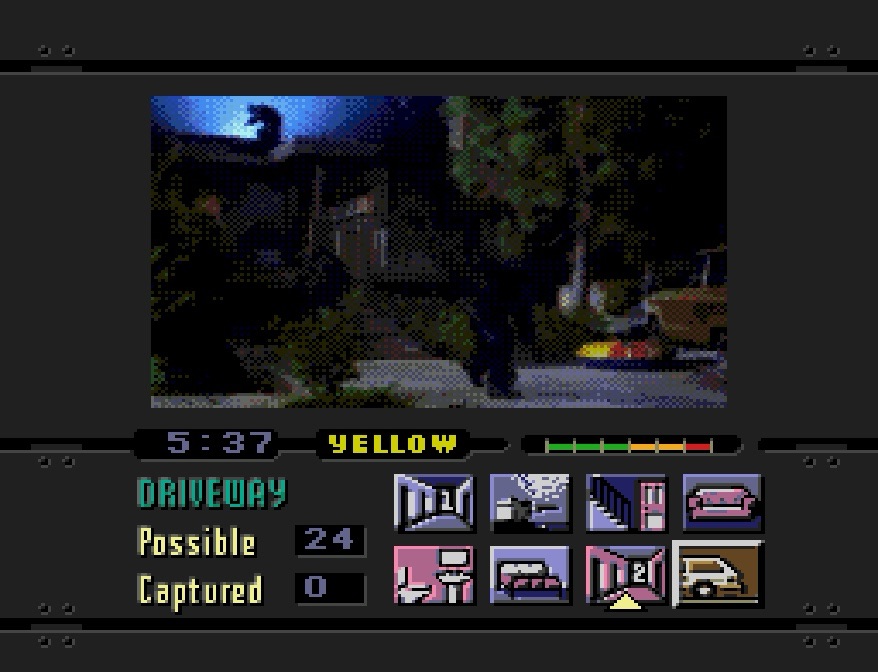
The only other control is Start, which pauses the game and brings up a fairly pointless map of the Martins’ house, albeit something that might become a very familiar sight… Apart from the main camera view window itself, the only other thing of note on the screen is a “Possible / Captured” counter, which indicates how many perpetrators you could have trapped so far, and how many you’ve actually trapped. And if that ratio ain’t great – even if the the teenagers are still safe – you’ll be kicked off the job the same as if you’d let one of them die. This can also lead to one of the most soul-crushing game overs you’ll ever encounter, when you think you’ve finally made it through the night and the credits are about to roll, only to be told you might have saved them all but you didn’t do it well enough! And let me tell you, the clock might be telling you it only took you about twenty-five minutes to get to that point, but actually getting to that point is something else entirely! Which brings us nicely back to my absolute obsession with this game. As already mentioned, everything happens at a certain time – every movement, every action, every conversation (including the ones where they prompt an access code change), and every potential attack or entrapment. The thing is, all of those things could be happening in any one of our eight locations, and any of them could be happening anywhere between one second and about thirty seconds after the last one. And just for some additional context, spread that across the twenty-five minutes or so I just mentioned, and it’s more or less a hundred captures. And not accounting for game overs because you were looking at one of the eight cameras at the wrong time and let one of your teenagers get into trouble elsewhere. Or you missed a trap. Or you got over-eager when the stupid meter went into the red for a split-second when the stupid girl was being held right over the stupid trap in the stupid hallway right near the stupid end!!!
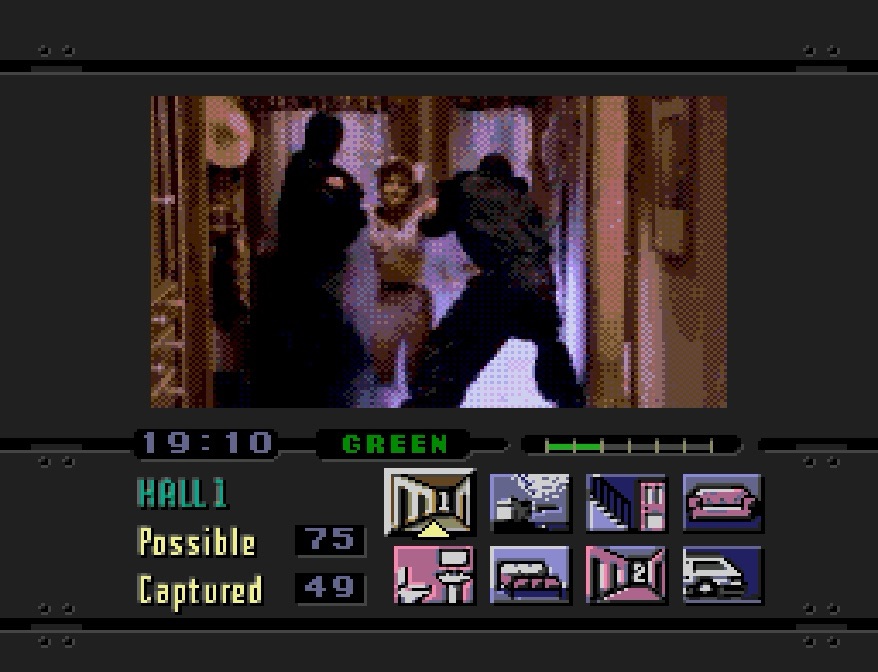
Anyway, through trial and error, methodically switching between views as a motion is detected until it all goes wrong, then trying to establish when, where and why that happened (in let’s say an average five to ten second window), you start to put together a picture in the form of a series of timestamps… Which you might want to record in a notebook like some kind of lunatic, every single night for hours at a time over the course of weeks! And yes, thank goodness for that seemingly pointless map screen after all! Obviously, while the gameplay itself is typically-FMV and little more than (thankfully mostly relatively forgiving) quick-time events involving a single button press, you still need to get that bit right every time too. The main challenge is keeping up though, especially when those access codes change because they represent the only variation from game to game, where one time it might be orange, the next time blue and so on. And that’s Night Trap! Switch to the right camera at the right time, press a button, move on… Move on with your life, more like! And with every restart, you’ll hopefully end up progressing far enough to write down the next timestamp in your pathetic little notebook. There is some additional reward in all of this experimentation though, because as just alluded to, those motion detector alerts increasingly going off all over the place aren’t necessarily leading you to someone to save or an entrapment opportunity for your tally, but simply indicate movement, so it could just be someone getting something out of the car or some random girly chat, or it could telling you there’s more baddies entering the building, or it could be a story scene that you’ll hopefully also start to patch together in parallel…
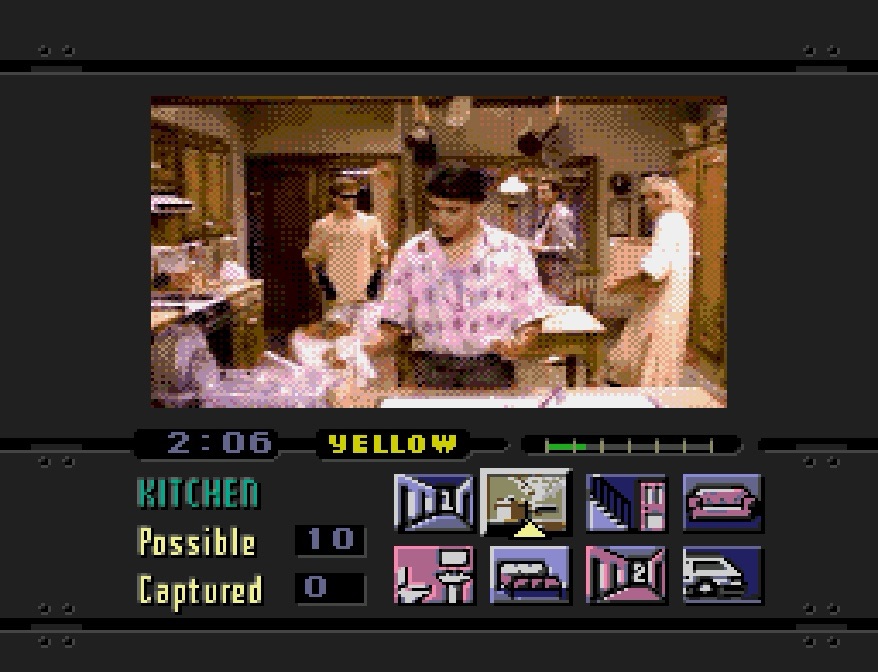
Right, I’m heading into proper spoiler territory here, but to get the full story you’ll need to put almost as much effort into uncovering it during gameplay as you will your evolving time-based to-do list! Our hosts, the Martins, are obviously not the victims but are secretly working with a bunch of ne’er do-wells called the Augers, some kind of deformed vampires who need blood but can’t bite! Instead, they use this mechanical blood-drainer (or “blood hook”) to harvest their victims, who are, of course, the teenage girls being lured to the Martin place for a weekend getaway. They’ve set up the entire house to be one big trap, with secret passages, trapdoors, pressure plates, concealed rooms and all sorts of Scooby Doo-type shenanigans, and they use these to capture the girls and hand them over to the Augers. Things then get a bit sketchy but I think tonight of all nights, things are coming to a bit of a head because the Martins aren’t delivering fresh blood fast enough, so the Augers have turned up en masse to help themselves without waiting for traps and stuff. Them stalking around the house in ever-increasing numbers causes the Martins to panic as they get more aggressive, and of course, the girls themselves start to notice something’s not quite right, which your undercover agent Kelli tries to keep a lid on. Actually, I won’t spoil the ending itself, should you get there, but it’s exactly what you’d expect! My favourite bit – where it goes full-on, low-budget b-movie – is where creepy neighbour and Victor Martin’s brother Tony (aka Weird Eddie) turns up with his big homemade laser blaster thing that can keep the Augers under control, so he’s then also stomping around the house trying to maintain order while only really adding to what by that point is total chaos, not to mention total nonsense! In fact, I think he’s the reason you’re there in the first place, because S.C.A.T. had previously noticed him and his weapon acting suspiciously around his house and the Martins’.
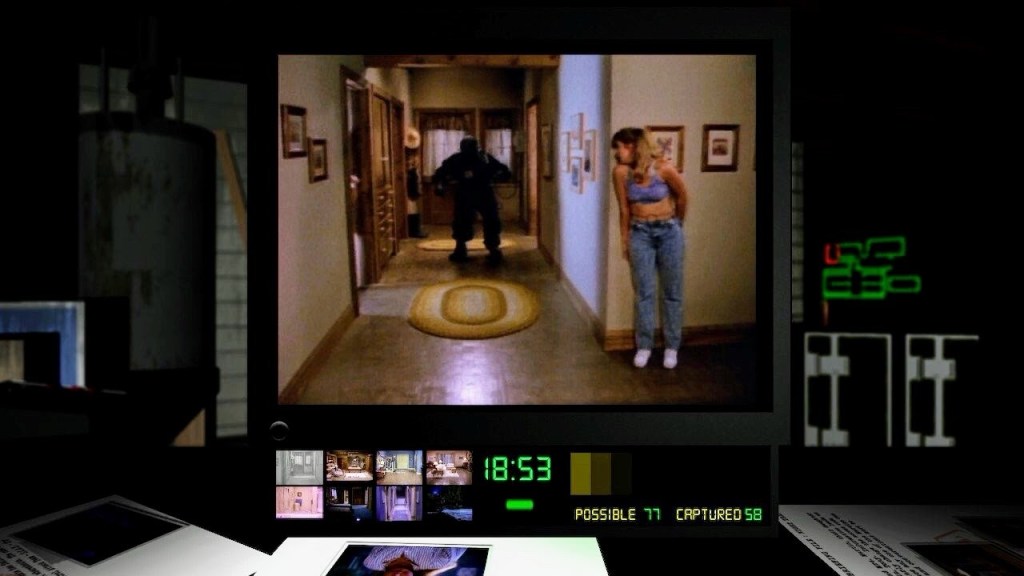
As you might be able to tell from the fresh screenshots scattered around the place here, I ignored that promise to myself and went back to the original Mega-CD version of Night Trap using emulation, and then once again on the Mega Drive Mini II for a more authentic experience (pictured way back above in a crappy photo of my TV screen), although with my old notebook in hand once again, it never got particularly obsessive either time. It did mean heading back to the 25th Anniversary Edition on Switch was then inevitable as well though! It worked out fine too, and I’ve come out of the other end intact, if slightly dumber than when I went back in! It’s definitely the way you want to play today if you can, with a complete overhaul of the user interface as well as all that FMV in its original uncompressed glory. There’s a ton of bonus stuff too, with a new Survivor mode that randomises Auger placement around the house, a Theatre Mode with all the FMV scenes stitched together so you can watch the full thing without interruption, and a bunch of deleted scenes, behind the scenes stuff and two documentaries. According to the handful of screenshots I grabbed from that ridiculous original play-through, I was still at it into 2019, but where I first played it is a bit harder to pin down. My brother remembers picking up the 32X and Mega-CD bits and pieces at some point but doesn’t remember owning the game. It does ring a bell but that could have been from the coverage elsewhere we discussed earlier, or we rented it. The other alternatives are a couple of university friends that had Mega Drives, where the rental story would also hold plenty of sway because a lot of that went on when we had nothing better to do. It’s a shame things don’t sink in quite so much when they don’t belong to you so you’re not quite as invested.
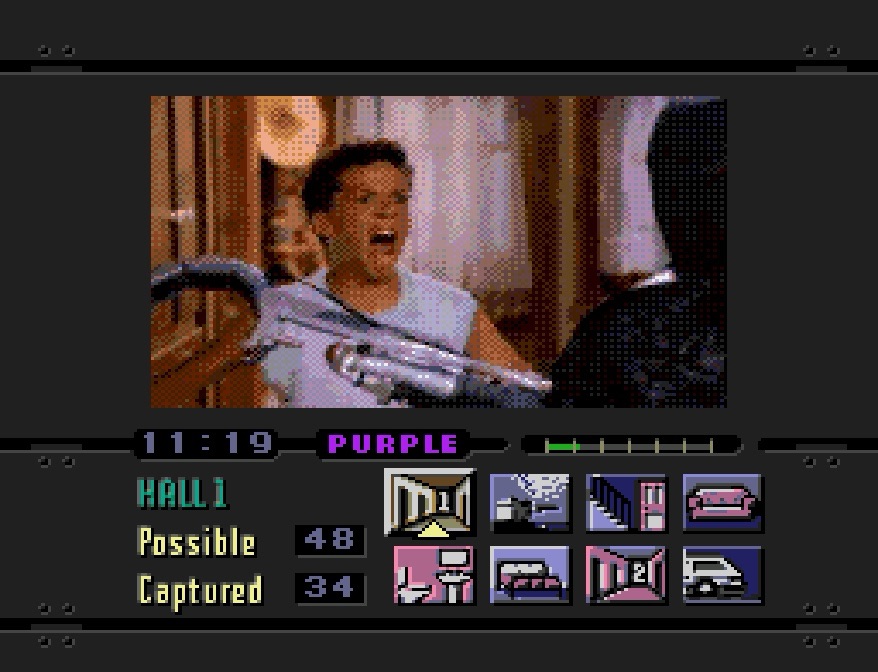
What I do remember is just how mind-blowing this kind of thing was at the time, compressed to hell or not by today’s standards! Fortunately, we had no such standards for these things back then – for all the reasons the parents of America hated it, the sheer reality of full-motion video when we’d been similarly blown away by a handful of big blocky pixels stacked in a pattern around each other just a few years before was still pure science fiction. Your imagination didn’t need to fill in any gaps anymore, so you could focus all your attention on the, er, gameplay and gripping storyline! Looking at these screenshots or playing on a big fancy modern TV really doesn’t do it justice either – it was meant to be smoothed out by a CRT, although referring back to that C&VG review from earlier, even they bemoan the pixelation at times. We were spoilt already! If you watched an old VHS video on a laptop screen today, I think you’re in the right ballpark for how it probably looked in reality at the time though, and that was pretty impressive! It would sound like an old VHS video too – let’s be kind and say the voice-acting was hammed-up deliberately for the occasion, and actually suits the equally dreadful script (in a good way) perfectly! There’s plenty of sound going on around the conversations though, and outside in particular is given a real sense of place in the world – assuming we’re talking a well-to-do rural Southern Californian vibe as I think is implied. And the soundtrack is great! Proper hokey teen-horror stuff from the time, full of cheesy synth and unconvincing menace.
I’m not sure this is of any real relevance here, but I’ve mentioned before that I have a countdown of my top 200 favourite video games ever that rarely changes but I’m always tinkering with! And yeah, I know, but at this point it’s hardly worse than having a notebook filled with 100 lines of times and room names, is it? Anyway, of those four games I started with telling you I’d obsessed over, only Destiny and Night Trap are in that list. I guess obsession is about compulsion rather than affection, but I certainly still have affection for Night Trap! And maybe that’s the real magic of it. For all the noise, all the outrage and all the reasons it should have been forgotten, Night Trap still got its claws into me in a way far “better” games never did — the most unloved game of its time, and somehow one I’ll always have a soft spot for.
As always, I’ll never expect anything for what I do here but if you’d like to buy me a Ko-fi and help towards increasingly expensive hosting and storage costs then it will always be really appreciated! And be sure to follow me on Instagram, X (formerly Twitter) or Threads for my latest retro-gaming nonsense, and also on Bluesky, which is under my real name but most of it ends up there too if you prefer!

