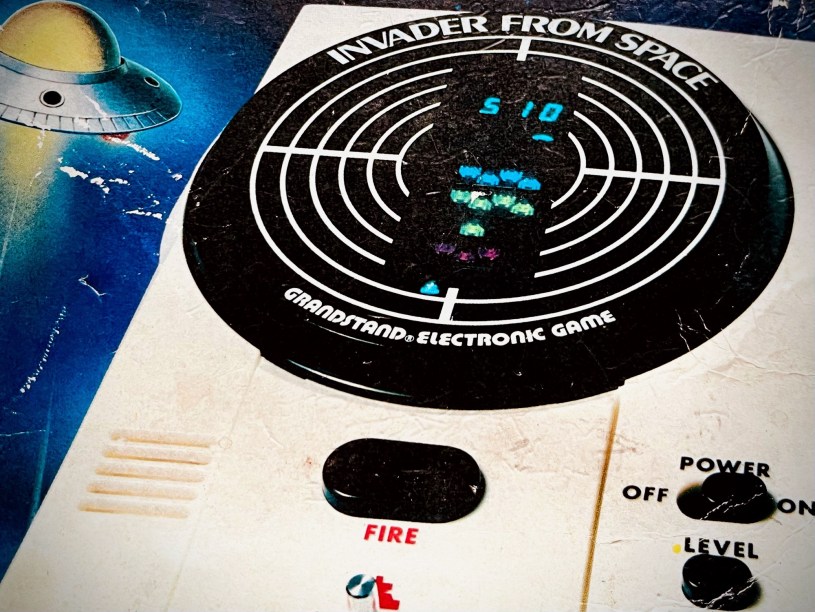
While there’s an argument to be had that you’ll never grow or change anything by always playing it safe and sticking with what you know, there are times when that might be for the best… Like when its 1982 and you’re nine or ten years old, and you’ve got a single shot at choosing the handheld electronic game you’ll be stuck with forever after because, whether you like it or not, you ain’t getting another one! And I reckon there’s probably a lesson there in itself about the merits of knowing when to play it safe because I’d take exactly the same approach a few years later when it came to buying my first video game, Arcadia, having played it on my best friend’s VIC-20 shortly before I got mine! That was a slightly less critical choice though because there was always your birthday then Christmas for your next one, at least until budget games emerged, and you could always swap with your friends in the meantime, or sometimes rent by post for a couple of weeks for 50p a time too…
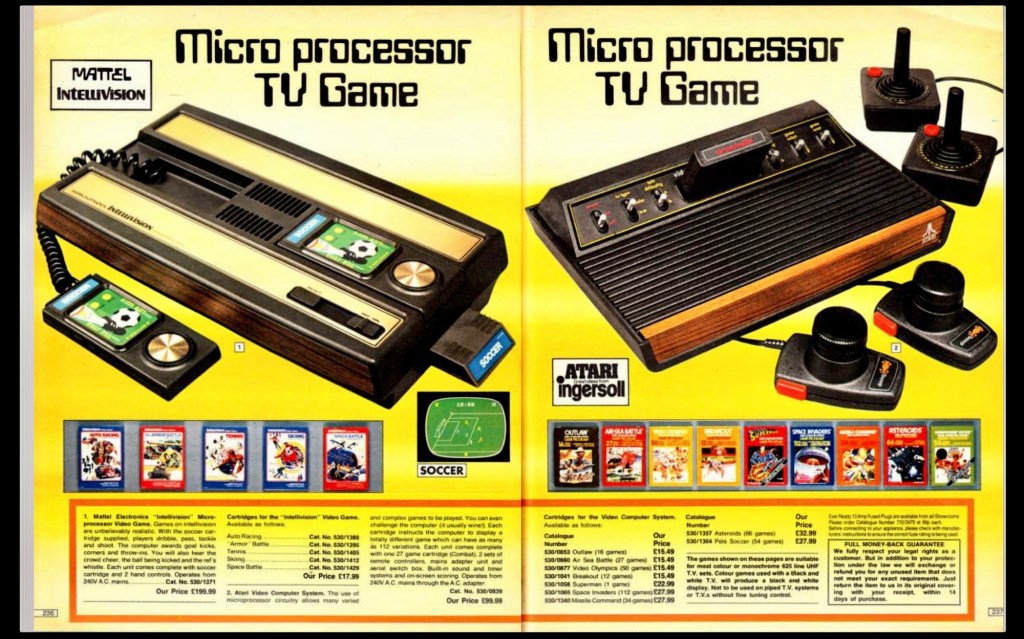
The price of those handheld and tabletop electronic games made them something else though – if we’re talking £5-7 for a new game on cassette for the VIC-20, then it was more like £25-40 when they were the only viable option if you wanted a gaming fix at home in the few years before computers became a bit more affordable and within the reach of us ordinary folk, as the early-eighties became the mid-eighties. There was the Intellivision or Atari VCS (or 2600) I suppose but the price of those, with the games on top, never seemed very viable at all to me! Either way, these things becoming available did in turn bring down the price of those electronic games as time went on too, and they became more for gaming on the go alongside your home computer (where you could play anything) rather than gaming full-stop. In the period we’re talking about before that though, as said, they were expensive enough to make them your main birthday or Christmas present, and in the unlikely event you never also wanted a BMX or a Kappa tracksuit or a decent pair of roller-skates at some point then over time you might end up with one or two if you were lucky. Which I suppose was also the benefit of having two brothers with similar ideas!
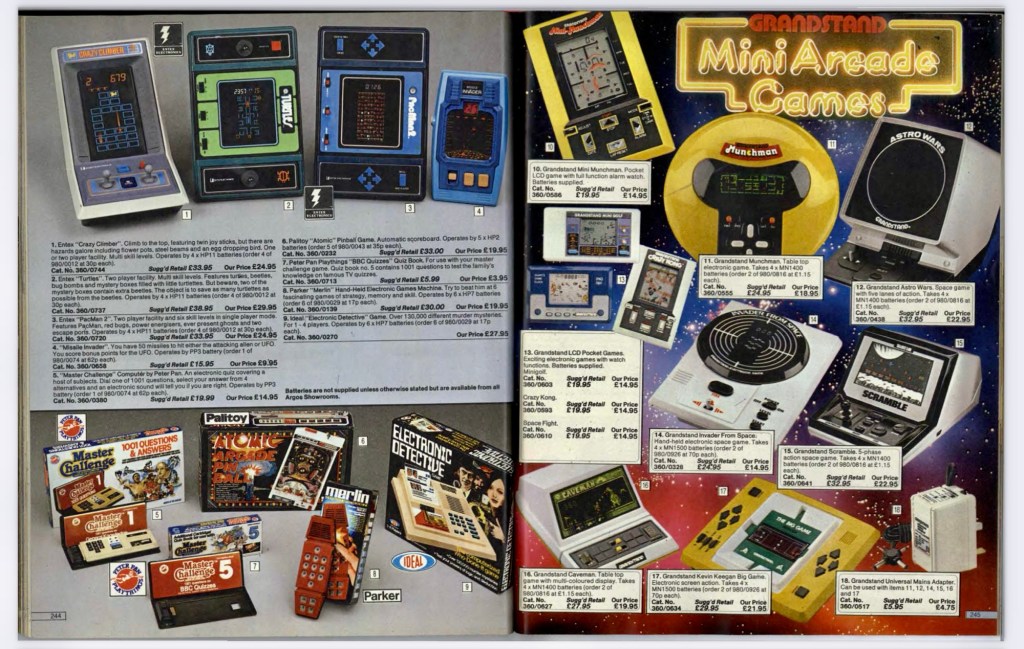
Coming back to choices though (and credit to the Argos collection on Internet Archive for the images here), around Christmas 1982 we’re now talking quite the influx of electronic handheld and tabletop games versus just a couple – namely Grandstand Astro Wars and Invader From Space – only a year previously, and thankfully consigning all those dreadful Pallitoy LED sports games like Trevor Francis Electronic Striker or Alex Higgins Electronic Cue Ball to history at the same time! As a quick aside, trying to remind myself of the names of those, I just spotted Lighting Luke, a light-gun by Corgi where you had to shoot this plastic cowboy in the sensor in his chest when his eyes lit up – it’s another dreadful old battery-powered thing from 1981 that no doubt enthralled us both for hours whenever my brother got that for Christmas! Great days, and always great having an excuse to look back through old Argos catalogues too!
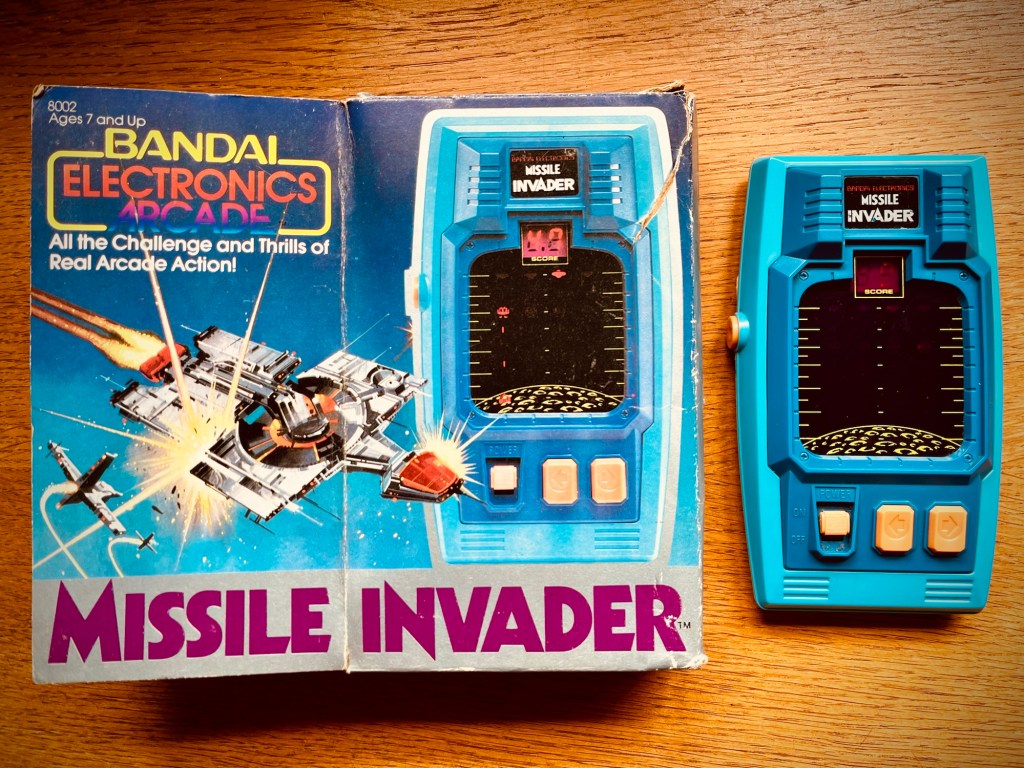
Right, choices, and back in 1982 it looks like your choices included Crazy Climber, where you climb to the top of a building and avoid stuff falling down on you, impressively using twin-joystick controls, then a couple of even more pricey Entex two-player games, Turtles and PacMan 2, which were both variations on a similar theme with joysticks either side of the screen, and we’re also talking tabletop more than handheld for all three. Then there was Bandai’s Missile Invader, which my brother had got for his birthday the previous summer, where you had fifty missiles to take down as many aliens as you could, as well as the bonus point UFO, and it was one of those games you could learn to play by sound alone, so we’d both end up being able to max out the score every time without even looking… Which turned out to be useful with my red-black colour problems! Very much handheld that one, with simple controls and a lovely Space Invaders-inspired overlay on the screen cleverly disguising its even more simple gameplay! I do have my own machine now too and it’s still a lot of fun, and last time I looked was at the lower end of modern pricing for such things, so a good place to start collecting too!
Over the page we’ve then got the far more glamorous-looking lineup of Grandstand’s “Mini Arcade Games” which still include the aforementioned Astro Wars and Invader From Space, and I just noticed the big hit the latter had taken on price, costing only £14.95 versus the regular £24.95 suggested retail price, which might explain why my choice here was accepted with so little resistance! Anyway, we’re also offered their LCD pocket games, including the wonderful Mini Munchman (which my brother would also later get) and Crazy Kong handhelds, that in retrospect I think were probably the most fun of the lot of this first(-ish) generation of these, until Nintendo Game & Watch came along and took a very similar concept to another level. For pure ambition though, you wanted Scramble, a colour vacuum fluorescent display toting tabletop that felt like an arcade machine and included an incredible five different phases of gameplay, echoing if not quite replicating its arcade inspiration! We’ve also got the big version of Munchman, which honestly never really appealed to me, but to this day I still want Caveman, another VFD tabletop where you had to grab eggs from a huge dinosaur and get them back to your cave! I played it once when a friend brought it in on one of those last days at term in middle school when you could bring your own toys and games so the teachers could get ready for their holidays in peace, and I’ve been sold ever since! Finally, we had Kevin Keegan’s Big Game, which thankfully no one ever brought into school and was just a throwback to those LED games I thought we were done with earlier!

I think I must have played Space Invaders on holiday or somewhere by 1982 but I’ve no real recollection of doing so before Invader From Space. Like every kid by then though, at the very least I was aware of it, having already established a legacy that was not only a foundation of those very early days of gaming but had also transcended it into popular culture. In fact, I can attest to that because I’ve still got the “Space Raider Stick-Pin” that came of the cover of issue two of TV Tops magazine from October 1981 stuck on my noticeboard (also from then) that’s still sitting above my desk right now! And I know I’d definitely played Galaxian by then; I actually think Namco’s answer to Space Invaders from 1979 was possibly the first arcade game I ever played, which was probably 1980 or 1981. Whenever it was, those sound effects will always be unforgettable to me, with that ominous, rhythmic throb and high-pitched wail announcing the aliens peeling out of formation to dive-bomb you. Absolutely terrifying, and to this day (like Arcadia from earlier), one of my top ten fixed, single-screen shoot ‘em ups. Despite inspiring the whole of that list though, the original Space Invaders wouldn’t quite make my top ten in the genre nowadays but in my defence, an early sequel definitely would, and if I was including handhelds, then Grandstand Invader From Space no doubt would too!

As I alluded to at the start though, getting it for Christmas 1982 wasn’t my first time playing… We’d been going to my Grandmas’s house for lunch on Saturdays then staying for the rest of the afternoon while our parents went shopping in Bedford town centre (in the days when you could spend an entire afternoon there shopping) for as long as I can remember. Our Grandad had died a few years earlier but our auntie, only thirteen years older than me so in her early twenties by then, still lived there, and would usually arrive from her job at the local Co-op supermarket, just around the corner, shortly after we got there. She had all the latest records and loads of cool stuff like disco lights and posters of all the bands and film stars in her bedroom, so we’d often end up just hanging out in there with her while she got on with whatever she was doing, or she’d take us into town ourselves and spoil us… And I will always wish I still had that Star Wars Jawa transport she bought me one of those times! Anyway, I’m guessing not long after it first came out in 1980, she had something else very cool to show us when she got home one Saturday, that would not only instantly mesmerise me but set me on the course you’ve joined me on right here, and it was, of course, Invader From Space! And if I had to choose from anything on that page in the Argos catalogue all over again, I wouldn’t change it for the world, the safe option or not!
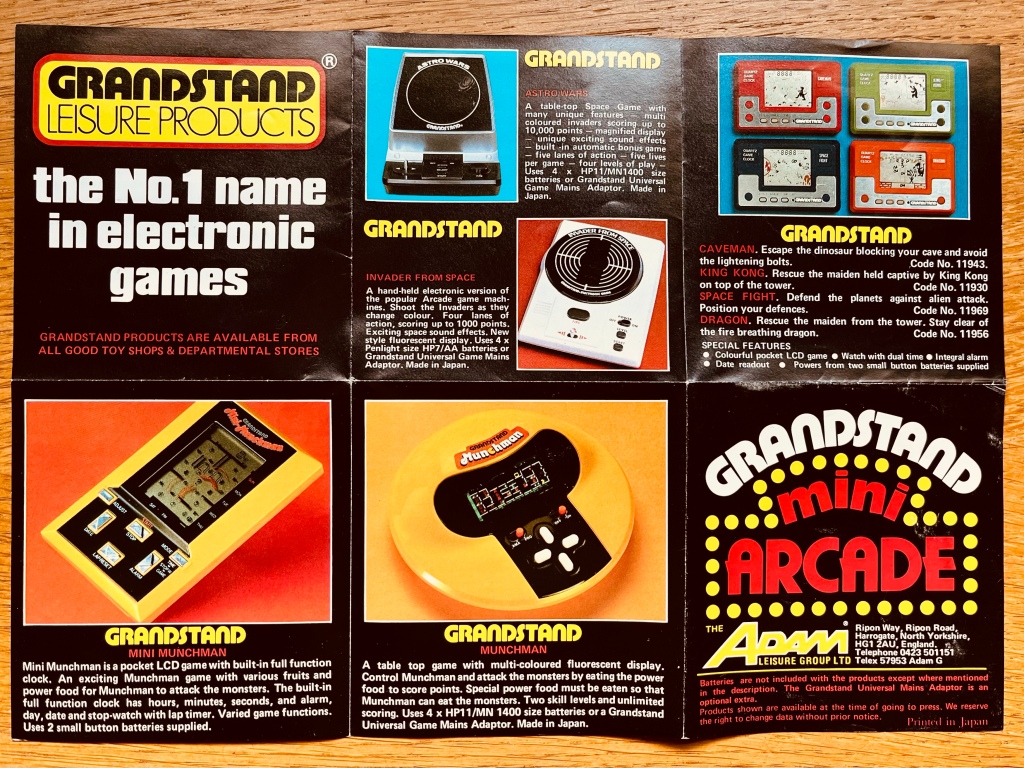
“A hand-held electronic version of the popular Arcade game machines. Shoot the Invaders as they change colour. Four lanes of action, scoring up to 1000 points. Exciting space sound effects. New style fluorescent display. Uses 4 x Penlight size HP7/AA batteries or Grandstand Universal Game Mains Adaptor. Made in Japan.” That’s the blurb from the wonderful promotional leaflet that came in the box with Scramble, in the days before it was worthwhile for anyone local to check the Japanese translation! Which actually isn’t bad, when you consider we were still the best part of a decade away from “all your base are belong to us!” Really should do a top ten bad translations sometime too, although that NES Ghostbusters end screen is going to take some beating… Anyway, back to the blurb, I was thinking I might try and use that here as a bit of a guide for the rest of what you’re about to read, so let’s jump to the game itself! Now, when it talks about “popular Arcade game machines” it’s obviously referring to Taito’s aforementioned Space Invaders from 1978, where you’re moving left and right and shooting your laser cannon at the invading aliens moving backwards and forwards and then down the screen when they reach an edge while also avoiding their fire, aided by four quickly diminishing bunkers, and there’s sometimes the “mystery ship” moving across the top for big bonus points too. Just in case you didn’t know!
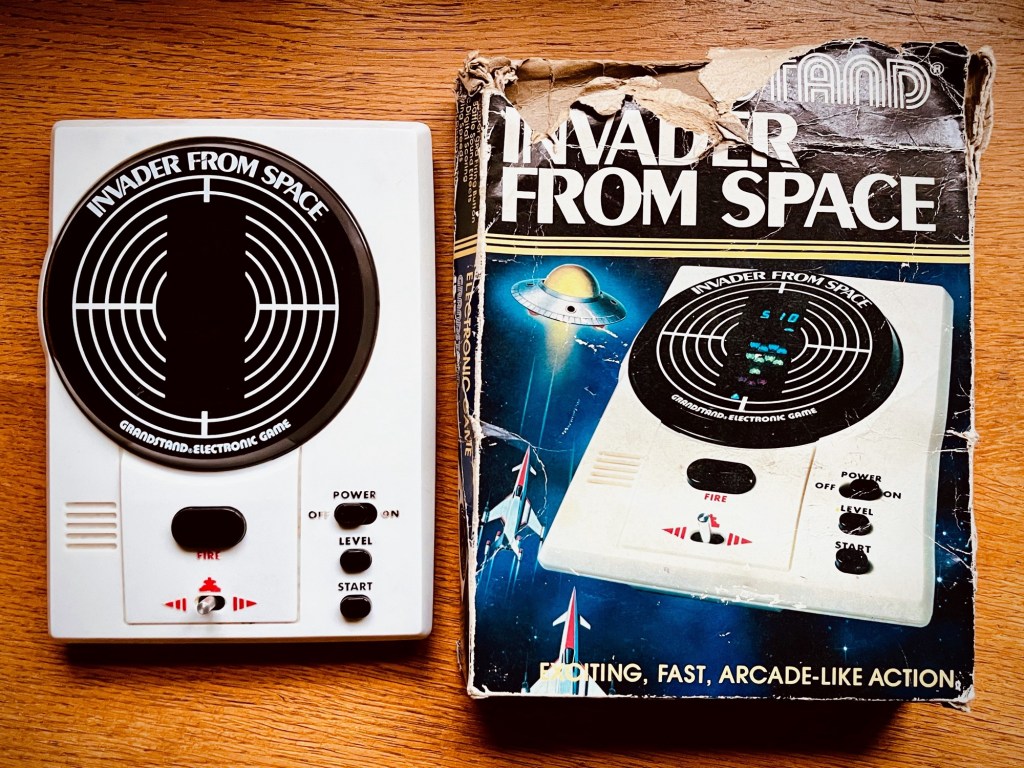
We’ll get to how this take on the original plays out in a second but first we should have a look at the unit itself… And the sorry state the box is now in, although I suppose it’s doing alright for still existing at all! Anyway, it’s about 20cm long and 15cm across, where the slightly off-centre screen makes it its widest, and likewise it’s 3cm deep, including that protruding display, which accounts for about 0.7cm of that. With four AA batteries inserted, you’ve got an overall weight of around 400g, so all combined, that makes it just about handheld, although with the extra plastic for the “screen” plus the battery compartment being located towards the top, it is a bit top-heavy to hold, so you’ll probably want to have something to lean on for extended play! And in that case, you’ll probably also want the Grandstand Mains Adapter (or similar) because it gobbles batteries! I’ll come back to that shortly too but I’ll come back to the screen first, which does a good impression of being circular and about 12cm in diameter but most of it is dressing, with a nice radar-style printed overlay, and in reality, the action is taking place in a 2.5 x 8cm vertical vacuum fluorescent display, overlaid with bands of coloured gels to change the colour of the naturally white invaders (and all those lasers!) as they descend, which I’ll also come back to. These little deceptions work well though, and were pretty common across the board in machines like this, with the aforementioned Scramble and also the later BMX Flyer doing similar to excellent effect, just to name a couple from my own experience.
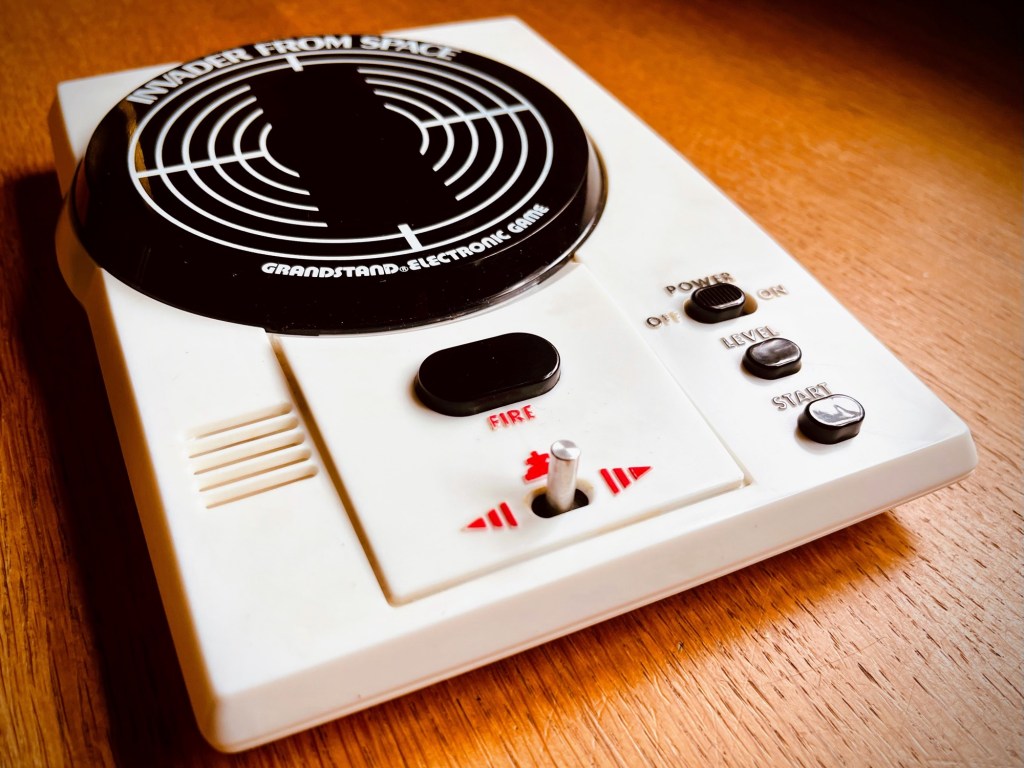
Below the screen we’ve got the world’s loudest speaker on the left, so no way you’re sneaking a game of this one in under the covers when you’re supposed to be going to sleep! Then across the way there’s the chunky sliding power on-off switch, then a level select button – of which there are three, where the invaders move at increasing speed – and under that is a start button to begin the “computer-controlled attack on Earth.” As is the case with any decent clone, we’ve got a unique story that goes way beyond the scope of its gameplay, and according to the instructions, it goes like this… “It’s an invasion from Outer Space and you must defend your missile bases on Earth from the computer-controlled space invader attack. You have 5 missile bases and 5 chances to launch a counterattack. Watch out, here they come. Fire. It’s a game of speed as well as skill. If the invaders reach the Earth’s atmosphere, the game is over even if you have missile bases left.” The controls for doing all this are a little awkwardly positioned, one above the other, in the centre of the unit right below the screen but you can just about take the weight of the unit in your left hand (or vice versa according to your preference) and use that thumb to fire, while using the other more for maintaining balance then using that thumb for left and right. The fire button is huge, with a meaty click so you know you’ve pressed it, but the aluminium (I guess) “Intercept Control Lever” is way more flimsy, and is the reason why I ended up with my auntie’s original unit a few years later because it just snapped on mine… That and the power adaptor on the top too – okay, better than endless batteries your parents eventually refuse to keep replacing, but that soon developed a wobble, and messing around with the adaptor plug soon made it worse, and eventually no amount of sellotape forcing it down just at the right angle was going to keep it switched on!
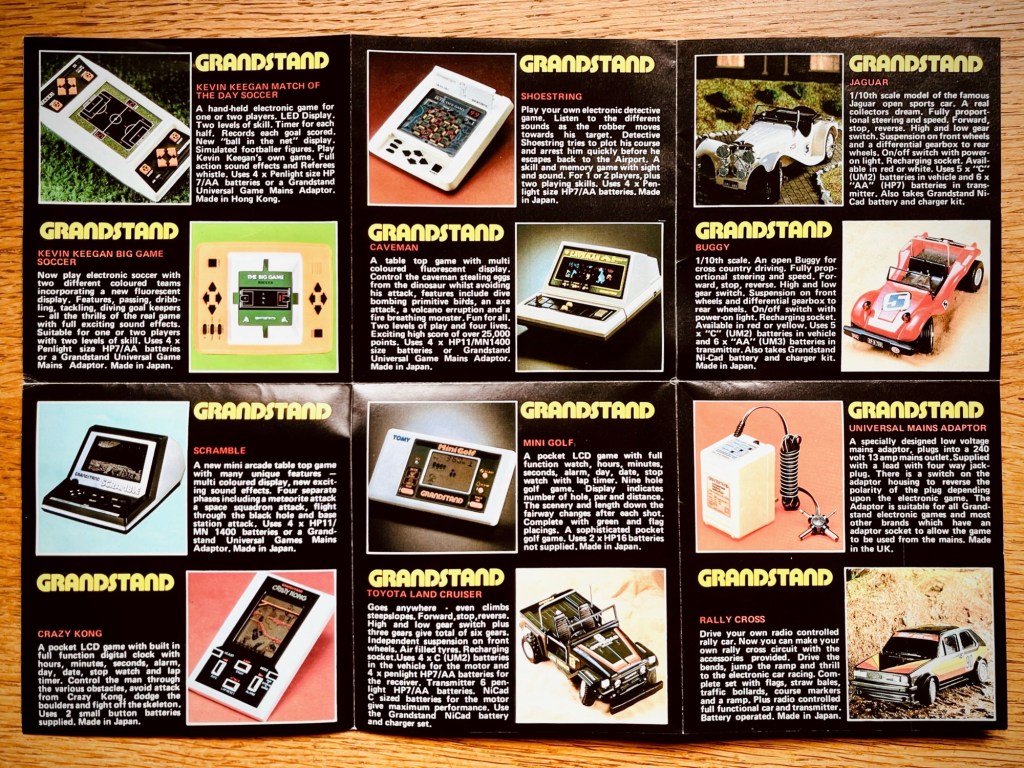
The little left and right joystick is a nice height while it lasts though, and it’s more than responsive enough to keep up with your heavy-set on-screen movements. I suppose it is an entire missile base you’re shifting around though! By the way, both the box and the instruction manual play it fast and loose throughout when it comes describing what you’re actually shooting (and what’s being shot back at you) – sometimes it’s missiles and sometimes it’s lasers but it doesn’t make any difference so not to worry! Okay, let’s have a look at what’s on the screen. At the top you’ve got the three-digit score readout, which is replaced by the “number of counterattack chances remaining” or number of lives to the rest of us when you’ve lost one after getting whacked by a missile or laser fire. You’ve got five lives, or counterattack chances if you still wish, and then it’s game over, which, as you probably already worked out, is also the case if you score a thousand points, and if an invader reaches the bottom right of the screen. The rest of the screen is divided in four “cosmic zones” made out of those different colour transparencies from earlier. First there’s the UFO zone, and that’s where these bonus enemies occasionally appear then move from left to right across the top of the screen, and are going to randomly be worth thirty, forty or fifty points if you can get a shot in. You’ll need to get it past the invaders first, and they gradually appear from left to right just below the UFO zone, then move down when they reach the opposite edge, then back the other way and so on.
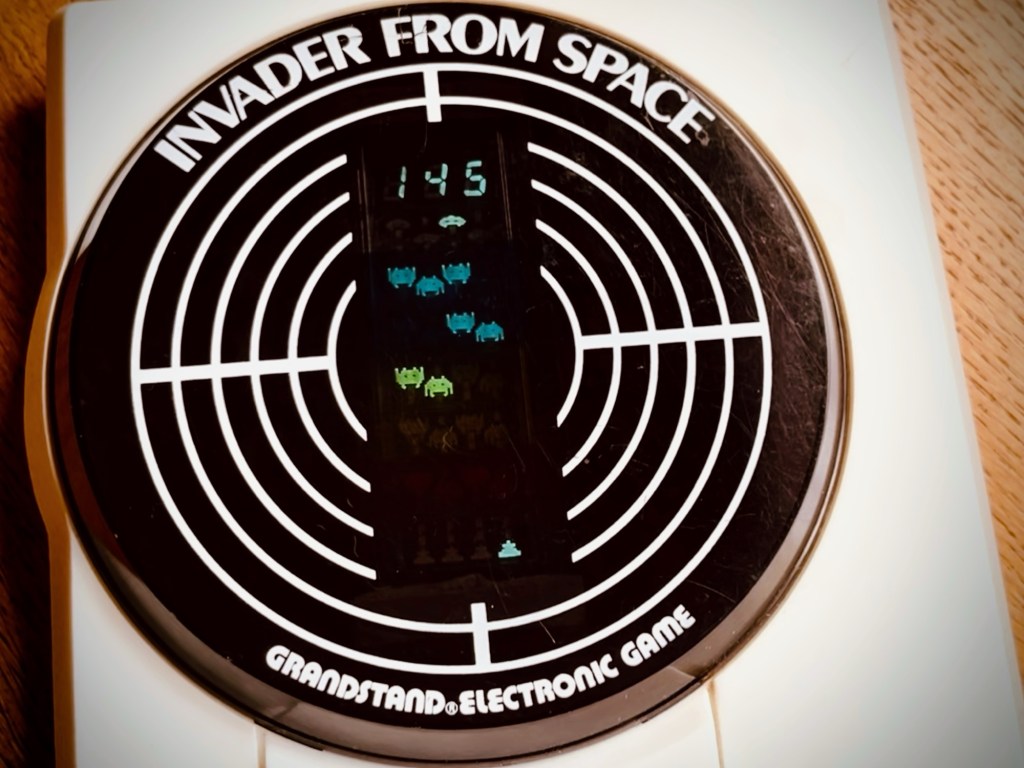
They come one at a time, building into a wave of sixteen, and once you’ve killed the whole wave you start the next, a bit faster. When they’re still in the blue zone, where they begin, they’re worth five points each; if they reach the yellow zone it’s ten points; and in the red zone, which is a single left to right right above your position at the bottom of the screen, they’re worth fifteen points. Bit of a risk waiting for too many of them there though – your fire rate ain’t great! It’s all by design though, and to this day it’s a joy to play! The first difficulty level starts to challenge you a bit before you reach the kill-score (indicated by three sets of three horizontal lines at the top and intact bases across your four lanes of play at the bottom) but by the time you’re seeing that score you should still be completing it without more than one life lost. The second difficulty is pitched just right, playing much faster from the outset, and making it tougher to create gaps in the invaders to hit that UFO, but while you’re going to be losing lives before long, maxing out is just about achievable. Which might also have been the case for the third level forty-plus years ago but I’m struggling after three or four waves nowadays! No denying it’s at its most exhilarating at this speed though – it’s not crazy to begin with but you’re under real pressure straight away, and that red zone is going to be filling up faster than your bullets (or lasers or missiles!) can shoot, quickly making it impossible for you to get out of the corner you’ve suddenly found yourself in!

According to our planned order of events from that leaflet earlier, I think that brings us to the “exciting space sound effects” and I think “exciting” is one way of putting it! It’s just so loud and so obnoxious to boot! Like the gameplay, it’s taken the Space Invaders concept and tried to replicate it as closely as possible within the limitations of a tiny circuit board stuck in a handheld in 1981, so in this case, those iconic, intimidating, melodic thumps as the invaders ominously move across the screen have been replaced by a repetitive, mid-range beep! Then that breathy, none-more-sci-fi firing sound has been replaced by a higher-pitched beep – and I mean higher-pitched! When you die you get a two-note beep, then there’s another set for finishing a wave, selecting a level or starting a game, and a real flourish of beeps when you die! Whatever the pitch or sequence though, it’s mostly going to be more shrill than you ever want to hear, and it’s going to be coming at you at about a hundred decibels! Still, it might be of the time and place but it does what it needs to, adding atmosphere and authenticity because the chances are you weren’t playing it next to the original, and probably had only ever experienced that original a handful of times if you were lucky anyway! There’s really not much to say about the visuals – they’re that cool “new style fluorescent display” type, so they’re tiny but still way more detailed than pixels would ever allow, and with no worries about resolution or frame-rates or anything like that either – just seamlessly changing colours behind a filter you can just about see if you hold it at an angle in the right light, waving their little arms up and down, up and down, and looking just like their source material in one of those positions too!
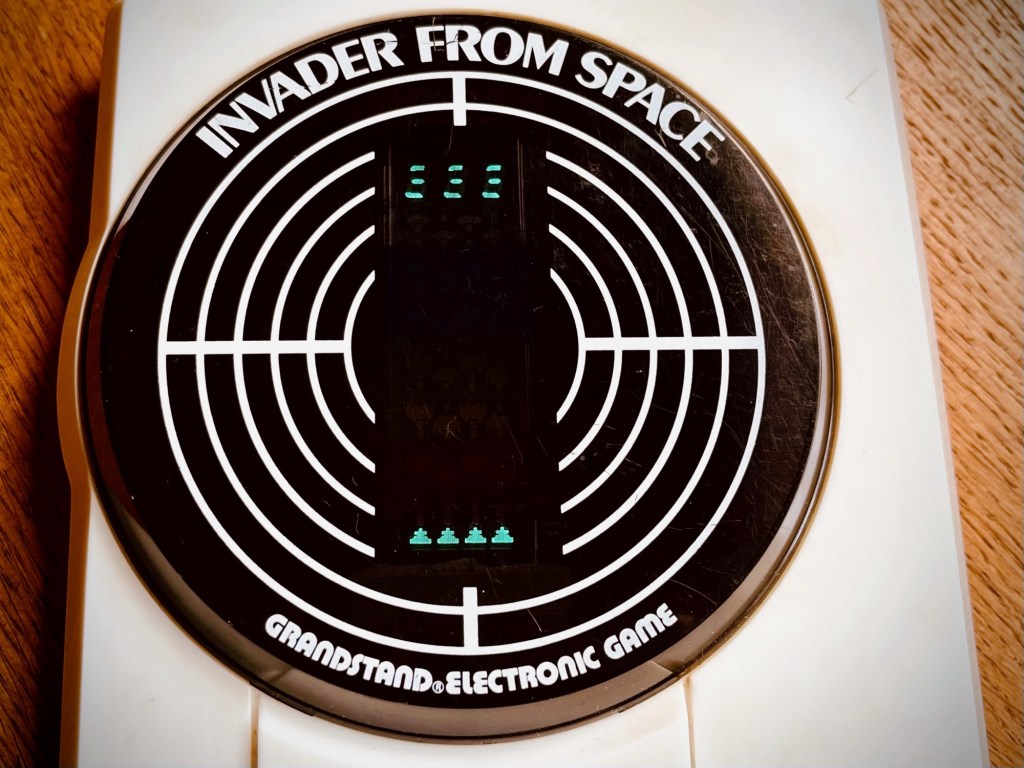
It’s funny, while talking about seeing those colour filters just now – which I honestly don’t remember even noticing before – I’ve also been struggling to get just one decent photo of this thing in action! Always an invader or laser shot or something missing, although no problem capturing every otherwise invisible to the naked eye scratch or speck of dust! Anyway, I then tried to use the Live Photo feature on my phone camera, where it’s taking a burst of shots so I could just choose the one where I’d properly caught most of the action; I assumed it was just flickering, intentionally or otherwise, but it turns out the screen is refreshing from top to bottom, faster than they eye can see (similar to what the Atari 2600 did with stuff like Yar’s Revenge and Asteroids to display loads at once). This means you can capture a frame with the top few lines, or the middle or the bottom, but you’re very lucky to get much of it all at once. Same with recording videos and trying to grab a single frame from them. And that’s the moral of this story – I’ve just broken this game down way more than was ever intended at the time, when all it was trying to do was give a kid a fun Space Invaders experience in their hands, which it certainly did for this kid! My very first video game, if it counts, and if it doesn’t, it was the start of this journey regardless. And all within a just couple of years of its pretty much first-of-a-kind inspiration emerging too, which is miraculous considering where the arcade industry, electronic games industry, home computer industry, video games industry, whatever was at the time, all right at the very beginning. But that meant anything was possible too, unbound by convention of any kind, and there’s no better time to be alive than then!
As always, I’ll never expect anything for what I do here but if you’d like to buy me a Ko-fi and help towards increasingly expensive hosting and storage costs then it will always be really appreciated! And be sure to follow me on Instagram, X (formerly Twitter) or Threads for my latest retro-gaming nonsense!
 Retro Arcadia
I had the red one.
LikeLiked by 2 people
Ermm, Tomytronic 3D. Picture didn’t work.
LikeLiked by 1 person
My brother had the white one. Still works fine but it’s definitely style over substance.
LikeLiked by 1 person
True, true. Luckily, we only had to wait THIRTY years for decent VR headsets to turn up.
LikeLike
Very fond memories of playing this game when my dad got a loan of it from a friend at work. My sister and I had to take it in turns.
I always wanted Scramble but was delighted to get Firefox-F7 back in the day, and the game & watch version of Scramble (which was still great). 🙂
LikeLike
Fantastic! I would love Firefox! Someone brought that into school on a last day of term once. Great game!
LikeLike