
Back again for our regular Sunday roundup of quick-fire reviews and impressions of everything under the spotlight at Retro Arcadia this week, old and new and a bit of both…
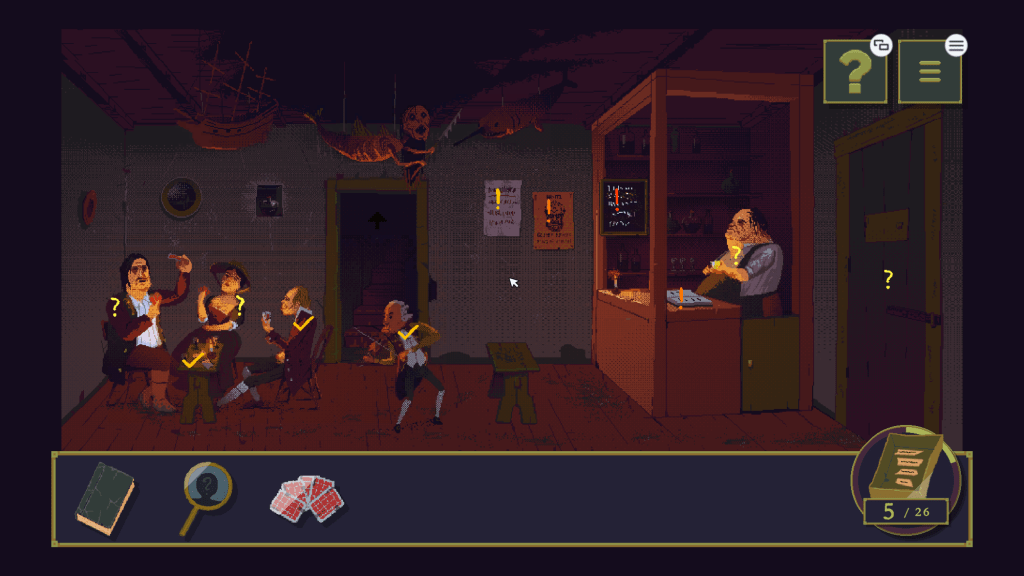
I’ve had a really good time exploring a bunch of new stuff on Xbox Game Pass of late (see previous couple of Weekly Spotlights) but while I think it’s been around on other platforms for a couple of years (disappointingly excluding it from any Game of the Year discussions), I reckon The Case of the Golden Idol is my new pick of the bunch! While it looks like an old point-and-click adventure, and you do indeed point at stuff and click on it, it’s actually a detective-adventure set in the 18th century where you gradually sleuth your way through forty years of inter-connected narrative to piece together crimes, criminals, causes and motives spread across eleven different cases. If you imagine each of these kind of frozen at a point in time just after they happened, then presented in this intentionally primitive hand-drawn art-style, with a cast of characters and objects as they were in what can be multiple, single-screen environments that you navigate with a simple click on a door, and investigate by clicking on what soon becomes a mass of items of interest on each screen. This will then open up further items that could be clues or seemingly red herrings, and investigating these will then populate your notebook and open up other lines of enquiry, each with their own icons at the bottom of the screen to make them easy to track. They’re by no means easy to put together and solve though, but everything you need is there, right in your face somewhere, and the puzzles you need to crack might become expansive and complex but there’s always a logic to them. Some are optional too but I haven’t skipped a single one so far because it’s all so compelling, and likewise the dynamic hint system is there if you need it but I really don’t want it, however long I’ve been stumped by some scenarios or been kept up at night thinking about them. And I’m deliberately avoiding them here or any other real detail because this deserves to be experienced fresh, which I’ve learned you can also do via Netflix if you’ve got that, and I bet it works great on a tablet, but I definitely recommend checking it out wherever you can!
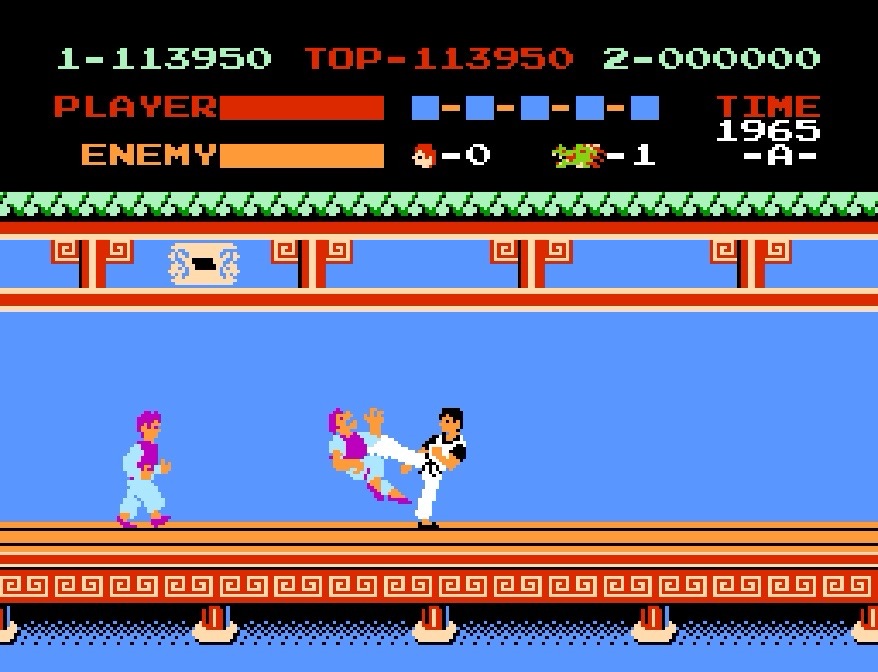
The name might have been tweaked but Kung Fu has still got to be up there with the likes of Contra and (Mike Tyson’s) Punch-Out!! as one of the great arcade conversions on the NES! It arrived in 1985, a year after the original Kung-Fu Master, with pretty much all of its first of a kind, side-scrolling beat ‘em up action intact, sacrificing a bit of the visual impact but making up for it with possibly snappier combat, as well as your character being modelled on Jackie Chan, which I think gave it a first in its own right… It also gave it a slightly less tenuous link to its supposed subject matter, his recent martial arts movie Wheels on Meals (known as Spartan-X in Japan, like all versions of the game), which it was tied-in to, despite clearly being based on Bruce Lee’s Game of Death, and specifically its finale, where Bruce ascends each floor of a pagoda, beating its “boss” before going up to the next until he eventually rescues his girl. And that’s what happens here – five floors filled with a variety of goons, traps and mythical beasts to beat before a unique boss and a set of stairs up to the next. You’ve got an arsenal of punches and kicks to fight back with but timing is key, as the action quickly becomes frantic and they all start appearing in big groups from either side, and likewise the bosses will each have their own attacks – from sticks to fireballs to just being huge – that you need to learn to get in-between and counter. It’s almost as much rhythm action as beat ‘em up, and once you get into its groove and start to learn what’s coming from where (especially on what’s probably the most challenging second floor), it becomes both beatable and a real joy! While the animation here isn’t quite as fluid as the combat, the rest of the original’s iconic presentation is all here, moving smoothly with decent-sized, recognisable sprites, all full of colour and character, as well as crunchy sound effects and that simple but memorable theme tune playing throughout. It’s everything I wanted the disastrous ZX Spectrum port to be at the time but that’s a sad story for another day!
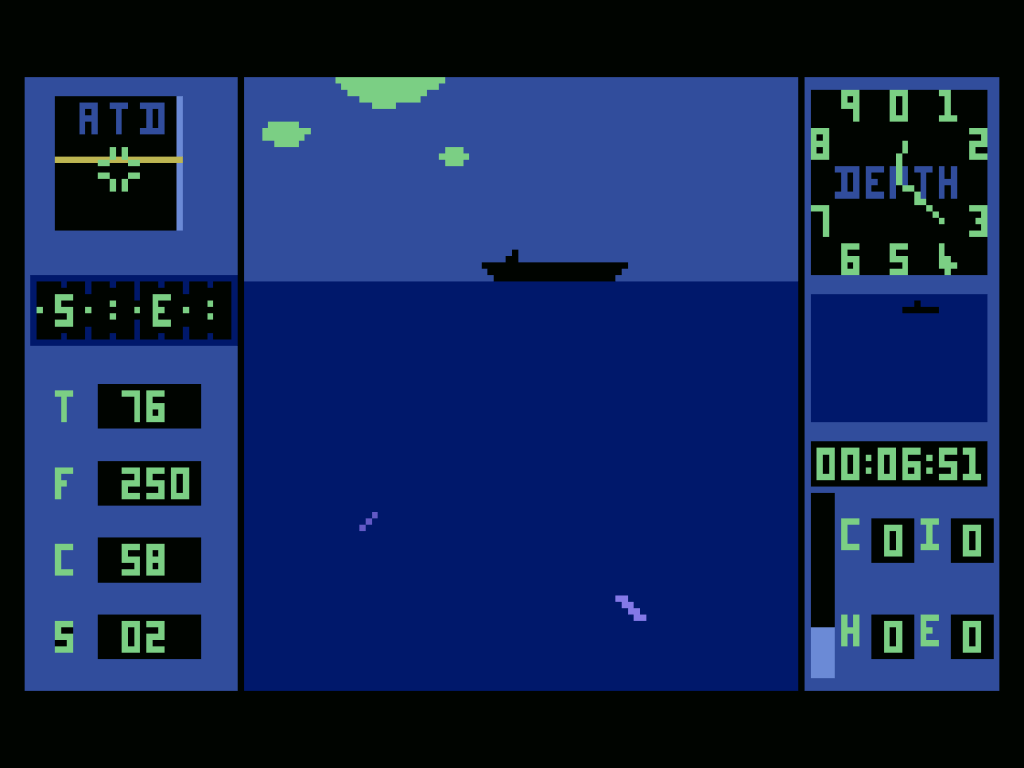
I don’t have the computer to play it on anymore but the 16K VIC-20 version of Submarine Commander is still taking up precious shelf space a couple of feet away from me as I write, such is my love for it! This week I’ve been back to the original 1982 Atari 8-bit version on The 400 Mini (with proper keyboard attached), which in reality is more or less identical to the port from a year later where I’ve spent what is probably getting on for hundreds of hours playing over the years, and to this day, still manages to capture the incredible claustrophobic tension I remember equally well – if you’ve ever seen one of those old war films where a submarine is being depth-charged then you know exactly what I’m talking about! Its atmosphere and sense of place for something from that time, on those machines, is nothing short of incredible, as you travel the Mediterranean, hunting down enemy shipping convoys using a long-range map, using the surface for speed and recharging your batteries before diving as you approach, tracking them with sonar from below, then switching to periscope, launching an attack and disappearing before the destroyer escorts even know what’s hit them. Well, that’s the theory anyway! You’ve got multiple screens with maps, sonar and all your instruments that you can flip between and control with various key commands but the periscope screen is where the action really is and – one way or another – where the hunt will end, showing the view across the sea where you’ll try and pinpoint the enemy convoy, line up your torpedoes and fire them off towards their target, as the depth charges start to fall and you need to dive, dive, dive and get out of there! It’s all pretty simple to look at but, like the sound effects too, that’s all it needs to be, and I can only really think of the remarkable Star Raiders on Atari 8-bit that offers this kind of accessible complexity and, in this case at least, such tension and realism – a true simulation where it had no right to be one!

I think I’ll finish back on the NES with Rad Racer, Square’s high-speed, 3D glasses-supporting racer from 1987 that’s not dissimilar to Out Run but does enough of its own thing very well to get away with it! The game has you driving from coast to coast across America, split into eight stages that you race against the clock to reach the checkpoint at the end of each, which does admittedly sound very familiar but unlike Out Run, you do get a bit of a second chance here because even when the timer hits zero, you’ve still got to come to a stop before the game ends, resulting in some nail-biting situations where you got really close and might still just about roll over the line if you’re lucky! You do have plenty of fellow racers driving like idiots to worry about too, although no regular traffic which would have added a bit more variety, but you do get a choice of a Ferrari or some kind of F1-type car to choose from, which doesn’t seem to make any difference to the pleasantly twitchy with just about enough friction where it matters gameplay. It’s really tough though, with some stages pretty much demanding perfection while maintaining what can seem like an unrealistic speed. They can look great too, especially the ones with lit-up city skylines like Las Vegas’ at night, while the more “generic” desert or mountainous stages are complemented by some cool skies or different weather to look at and keep them interesting. There’s not much going on in the foreground, with cars detailed enough and the odd bit of animation, while lampposts and the like maintain an impressive sense of speed at the side. Does flicker a bit, and the sound effects can get overly shrill but they’re alright on the whole, as is the music, without ever getting close to Magical Sound Shower. Derivative as it is though, it is a fun racer, and I think maybe one of the best on the system to boot.
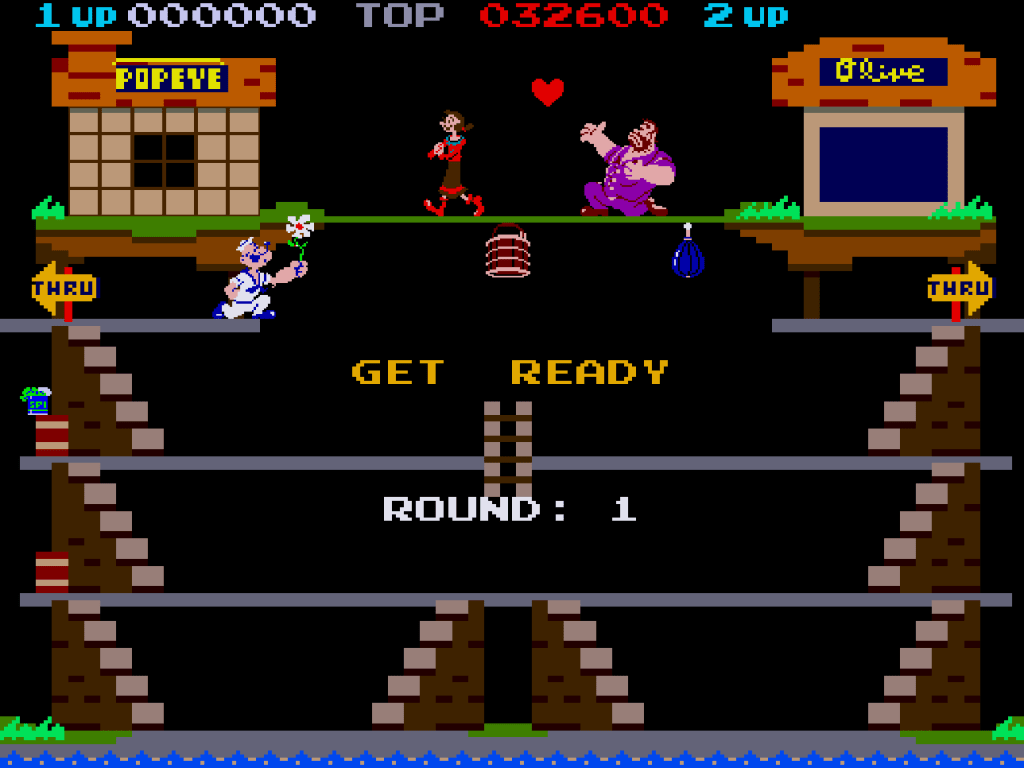
I am still playing Metal Gear Solid on the PlayStation Classic Mini, and Octopath Traveller on Xbox Game Pass, and I’m still quite taken with both of them but I’ve gone long as usual so I’ll finish there. In case you missed it last Wednesday though, do check out an all-new top ten feature, and one I’ve enjoyed putting together so much… This time it’s the next in an ongoing series, counting down my favourite fixed, single-screen shoot ‘em ups! Then next Wednesday, be sure to check back again for a deep-dive into Nintendo’s Popeye arcade machine from 1982, as well as its very cool Atari 2600 conversion, and a look back at the man himself! And in case you spotted my original scheduling mistake here last week, I promise it’s definitely coming this time! See you then!
As always, I’ll never expect anything for what I do here but if you’d like to buy me a Ko-fi and help towards increasingly expensive hosting and storage costs then it will always be really appreciated! And be sure to follow me on Instagram, X (formerly Twitter) or Threads for my latest retro-gaming nonsense!
 Retro Arcadia
Kung Fu Master is a true classic. I’ve played it through the years, from multiple fairgrounds in the 80’s to current day Mame.
LikeLiked by 1 person
Definitely! I didn’t get to play many arcade games as a kid but this was one I did and I still love it. I’m actually writing a new in-depth feature on the original at the moment which is how I got to playing the NES one this week.
LikeLiked by 1 person