
These top ten things I sometimes do tend to evolve over time – I’ll have an idea for a subject I want to look at, and I’ll stick it in my phone’s notes app with any initial ideas, and I might even schedule its publication at some point in the future, or at least stick it in my big list of planned features, and I’ll keep coming back and messing around with it until it’s sorted itself out. In the case of this one though, it’s now been stewing for over three years as I write, and became a bit of a beast that I’ve just had a very enjoyable time trying to wrangle into a ten-screen countdown, from a shortlist that exceeded fifty by the time I finally got to it! Back in 2021, it was originally going to be a top ten favourite loading screens on any platform but it soon became apparent that was a bit of an ask, so it got split into an ZX Spectrum top ten, then a Commodore 64 top ten, and now this Atari ST version, which reflects where my initial shortlist was most focussed, those being where most of the games I’d played during the heyday of the loading screen had been… The BBC B did have one entry too, and although I’m now concluding the other three, never say never, but as compensation, that game – Repton 3 – did already get its own deep-dive!
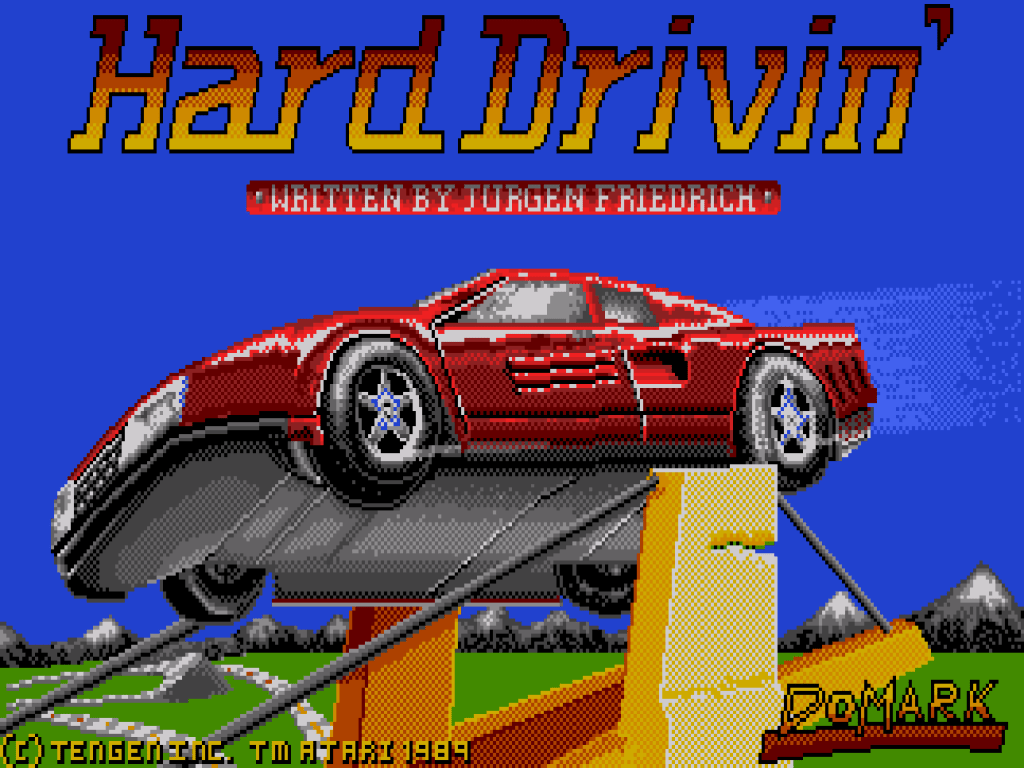
Right, I think that brings us up to date so let’s move on to the Atari ST! This top ten is particularly exciting for me because I’m still of the opinion that there’s never been a greater generational leap as the one from 8- to 16-bit. And I don’t think I’ve ever been as blown away as I was the first time I saw the sheer realism of Defender of the Crown or the arcade quality of Xenon on a friend’s machine back in 1988. From that moment onwards, I was working all the hours my Saturday-and-a-bit job would allow, saving up for one of my own, which came a few months later. And to this day, that machine sits plugged in about 20cm from where my hands are typing these words right now, although I should mention I grabbed the screenshots you’re about to see using the Hatari emulator on PC. That said, after I finalised the list I did realise I actually own all the games in the top ten, although that didn’t have any bearing at all on coming up with those games, and once we’ve been through them and I get on to a gallery of honorable mentions, I probably own no more than half of those at most. And with that, let’s start the countdown. The format is a quick history and my thoughts on each game, with a look at it in action, then we’ll move on to the loading screen itself and why it’s one of my favourites, starting with…
10. Starglider 2
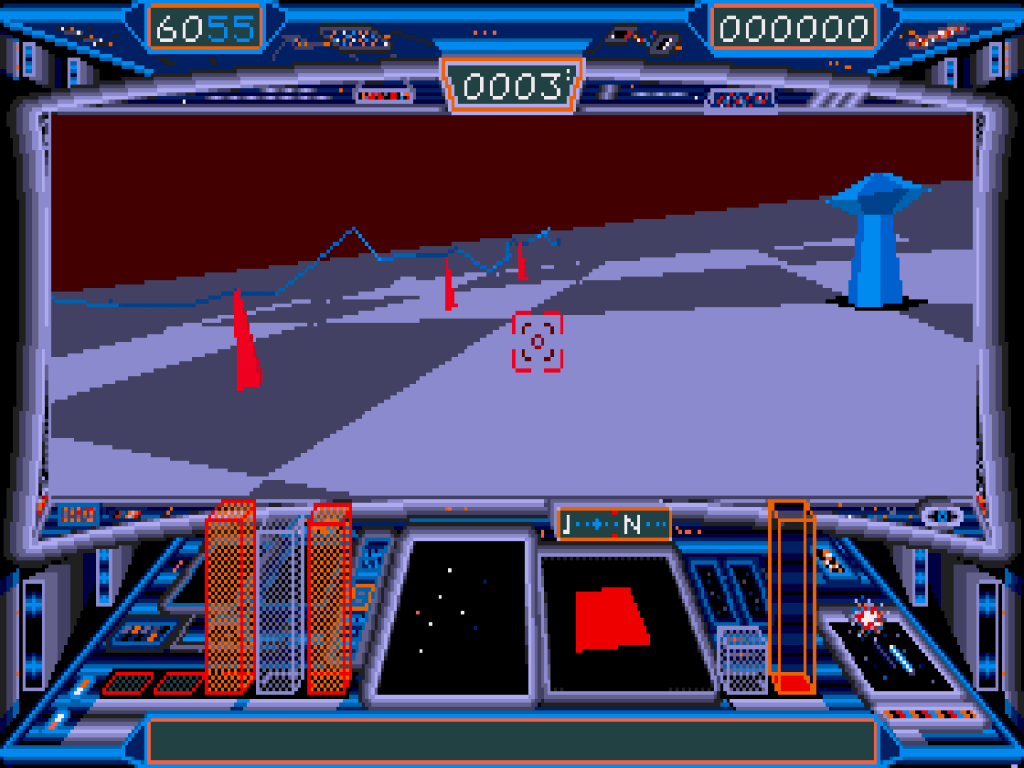
What a game! I’ve already mentioned 16-bit realism and arcade quality but how about chucking all that 3D around with this kind of speed and smoothness as well! And unlike the wireframe wonders of the original, this 1988 masterpiece from Argonaut Software and Rainbird even filled in all the 3D shapes with solid, shaded colour, just like real life! It also did a very good impression of a seamless, open-galaxy to explore as you travelled through space, descended onto planets and explored them for bits to make a bomb to blow up an enemy space station before they finished building it. It’s way less Star Wars than I’ve suddenly made it sound, and there’s space pirates and asteroids and you can even go below the surface in some places. Incredible depth all round then, but still had a nice arcade feel and is still a very impressive and very immersive good time.
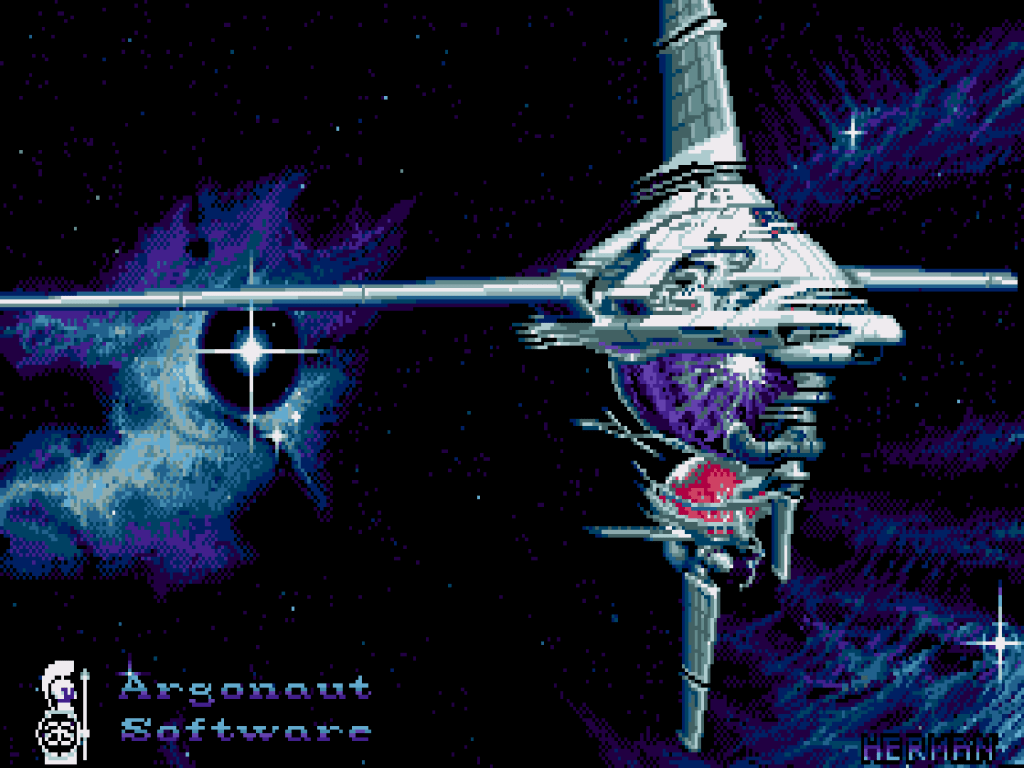
Not being able to put it down for the best part of a week while I was putting this thing together delayed it even further too, so before I allow it to distract me all over again, let’s take a look at the real reason it’s here! The loading screen simply oozes class, with your mysteriously part-organic but totally sci-fi spaceship set against this exotic intergalactic star-field that’s just begging the disk drive to get a move on so you can start exploring it! The colours are limited but supremely atmospheric, and really let the energetic textures on the ship itself shine. The pictures of Spellbound Dizzy and Hard Drivin’ you’ve already seen put up a proper fight for this slot but I’m glad I got to talk about this one after all!
9. Overlander

I was recently talking about RoadBlasters as I write, and how I’ve never been particularly fond of it, although I did say it might be down to the combat-racing genre as a whole rather than anything particularly wrong with that game. And then I remembered Overlander! By the way, if future-me remembers, I’ll come back and plug in a link to an upcoming deep-dive I’ve got pencilled-in for this fairly soon! Anyway, fantastic example of the genre by Elite in 1988, where the year is 2025 and the whole planet resembles Death Valley because aerosols – no doubt from all that hairspray back in 1988 – have destroyed the ozone layer and left the Earth’s surface uninhabitable, so everyone moved underground. And this is where the Overlanders come in, transporting goods for big money between these subterranean cities, where there’s more than just a bit of sunburn to worry about as rival gangs try to get their hands on your cargo. It’s fast-paced, super smooth and even more stylish, with some gorgeous post-apocalyptic visuals and stomach-churning courses, which admittedly do compensate for pretty repetitive gameplay. Fun while it lasts though!

I’m not sure it’s the greatest illustration of a homemade, souped-up armoured car from the future ever but just look at those perfectly chosen colours, and just look at that lighting! Forget ray-tracing, this is the power of the 16-bit machine in action, with some really stunning reflections and shadows, not least underneath the car itself. It’s funny, as I write I’ve just finished a walking sim called Return to Grace on Xbox, which has a real sixties, retro-futurism, sci-fi vibe, and this reminds me of that but through late-eighties, Miami Vice eyes, with those decadent, single-shaded reds and blues evolving a definite, period neon spirit. As does that Overlander signage at the top, with colour graduation that really can’t escape its own time, although I don’t think the Elite logo ever looked better than its flamboyantly understated imprint across the bottom! Altogether, as cool as Don Johnson!
8. Elite
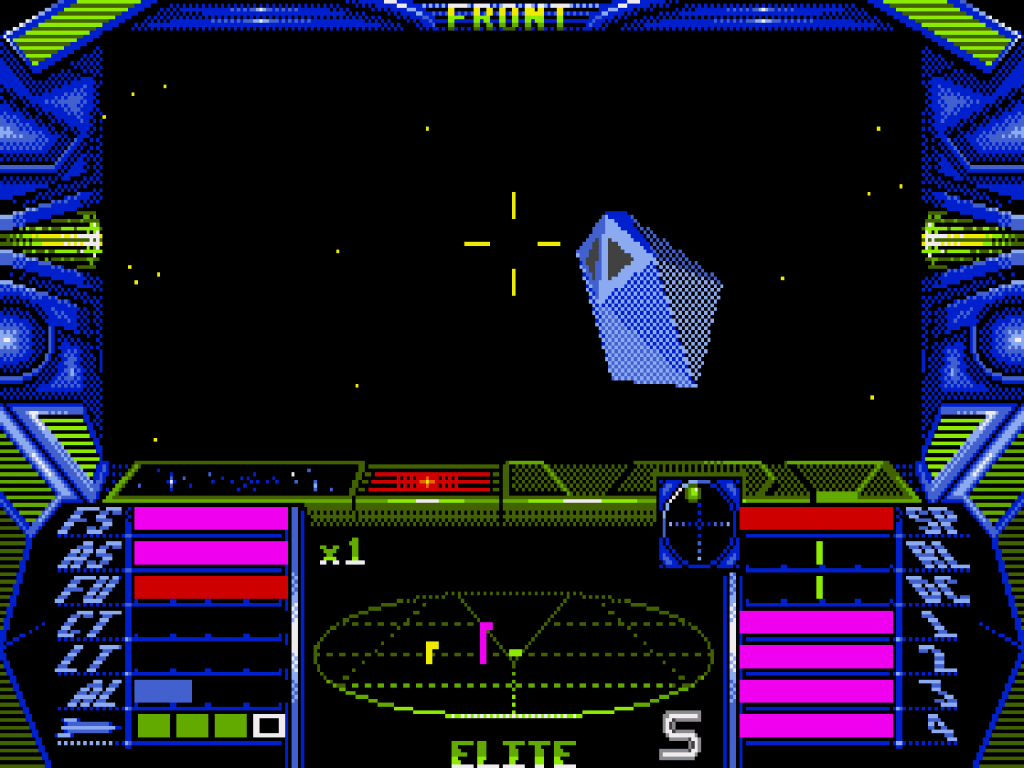
The version of the game that rounds out my top ten favourite games of all time finds itself a couple of places higher in this list! I’d spent many an hour watching a friend play Elite on the BBC, so while the scale had already made an impact, the new, filled-in 3D polygons were something else entirely, removing the need for your imagination to fill in any gaps and allowing you to focus on paving your own way across the infinite beyond! Whichever version of David Braben’s pioneering masterpiece you know best though, it’s unquestionably one of video games history’s greats, with this one arriving in 1988 and sticking to the established, almost entirely freeform space exploration, trading and combat formula as you travelled the stars, surviving, upgrading and amassing more wealth to eventually become Elite. It’s as intimidating as it is beautiful, but the incredible immersion will soon suck you in and then it might be a very long time before you leave again… Decades, in fact!

Not unlike Overlander, this is one of those loading screens that probably represents exactly how the developer started out wanting the game itself to look, and in this case at least, is probably also how it still looks in my mind! Either way, it conveys what you’re about to experience very nicely, with hostile worlds and possibly hostile but certainly mysterious fellow travellers holding the promise of reaching that fabled Elite status, front and centre in the game’s logo, which, like the company rather than the game Elite’s just now, has never looked better! Takes full advantage of new levels of resolution and colour too, also hinting at the new-found polish you’re about to discover, and that applies across the rest of the screen, with so much life and energy and sheer wonder. Just like the game itself!
7. Flying Shark

It might be slightly toned down but you really couldn’t ask for much more of this 1988 conversion of the Taito arcade machine from the previous year! It’s a military-themed, vertically-scrolling shoot ‘em up, developed by Toaplan and, I reckon, close to their pinnacle in the genre, with your lowly biplane up against swarms of enemy aircraft, tanks, ships, cannons and some big, bad bosses, as you cross tropical jungles, villages, sands and high seas, you against the world! There are power-ups along the way to turn your initially weedy shot into something faster and more formidable, and bombs too, for when things get a bit frantic, although it’s nowhere near as frantic as the original, which actually makes it a bit more friendly to my red-green colourblind eyes than that was! It all moves well enough too, with detailed, colourful environments and a lovely bit of music on top, which combine to make this probably my preferred way to play Flying Shark, and definitely one of my favourite Atari ST arcade conversions.

To let you behind the curtain, this was the loading screen I was looking at all that time ago when I decided to make the multi-platform top ten list that evolved into what you’re reading today! You might quite rightly look at the screens above this one and further below, and question both its comparative technical or artistic merit but I’ve always just really loved it! I think it’s something to do with the blue – that plane could have been any colour under the sun but no, despite the sky and the river also being multiple shades of blue, we’ve now got more than enough of them to throw a load more at the main feature too! And it’s got so much character, with that snarling cartoon face painted onto its nose, in total defiance of the far less whimsical dangers approaching from top-right. Admittedly, the rest could have come straight off a Commodore 64, and those mountains in the distance might even be doing that machine a disservice, but there’s a dynamism to the image as a whole that surpasses what’s going on (or not) across individual pixels, and as said, I just love it, so there!
6. Nebulus
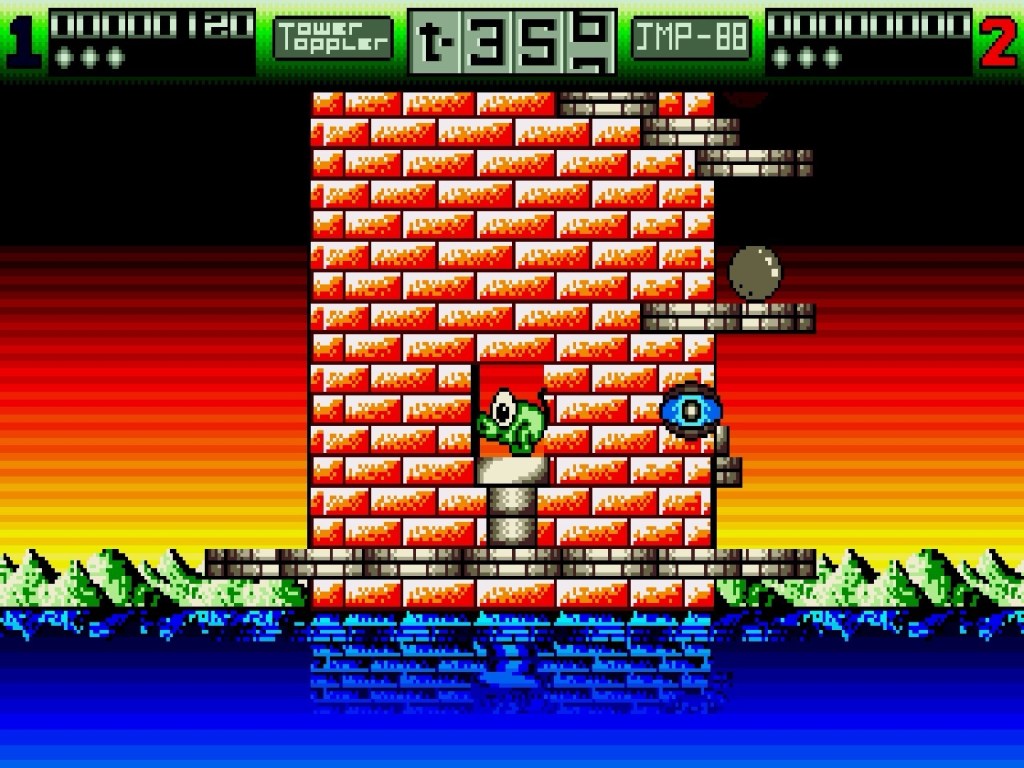
As unqualified as I might be to say so, I’ve always thought Nebulus was one of the most technically impressive games I ever owned on the ZX Spectrum. Likewise the Commodore 64 version when I got to that, which is probably now the one I’ve played the most. And that was still the case when I, er, picked up a copy on Atari ST! One of the best-looking games on any system it’s ever appeared on too. Not to mention one of the hardest! It’s a wonderfully infuriating and hopelessly addictive platformer by Hewson in 1987, where your little green frog thing has to make his way up a series of treacherous towers in the middle of the sea, planting a bomb at the top of each to collapse it into the water before getting into his submarine for a quick horizontal shoot ‘em up to the next one. You’ll need to negotiate stairs, elevators and all sorts of hazards on the way up, as the tower rotates clockwise and anti-clockwise while you move left or right, or even through the middle of it to the other side. The sense of depth this creates is incredible, and until the SNES came along with its wild Mode 7 effects, Nebulus was a real showcase wherever you played. This version was probably where it’s incredible pixel art came to life the most though, with gorgeous textures and lighting, as well as reflections in the water… Which you’ll be seeing a lot of, every time you’re knocked back down to the start again!
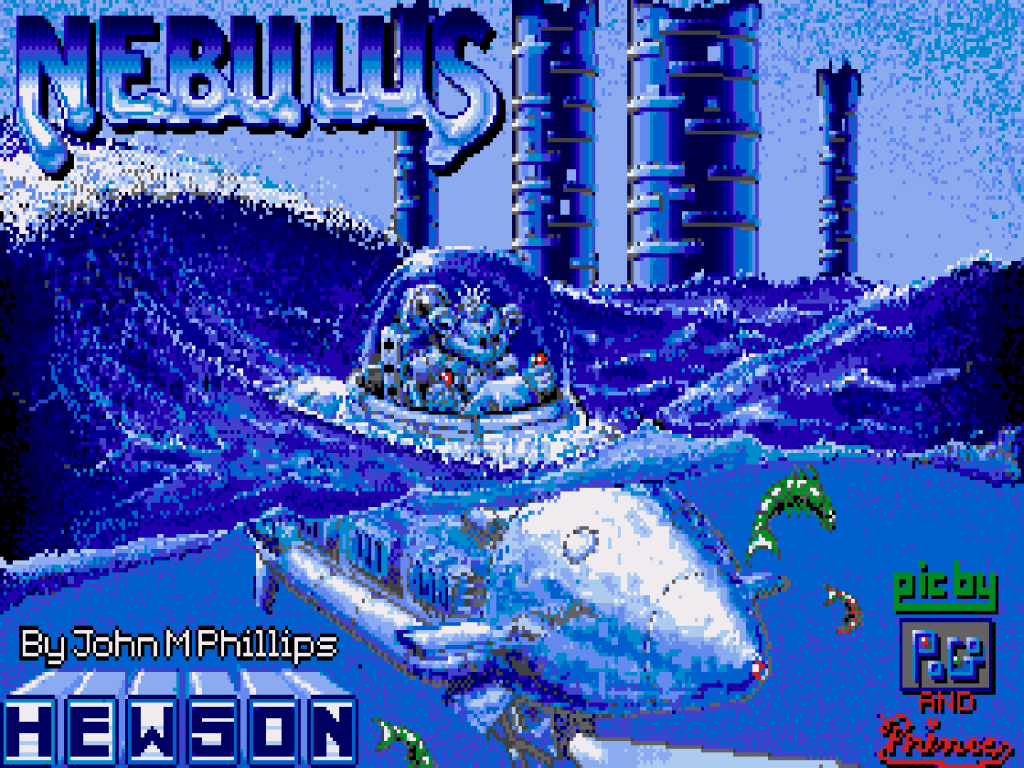
If you thought Flying Shark went heavy on the shades of blue, then check out this one – it’s like a whole rainbow of the stuff! It also absolutely nails the gameplay you’re waiting to get into, with a sense of fun overriding the treacherous waves and those impossible, monumental towers you’ll need to negotiate, while there is relative serenity below, if you can get that far! But that look on your disturbingly detailed little frog guy’s expressive face also looks totally in control inside his cool, domed and equally detailed submersible, and that also perfectly reflects the gameplay, where, like an old arcade game also involving a frog, you might be dying all the time, but the dying is always down to you! Lovely wet feel to the water too, with those waves looking menacingly realistic and relentless. I know it’s a necessary evil but I’d love to see this one without all the text and logos; it deserves to stand alone!
5. BattleTech: The Crescent Hawk’s Inception
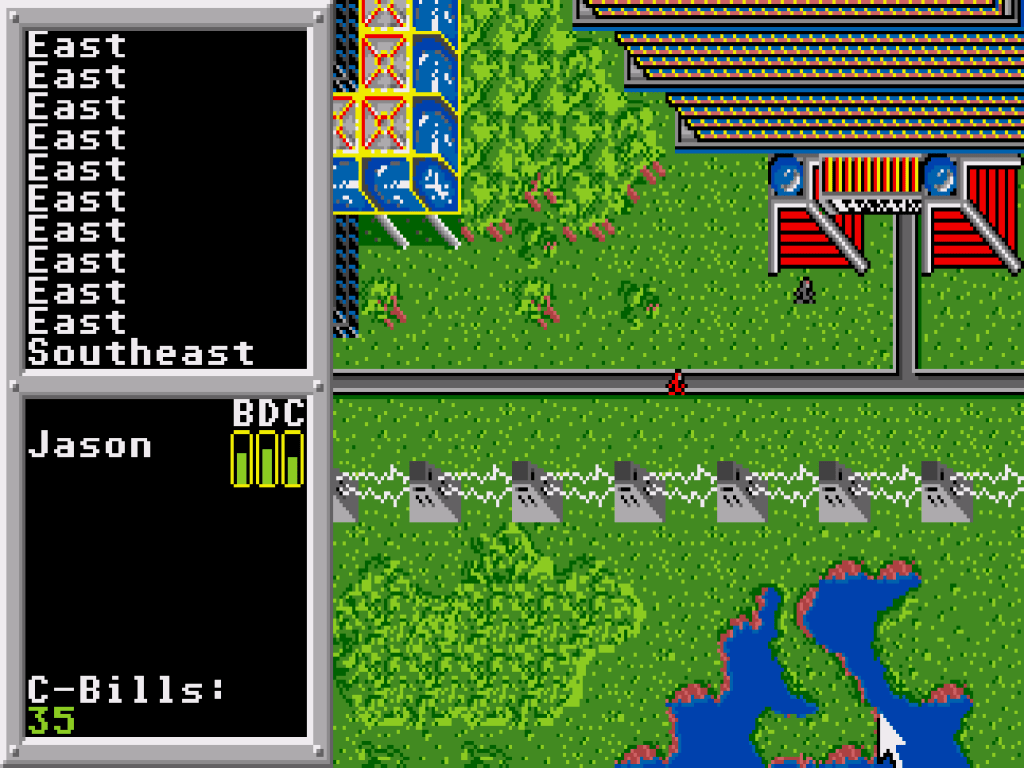
While my Atari ST kept up the good fight long after the original PlayStation arrived in 1995 (mainly for multiplayer Kick Off), it eventually succumbed to my parents’ loft, where it stayed until I finally had room for that and everything else still dumped in there around 2017. And during that time, I frequently failed to remember the name of the mech game I used to enjoy on there that was vaguely top-down but that was all I could remember! Fortunately, opening up some old floppy disk boxes as soon as I could soon revealed it to be BattleTech from Infocom in 1988, based on a sci-fi tabletop wargame from 1984 that I think would go on to spawn loads of video games, board games, card games, novels and a cartoon. This game is a kind of turn-based RPG, although it’s a while before you start doing regular RPG stuff like creating parties and going on quests, which does maybe make it more accessible to the newcomer, for better or worse. Better for me though, and 31st century trainee mech-warrior business soon picks up when you’re forced out into the world as the (text-heavy) story and some nice little static cutscenes illustrate your various encounters, including lots of pleasantly tactile big mechs fighting stuff! Really nice presentation too, and while it’s a bit niche, it’s a niche I like spending time in now I’ve found it again! By the way, I am planning a deep-dive into this one as well sometime soon.
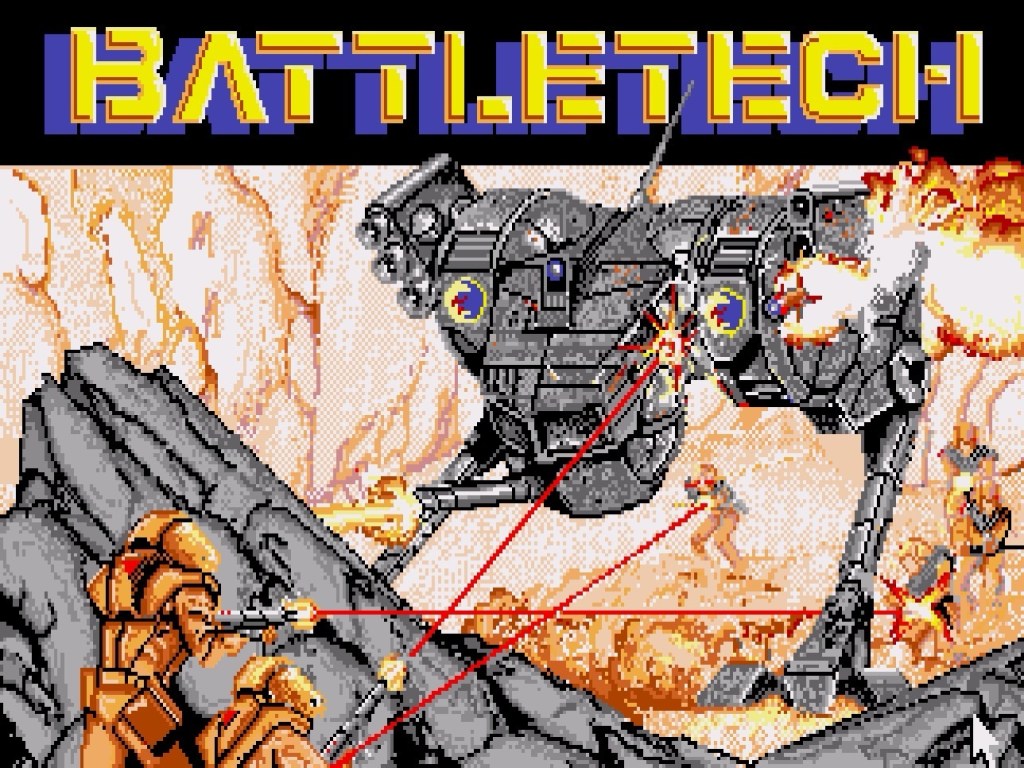
One of the things I always looked out for with 16-bit loading screens is how closely they could replicate what was on the box, when they decided such a thing was appropriate. I don’t know that it was any indication of the quality of the game itself but it was still a bit of a novelty to see this relative photo-realism afforded by all those colourful new pixels! All the same, the box art for BattleTech was proper science-fiction book cover (or generic eighties action movie!) fodder, with lasers and missiles and explosions everywhere as this huge, battle-worn mech lumbered through the puny human resistance in some rocky space valley… Not the easiest thing to translate to 320×200 pixels! They’ve done a fine job though, and it really stands out as a uniquely-styled piece of Atari ST art, impressively capturing the feel of the original image as well as most of its key details and evocative textures. Love the way it subtly incorporates the starkly contrasting title too. Some real passion behind this one!
4. Advanced Dungeons & Dragons: Hillsfar
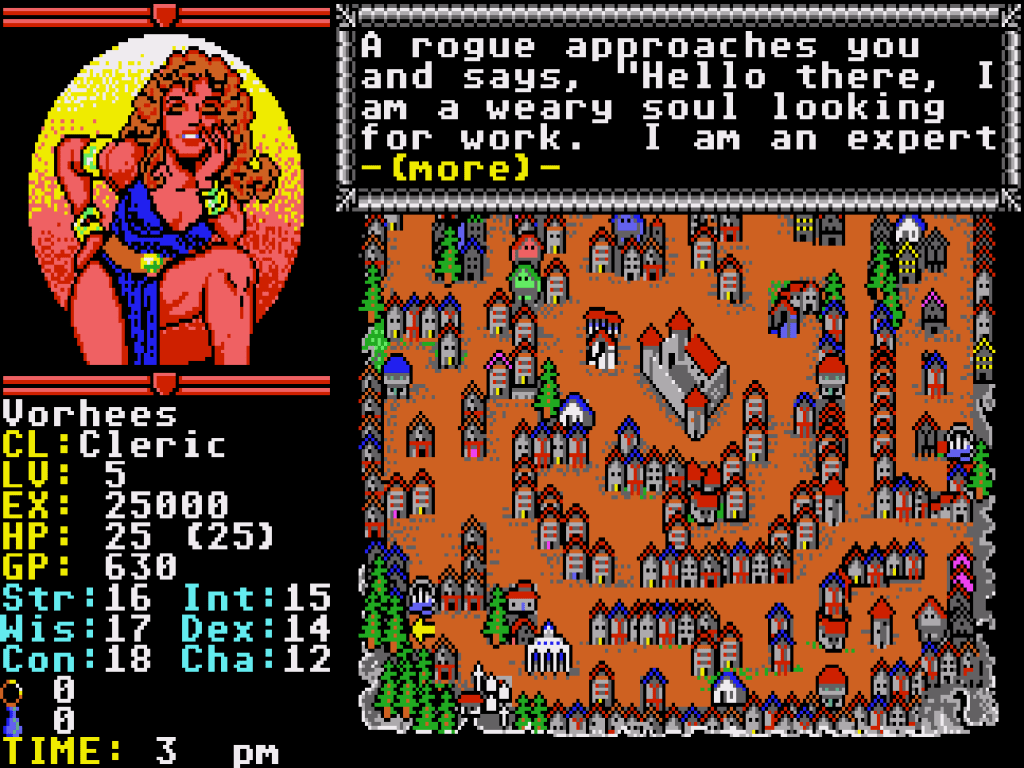
As you can imagine, I’ve had loads of fun messing around with these games while I’ve been scribbling notes and grabbing screenshots, but in the case of Hillsfar, I was already in the middle of a game when I started… Not that it wouldn’t have been here anyway but I’ll come back to that! In the meantime, it’s proper official nerd stuff from Strategic Simulations in 1989, and follows on from its possibly better-known AD&D predecessor, Pool of Radiance. Wasn’t so much a sequel as a side-quest though, tiding you over until Curse of the Azure Bonds came along. Either way, it’s a role-playing game set in the high fantasy of Forgotten Realms, where you create a character from various races and classes, which in turn open up a series of unique quests played out in over-world and location-based map views, side-scrolling travelling views (where you get to ride a horse against the backdrop of a lovely pixel-art forest), then there’s a top-down dungeon view for your storyline or treasure-hunting business inside specific locations. It’s pretty much open-world but progress is guided by a series of quest-related missions, occasionally interrupted by random encounters or locations of interest, and you’ve got all the usual stats and dice-roll interactions, plus a bit of simple projectile and hand-to-hand combat, and while maybe not as deep as the other three games that eventually completed the rest of the series, it’s just right for an AD&D dabbler like me to aimlessly grind away in to my heart’s content!

I once tried to create an RPG using the Atari ST game-maker’s programming language STOS, and actually got pretty far, albeit never as far as a loading screen. I’ve always thought this is what it might have looked like though, which is partially why I’m so fond of it, but I also think it just oozes 16-bit pixel art as an art style – the kind you see in all those modern-retro games today! There’s also an element of the magic of exploration I’ve always enjoyed about Dungeons & Dragons, where there’s a cue for your imagination at every turn, and there are few better ones than emerging from an enchanted forest to be confronted by the wonders of a grand castle, with the mysteries of the sea and the mountains inevitably waiting beyond! I know in many ways it’s another case of not much more than 8-bit… Would any of those buildings look out of place on a Spectrum??? But then look at the leaves on those trees, and the flowering weeds in the grass, and the detail in those folky bundles of straw and berries up-front! Forget clerics and goblins and geeks calling themselves Dungeon Master – this screen is every reason I enjoy this game so much!
3. Onslaught
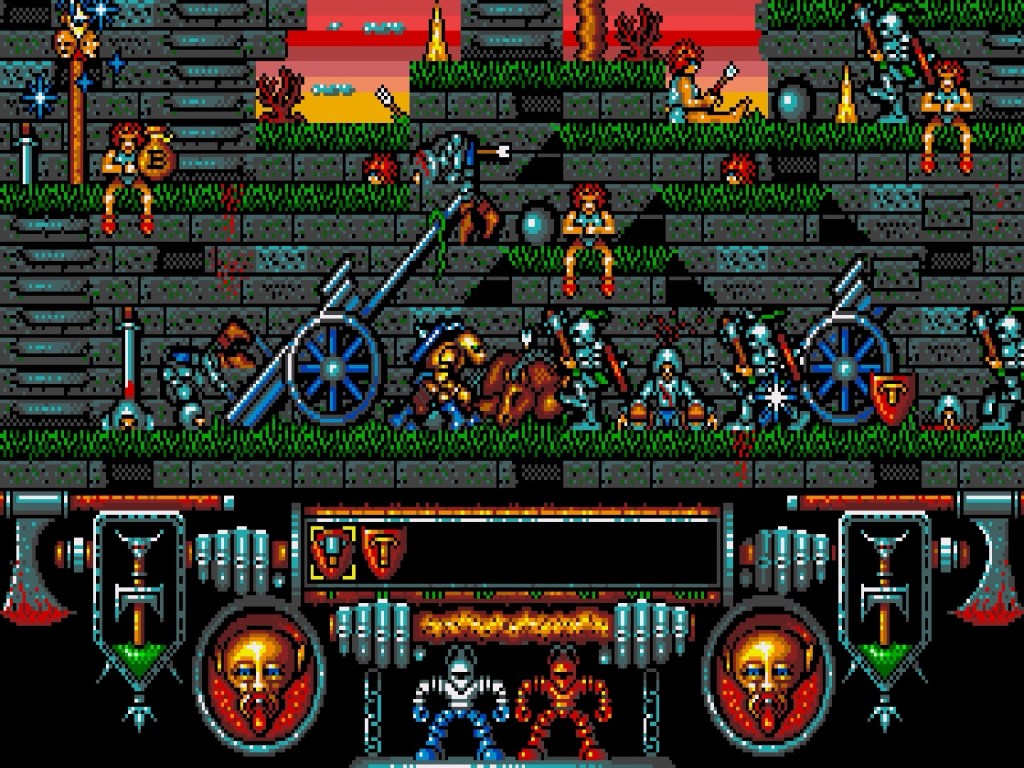
We were talking best-looking games on the system with Nebulus earlier, and here’s another game that’s also in with a shout… Choosing favourite loading screens is one thing but it took almost as long to choose a screenshot to simply set the scene here! Just a shame the gameplay doesn’t quite live up to the presentation! It’s a sort of medieval tactical action-adventure where you play a super-soldier trying to bring peace to a world full of warring cults, mostly by killing them all! Select a target territory, side-scroll your way through an impressive array of enemies to reach a castle, take down everyone in that, then have a boss fight. If it played like Metal Slug, that would be fine, but it wants to be all strategic at the same time, with controls that are too clever for their own good, and it’s really hard to boot, with the main reward for persevering just loads more of the same. It’s drop-dead gorgeous though, and in mindless short bursts there’s some fun to be had from the total chaos, but try as I might over the years, I’ve never been able to get much more out of it than that. By the way, for a real masochistic treat, have a look at the Mega Drive or Genesis version – looks like crap and properly stinks to play!

The gameplay might be an acquired taste but the loading screen is beautiful! It’s right out of the eighties, proper straight-to-video Conan the Barbarian knock-off stuff… Which reminds me, if there weren’t already two other games called Barbarian on the Atari ST, there’s no way this wouldn’t have been too! Onslaught works as name too though, just like its grimly metallic title hanging above this vista of particularly evil looking knights on horses, no doubt ready to burn down some village and kill everyone except a single child who’ll then grow up to be an expert swords-person, out for vengeance with a rag-tag party of ne’er do-wells, and dressed in no more than a couple of little bits of carefully placed fur! Anyway, careless as they might be, they look great, full of motion as well as menace, as their hooves kick up a sandstorm out of the sunburnt desert floor, while the sky itself burns behind the mountains, all with these rich, atmospheric orange hues that also serve to set off this black, er, onslaught!
2. Last Ninja 2: Back With a Vengeance
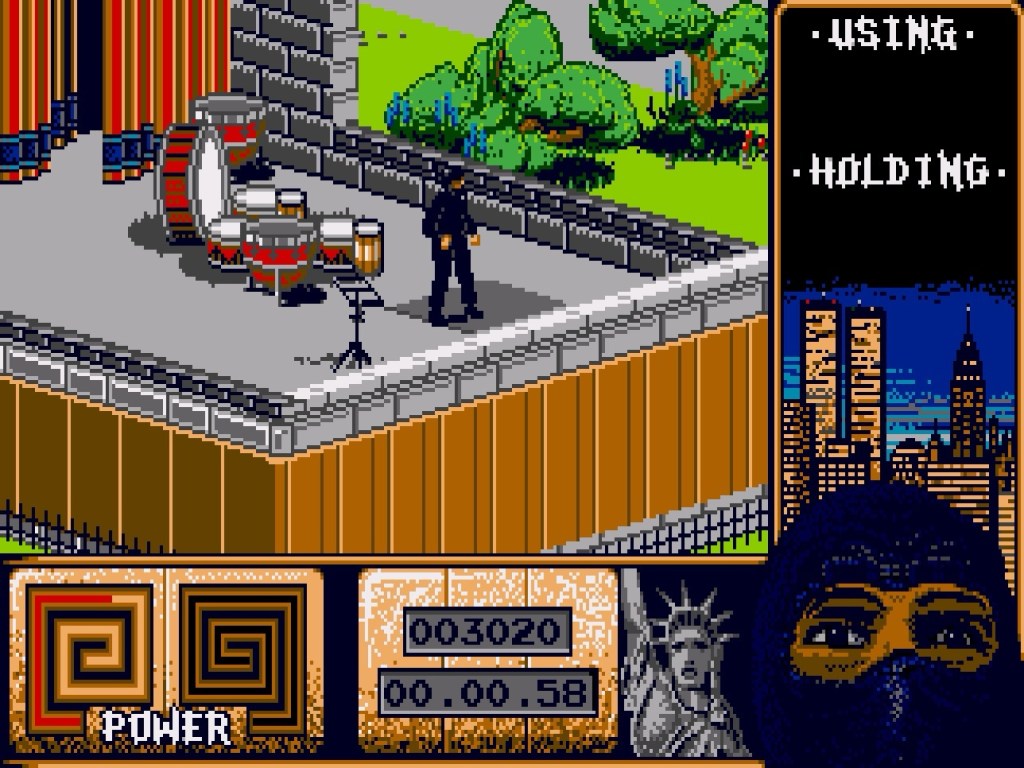
As with the first Last Ninja, this Atari ST version of the sequel looks exactly how I remember the Commodore 64 original looking! Will never sound like it though… Anyway, unlike the first game, this one did get a proper Atari ST release, in 1990, which was two years after it first appeared on the 8-bit machines, where it was pretty much hailed as a masterpiece across the board. That said, I owned a Spectrum, and this was one of those games that just wasn’t the same on there, so while I generally wasn’t keen on these remasters of 8-bit games when there was a whole new world of 16-bit fun to be had, I made an exception with this one! It’s another isometric ninja-adventure, and this time you’ve been mysteriously transported across the centuries to modern day New York, where The Evil Shogun you defeated in the original game is back and up to no good again, so you need to fight your way through his minions and find various items and work out how to use them in different locations around the city to take him down. It looks and sounds as well as it plays, although I’ll always prefer the original Feudal Japan setting, and there is no escaping it’s an 8-bit game in a more or less 16-bit skin.
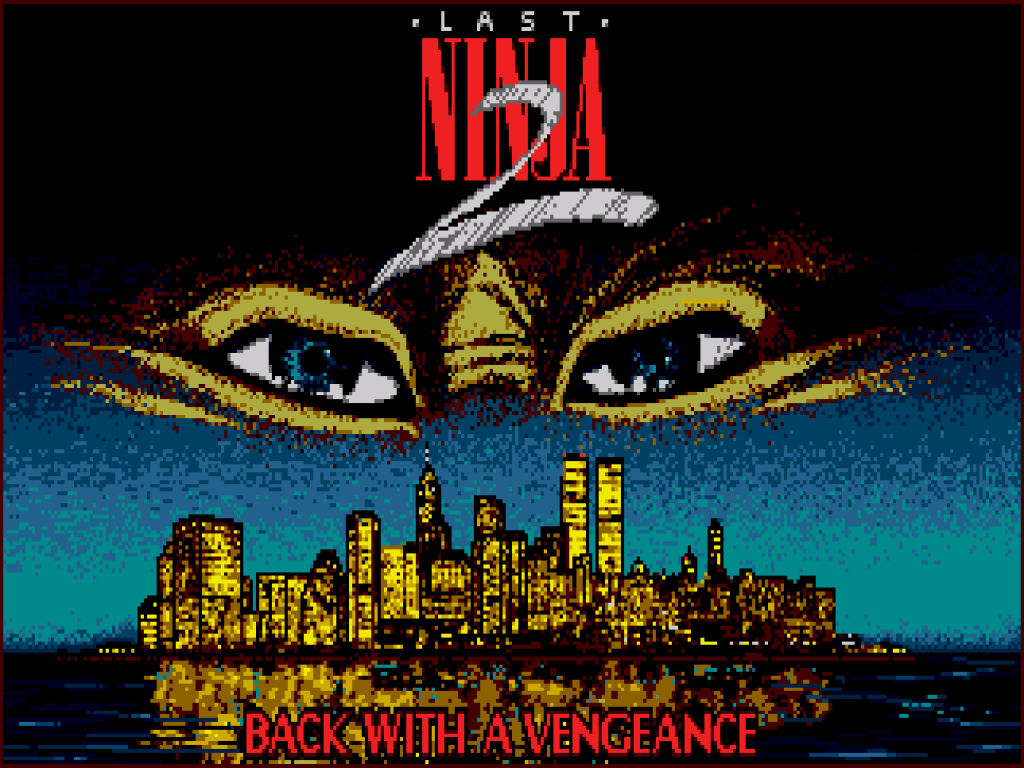
Old-hat or not, you’ve got to love a ninja, and there’s no way you’d get that kind of fidelity out of an illuminated Manhattan skyline on a crappy C64! Joking aside, much like Onslaught, I think I’m so fond of this one because it reminds me of those dreadfully brilliant straight-to-video eighties ninja movies like City Ninja, The Ninja Master and Nine Deaths of the Ninja that made American Ninja look like a block-busting masterpiece (although its sequels probably also qualify)! Obviously, you can only ever see a ninja’s eyes, so as usual they’re front and centre here, and on close examination are probably the weakest part of the image, but like the updated logo above them, they do carry over from The Last Ninja, successfully providing continuity if nothing else. They’re not to be taken standalone though, and couldn’t be a better fit, blending into the hazy night sky above the darkened waters that beautifully reflect the over-saturated lighting from that iconic New York silhouette. My aforementioned colourblindness does leave me without much of an opinion about the Die Hard-inspired tagline at the bottom, but as we’ve already seen, this image is more than the sum of its parts anyway, and I’d have gladly had it on my bedroom wall as a teenager… Which maybe I did!
1. Escape From the Planet of the Robot Monsters
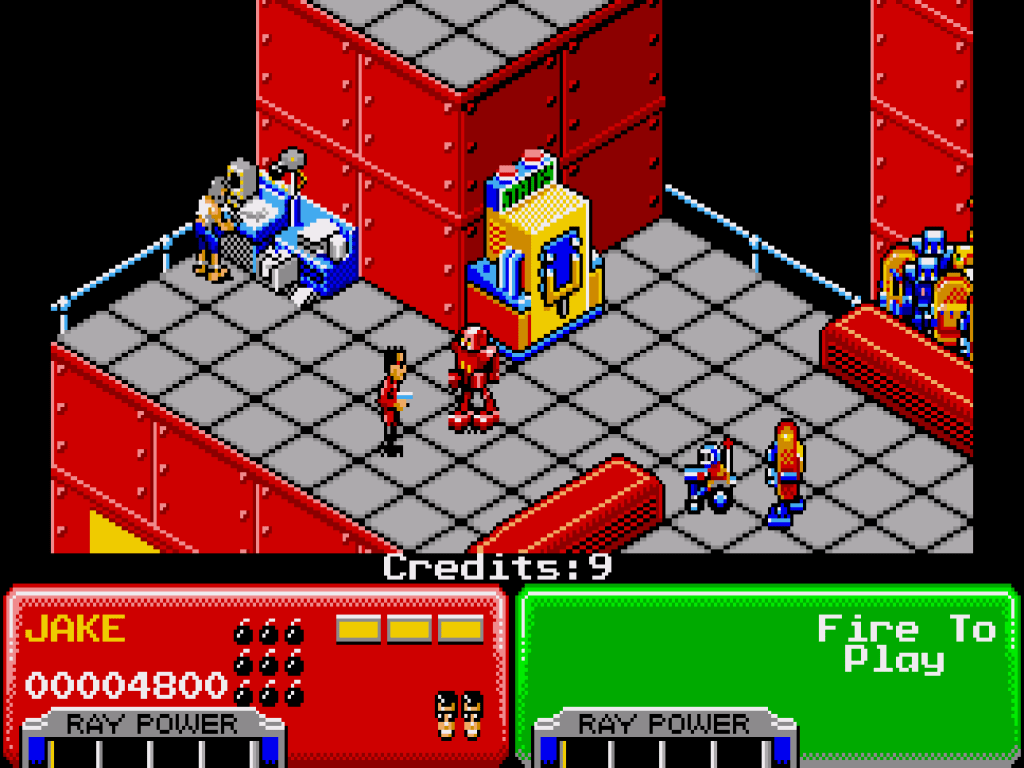
I didn’t know much at all about this game until it arrived on a wonderful Atari arcade game-based compilation called Tengen Trilogy in 1990, which also included similarly excellent ports of futuristic American footballer Cyberball, and legendary tile-matching arcade puzzler Klax, that I think had only recently released standalone and was most likely why I bought the set. Robot Monsters hadn’t been around long either, only hitting the arcades a year earlier in 1989, where it brought an authentically camp (but not authentically very colourful) fifties sci-fi b-movie aesthetic to a one or two player isometric shooter. You’re on a rescue mission after a bunch of robots overran the industrial Planet X so they could use it to build a robot army, kidnapping a nice lady doctor in the process. It’s a simple but challenging affair, with you shooting all the robots, flicking switches to open up new areas, and moving up and down and on to the next. Eventually you’ll then get to an auto-scrolling, isometric obstacle-maze thing, which will lead to the next level, and so on to the final boss. It all translates great to the ST, although the music isn’t a patch on the Amiga’s! Not sure how well it did anywhere else but it’s a fantastic game regardless, and a fantastic discovery to make on a compilation, which is what is always such a thrill for me!
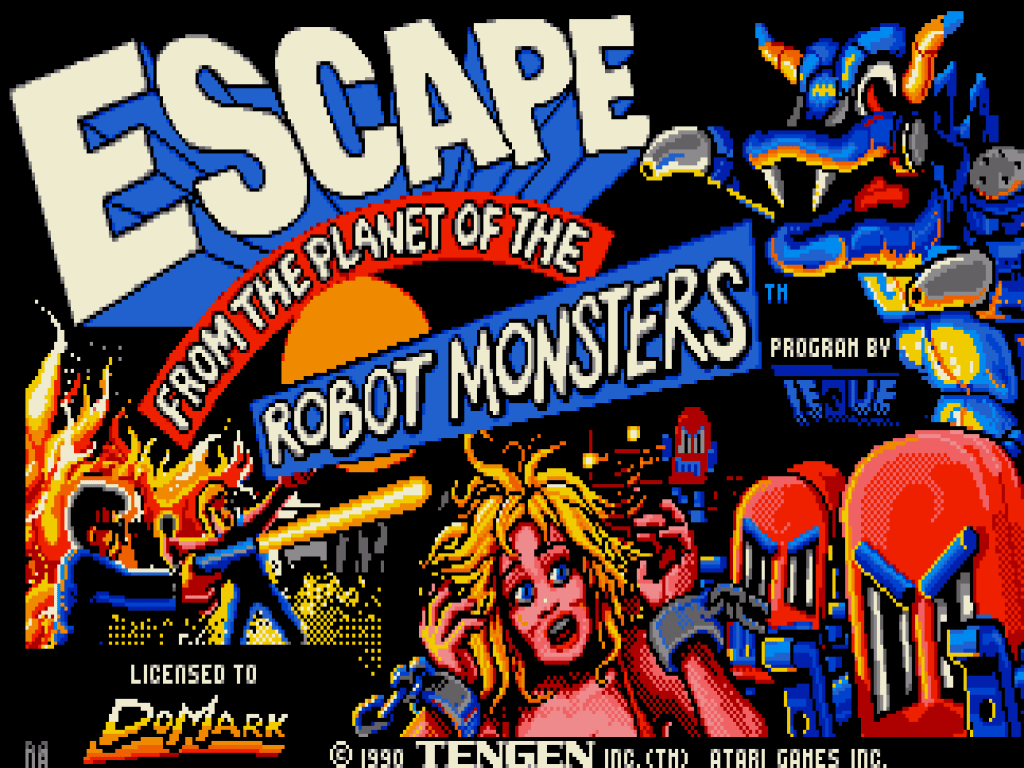
This loading screen is just genius! I remember when I had Pac-Land in my Commodore 64 top ten, I said it was like the whole game condensed into a single image, and that’s exactly what’s going on here too! You’ve got robots, you’ve got monsters, you’ve got robot monsters… And there’s flames and planets and shooting at stuff, and that totally bedraggled doctor in distress! Then there’s the large scale, multi-font title scrawl, which is the icing on the b-movie cake that’s jam-packed with all the colour and energy, character and humour you’re going to experience just as soon as the disk has done its work! Like its cinematic inspiration, where a poster outside was often the only thing that was going to sell you a ticket, this exists to catch your eye and convey a story in an instant, and it absolutely succeeds in doing so. I’m totally sold!
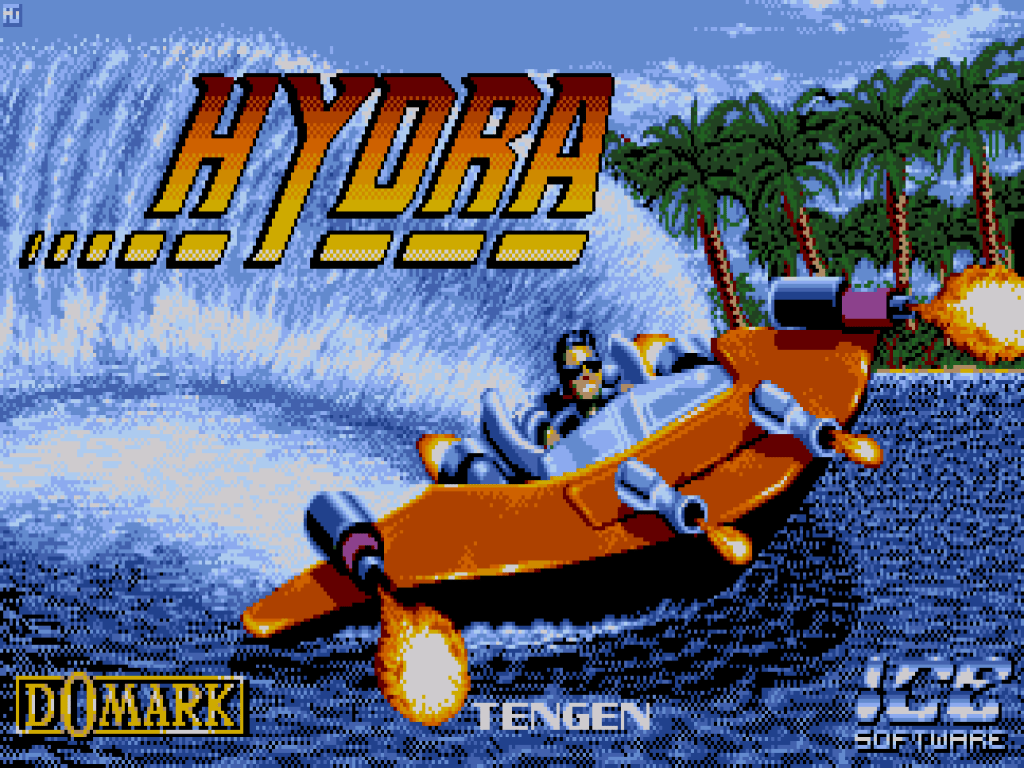
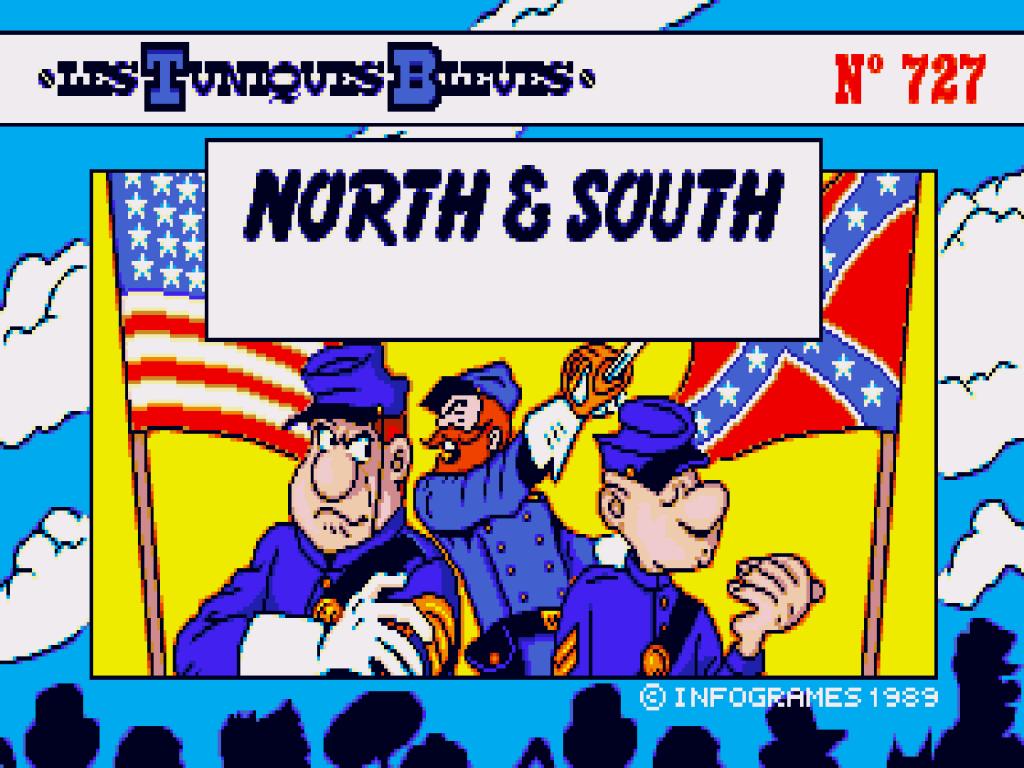
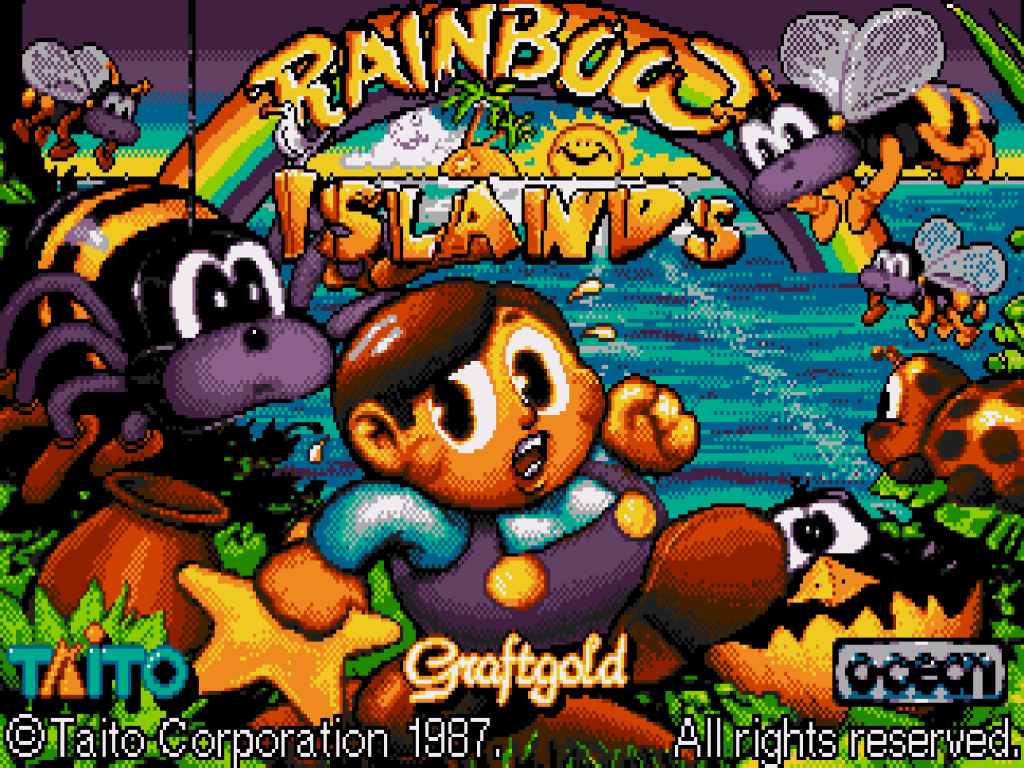
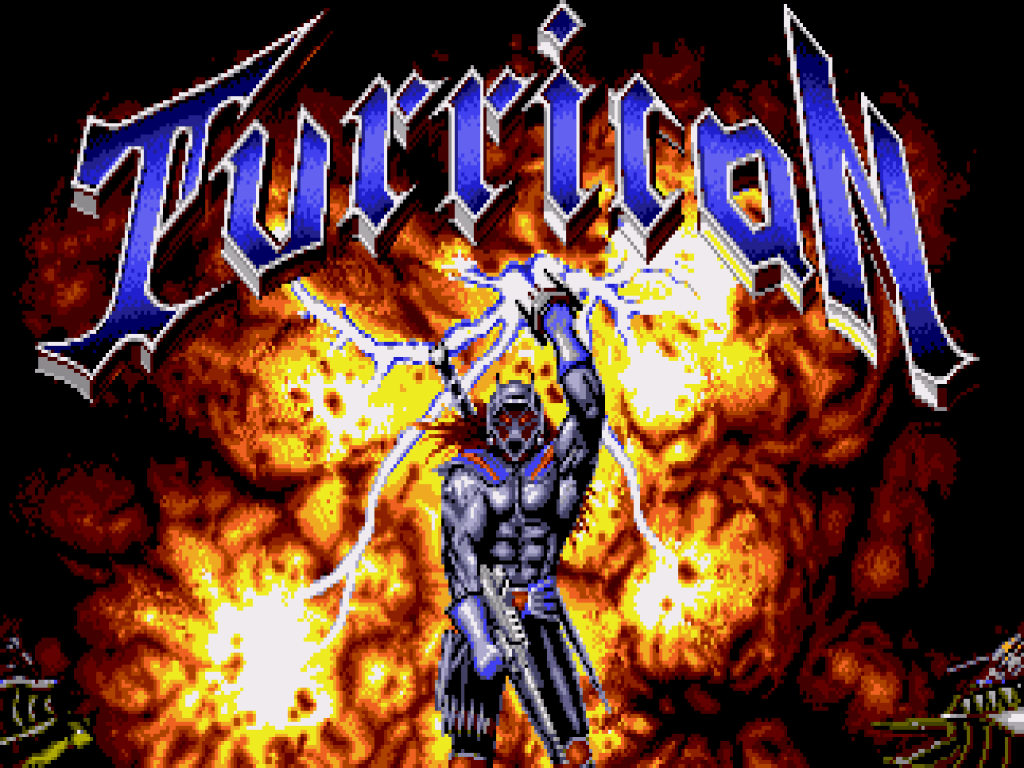

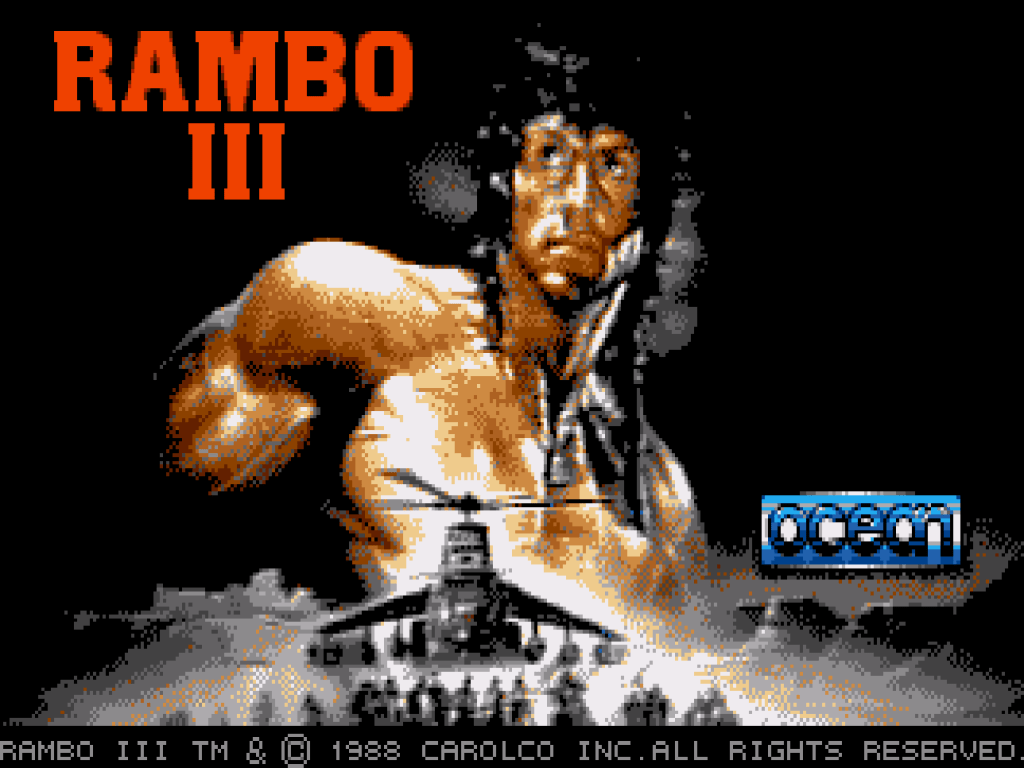
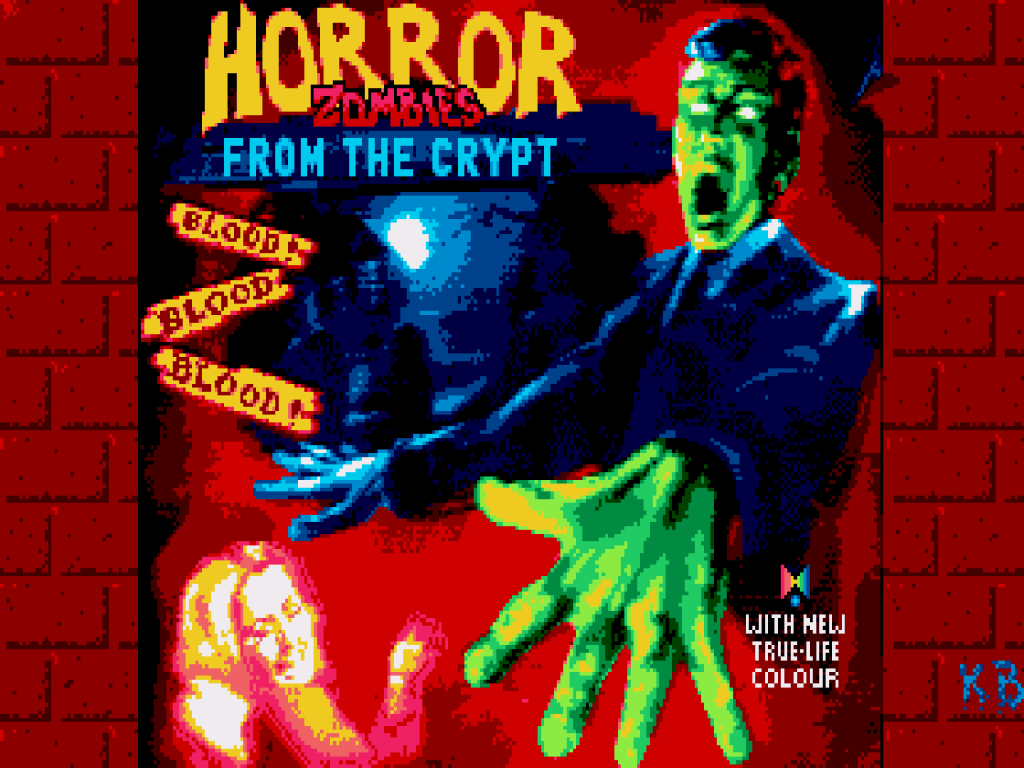
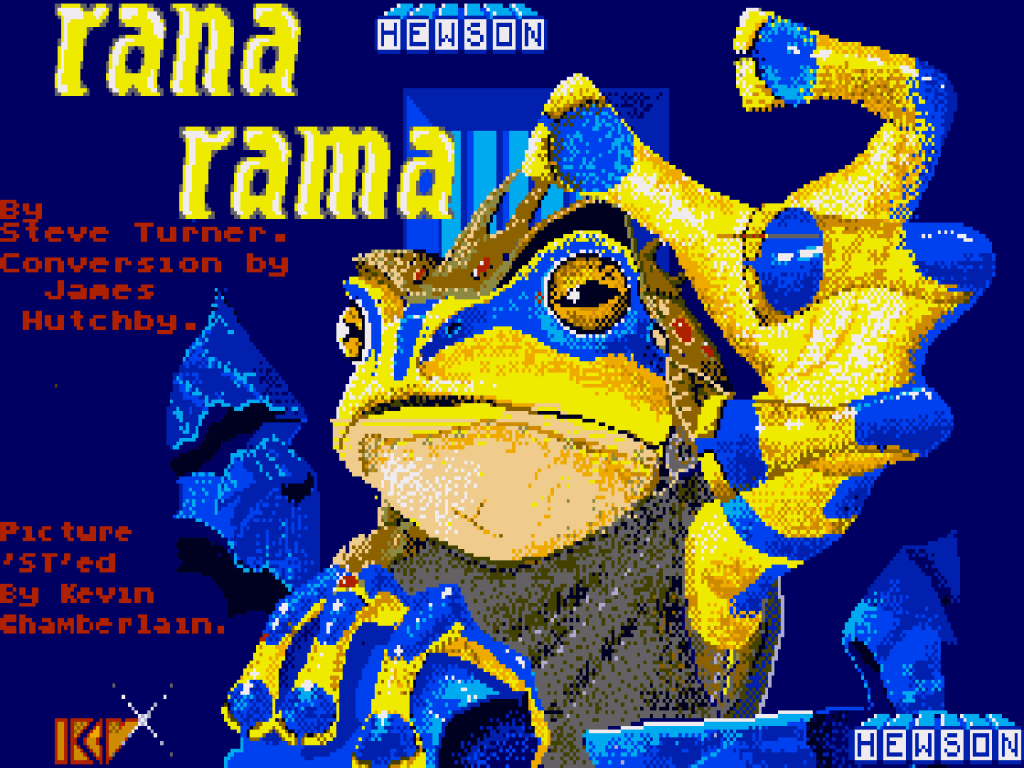

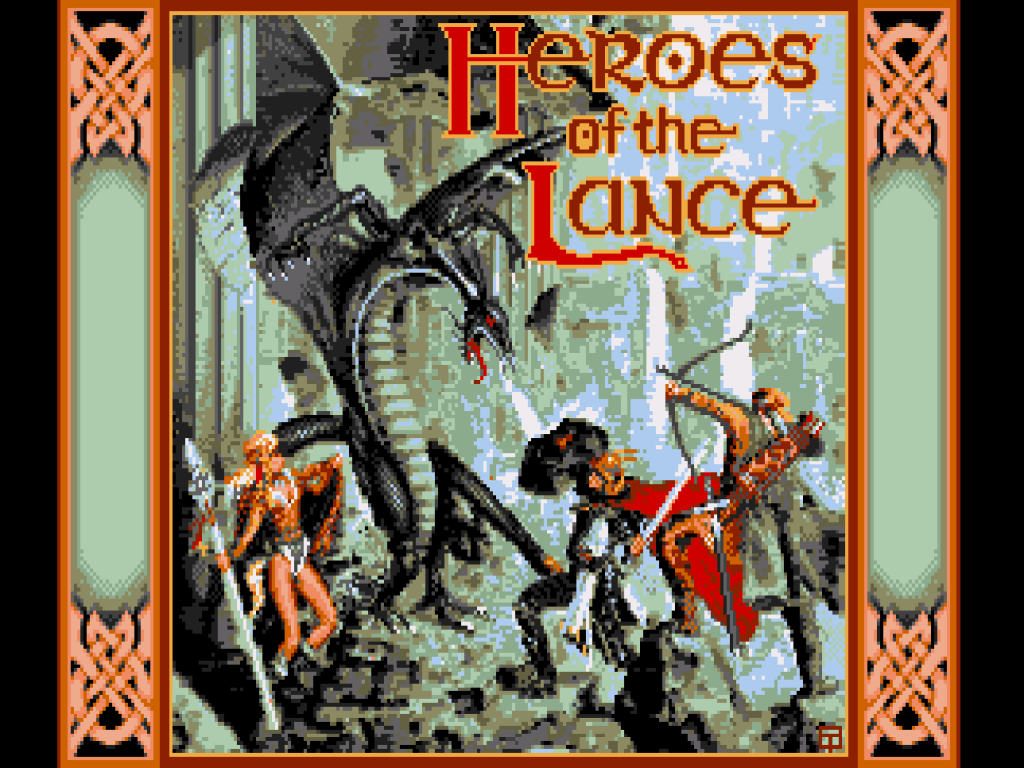
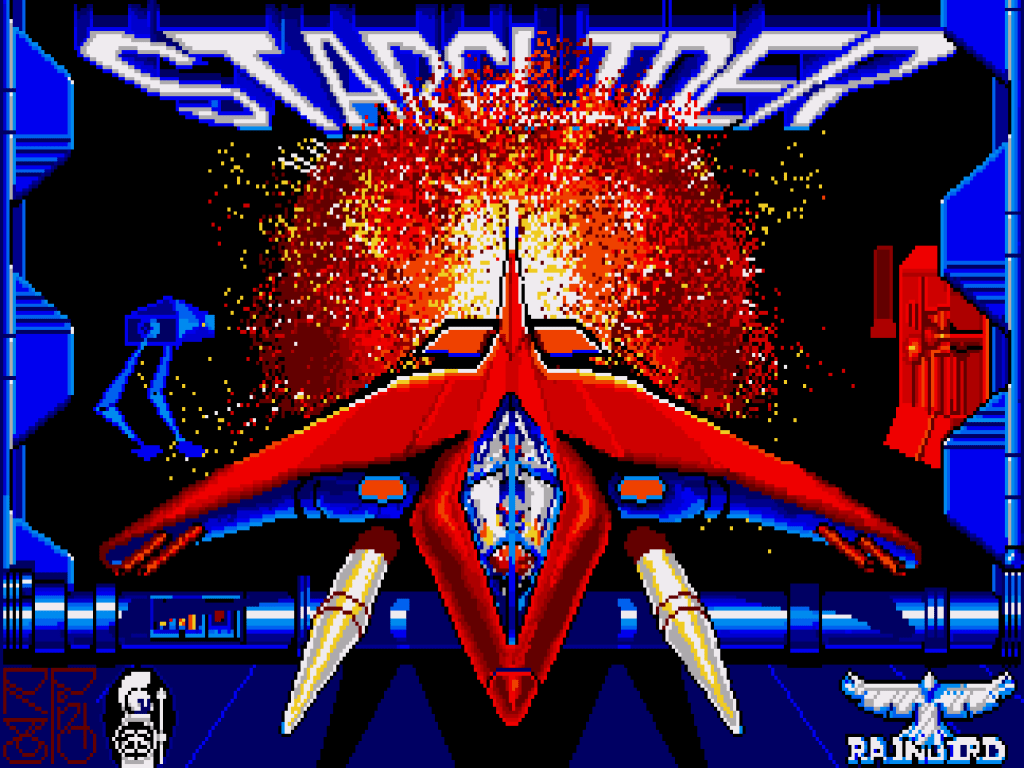
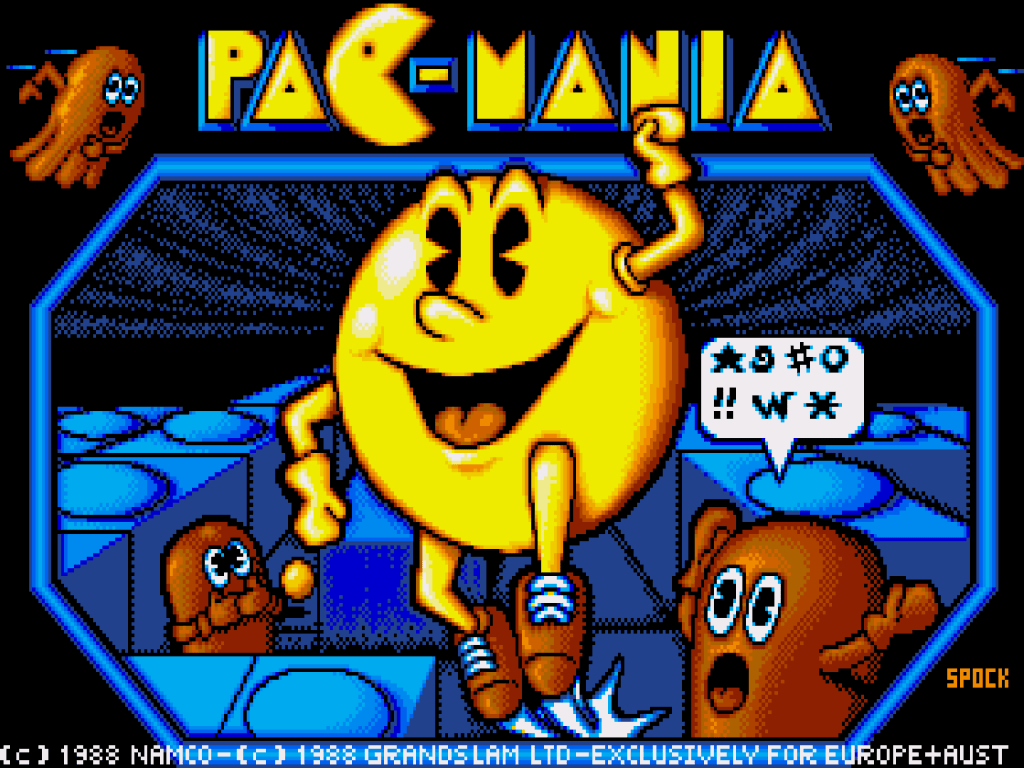

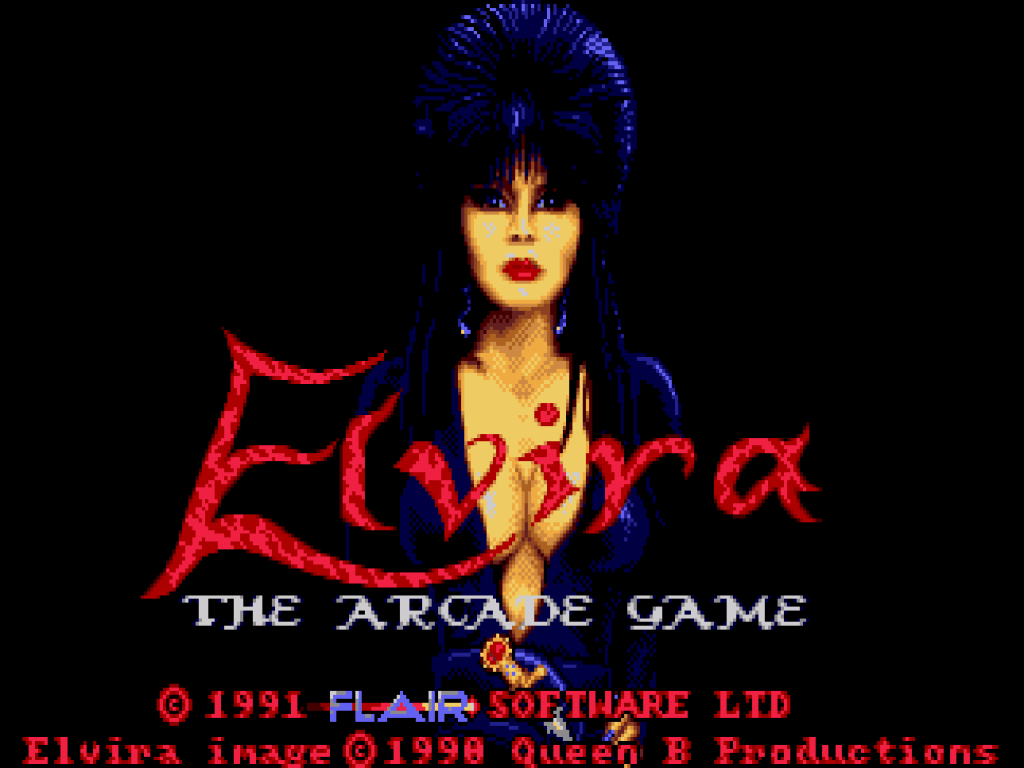
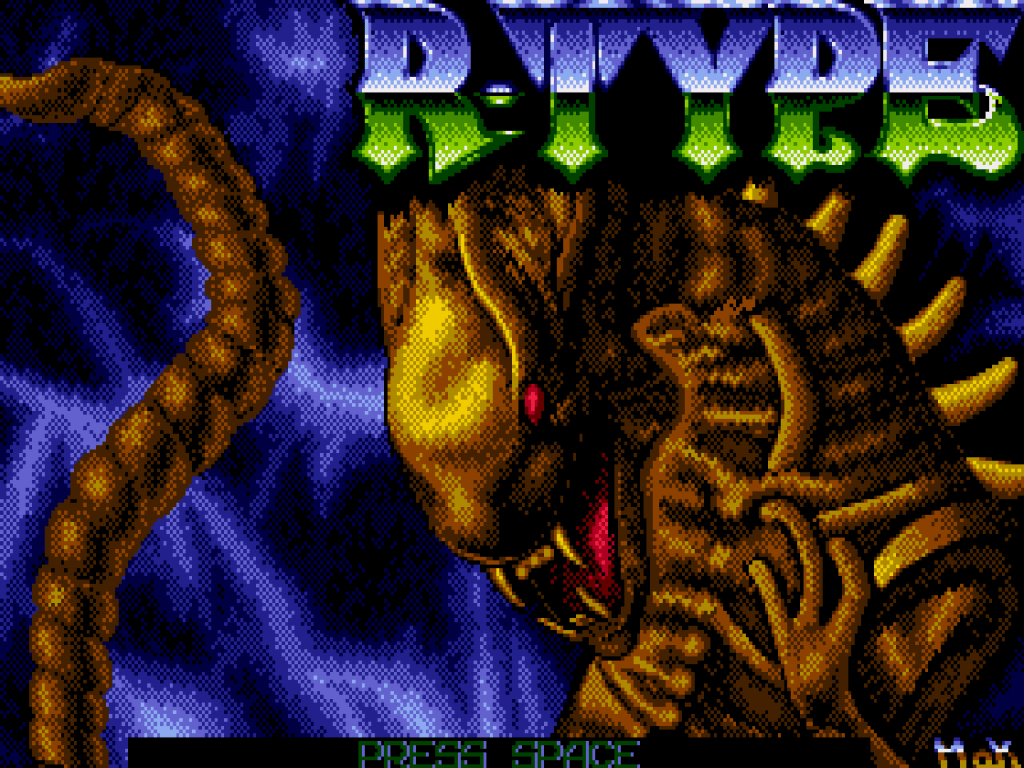
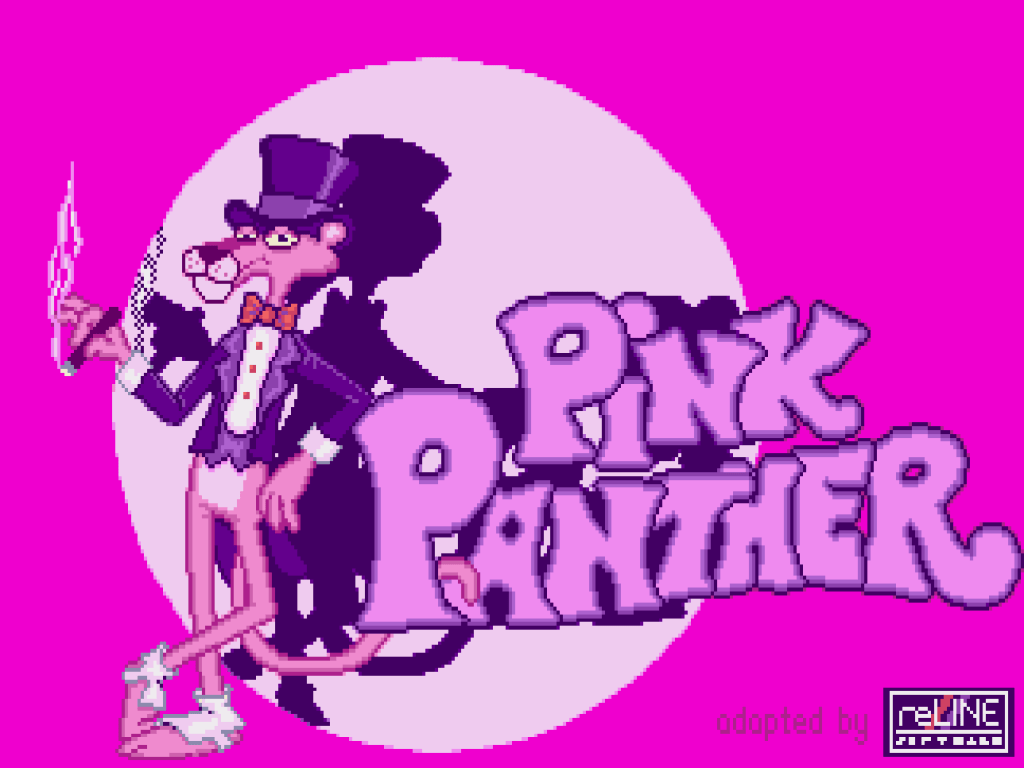

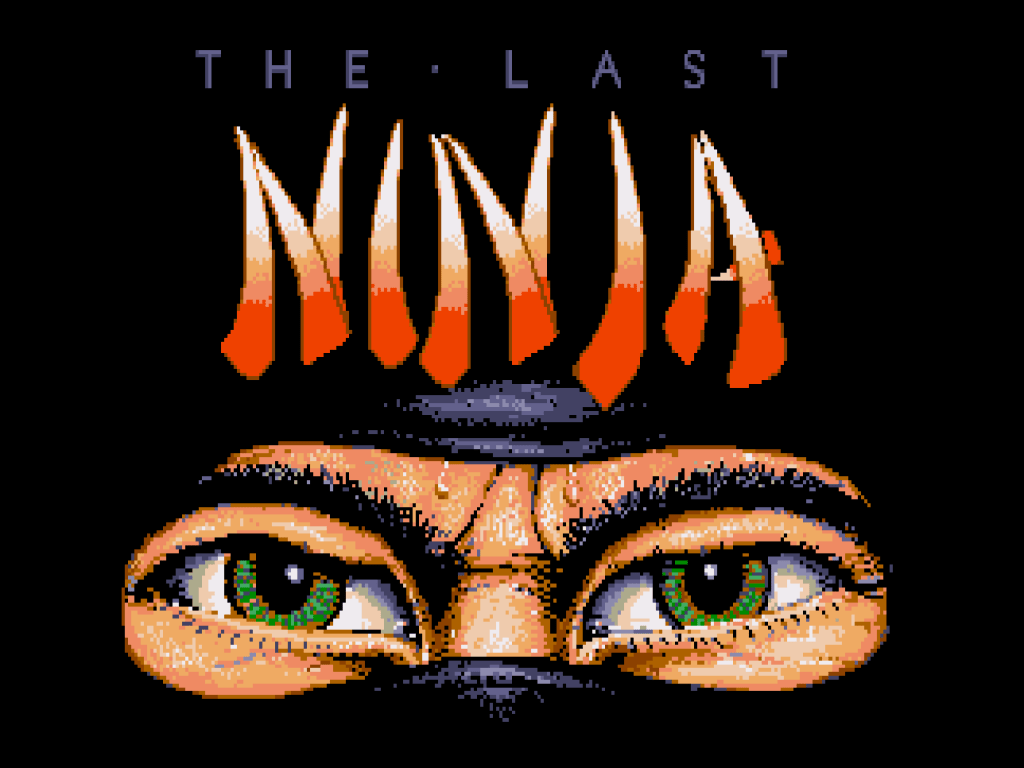
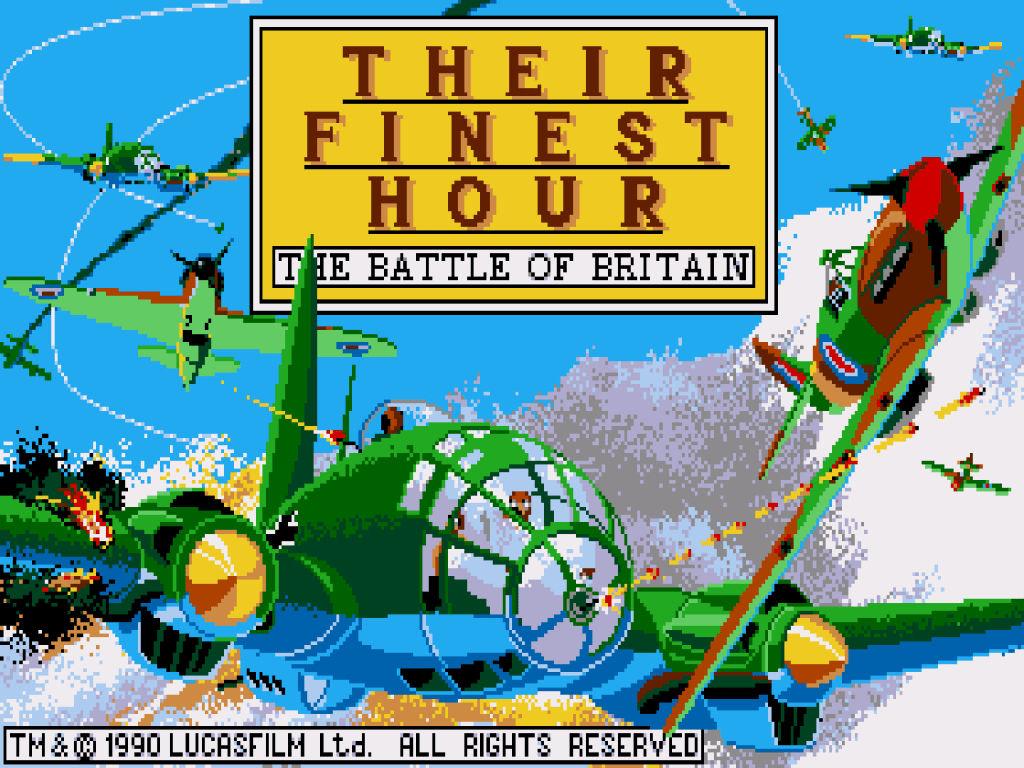
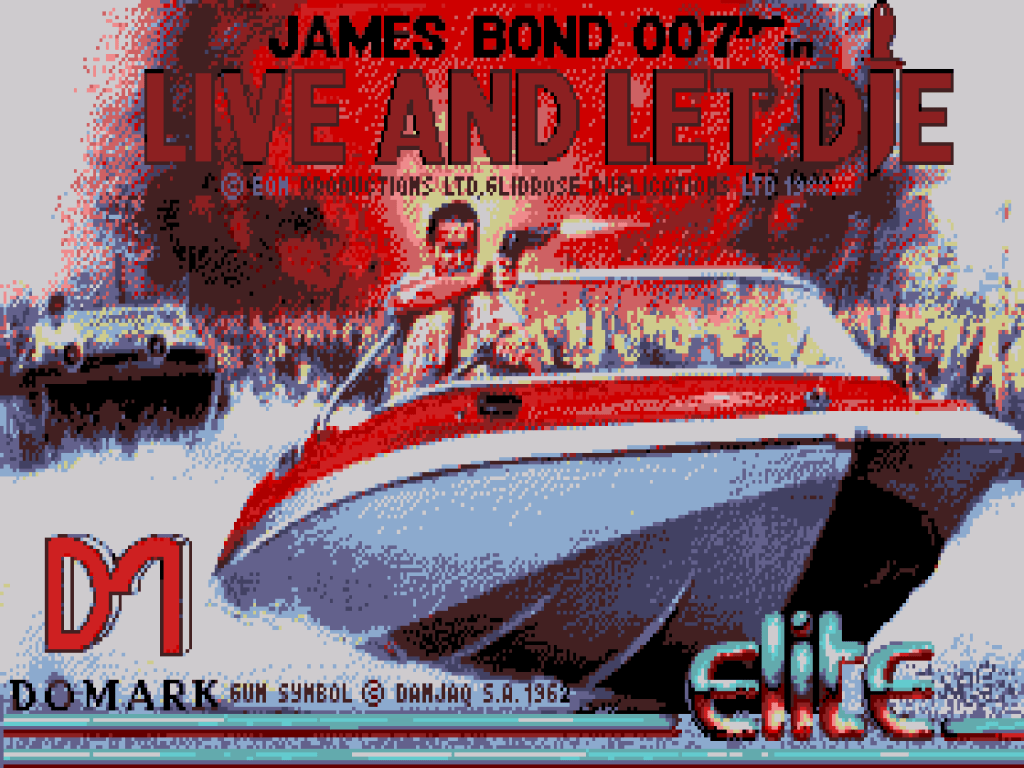
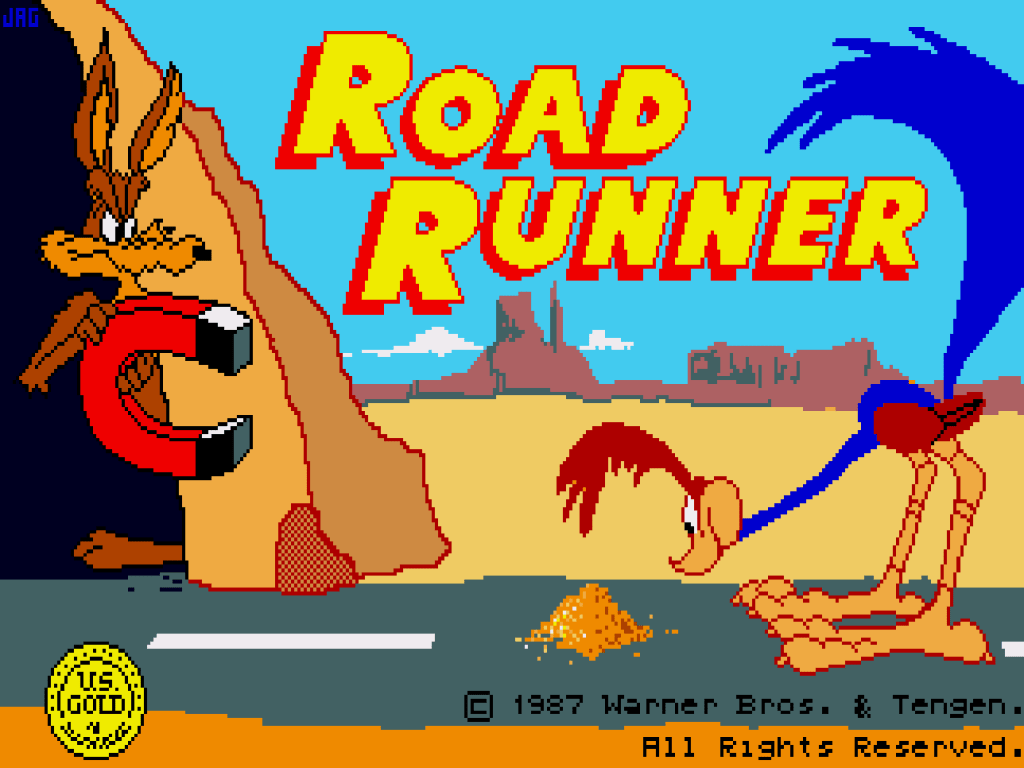

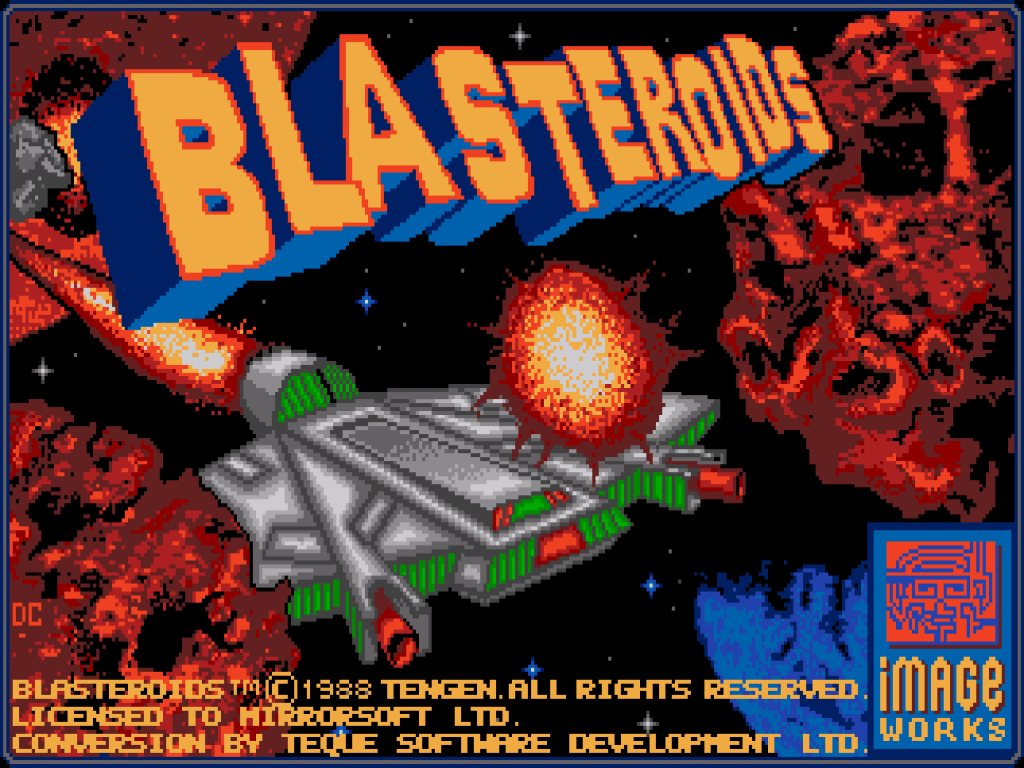

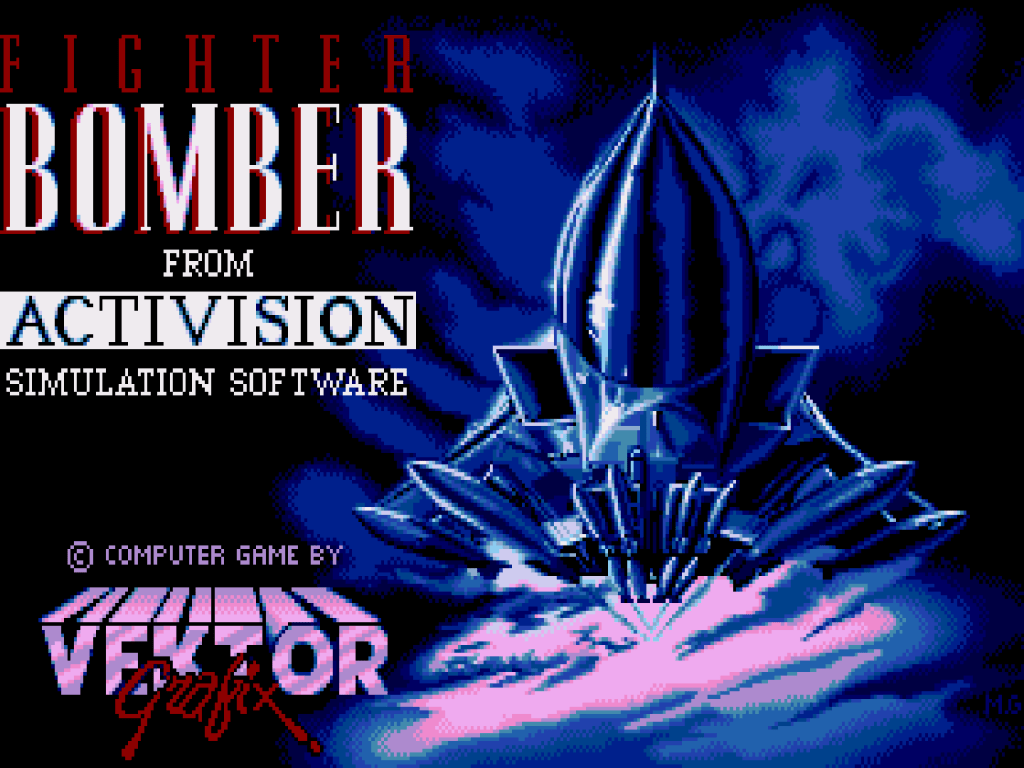
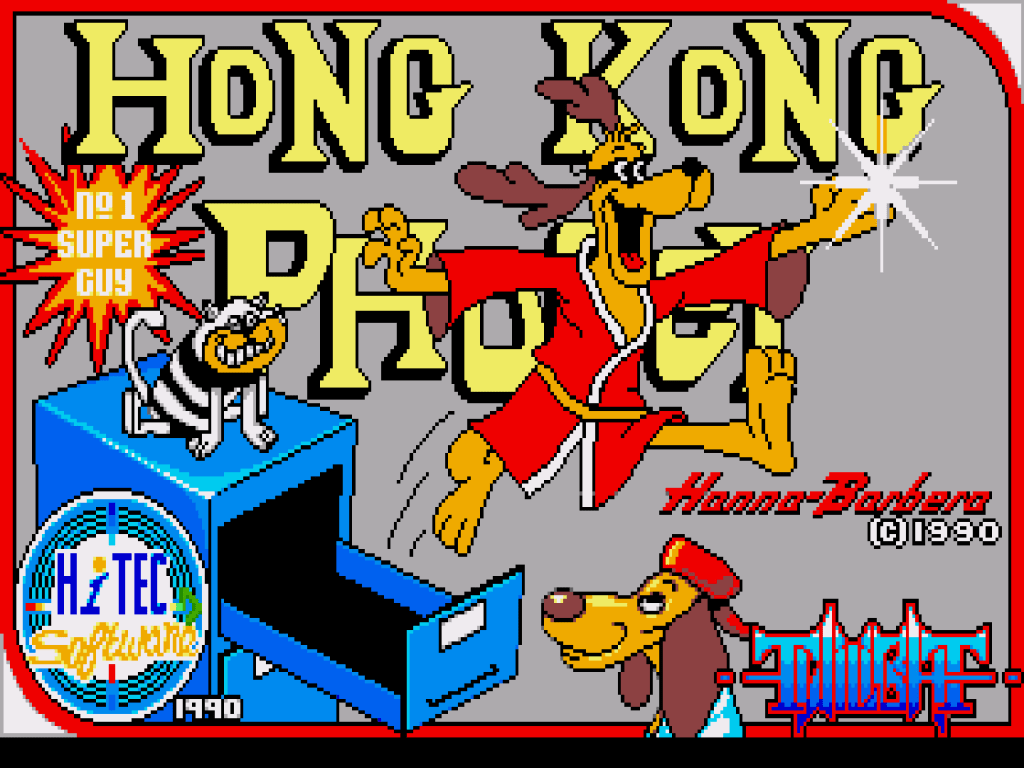
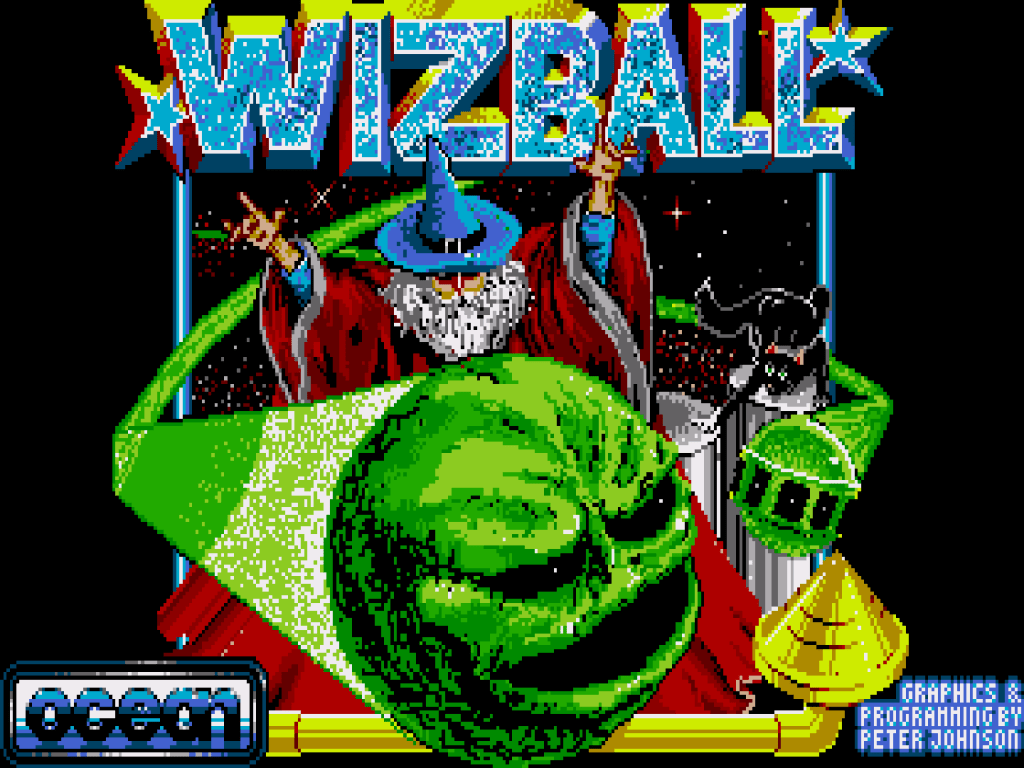
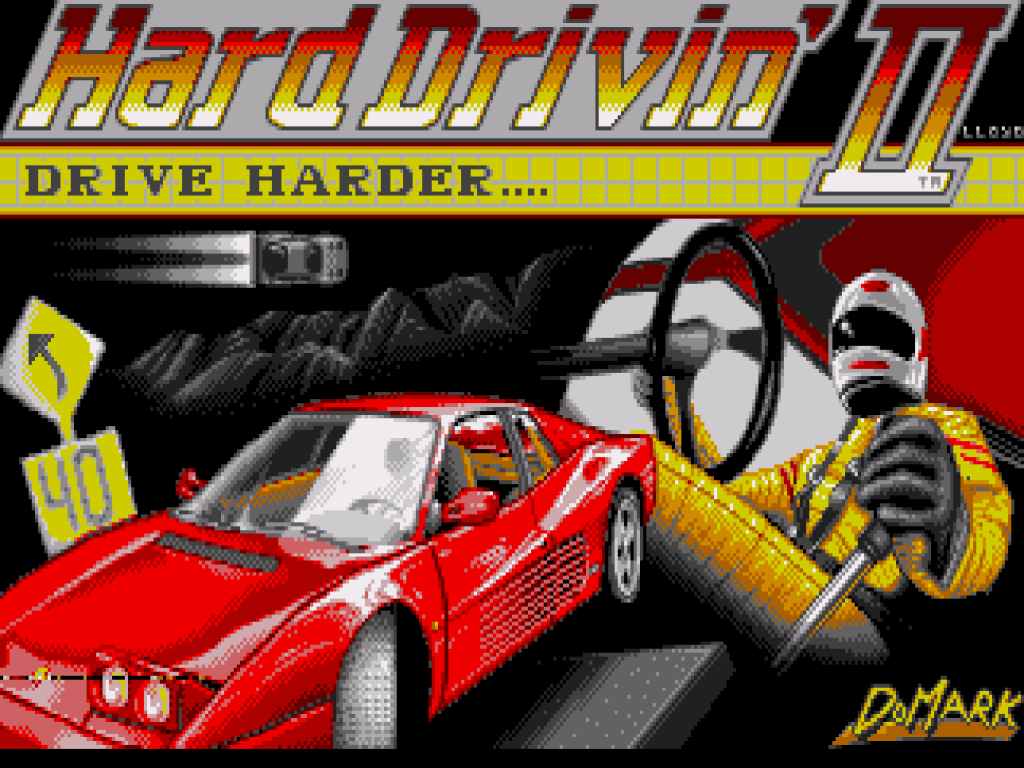
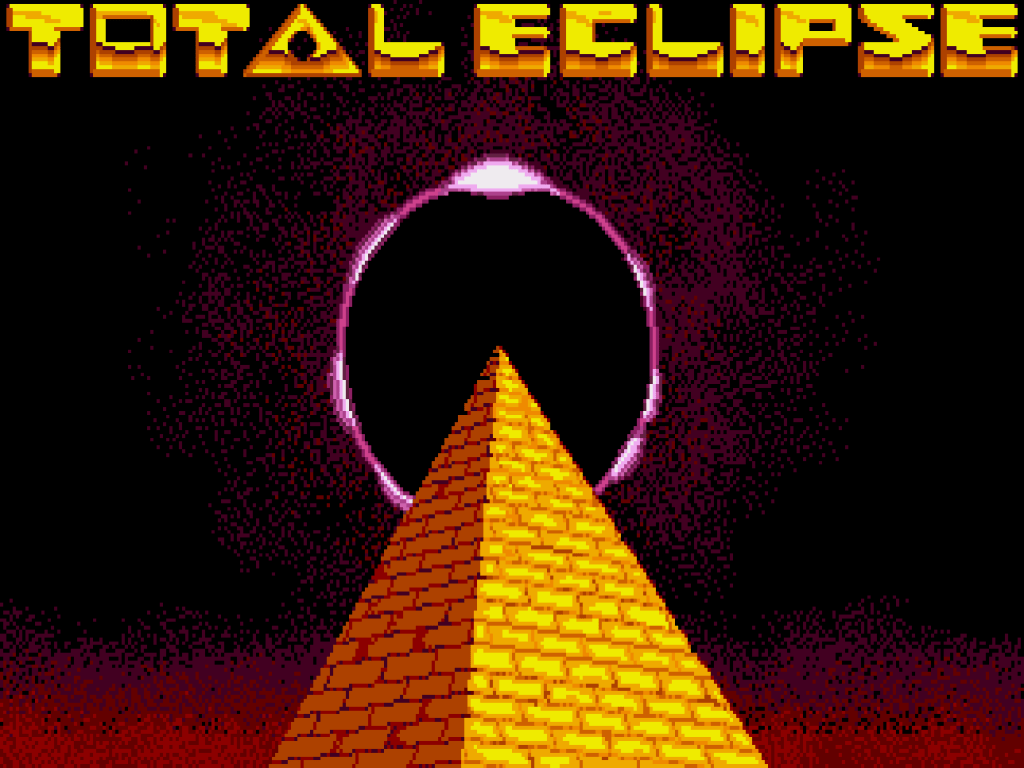
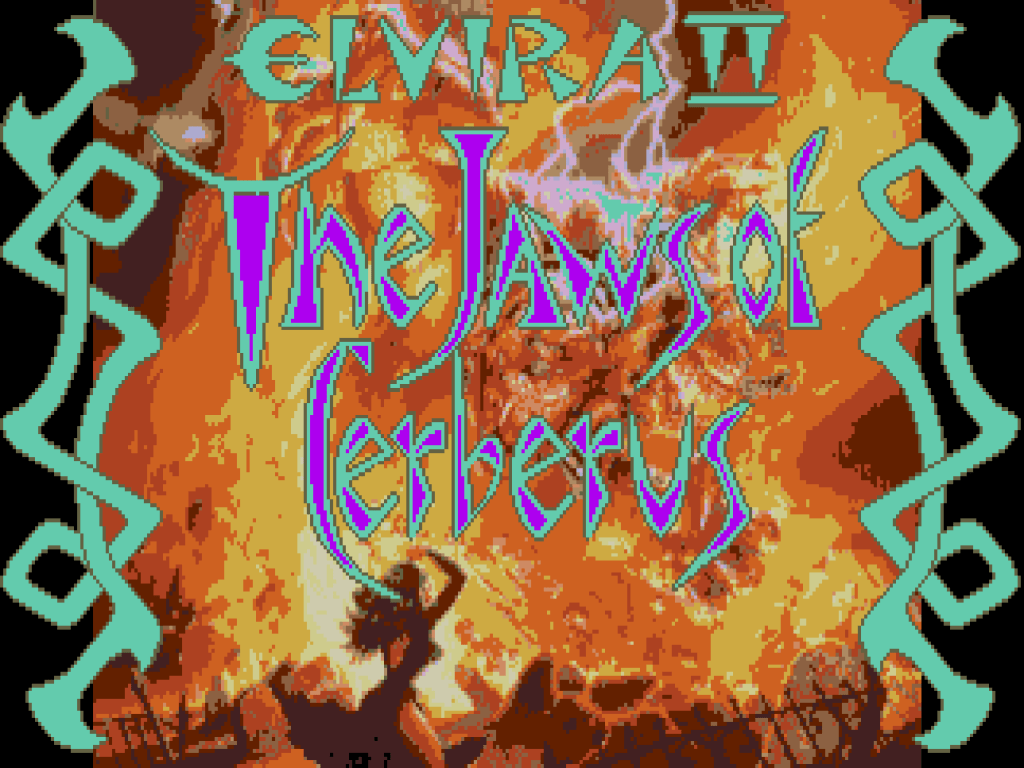

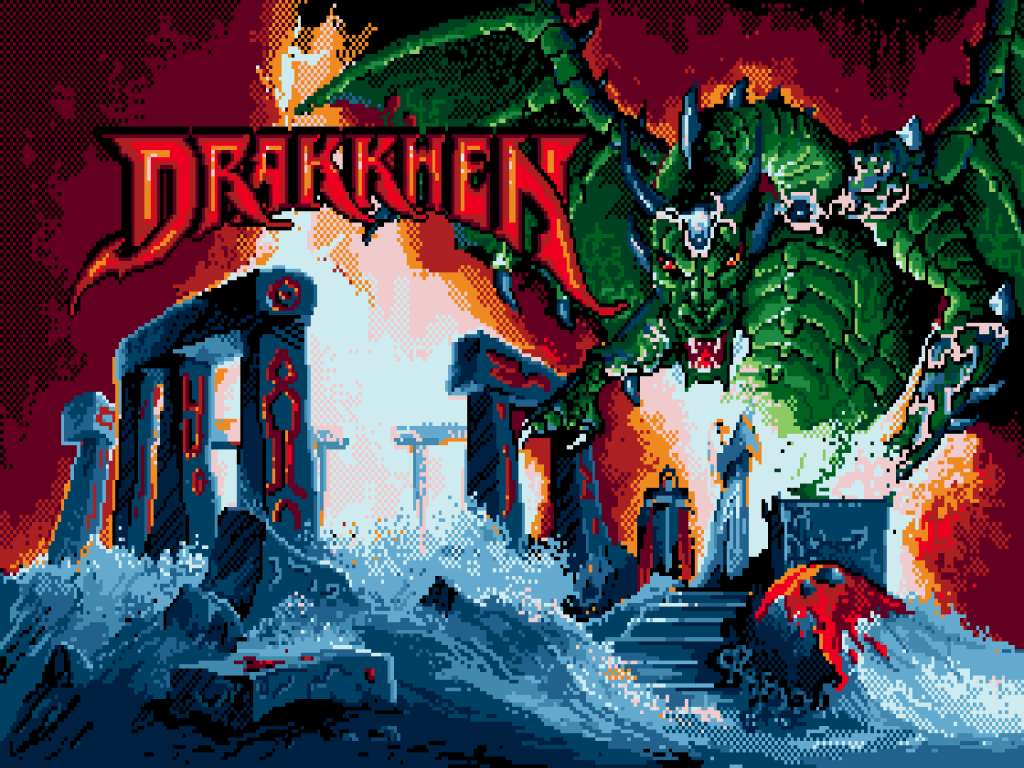
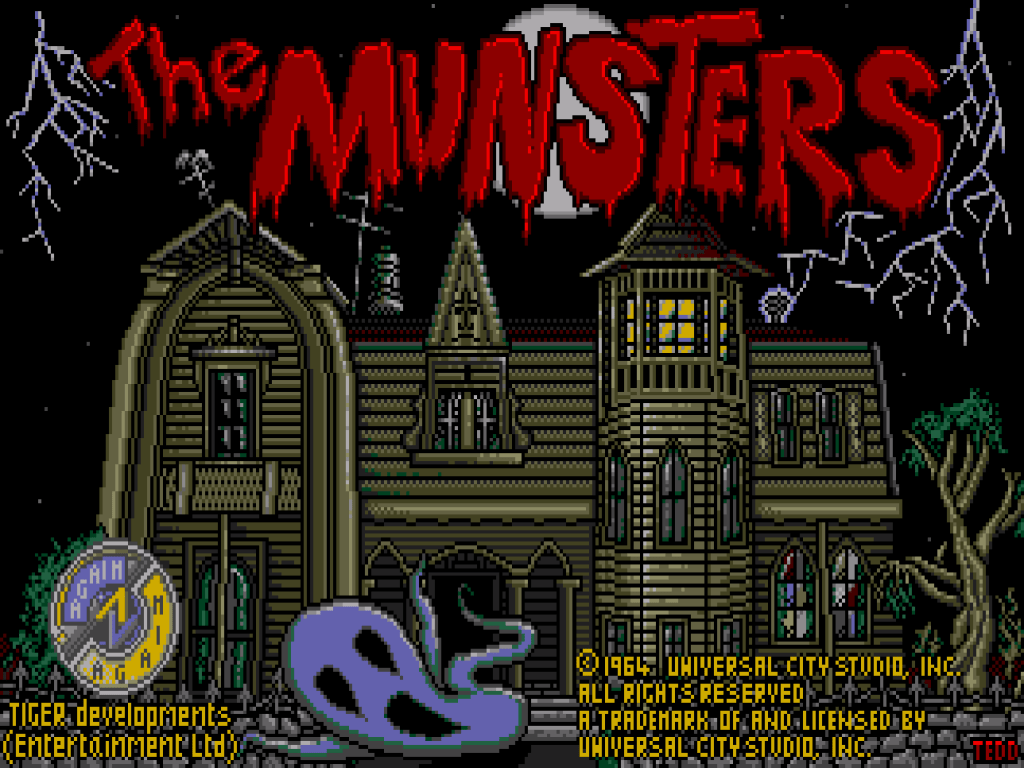
And with that, my work here is almost done! As I said at the beginning, I’ve been thinking about these for a few years, so while the outcome was hardly a surprise to me when I finally got down to a top ten, there are an awful lot of games I could quite happily have also included, many of which you’re seeing in the little gallery above! And of those, there were quite a few I did also play to grab a few screenshots before I was sure of what was going to make the cut, so what I might do is include a quick paragraph on each one in some upcoming Weekly Spotlight features, because they all deserve that at least… Even Hong Kong Phooey! In the meantime, I hope you’ve enjoyed reading this even half as much as I enjoyed putting it together! Not sure what’s next – there are lots more top tens to look out for but as for loading screens, I think an Amiga top ten would be almost the same as this, which means we’ve probably covered the main systems that had them well enough… Maybe title screens instead, so we can take in some consoles too? I’ll keep you posted!
As always, I’ll never expect anything for what I do here but if you’d like to buy me a Ko-fi and help towards increasingly expensive hosting and storage costs then it will always be really appreciated! And be sure to follow me on Instagram, X (formerly Twitter) or Threads for my latest retro-gaming nonsense!
 Retro Arcadia