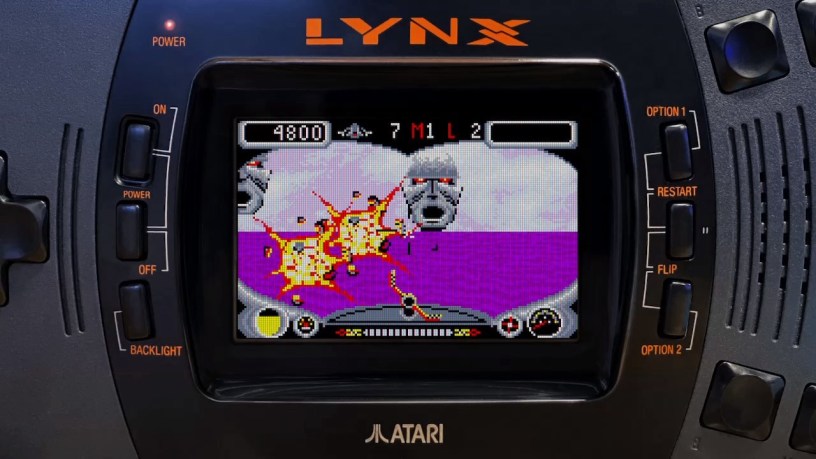
As much as I like to plan these things out way too far in advance (scratching the same itch as searching for something to watch on Netflix rather than watching it), I do always try and leave a space every couple of months for a game like the one we’re going to look at shortly that just grabs my attention from out of nowhere and I want to get into immediately, rather than letting it stew while my own thoughts on it do the same thing before doing so. Not that it happens often; in fact, the only occasions I can think of where I’ve taken advantage of my little emergency slots were for Alien Isolation on Xbox One and Metroid Fusion on Game Boy Advance, neither of which I’d played previously at the time, but had such an instant impact that I thought might benefit from an equally instant reaction. Which you can be the judge of! And although I’m not sure Turbo Sub on the Atari Lynx is in the same league as either of those, I’d never played it before either, and I also had a similarly unexpected blast with it, so here we are! That said, as you’ll come to realise, I then totally forgot to publish it and sat on it for more than a year, so please just use your imagination as required…
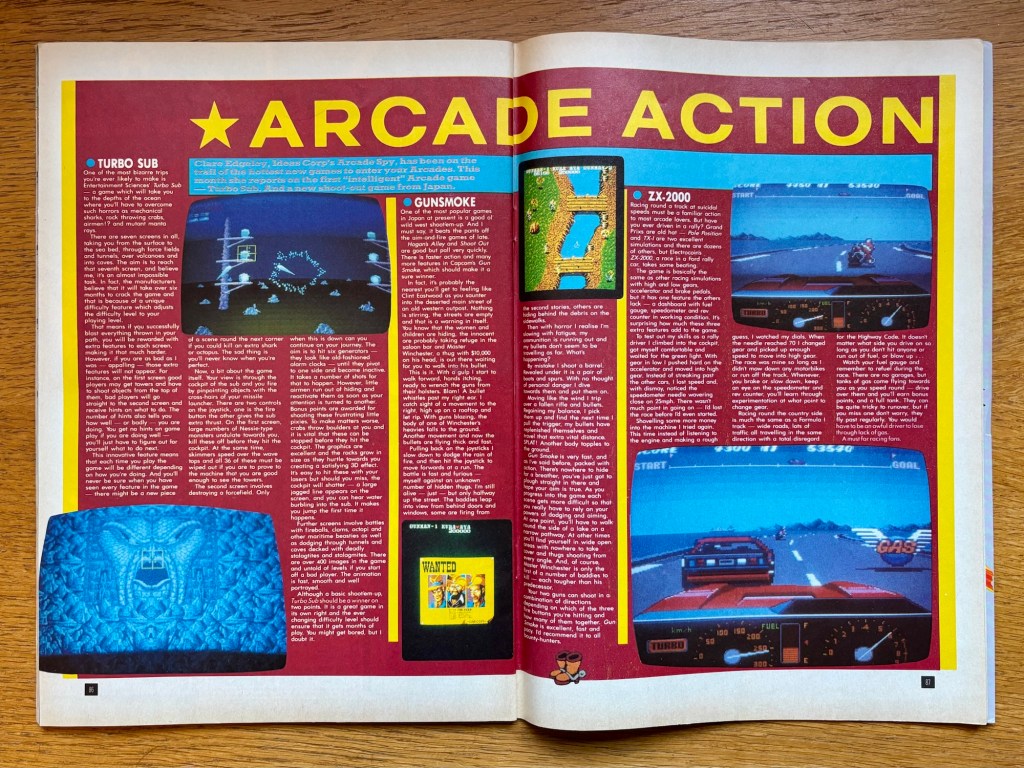
Also in contrast to those other two games, I’d barely even heard of Turbo Sub when it first grabbed me a few months back at the time of writing, despite having actually owned a copy as part of Atari 50: The Anniversary Celebration on Nintendo Switch for a few years prior to that. I guess I had a cursory go when it first came out but it clearly didn’t grab me quite so much first time around, and as is the nature of those mega-compilations (especially when the DLC starts flowing), it then just passed me by as I spent “50 hours or more” (according to my game clock) obsessing over the likes of Adventure on Atari 2600 and Star Raiders on Atari 5200 instead! We got there in the end though, which is also the case for the 1985 arcade game by California-based Entertainment Sciences it subsequently turned out it was a port of, although once again, it seems it was also hidden in plain sight all along… As readers of my Retro Rewind features will already know, the copies of Computer & Video Games magazine we flick through each month are part of a collection that originally spanned 1985-1992 but now extends considerably either side! However, if we home in on the April 1986 issue, and specifically the magical Arcade Action section, there it is! I must have read that copy a hundred times but I have no recollection of Turbo Sub, although in my defence, the piece is accompanied by two incredibly murky and nondescript screenshots that do nothing to make you want to explore the verbose but misleading mass of tiny text that makes the game come across as a single-screen shoot ‘em up with seven different screens to discover. And by 1986, that was hardly a genre that still grabbed your attention!
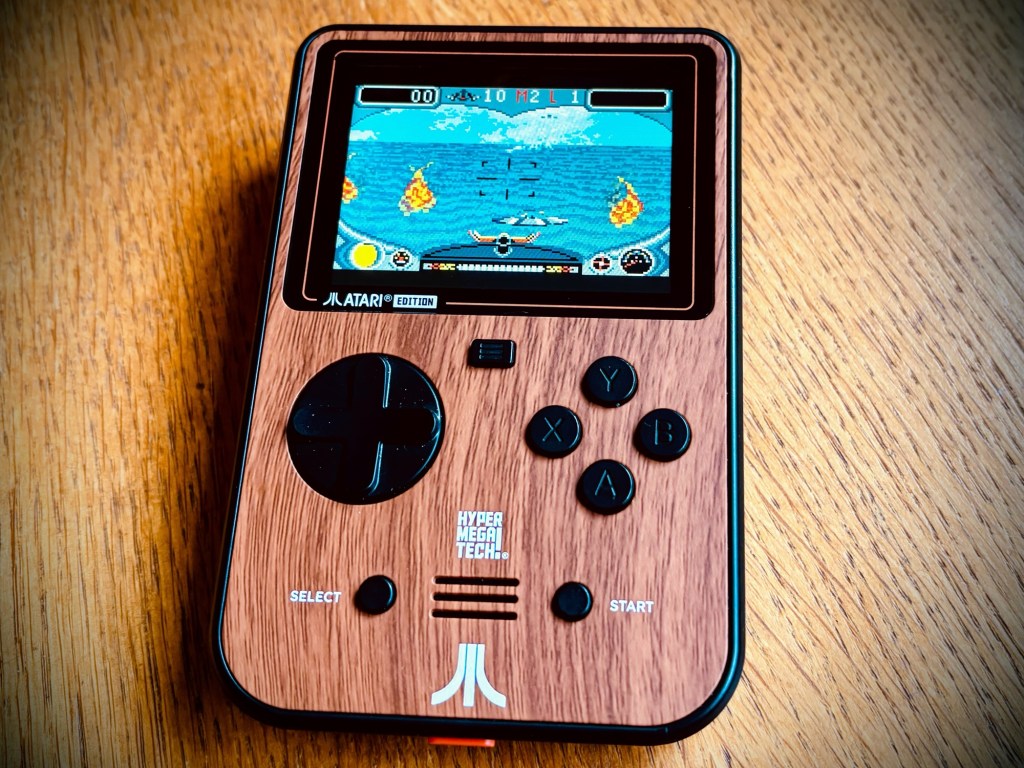
It doesn’t seem like it ever got much of a release in the end anyway; in fact, Entertainment Sciences was defunct by the time this hit C&VG, and aside from a failed arcade game called Bouncer, a few Turbo Sub cabinets was all they had to show for their existence. Although I did try and keep on top of the comings and goings on the Atari Lynx (because my brother had one), I obviously also totally missed Turbo Sub originally arriving on there in 1991, and it’s worth noting that the Lynx is the only place it arrived anywhere… Shame, could have been a system seller on the Jaguar… It was developed by NuFX, who’d already put Rygar, Hard Drivin’ and Xybots on the Lynx to surprising levels of success, and was published by Atari themselves in both North America and Europe. Who it was actually licensed from seems to be a bit of a mystery though! As I write this very sentence, I still haven’t actually played the original, so I reckon what I’ll do is save it and do a bit of a reverse-comparison at the end to see how it stacks up against the version that’s quickly become a bit of a favourite of mine, so let’s now jump to precisely where that’s happened! The Super Pocket Atari Edition handheld console arrived in the middle of October 2024 and came from Hyper Mega Tech, who were spun out of Blaze Entertainment, the Evercade people. Which it’s also got a cartridge slot for in the back! I just couldn’t resist the Atari 2600-inspired, woodgrain effect limited edition when it was announced a few months earlier, and it doesn’t hurt that I’m a sucker for old Atari games either, and while I do own everything on there on either original cartridges or a dozen compilations on a dozen systems already, including on Evercade, I’ll very gladly play them all again anywhere else too. There’s no less than fifty included on this thing, all very thoughtfully curated, and spanning arcade, Atari 2600, 5200, 7800 and Lynx, which gets some fantastic stuff like Warbirds, Checkered Flag and Basketbrawl, on top of Turbo Sub, of course.
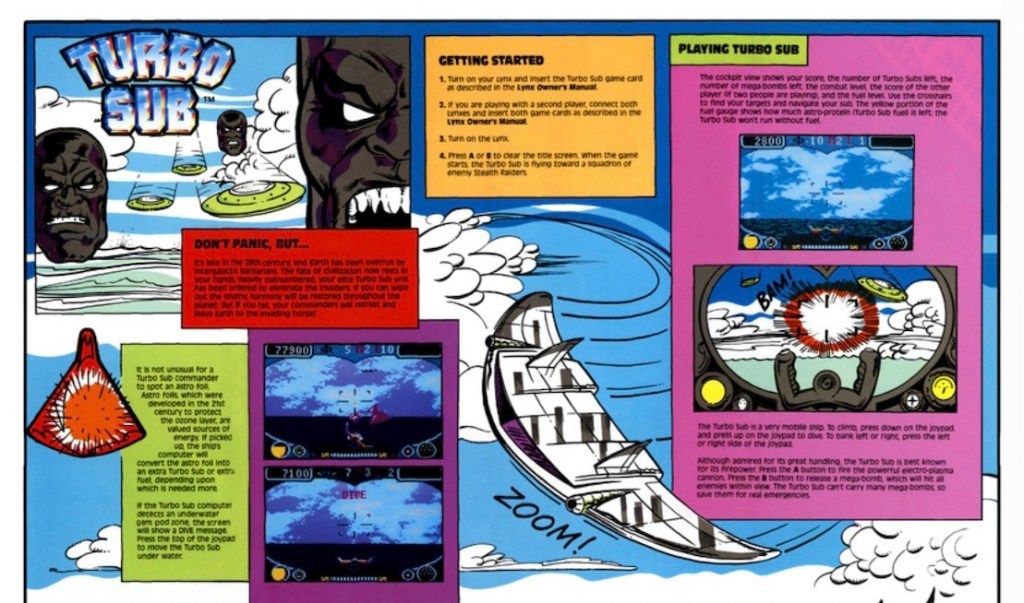
I think the small screen handheld format (rather than on Switch on a huge TV where I usually play it) had a lot to do with things clicking this time – I was pretty much seeing it through Lynx eyes. However, there may also have been an element of wanting to discover something to justify the cost of this thing despite what I just said because there wasn’t much else on there I wasn’t already intimate with, and – Lynx games aside – was probably played better elsewhere too! Anyway, it’s about time we got into the game itself, and for that I’m going to refer back to my Switch because the Atari 50 compilation comes with all sorts of goodies, including the instructions, which, in this case, come in the form of a really nicely presented mix of comic book and explanatory screenshots! Turbo Sub is a more or less on-rails, 3D, fixed-crosshair shooter, with you in the cockpit of the titular vehicle sometime in the late 28th century, when “Earth has been overrun by intergalactic barbarians. The fate of civilisation now rests in your hands. Heavily outnumbered, your elite Turbo Sub unit has been ordered to eliminate the invaders. If you can wipe out the enemy, harmony will be restored throughout the planet. But if you fail, your commanders will retreat and leave Earth to the invading horde!”
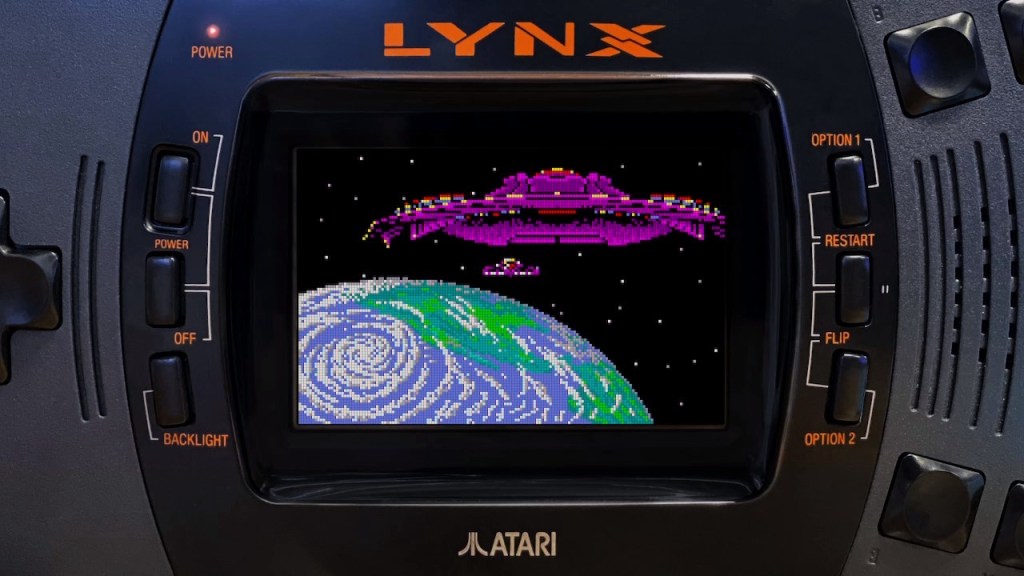
For a game that’s so full of energy, it all starts out a bit uninspiring! The title screen appears to be more interested in communicating copyright notices than getting you excited about playing the game, and isn’t helped by the white noisy, techno-lite rhythms of some chip-tune muzak introducing itself alongside it, but both soon pick up as an attract mode cinematic (of sorts) kicks in, with the aliens swarming into Earth’s atmosphere from their ominous mothership, followed by an overview of how many points for what and a few key instructions, which is all now accompanied by a tune that’s evolved into something pretty upbeat, complete with some really nice key changes… Reminded me of that cool in-game Mega Turrican music (from Stage 1-2 to be precise) on the Mega Drive! By the way, if you have the opportunity, you want to stick some headphones on for this one – that’s about it for soundtrack but the in-game effects are something else, especially your own regular electro-plasma cannon fire, which pounds away hypnotically and just echoes around your head! The rest is suitably crunchy or splashy too, while enemies pulsate away and things beep in your ship, and the way it all goes slightly muted when you head underwater is so thoughtful and adds so much to your immersion. Literally!
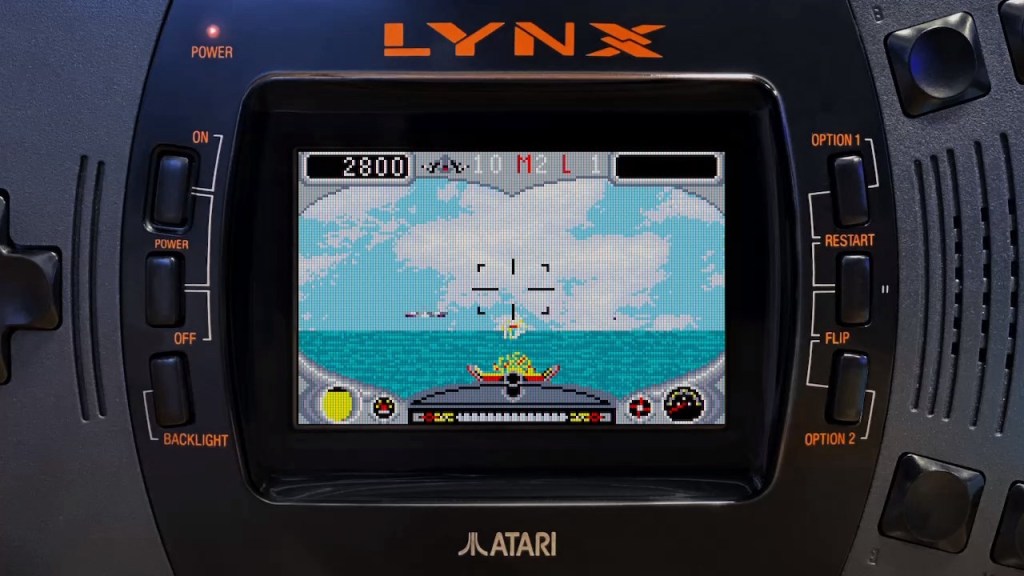
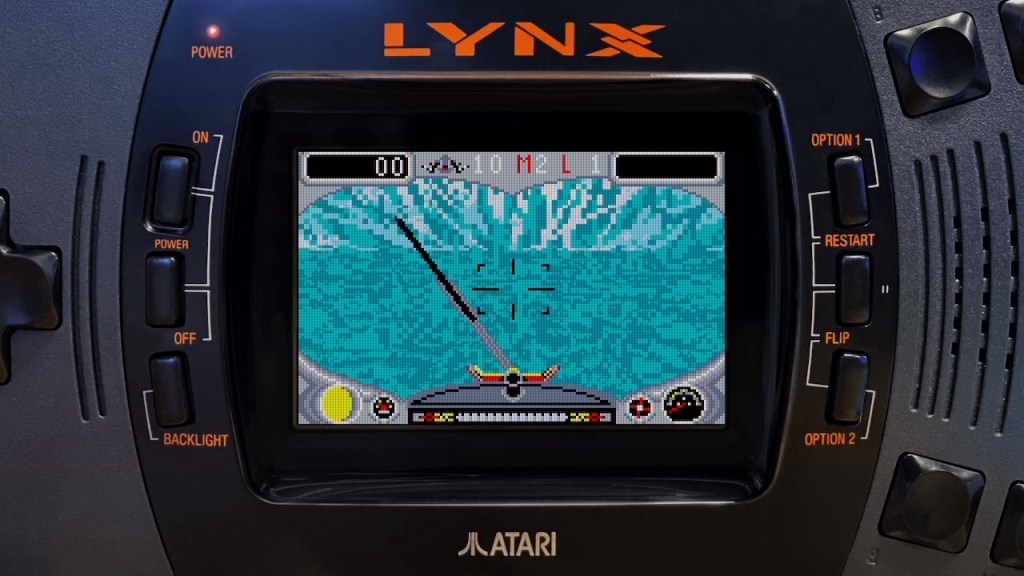
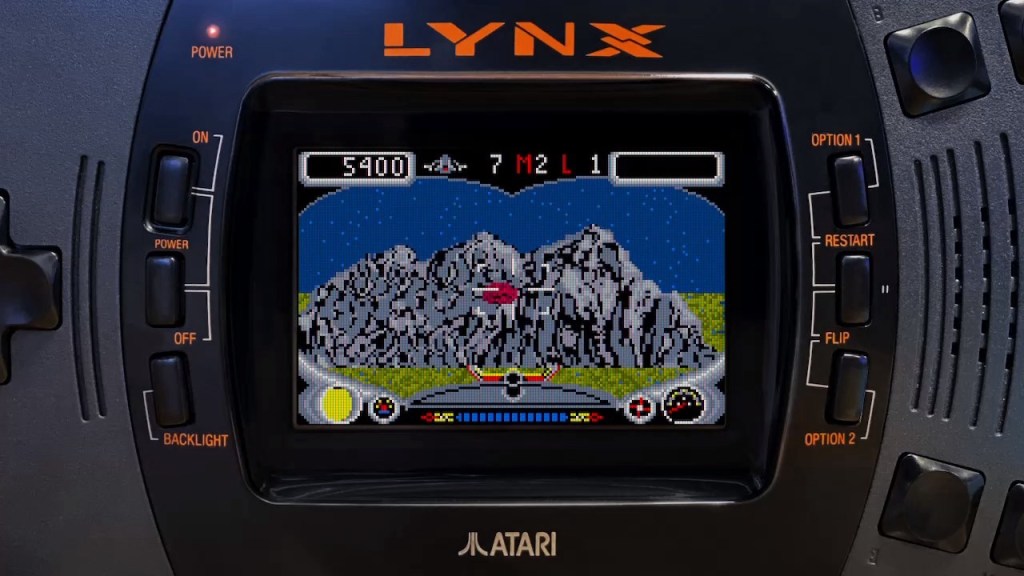
I usually need to make a conscious effort not to relegate sound to the end of these things but for once it’s found its way right into the start without any thought whatsoever! Anyway, once we hit start, we’re behind the wheel (or whatever) of our Turbo Sub, although initially you’re skimming across the surface of a somewhat psychedelic blue pixel ocean rather than beneath it, with clouds whisking towards you then past you from a simple but perfectly effective skyline, all combining to give a decent impression of the “turbo” in your Turbo Sub from the outset in a very original way. Most of your little screen is taken up by your windscreen, and I’ve got to mention the wipers that automatically clear the water off it when you resurface, which, like that muted sound just now, is such a thoughtful touch that you’ll never tire of seeing, and honestly might be the highlight of the whole game for this simple, easily-pleased mind! Elsewhere, you’ve got your score, lives left, which start at a generous but easily consumed ten, the number of screen-clearing mega-bombs left (with two at the start), your astro-protein fuel level (which depletes as you go) and your current game level. I’ll come back to most of those things in a sec but although I’ve got no way of trying it, I did want to quickly touch on something this version of the game has which the original arcade game didn’t, and that’s a two-player mode!
It was possible to connect two Atari Lynx consoles together using a dedicated Comlynx cable, and it was also possible to then chain up to eight of them together (or possibly more but stability was then questionable at best). I think it got a fair bit of game support too, from stuff like Warbirds, Basketbrawl, California Games, Rampage, Checkered Flag and the wonderful Super Skweek to name a few, but was reliant on all players owning a copy. As for Turbo Sub, the instructions don’t tell us much except you’ll also see the other player’s score on your cockpit display if there’s one connected, and that competing for the highest score is what it’s all about. I also couldn’t find out much about it anywhere else, except one forum post saying it was the worst Comlynx experience on the system, so maybe not knowing any more is for the best! Controls are straightforward (unless you’re a non-invert pervert!), with down to climb, up to dive, left, right, regular fire on one button and bomb on the other. It’s all very responsive too, with a large, fixed crosshair the focus of your attention in the centre of the screen, but that said, it will take you a few games to get a feel for your “hitbox” so to speak – there’s as much dodging going on as there is shooting, and it all gets a bit tight a bit quick, especially on your first trip underwater, where the pillars you’re suddenly having to avoid are going to be accounting for most of those ten lives for as long as you’re trying to work out how wide your sub is! It’s all part of the learning experience rather than anything unfair though, and the thrill of that first trip beneath the waves is going to make it all worthwhile anyway! Despite this being first-person rather than from behind a hover-dude, there’s no denying this plays out like Space Harrier or something though; in fact, a few of the enemies look like they’ve been lifted straight out of its Fantasy Zone too!
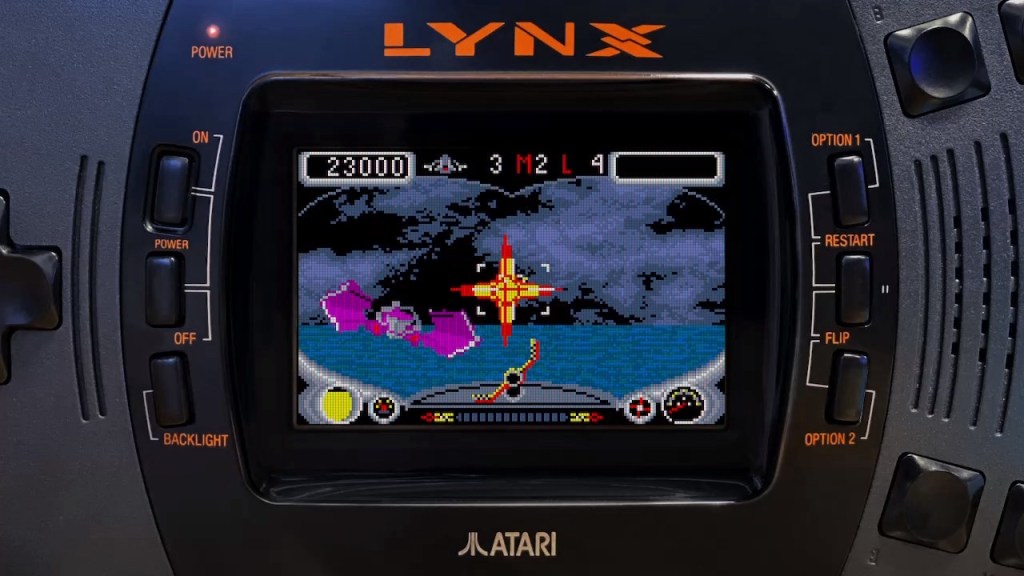
Aside from giant stone heads attacking in formation, and those garish pillars to avoid, there’s a decent variety to them elsewhere, even if they do eventually repeat, from Galaxian-esque fighters and flying saucers to sea life-inspired bosses, like the Mech-Ray or Galactapus, and then there are mines and cannons, and also real monsters of the deep to worry about, from dirty great jellyfish to big-eyed barracudas. It’s like tiny Darius, but as small as it can only be, it’s all perfectly formed too, with lots of detail and colour and plenty of personality about them, and all kinds of attack patterns to keep on top of, with some raining fire down on you, some shooting at you, and some just plain kamikaze! Obviously, these are where all the points are too, with some worth a lot more than others, with the high-scoring ones often dictating a hasty temporary retreat either above or below the surface instead, but in reality, there are three phases to each level. In the first, you’re always starting on the surface, and you’ll be pummelled by whatever’s the alien of choice there for a while before you get an instruction to dive, which signifies you’re above a gem pod zone. Gem pods are the currency of the 28th century, and at the end of each level, you’ll be manoeuvring yourself towards a supply depot, where you’re going to be able to spend them on upgraded weapons for the upcoming level only, such as rapid fire, multi-fire, missiles, shields and a targetting computer, as well as more lives, more fuel and more mega-bombs, all of which you can keep until you use one way or another.
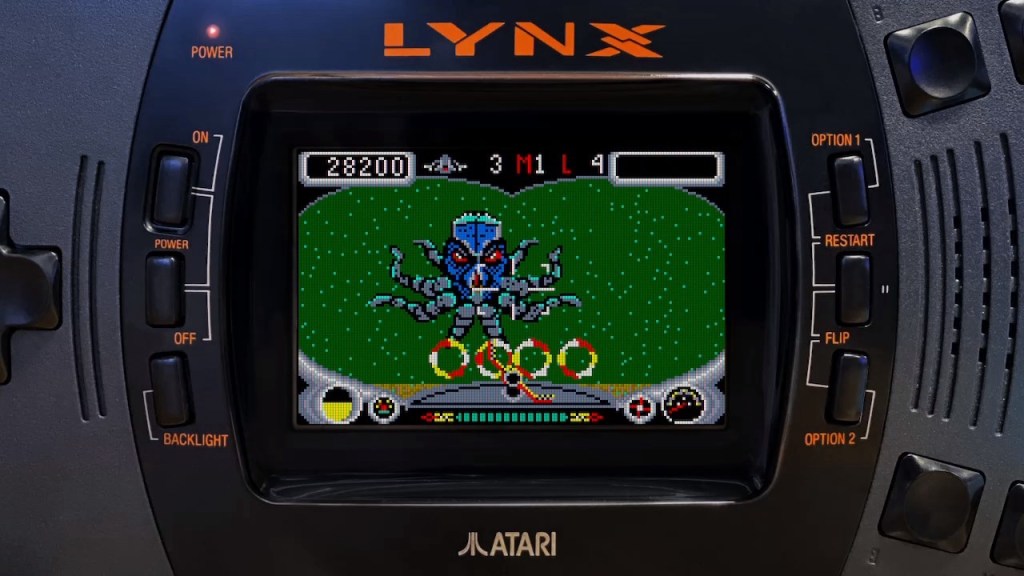
To collect a gem, which are all big pink jewels you can’t miss, you just need to run into it, but to get to it you’ll also need to negotiate those pesky pillars or various other alien traps, mines and laser nastiness, which generally make up the second phase. And then the third will be some kind of alien attack wave, before things suddenly go quiet and you need to keep an eye out for that supply depot and its little 3D tunnel to glide your way into. Which is maybe phase three and a bit! Then once you’re done spending whatever you’ve collected in there, it’s off to the battlefield again to resume your mission on the next level. I think there are seventeen levels in total, all with their own unique (and sometimes very unique!) watery colour schemes and weather patterns, and they’re also split-up by occasional day-night cycles, as well as those robo-fish bosses coming every four, before a final boss at the end, which honestly I’ve not got anywhere near as far as yet, but if he’s anything like the others I have met, you’ll want to go in hard with any bombs you’ll have hopefully saved, then duck and move around its attack as you plant a few more regular shots (ideally boosted for such an occasion) in its kisser before it goes down. I get the impression they’re here as much for variety as to test your prowess, but the ones I’ve got to have been fun all the same! I also get the impression that until you’re worrying about how to beat the final boss, you probably won’t be worrying too much about high scores either because that variety I just talked about, and seeing what’s next, are equal to the frantic gameplay and windscreen wipers for me!
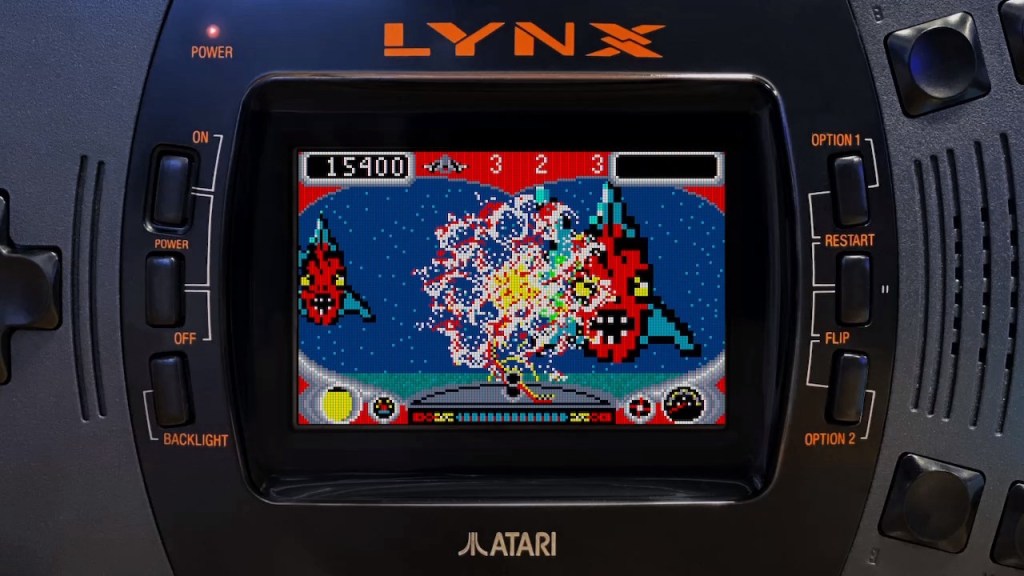
As alluded to earlier, going beneath the waves in Turbo Sub is also just a delight, with the simple but remarkably effective use of a mass of underwater particles acting like a star-field would do in a space shooter, adding a real sense of speed and danger, and now feeling more like the stage on the surface of the Death Star in Atari’s old Star Wars arcade game than it does Space Harrier. And like Star Wars, there’s a really cool moment of transition as, in this case, you’re suddenly submerged, the windscreen is inundated with water, and for a second you’re driving blind and briefly helpless, which gives you just enough time to reflect on what you’re about to face when it clears. It might take a bit longer to wrap your eyes around what you’re looking at when it’s laid out in front of you too, taking that psychedelia we also encountered earlier to a whole new level, as well as really going to town with the contrasting solid vibrancy of the enemies too. Obviously, you can also now dress-up the environment way more than you could on the surface, and while it’s never overly busy (as much, I imagine, to maintain speed as for aesthetic reasons), it’s easy to get distracted as the action ramps up fast, as evidenced by the skeletal remains the easily-distracted will notice littering the seabed! It’s all well-balanced all the same though, and once you’ve got a feel for what you can get away with, and a fix on the behaviour of the different enemies, the hit-detection is actually more on the forgiving side, and progressing to that next bit is always just about within reach. And it’s so much fun, with that fantastic energy I mentioned at the start just held in check enough to keep things enjoyably intense rather than frustratingly chaotic, and it’s that balance that really makes the game.
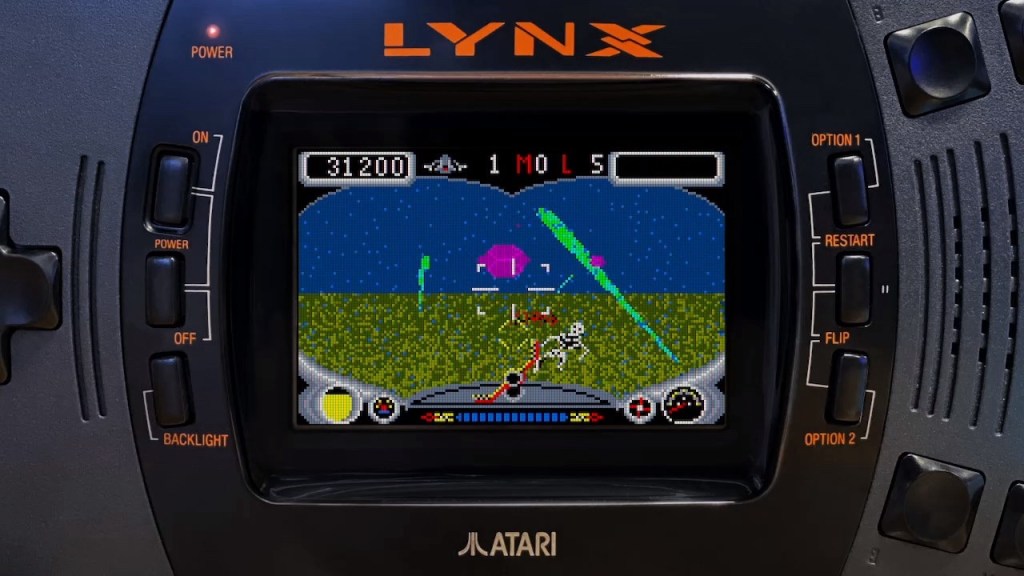
I’m a huge fan of a couple of other submarine games, namely Submarine Commander on the VIC-20 and various incarnations of Silent Service, and while admittedly it’s totally unfair to make the comparison to a pair of simulations here, there’s one thing they both nail that’s missing here, and that’s putting you inside the submarine itself. It’s all totally atmospheric, especially when you’re underwater as we’ve just seen, and in another example of thoughtful design in Turbo Sub, a lot of that is down to how your cockpit has been crafted, foremost as a window to the world that puts you in the sea… But to be “inside” the submarine itself, there needs to be a degree of claustrophobia, as well as the precariousness of you being in a tiny metal box in the vastness of an endless ocean. As said, I know it’s unfair to expect any of that of an on-rails shooter that isn’t shoving maps in your face so you can plot out how to traverse huge distances while also making you totally reliant on instruments and beeps and blips over sight, but I did wonder how much of an impact playing it on a tiny screen – be it Lynx, Super Pocket or in a fancy window on Switch – might have on this. Which seems like a good excuse to have a quick go on that original arcade version on an original-sized big screen! And don’t worry, I know I’ve gone long here, so I will be quick too then we’ll get out of here!
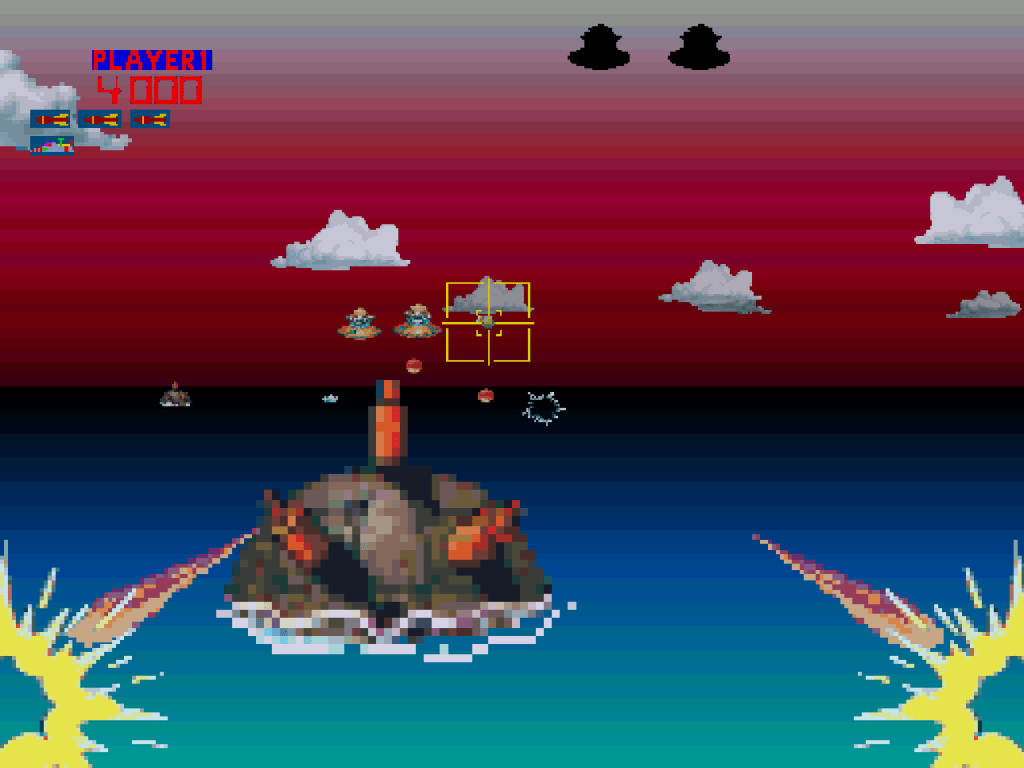
I literally dropped everything to go off to where I’ve got MAME set up on another PC and have a go at this for the very first time between writing that last paragraph and this one, which took several attempts and far more fiddling with controller setups than it turned out the game deserved, but we’ll persevere now we’ve gone to all that trouble! The first thing to get out of the way is it’s not really the game we’ve been looking at; the main difference is you’re controlling the crosshair, which you can move all over the screen (like a mouse pointer) and shoot the stuff coming at you. Apart from gunfire effects in the bottom corners, it’s 100% first-person now too, so no cockpit windows or any kind on surround at all. In fact, that makes it just like Atari’s Star Wars from two years earlier – albeit a pale imitation – and that means it also plays a lot like Taito’s far superior but similarly themed Battle Shark from 1989… Just play that instead – it’s brilliant and apart from some primitive, Berzerk-style speech, this is crap! Anyway, you’re still shooting stuff for points and avoiding things in the sea, but that’s all it’s really about now, sometimes moving forward then sometimes coming to a halt while you clear the screen of rubbish, indistinct whatevers before going again. In its vague defence, I suppose the way the sea infinitely blends in with the sky on the surface does give it that sense of scale I was missing in our Lynx game, but that’s all I’ve got!
I might not have got what I was looking for there, to the extent that if I wasn’t so lazy I might go back and change the entire narrative of that last bit, but actually, I think it was a worthwhile aside all the same, not just to see where this port of Turbo Sub was coming from, but more so to see that it wasn’t really a port at all! Which does beg the question why Atari bothered getting the license (or not) for an arcade game no one really played, when it is so far removed from its supposed source material. All the same, quite possibly the most underrated example of a home conversion done better than the original, and even if we chose to define it as more of a reimagining than a conversion, there can be no complaints on any front about that either… Unless I ever do a top ten countdown of my favourite Atari Lynx arcade ports, where it’s now going to cause me all kinds of self-imposed rule-breaking headaches! It deserves to be part of pretty much any top ten on the Lynx though – a hidden gem of a game on a hidden gem of a console that I’m so glad is more accessible now than ever before. I reckon it’s a bit of a miracle too, especially when you look at other attempts at ambitious 3D shooter stuff on there like Cybervirus, for example, that can come across as more of a tech demo than something to keep going back to, while this just seems to wonder what all the fuss is about. And that means it can focus on what it does best (just to properly conclude that wayward narrative just now), which is fast-paced, in your face, all out action involving a heavily armed submarine and a load of big messed-up fish, and it does that brilliantly!
As always, I’ll never expect anything for what I do here but if you’d like to buy me a Ko-fi and help towards increasingly expensive hosting and storage costs then it will always be really appreciated! And be sure to follow me on Instagram, X (formerly Twitter) or Threads for my latest retro-gaming nonsense, and also on Bluesky, which is under my real name but most of it ends up there too if you prefer!
 Retro Arcadia