We’ll come back to my history (or not) with Another World in a second, but first, I was thinking about other games that – like Another World – I played at the time but did absolutely nothing for me, only to have then seriously grown on me and become real favourites since! I suppose the most obvious – because it’s the most closely related – is Flashback, which was also put out by Delphine Software but a year later, in 1992. I played it on the Amiga sometime around then, and then DOS, Mega Drive, SNES, Sega-CD, iOS and probably elsewhere too since, but wherever it was, it just didn’t click. There was always something there though, which is why I kept coming back, until I eventually bought the 2018 remaster (pictured below) for next to nothing in a Nintendo Switch sale, some time after that again, promising myself I wasn’t letting go until I’d finally worked out what all the fuss had been about for myself. And I did! I even finished it too, once I’d also worked out there was a bit more to it than met the eye, and it needed to be approached more like a series of interconnected spatial puzzles than the cinematic action-platformer I’d always thought of it as. Which I’m pretty sure is a theme we’ll return to shortly!

While Flashback hasn’t quite become the favourite Another World has, a couple of other totally unrelated games that really have also sprang to mind, and maybe most prominently for me, Silent Hill, which I’ve now completed dozens of times, and whose sequel I’d rank as my number four all-time favourite game! I bought the PlayStation original day one in 1999 because it was a no-brainer that I’d love it, but fifteen minutes in (many times over), I just wasn’t getting it, and eventually I gave up trying to get it, more fool me! Actually, I say unrelated, but now I think about it, there’s a fair bit of Another World in Silent Hill too! A whole other world away but maybe equally surprising is Atari’s Missile Command, which I’d been messing around with since it was first in the arcades in the early eighties then later elsewhere, but once again, I never really got it. I don’t know, maybe a bit too strategic for me, which might explain why it took the simplified but absolutely authentic Atari 2600 port for it to click. However, I don’t think my friend with the 2600 at the time ever had it, so I probably didn’t experience it until the Atari Anthology compilation on PlayStation 2, which would make it as late as 2005 at least. Nowadays, I think the original 1980 arcade game probably just about pips that version, and even made it into my Top Ten Favourite Fixed / Single-Screen Shoot ‘Em Ups countdown, ironically for that additional complexity (which I do admit only means three buttons rather than one)!
Those are probably the main ones that come to mind for now but if you’d asked me to name just one, it would have been Another World, and without any thought at all! Like Flashback, I played it absolutely everywhere for decades, always knowing there was something there, even if it did keep eluding me, but I think the first time would have also been on a friend’s Amiga sometime around its launch in 1991, where I weirdly associate it with Shadow of the Beast II, which came out the previous year but I guess he might have picked it up around the same time so I think of them as a pair, and distinctly remember being totally disinterested in playing either after my first couple of goes and watching him do it instead! Similar story with the DOS version and another friend at university, and my brother possibly rented the Mega Drive version but I don’t think we ever saw beyond the second screen before it went back, and that was probably it until I got my first iPad back in 2011, which coincided with Another World’s 20th Anniversary edition on there. I think I got as far as the third screen that time! Undeterred, as emulation came along and evolved to allow for more sophisticated consoles, I think I tried most of the versions between then and now – SNES, Sega-CD, 3DO, Game Boy Advance… And then along came The A500 Mini in 2022, and suddenly I found myself with a legitimate copy of that original Amiga version I’d dismissed thirty years before, and just like I had with its stablemate on Switch, made up my mind I was sticking with it until I found what I’d been looking for this time… And once again, I did, and more besides!
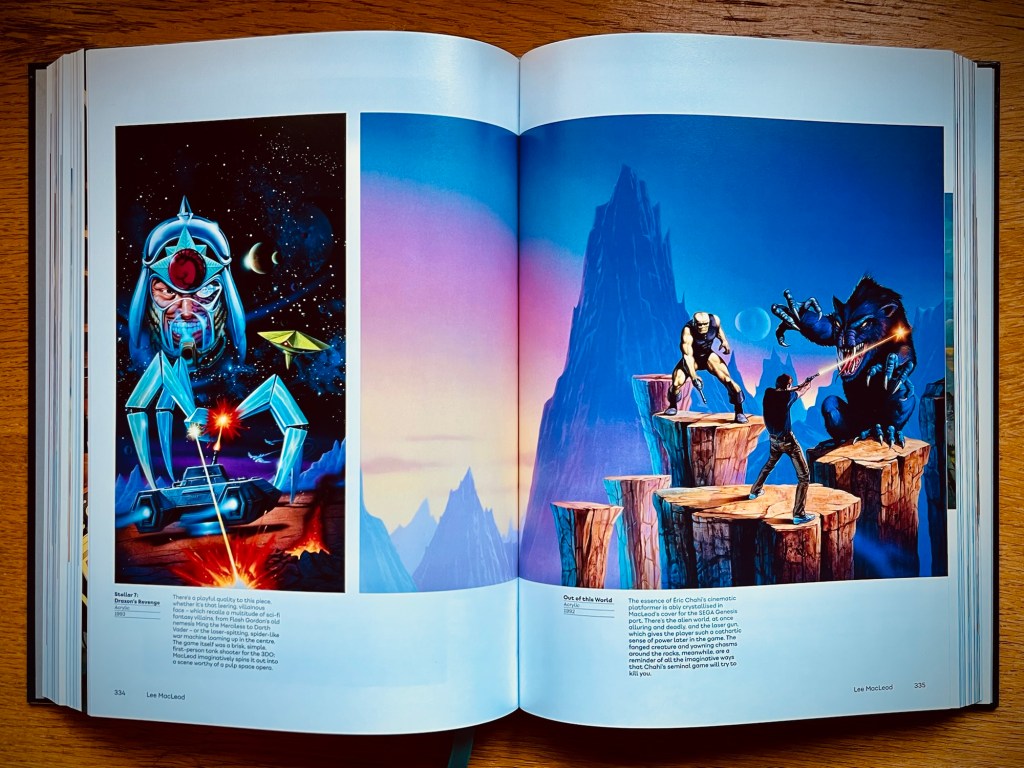
I read on more-or-less solo creator Eric Chahi’s website that he thought the original Amiga version had gone out relatively untested, and therefore lacked some of the fluidity of gameplay of later ones, but I reckon had it not taken me over three decades to come back to it again, or, indeed, had I got caught up in the hype and asked for the Atari ST version for Christmas 1991, just after they were both first released (by U.S. Gold rather than Delphine Software in the UK), then I’d have taken to Another World a lot quicker than via all those other versions over the course of decades! Okay, both the sights and sounds on ST one aren’t quite as vibrant as on the Amiga, but there’s not a lot in it when they’re not side-by-side, and while I’m not going to get into every plus and minus of all the other versions, everything that eventually clicked is exclusively there (or not there) on the Amiga in particular… And we’ll get into that, but first we should probably get into what the game’s all about, although first we need to get past its infamous copy-protection… The dreaded code-wheel! The game came on two floppy disks but no sooner was the first in the drive that you needed to grab the cardboard wheel that also came in the box, rotate it to the position indicated by a number on the screen, then correctly enter the mysterious symbols thus revealed. These things were the bane of every teenager lucky enough to have a 16-bit computer back then – it was easy enough to copy a disk, and sometimes it was even possible to photocopy a manual if you were far enough up the piracy chain (meaning you knew whoever had the original), so could identify word eleven in paragraph two on page forty-five when the need arose, but a two-piece, twenty-stage wheel full of arcane symbols positioned behind a series of obscurely-shaped cutouts???
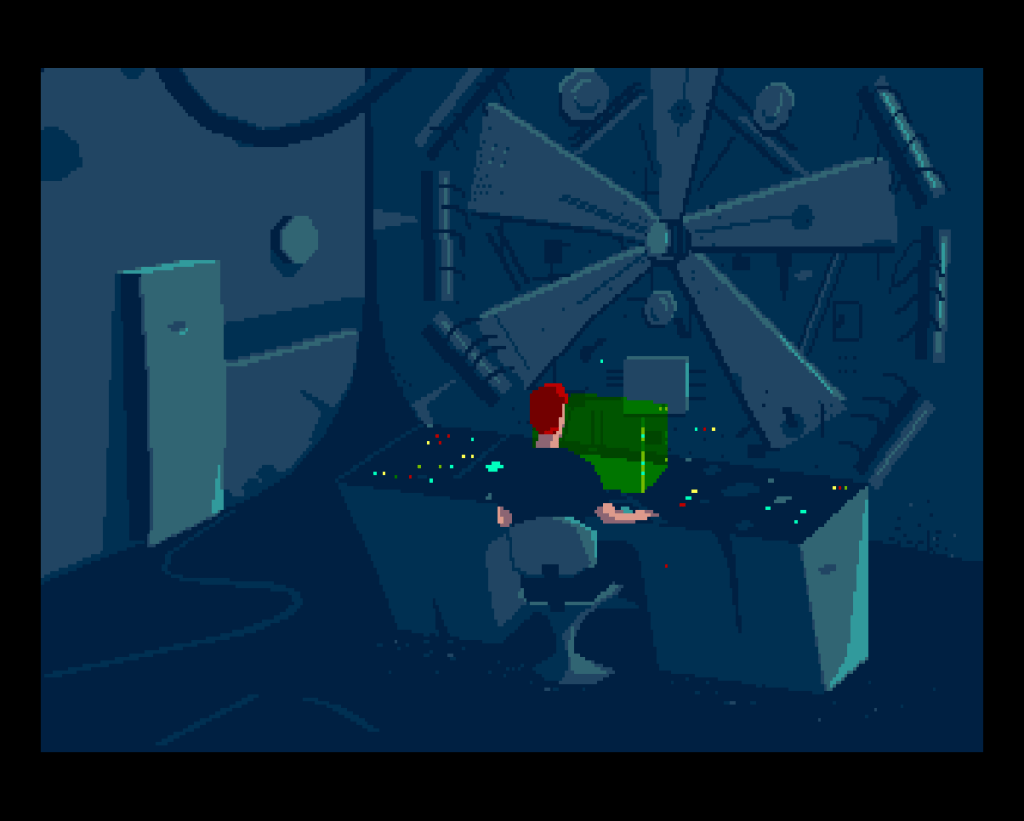
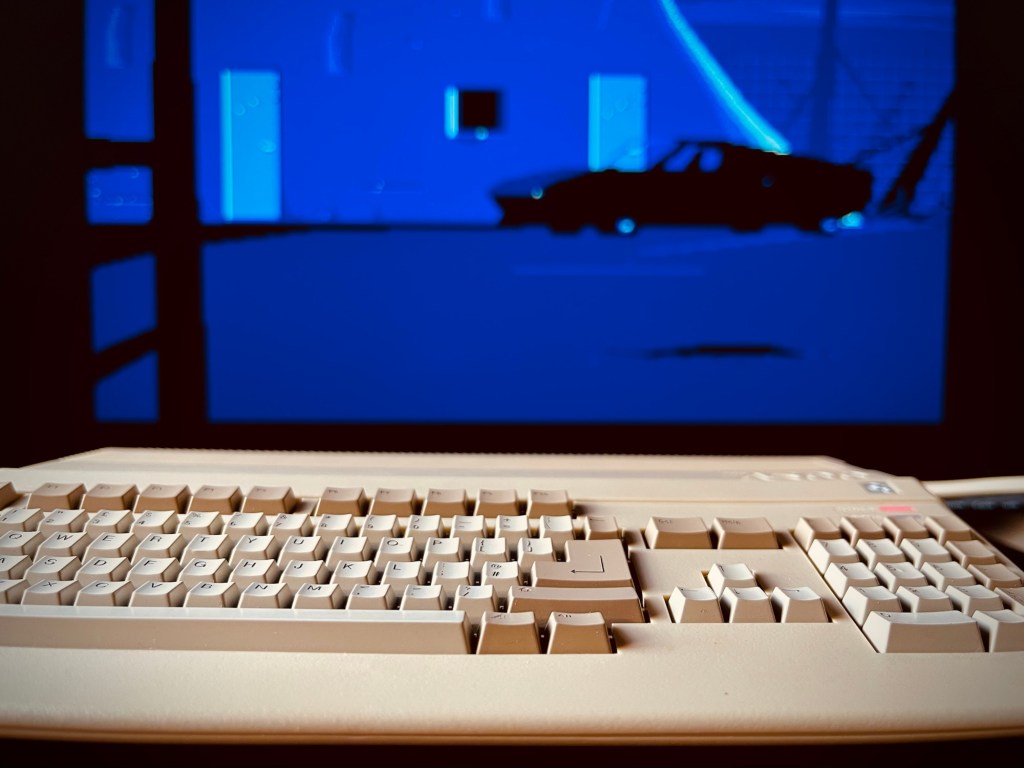
Thankfully, we can dispense with that on the Amiga Mini and get straight into the opening cutscene, which in this case does compensate for the resulting lack of back of the box (just like the old days)… “Young scientist Lester Chaykin never in his wildest dreams imagined that it could happen… but it did. While experimenting with sub-atomic particles, his laboratory was struck by lightning – teleporting him into another dimension. A strange world nothing like earth, where he must call upon all of his intelligence, training and resources to survive.” The American release, known as Out Of This World, was a little more literal, but apart from a cryptic paragraph in the manual that you’ll eventually work out relates to the gun you might find later, as well as lots of less helpful references to cinematic storytelling, that’s about all you’re getting before you’re thrown into the action! By which I mean into a very deep swimming pool thing, with the action specifically being to not drown, although it might take a few goes to realise that, and then a few more to do anything about it! And that’s kind of how the rest of the game goes too… I’m jumping ahead of myself now though because I really want to mention that cutscene, which does play out like the back of the box said, but is something else again, the likes of which we’d take for granted now but I’m struggling to think of much like it before this came along. Maybe some Lucasfilm or Sierra point-and-clicks had had their cinematic moments, albeit to a much lesser degree, and Dragon’s Lair, I guess, if that counts; it certainly counts as an influence, and likewise, Impossible Mission on the Commodore 64 – in fact, mash those two together and you’re not far off Another World!

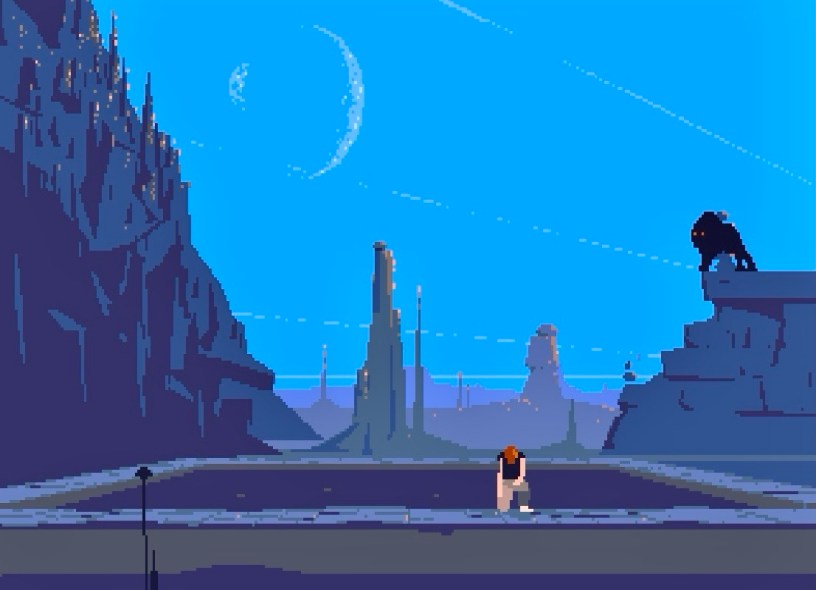
Anyway, back to the cutscene in question, this was groundbreaking, blurring the lines between passive and interactive, cutscene and gameplay, in the same way Metal Gear Solid went to another level again doing a few years later, and it was pure b-movie presented like a Saturday morning cartoon, all glamour as you turn up to work in your Ferrari and login to your holographic screen before it goes Back to the Future in a very Scooby Doo kind of a way, with a lot of what’s going on more striking than detailed, and static but in constant motion, before things really kick off as the lighting strikes and everything gets electrified and starts falling apart, as sampled howling winds and thunder-cracks and menacing buzzing noises replace the none-more-Amiga simple, textured, almost pan-piped melodies that have been slowly building all this electricity in the background without you even noticing! And suddenly there’s silence, and then the sound of gurgling, and now you’re behind a desk that’s sinking very quickly into the watery depths, and you’re on your own! And probably dead too… It is true that Another World takes about half an hour from start to finish but we’re now assuming you’re going straight there and not dying on that first screen before you realise what’s going on. Then when you do, and you emerge from the pool like in the picture at the top of the page here, not dying again as a tentacle drags you back in while you’re getting your bearings!
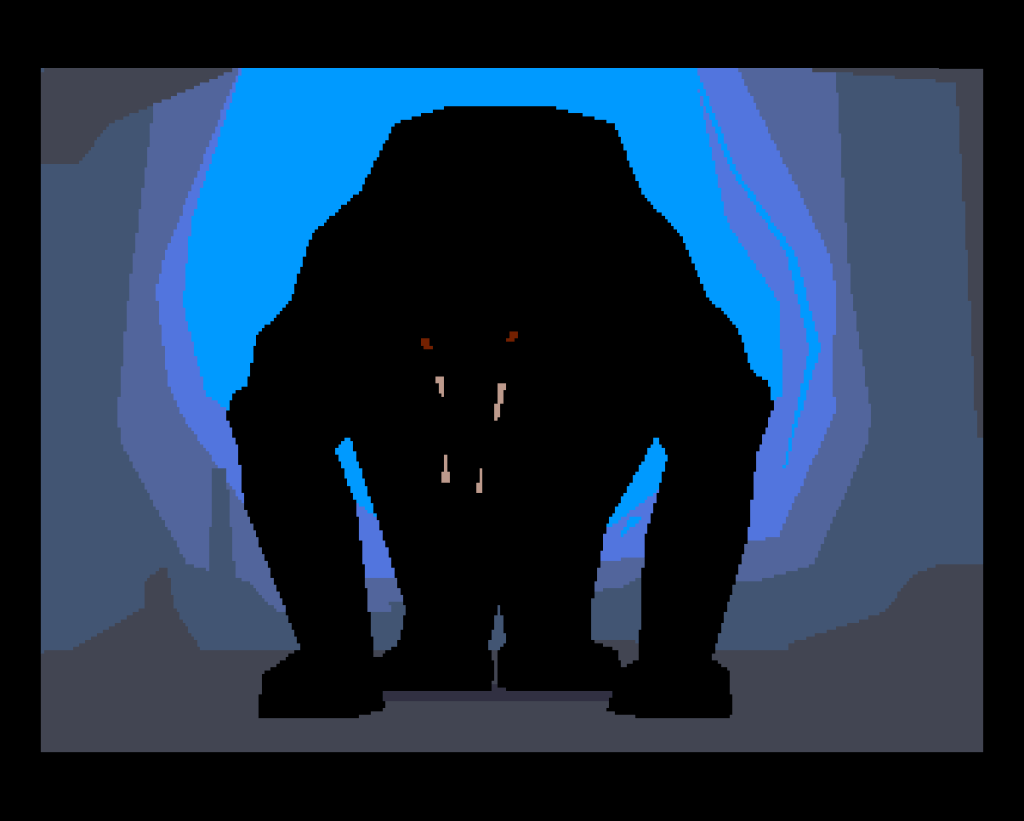
Once you realise you can’t hang around, you’ll soon be stung to death by a little single-fanged worm thing on the next screen, then once you’ve worked out you can kick it to death, the rest of its family will drop from the room and do you in again! You’ll soon be an expert at kicking worms though, to the point you’re now a bit cocky, so you’ll get bitten to death again by the next lot on the next screen. And then the massive beast you saw in the background at the start is suddenly in your face and about to bite it off! Eventually you turn and run before it can do that, and eventually again you’ll run all the way back past where you started, right over a cliff you were supposed to jump off and grab a vine to escape then head all the way back… And there’s less than two minutes of your thirty before you see the credits! I’m not sure how many screens there are in this game but I reckon you’ll die on every single one, probably several times, and then you’ll be dumped right back at the start of that section or level or whatever you want to call it so you can get back to where you died and try all over again. And most of the time you won’t really mind in the slightest because every screen and even every action is progress, and it’s never too far from the last checkpoint to wherever you’re heading back to, and when you’ve done it once you’ll feel like a boss getting back there! You are given a four-letter password for the last checkpoint every time you die too, so you can easily come back again later. All that said, once again, I am playing this now with the modern conveniences of the Amiga Mini, and not suffering the constant disk swapping that went hand-in-hand with going back to a checkpoint, so it wasn’t exactly all sunshine originally!
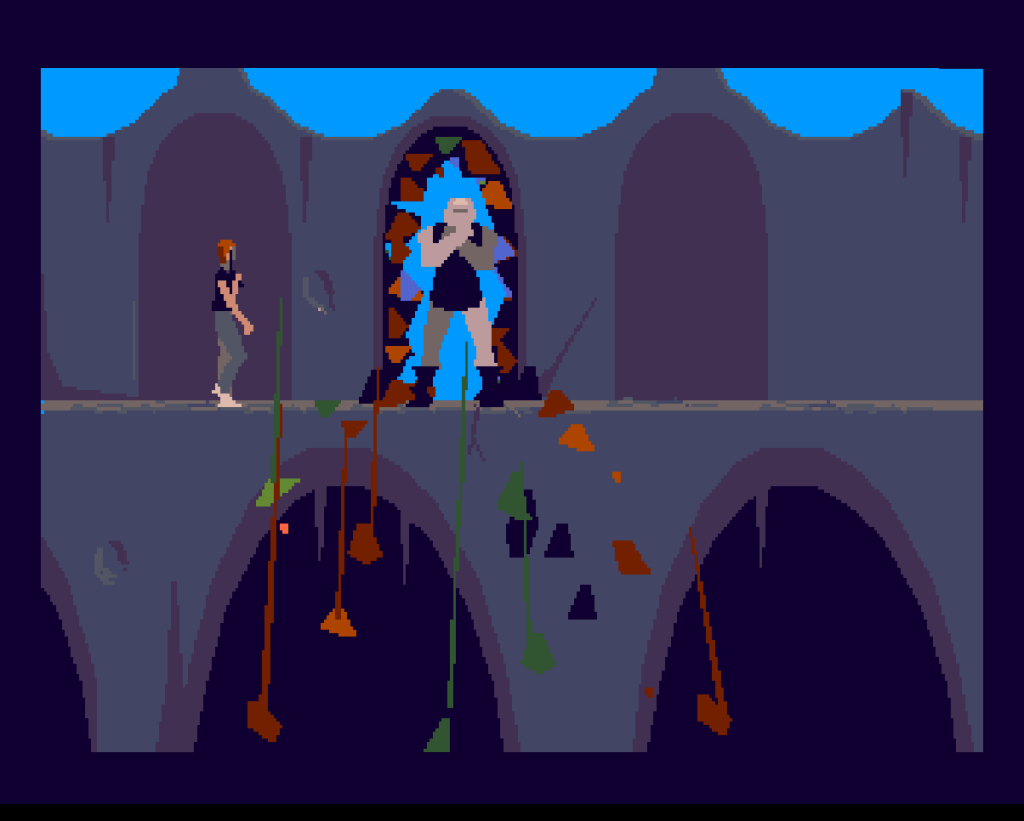
Artistic splendour aside (and I’ll come back to that), most of the game plays out visually at least like a side-scrolling platformer, but I want to quickly return to some of those deaths we just covered because they’re also often accompanied by some fantastically gruesome cutscenes, styled like the big one at the beginning and even more vicious for the minimalism, as you’re gored or devoured or worse! And even for regular “in-engine” deaths, where you might miss a jump over some spikes or get shot by a laser, there’s loads of black-humoured schlock to enjoy, whether from bloody impalements or a multi-part evaporation, complete with crumbling skeleton! These animated touches stand out all the more against the immaculately minimal backgrounds left behind as you die over and over but they’re not just limited to death sequences – aliens might burst through stained-glass windows that shatter in a suitably visceral rain of colour; the shield that appears if you hold down fire for a second will shimmer; walls you shoot down by charging up your gun when you hold fire down for a bit longer will disintegrate… And all these effects are kind of muted but at the same time exaggerated because of just how minimal everything else looks. The art style here really is something else, and the very definition of both iconic and timeless, in equal parts down to masterfully selective use of the Amiga’s relatively limited colour palette, as well as the uniquely minimal graphical illustration we’ve already touched upon that moulds these colours into a truly alien world. It’s a truly recognisable world wherever you’re playing too – you can dress it up like on the 3DO or make it all clean and high-resolution for multiple anniversary editions on modern consoles but it’s always unmistakably Another World, although I don’t think it ever looked any more at home than where it was first created.

The gameplay itself isn’t easy to classify! Maybe narrative action-adventure or action-puzzler, with bit of platforming and exploration (although overall it’s mostly linear), and I’ve always found it to be pretty point-and-click adventure in spirit too. I find the “narrative” bit most interesting though, not least because as I was writing the word down, I realised there’s barely a word spoken throughout! In fact, I think a few words written on the computer screen in that opening cutscene are about the extent of it! As anyone who’s ever played the likes of Ico and Journey (both of which undoubtedly drew inspiration from this game) will attest though, there’s more than one way to tell a story, as well as build up an unspoken but unbreakable bond with another character, human-controlled or not! That reminds me, no health bars or scores or anything else at all cluttering up the screen here either, which is something else you didn’t see much back then. And also like those games, Another World is not going to be done any justice by me attempting a pseudo-walkthrough, so I’ll just give you a rough outline to give some context for how it plays. Once you’re done running away from the scary big beast and scarier tiny wiggly worms at the start, you’re going to come a cropper at the hands of a pair of humanoid but orc-ish locals, then find yourself caged-up with another of them, suspended above an underground labour camp. There’s no prompting about what’s next, as a prison guard beneath you hangs up his coat and starts his shift, but getting out seems like a good idea, and for want of any better ideas, moving your joystick left and right to get the thing swinging will subconsciously suggest itself sooner or later, and after doing that for a while, you’ll come crashing to the ground with your new alien ally, bust out of the cage, and if you’re being observant, pick up the gun that poor old guard has just dropped as you fell on top of him, before the pair of you do a runner! And that’s pretty much the rest of the game from here on in. You simply need to do what you can to make sure both of you survive as you move from what turns out to be an increasingly sophisticated prison complex, then through caves, Romanesque towns – complete with a coliseum (where I get the feeling you might have ended up had you stayed in the cage) and some saucy-looking baths – and onto a high-rise climax in a tower, although you do kind of just end up there rather than it being any kind of destination, with escaping your immediate situation generally being the recurring goal that drives you on, rather than there being an overarching one, like getting back home, for example.
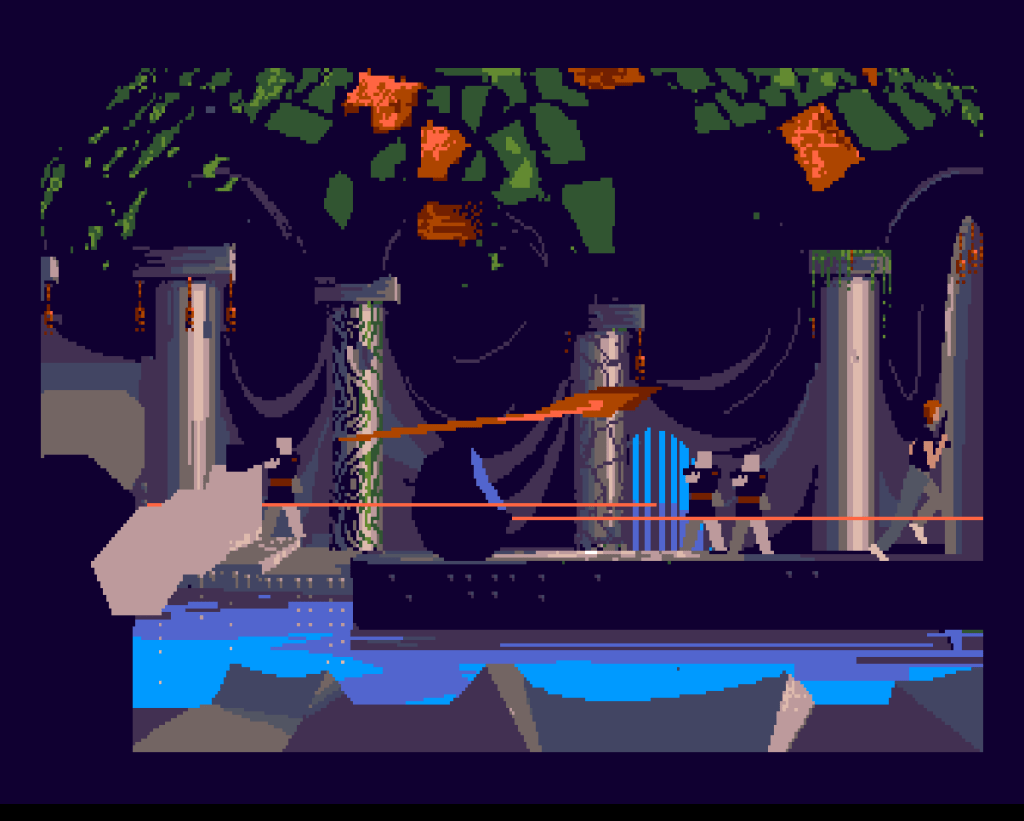
As well as doing an awful lot of running away, you’ll soon also be in shootouts with more prison guards or police or whatever they are – in some kind of social commentary I’m sure, the aliens are generally identical, including your new friend, so it’s hard to tell! The rest definitely aren’t friendly though, and with the one-hit kill system at work here, they’re probably going to become the most persistent challenge when a Star Wars-style laser battle across the screen is the only way to progress! For all the fire button mashing though, these encounters are a surprisingly tactical affair, as you typically duck, fire up a shield, then shoot a relentless barrage until someone blinks and their shield goes down for even a split-second before it can be recharged again. Good luck trying to win one of these fights first time around too – you’ll be doing well to even react before you’re shot if you don’t know it’s coming, especially the times when it’s coming from another screen! The way things pan out is totally predictable though, so you’ll probably be fine at the second attempt regardless, and if things get really hairy, your new-found friend will often be there to literally drag you out of whatever trouble you’re in! Unlike something like Ico, where there’s quickly a sense of working together and probably a greater bond as a result, in Another World your relationship is more passive and built on reliance, like you’re both trying to find a way to get the pair of you out of your current predicament because that’s the only way either of you will, so he’ll come and go as, no doubt, he’s doing exactly the same as you, trying to work out how to open doors, reach high ledges, power things up and so on. Obviously, all this puzzle-solving is mostly down to you though because it wouldn’t be much of a game if he did everything, and he does have a tendency to get himself trapped a lot too, which is also on you to sort out!
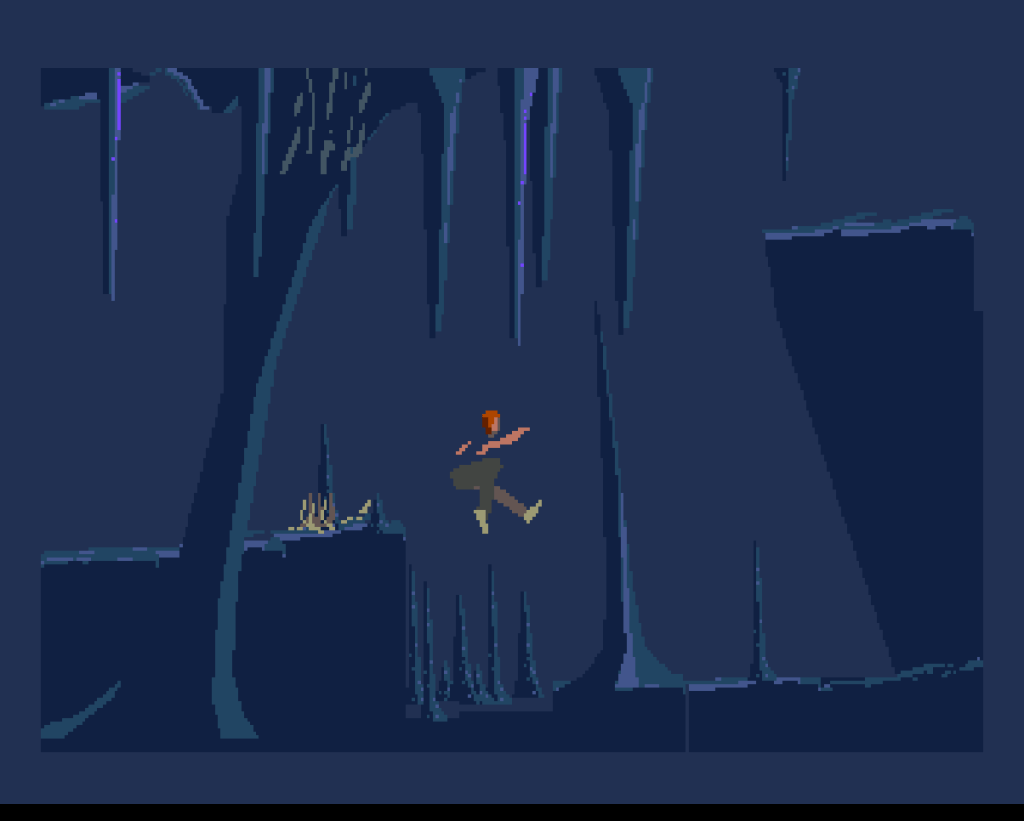
Puzzles vary in complexity and also in scale, with some very immediate and some requiring back and forth across many screens, dealing with various nasties along the way as well as some very precise platforming. In fact, this might be where those original versions of the game are at their weakest compared to later ones, with the controls a little sluggish and a little stiff, and while you do learn to compensate as you play, we’re also talking about pushing up on a joystick to jump rather than a dedicated controller button, so there’s no denying you’ll be coming to some frustrating sticky ends as a result. There’s one cave section in particular where a puzzle requires you to blast away some rock holding back what looks like the bottom of a lake above you, and once the dam breaks you need to get out of there very fast, which involves running (by holding down fire as you press a direction) then jumping over a series of gaps while the tunnel quickly floods behind you. These gaps were hard enough to negotiate when you had all the time in the world travelling the other way, but now one of them that was located near the end of a screen before is at the start of it, so allowing for the aforementioned lag, you’re pretty much taking off from the previous screen before you can even see where it is! The check-pointing here isn’t exactly as generous as it could have been either, and likewise a series of leaps of faith in the same area that I’ll never be confident of completing no matter how many times I play the game, and take just a bit too long to get back to when you inevitably fail while you’re trying to work them out. I guess that’s where the un-testing was!

I’ve mentioned point-and-clicks previously, and while I wouldn’t say any of the puzzles here are Monkey Island levels of obscure, there’s certainly some lateral thinking required for a lot of them, or careful observation, like one involving a guard’s reflection on some hanging globes, or sometimes just trying everything on everything, like shooting the chain holding up a big light, which you then discover has had positive repercussions several screens away, finally getting rid of the stupid guard you couldn’t even get a shot away on a dozen times previously! At the other end of the spectrum, some puzzles are just a simple process of elimination, by which I mean dying repeatedly until you stumble (or roll) upon the solution, and others just involve some exploration to find a switch or something. I don’t want to downplay the latter too much though because one of the most memorable moments in the game for me involved one of these, where you have to dive into a pool and swim down into a load of underwater tunnels, and at the end of one of them is a power source you need to take out. The thing is, you don’t know which one to follow, and those air bubbles being exhaled every few seconds are saying you can’t take too long working it out either, and the resulting claustrophobic tension is fantastic, as is either the relief when you find an air pocket or the panic when you don’t! And then you start having real-life nightmares about swimming blind through underwater tunnels…

There are a few more very important things still to tick off while we’re talking about building atmosphere but I’m going to start with maybe the least of them, which is the infrequent but incredibly effective use of up close and personal characters suddenly appearing and moving across the foreground of the screen. Sometimes it’s used to add a level of urgency, like when you come crashing into the aforementioned Roman baths and then just need to get out of there fast as the panicking naked lady aliens are quickly replaced by a mob of guards shooting very animated lasers at you from all directions and all dimensions! And then sometimes, it’s just about shoving a bit of life into the screen, reminding you that you’re the real alien here. There are two more areas where Another World really comes alive though, and the first I’ll touch on is going to be its legendary rototronic animation! This is where you trace over live action footage, frame by frame, to create a realistic effect, and in this case that footage involved toy cars, guns cut out of cardboard, and the developer’s brother running around the back garden! This was translated into polygons, both in-game and in the cutscenes, but I think its use was restricted to where realism was a big deal, such as in your character’s movement (which results in something not unlike Prince of Persia) or where you simply have to have a drifting Ferrari for that grand entrance at the office! The Amiga version does chug a little in this respect, and show a little less fidelity, if you’re comparing it with the likes of the 3DO or Jaguar versions (where you could switch to old-school if you preferred) but it looks good to me standalone, and as alluded to earlier, often all the better for it!
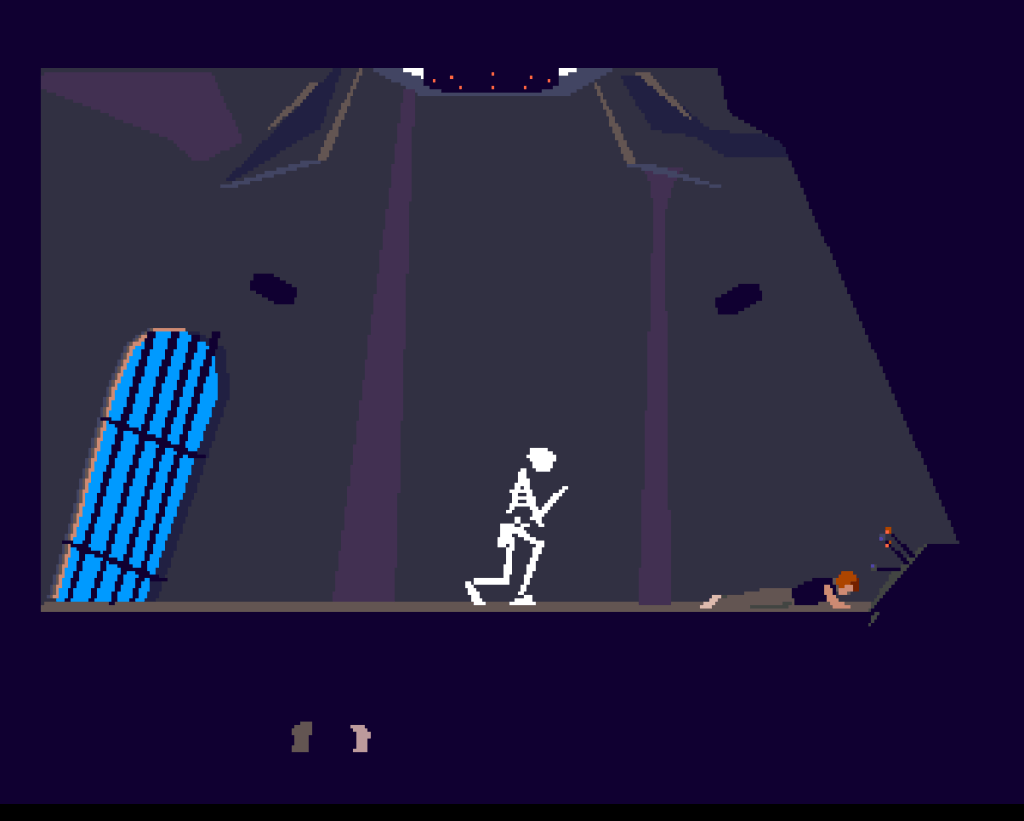
The second thing I wanted to get into now is the sound design. We’ve already touched upon Jean-François Freitas’ music but as much as I enjoyed it, and once again, would take it over some of the more padded-out soundtracks in later versions, it’s only really properly exposed during the opening cutscene and the end credits, so I’m specifically talking sound effects here… And while I’ve completely unintentionally left them until last, they might just be the headline act! Okay, by modern standards you can hear the compression but the lengths that have been gone to in creating and capturing them are more than equal to the same for the animation just now! They’re kind of used in a similar way to the textures on the backgrounds too – a constant but also a flourish that lets your imagination fill in the gaps. That said, they’re pretty relentless too – except where silence is used to its own effect – and even in those opening couple of minutes of actual gameplay, you’ve got the wind, the rumble of rocks getting ready to fall, the squelchy thud of the worm-things as they do fall, and then the serious squelching when you get a kick in on them, and they’re all proper, sampled sounds, all competing with each other to expand on the incredible atmosphere the visuals have already set out. Then there’s laser fire for every situation, the hum of shields, the onimous roll of energy-grenades, all kinds of electrical noise, things breaking, you breaking. Actually, I think my favourite is where you drop down to the bottom-right of the screen near where the lamp puzzle from earlier is, and just as you land an alien guard appears out of nowhere from the screen next-door and takes you down with this sickening breaking nose sound! I’m not sure where Chahi’s recorded all this stuff, and I’m not sure I want to know, but full marks for going the extra mile because whatever he did, he definitely did that!
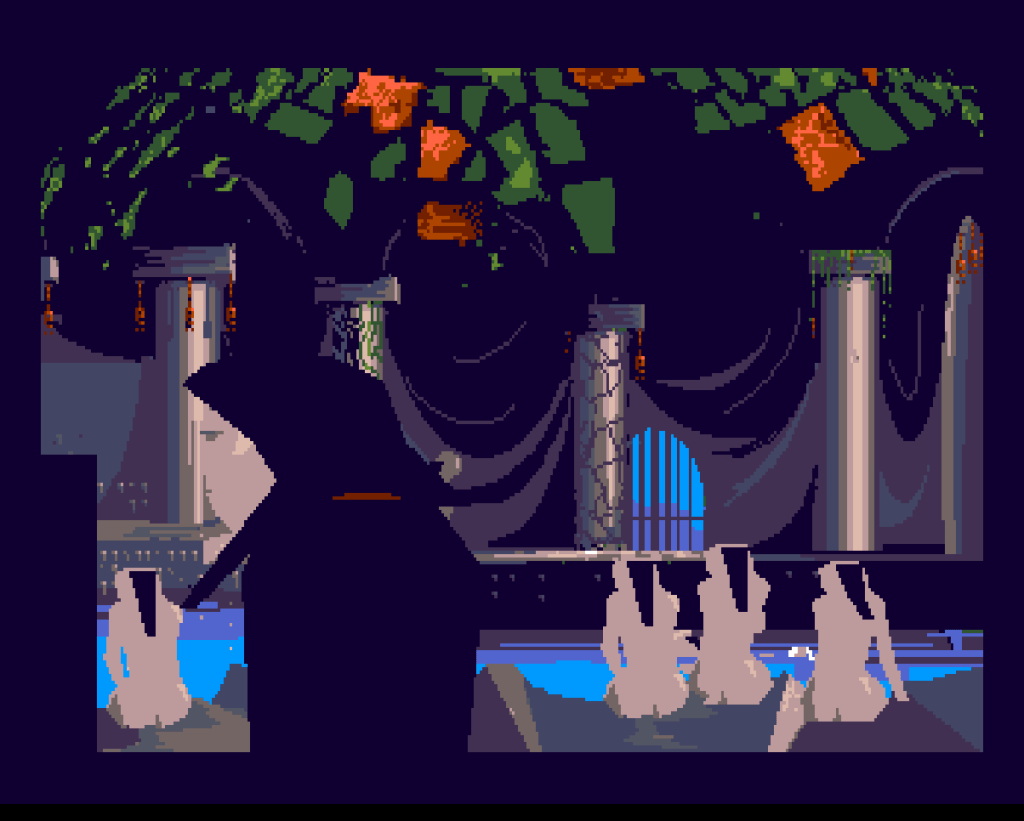
We’ve come across a few other versions of the game on our travels already, and like I said earlier, I didn’t really want get into any of them in too much detail. However, just before we close, I will single out the 1994 Sega-CD version, and not so much for Another World itself but for its somewhat obscure sequel, Heart of the Alien! You’ll have noticed I went with Sega-CD rather than my more regular Mega-CD localisation too because it only ever came out in North America, and only really existed because developers Interplay and publishers Virgin suddenly had a whole CD to fill, and there’s only so far a new soundtrack can carry you! Eric Chahi was initially involved too, and came up with the genius idea of revisiting the original game but through your alien friend’s eyes. Unfortunately that was about the sum total of his involvement, and what resulted seems to have been a bit of a stinker in almost all respects, to the extent that he’d later totally disown it as any kind of sequel to his original game! I did have a go a while ago, and I’ve had every intention of going back on a rainy day ever since, but maybe that says it all! Or maybe I’ll have a revelation in thirty years like I did its predecessor! Hmmm… I don’t think I’ve got much more to say about that either. Things do escalate for you and your partner, and it all goes places at the end, and leaves as many questions as answers, just like it should. Quickly coming back to Journey again though, there’s this bit at the end of that where your character is dragging himself through snow, at the point of exhaustion, and you’re so immersed by that point that you’re literally physically exhausted too. And now you know where it got that from! Much like Ico did, and Silent Hill, and Metal Gear Solid, and, of course, Delphine’s own Flashback, where we seem to have come full circle, and in the company of some of the greatest games of all time too, and that seems like a very good place to finish. Just lucky the guys and girls behind all of those realised Another World was also one of the greatest games of all time a lot quicker than I did!
As always, I’ll never expect anything for what I do here but if you’d like to buy me a Ko-fi and help towards increasingly expensive hosting and storage costs then it will always be really appreciated! And be sure to follow me on Instagram, X (formerly Twitter) or Threads for my latest retro-gaming nonsense, and also on Bluesky, which is under my real name but most of it ends up there too if you prefer!
 Retro Arcadia