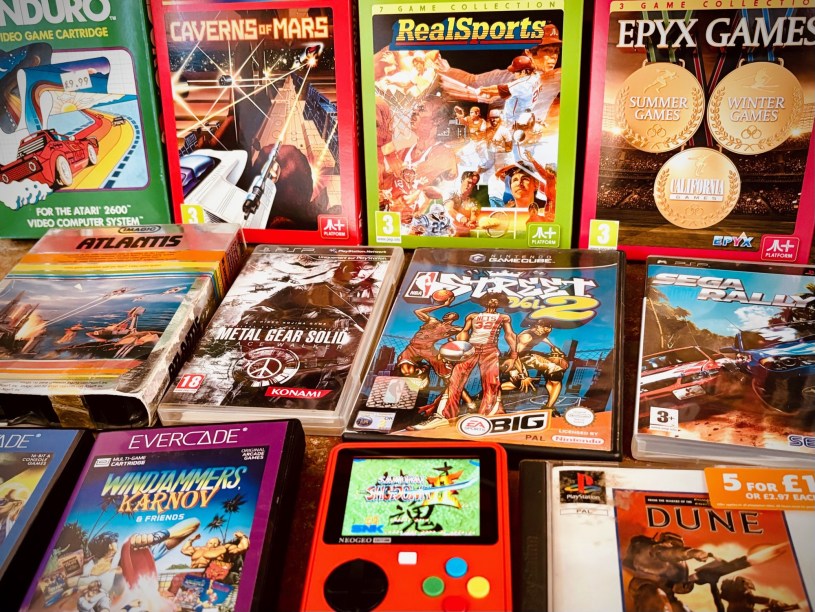
Welcome to another instalment in my seasonal series of features covering everything I’ve been spending money on that I probably shouldn’t have been over the past three months! That said, I did sell a bunch of stuff on eBay to make some shelf space for it, so I reckon things might have balanced themselves out for once… Actually, I will share that I pulled the trigger on getting rid of a few legacy Evercade cartridges that have been sitting there for years since I had my fill when they first came out, and I still can’t quite believe how much people are prepared to pay for them! I’m sure we’re all happy with what we got though. Anyway, nothing too extravagant for me this time – a few more Evercade investments, and I’m still filling in a few Atari 2600-shaped gaps in my almost-instant collection, similar for my ongoing PSP wishlist, and there was plenty more besides, so let’s jump in…

We’ll start on PlayStation Portable, and as just alluded to (or you might already know if you’ve read my Spring Pickups recap), I’ve had a bit of a shopping list for this on the go for a while now – nothing crazy, just fifteen or twenty regular games I’ve always fancied but never got around to. I’ve been making pretty good progress too, which continues here with Sega Rally… Or Sega Rally Revo (for revolution) as it was also known, which originally arrived on PS3, Xbox, PC and PSP in 2007. It was officially the fourth in the series, but I think is actually based on the Sega Rally 3 arcade game, which it was developed alongside, albeit by BugBear for this version, rather than Sega Racing Studio themselves. It’s the classic fast and loose Sega Rally arcade formula all the same, with you racing through fifteen different tracks set in jungles, snowy mountains, frozen tundras, rocky canyons and tropical beaches. As you’d expect, there are a bunch of modes too, with quick races, time attacks and various multiplayer events, although as usual with PSP games nowadays, good luck even getting online for any of those, let alone finding someone to play with! The headline Championship mode is going to keep you busy for ages though, where you start out in the Premier Championship, but achieving certain criteria will unlock Modified and Masters classes, and they all consist of Amateur, Progressional and Expert leagues to progress through, which will then unlock all sorts of other goodies as you go. These include loads of cars, with 2WD, 4WD and some Sega classics, and they’ve all got various customisations to apply if you want, but it’s no Colin McRae in any respect, so just jumping into the action is just fine, and there’s plenty of that on offer too! Races are against five other cars, and occasionally questionable AI aside, are a proper high-speed thrill ride once you’ve got a feel for the analog nub, with really nice “rally” handling across the different terrains, which I almost forget to mention can deform as you go around and take lumps out of them, although it’s more gimmick than game-changer. There’s tons of mud and dust and snow and debris flying about too, and things to break, and lovely little touches like occasional camera flashes as you pass groups of spectators or public transport passing by, and everything generally looks absolutely gorgeous and full of colour and life, as your easy-going co-driver provides directions, the engine roars, and some fine but generic music plays along in the background. I’m not sure anything will ever come close to the original Sega Rally for me but this is as good as you could ever have hoped for on the PSP!
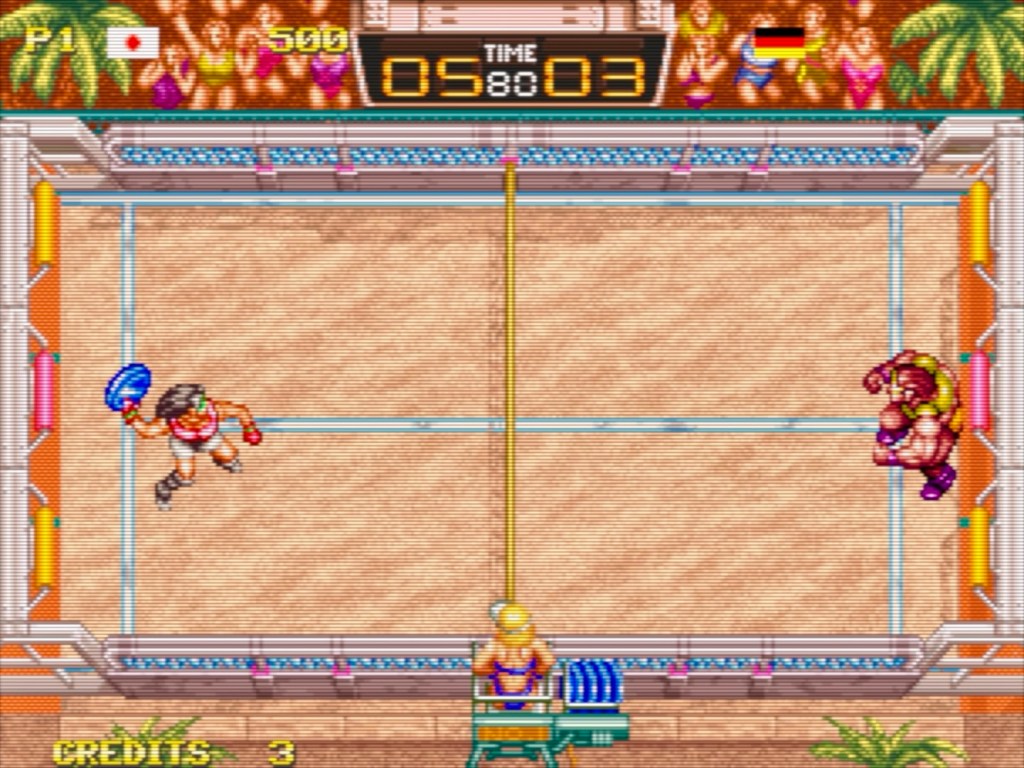
The new and strangely (but vaguely logically) titled Windjammers, Karnov & Friends collection for Evercade next, which came out a couple of months ago, and features five old Data East arcade games, obviously led by Windjammers, which at first glance might have been even more logical on one of the upcoming Neo Geo collections for the system, except SNK (who the Evercade folk, Blaze, have teamed up with for those) don’t own it, so it’s here instead. Anyway, I’ll come back to that and what else is part of an intriguing mix here shortly, but as usual with these, it’s all on a cartridge in a real box with an sizeable manual containing histories and trivia, as well as the all-important instructions for everything, plus some lovely stickers (of the type you’ll save for a special occasion then never use). Once you fire it up, you’re also getting typically slick, sortable on-screen menus, game info screens, quick saves and loads, and various DIP-switch settings if it’s all a bit too hardcore for you! Let’s have a quick look at the five titles included now, starting with the undisputed headline act, Windjammers, which is one of those games I might own all over the place already but you can never have too many ways to play! I’m a huge fan of this one from 1994, playing like tennis with a frisbee, or a souped-up, powered-up version of Pong. It plays best multiplayer too but solo is still full of variety, depth and strategy, and when you get properly in tune (and used to playing it on an Evercade d-pad), it’s an absolute joy, and everything about it still oozes quality.
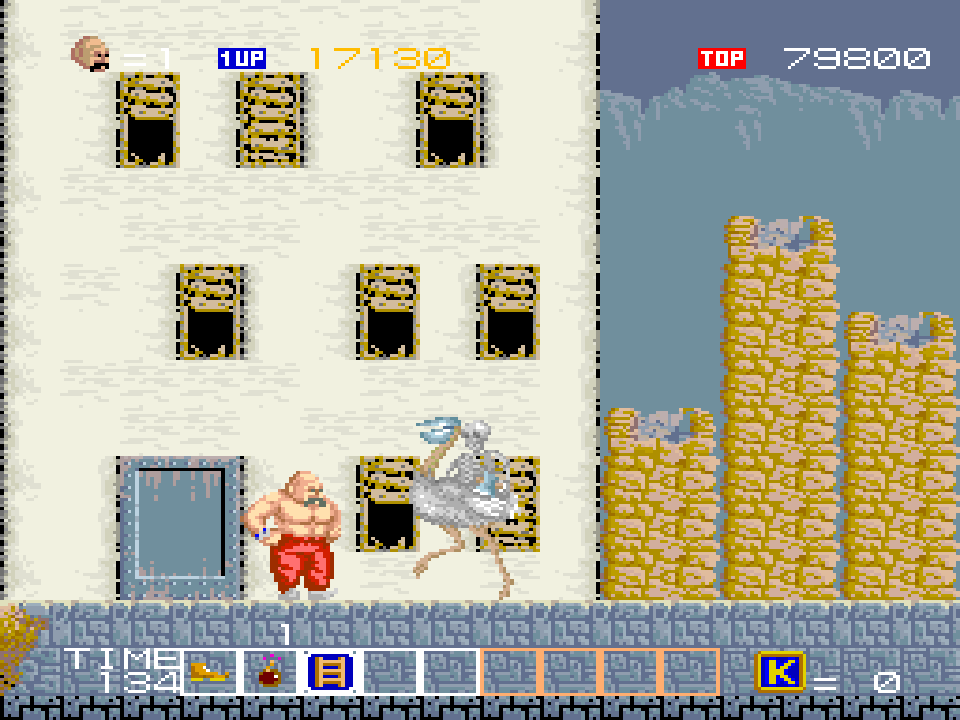
Our co-headliner (but not really) is Karnov, an arcade-platformer from 1987 that I had a soft spot for on the ZX Spectrum but has always been old-school brutal wherever you play! Gets weird quick too, as your fire-breathing strongman delicately lumbers through nine levels of very nicely presented but not massively sophisticated treasure hunting, although its inventory system was pretty unusual for this kind of thing at the time. Definitely tough but it controls well and eventually rewards perseverance. Next up is Atomic Runner Chelnov, which is one of those rare cases when the home port (namely Sega Mega Drive or Genesis) was better than the arcade original in almost every respect, although either way, I’ve never really clicked with this one when I’ve played it previously. It’s an early example of the auto-runner genre, all the way from 1988, with you on the auto-run from an evil corporation with a nefarious interest in your apparent ability to survive a nuclear meltdown! It’s multidirectional run and gun, where the screen never stops scrolling from right to left, and it’s alright but looks and sounds a bit crap, and doesn’t control particularly elegantly. Cannon relative of Karnov though, and almost as many cameos in other games, so maybe it’s just me, and maybe I need to give it a bit more of a chance after all.
We’re spinning around to a vertically scrolling shoot ‘em up now, with Vapor Trail: Hyper Offence Formation from 1989. Fantastic soundtrack but otherwise a competently good time with a forgettable story and generic mechanics that I’m sure I’ll gladly fire up whenever the cartridge is in one of my Evercade consoles but is unlikely to be the reason I got it out in the first place. Likewise its 1991 sequel of sorts, and our last game here, Rohga: Armor Force, which spins us back to a horizontal plane but is now as much run and gun as it is shoot ‘em up, as you take a mech this time to face up against the returning rogue military meanies you thought you’d got rid of in the last game. Once again, it sounds amazing, and this time looks the part a bit more too, and certainly mixes up the gameplay to good effect, but it’s really not my cup of tea, and I think it’s a bit awkward too. Overall then, I’m a sucker for Windjammers, and I’m glad to finally get my hands on a legitimate copy of the original Karnov (possibly for the first time amywhere?), so I’m sure I’ll get my twenty quid’s worth out of that pair at least sooner or later, but I doubt I would out of their titular friends, and as such, it’s hard to recommend as a package if you’re coming to it fresh.

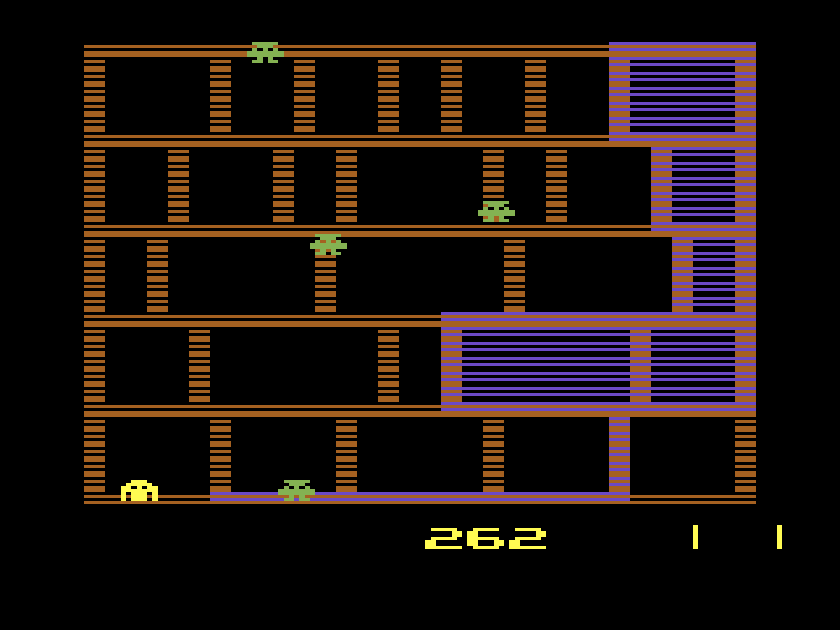
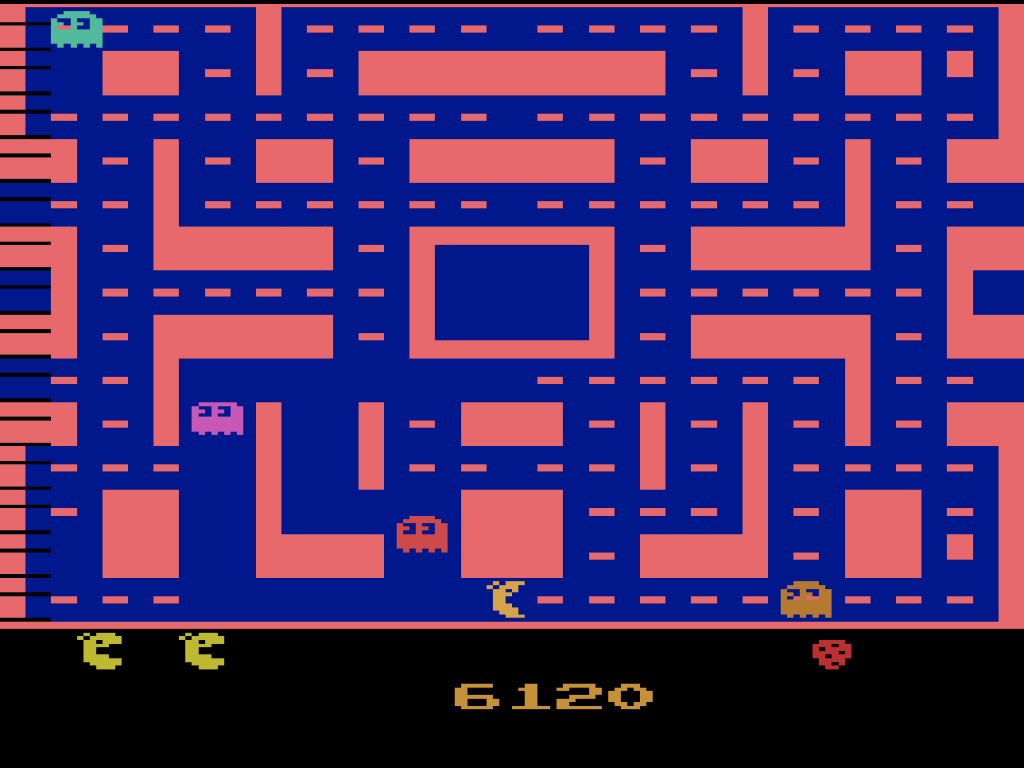
As tentatively announced at the end of the aforementioned Retro Arcadia Gaming Pickups – Spring 2025 Recap, my cartridge-buying addiction since I got an Atari 2600+ console last Christmas seems to be under control now, but that’s not to say I’m not still filling gaps in my instant collection when the opportunity arises, so this time I’m going to have a quick look at each of the (single) next batch I’ve picked up over the summer… Amidar first, and this is the 1982 port of the Konami arcade game from earlier that year, which pioneered the grid capture-type maze game. You need to guide your alternating gorilla or paint roller all the way around each rectangle on the screen to fill it with colour while avoiding the enemies out to stop you, and when they’re all filled you move to the next level. It’s a very basic version of a delightfully simple game, and plays a bit sluggish too, but I like it! We’ll go with an anything but sluggish port of another mazey arcade game next, Ms. Pac-Man from 1982. It’s pretty amazing, with virtually all the features of the original, as well as all the polish its predecessor never got on this platform, and it plays just like it should, which is all you can ask for! While most of what I’m still picking up for the 2600 is now fairly well curated, Starmaster was more of an impulse buy, coming across like a simplified version of Star Raiders that was more suited to the system as a result… And that’s exactly what it turned out be!
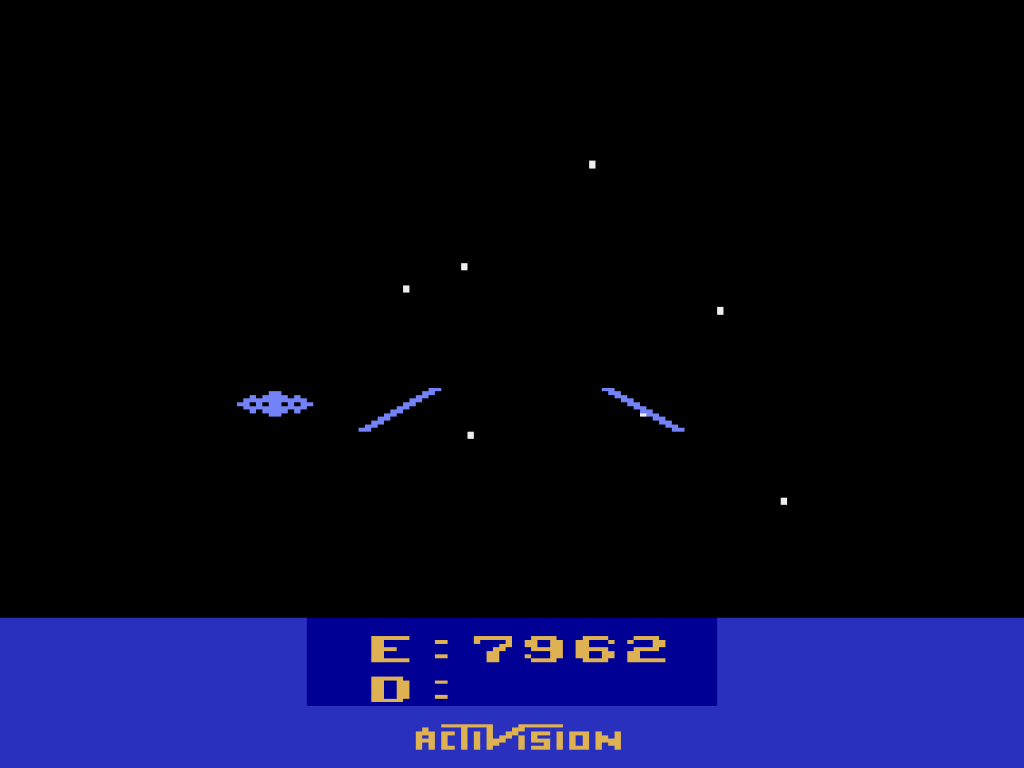
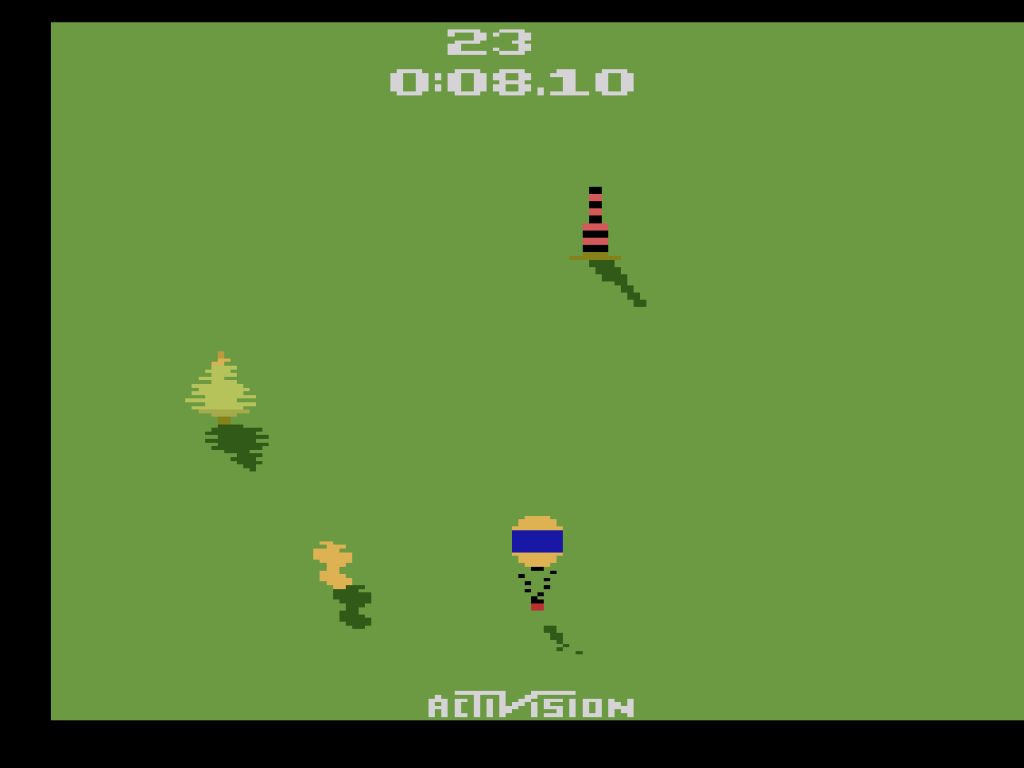
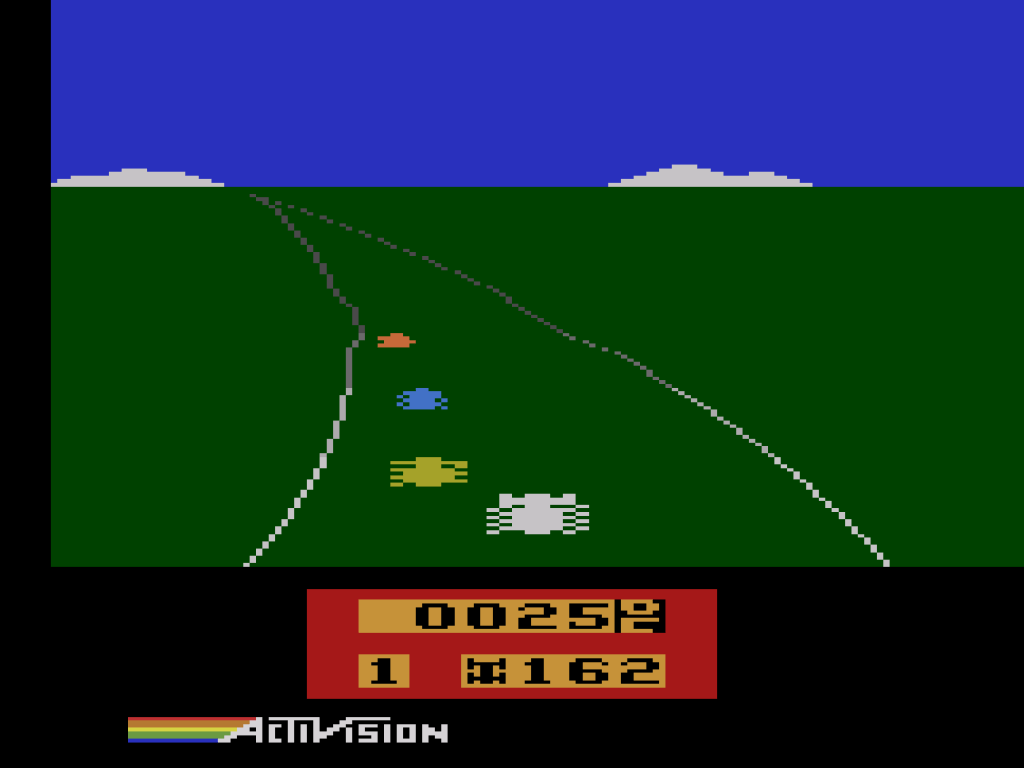
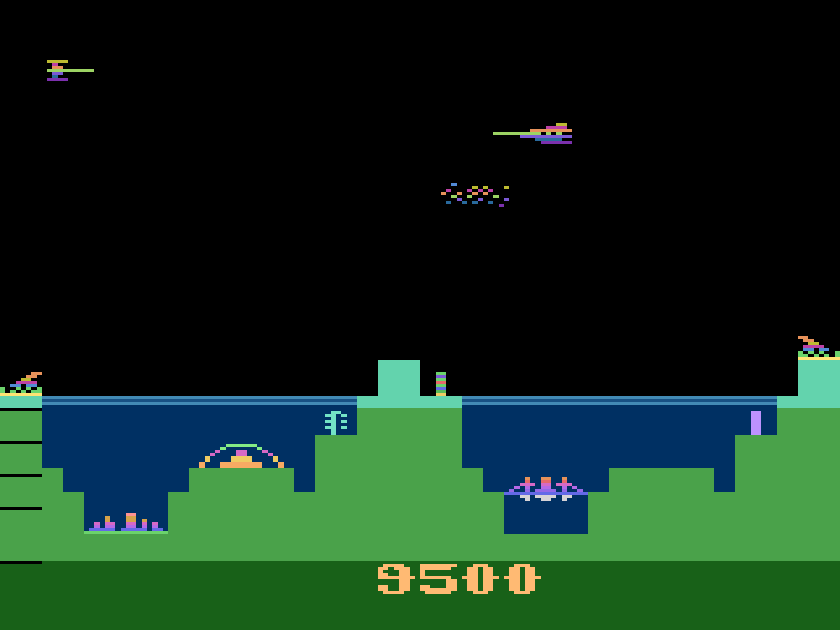
It’s a 3D space combat sim with a bit of strategy from 1982 that might not be as immersive as its undoubted inspiration but that doesn’t stop it being a lot of fun with plenty to keep coming back for. If you want really simplified though, then you want Sky Jinks – fly your plane either side of as many pylons as possible in the shortest time possible while avoiding trees and hot air balloons on four different courses and a randomly-generated one. There’s really not much to it but when did that ever stop you finding a good time back in 1982? Conversely, a year later we got Enduro, a kind of pseudo-3D endurance racer where you need to weave back and forth past a target number of cars each day to move onto the next, which not only gets more challenging the further you go, but you also have to negotiate changing road conditions as the temperature drops, and limited visibility through fog and at night. Remarkable stuff for the time, with responsive controls and a real sense of speed, and it still holds up as the best racer on the 2600 today. Got that one boxed too, and likewise the last of this lot, Atlantis, a vibrant single-screen shoot ‘em up from 1982 with a nice variety of game modes, where you’re protecting the legendary city from waves (pun always intended) of enemy invaders by shooting back from three gun towers at once, a bit like Missile Command. It’s very much its own thing though, fast-paced and wildly addictive, and a perfect example of why I love this machine!
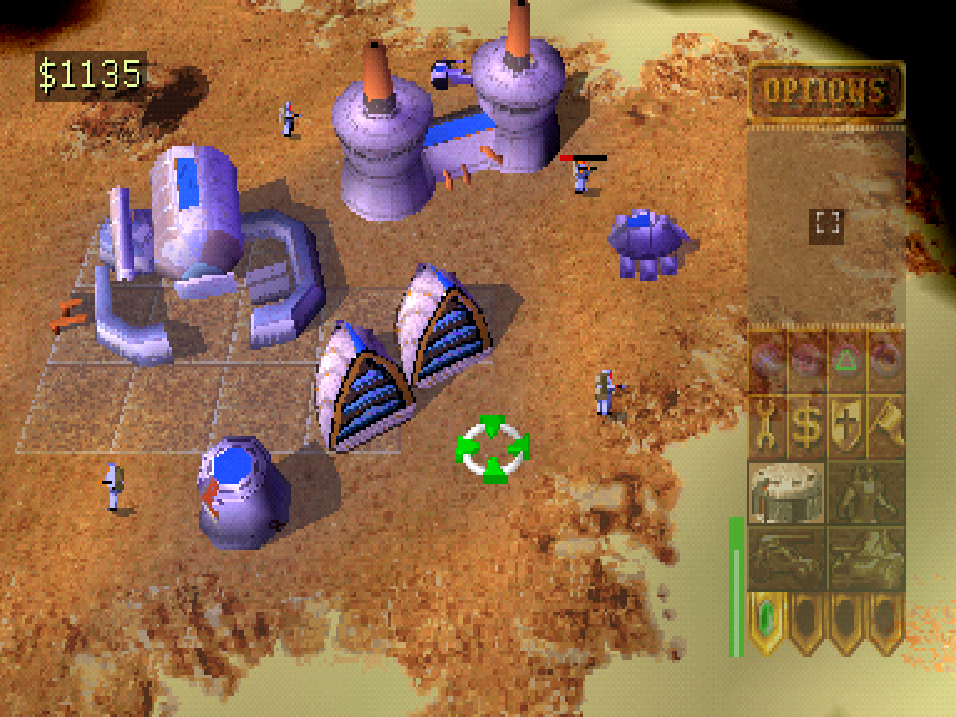
I won’t bore you again with my relatively recent but almost obsessive relationship with Dune, except to say I’ve been on the lookout for a couple of games based on it since I finally penetrated Frank Herbert’s sci-fi epic about eighteen months ago, after decades of trying! One of those is Dune (or Dune 2000) on the original PlayStation, a 3D-ish (obviously!) and impressively cinematic real-time strategy game from Westwood Studios in 1999, which I think they first published on PC the previous year before this release through EA, but is based on the older (and quite pioneering) Dune II for MS-DOS then Amiga and Genesis or Mega Drive from a few years before. It’s all regular Dune stuff though – choose one of three Houses then fight for control of the spice melange, the psychedelic drug powering the universe that’s exclusively produced on the desert planet Arrakis. This takes place across thirty missions, interconnected by a full-motion video narrative, which have you building all the stuff you need to find and harvest the spice, and also building your army to keep the other Houses at bay or go after their operations yourself.

I’ve never had a PS1 mouse but the controller works fine in its absence, with various menus and commands all easily accessible from different buttons and icons; the only real challenge is selecting units at speed when an enemy turns up, or even worse a giant sandworm! Adds to the tension though, which is always there regardless as you go about your business, and missions are generally well-paced and well-balanced, and fun to try again differently if you need to. The complexity is pitched about right too, never overwhelming but with plenty of depth, and you’ve also got a few other solo and multiplayer (via link cable unfortunately) modes on top. This style of game was never going to push the console too far but it’s recognisably Dune, there’s lots of detail and texture to the in-game visuals, and the cutscenes are of their time but still a nice distraction. And when a copy eventually appeared on eBay, it was a real a bargain as well, which I hope is also the case for the PlayStation 2 game I’m also after if that ever turns up on there!
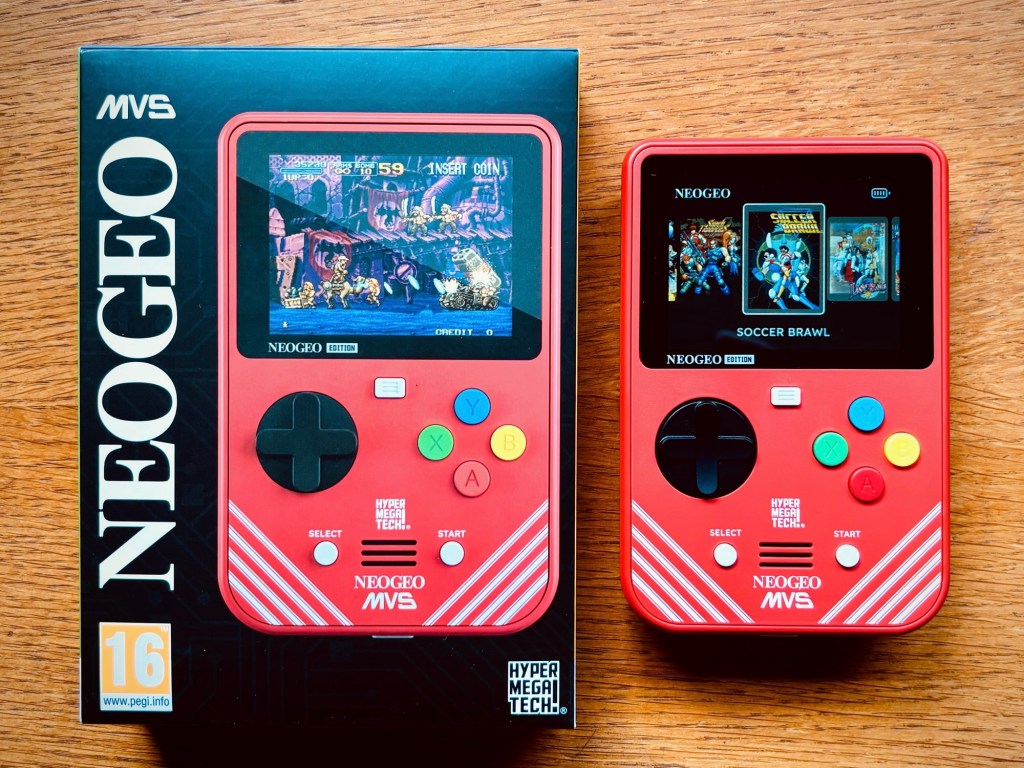
The launch of the NeoGeo Limited Edition Super Pocket handheld console ended up being delayed for a few weeks but was totally worth the wait! It’s by Hyper Mega Tech, spun out of Blaze Entertainment, the Evercade people, which it’s also got a cartridge slot for in the back, so you can get up to all sorts on here, including all the incoming NeoGeo carts to extend what’s already on it – hopefully more on those next time. I do already have the Taito and Atari editions of these, and still use them both a load when I’m out and about, so was already pretty confident I’d get my £70’s worth out of this, which is a bit more than the regular edition but I couldn’t resist the authentic MVS stylings! Either way though, this thing is all about the games, and there are some absolute corkers among the fourteen included here, which we’ll get into in turn in a sec, but let’s quickly check out the hardware first. As with the previous Super Pockets, you’re getting a great build for the price, with a vibrant 2.8” IPS screen, surprisingly punchy sound, and plenty of battery life, but at 8 x 12 x 2cm, it is properly pocket-sized too, which makes me appreciate having girly hands, especially for the cramped shoulder buttons on the rear, although fortunately, there won’t be many times the games included on here will be crying out for them. Apart from that, there are various display options, as well as save states and language selection, but not much else, which is exactly the idea with these things – as said, all about the games, which I’ll attempt to review in a single sentence each now…
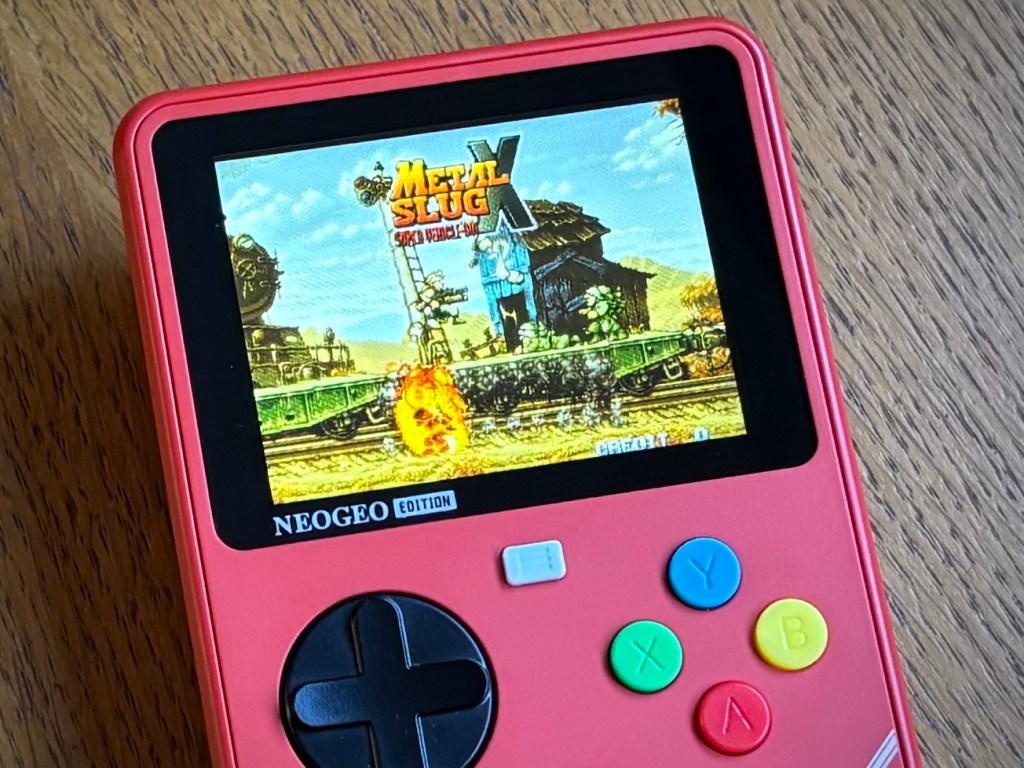
We’ll go alphabetical and start with Alpha Mission II, a less well-known but bright and breezy vertical shooter with fantastic music and plenty to discover, albeit all a bit by numbers. A horizontal shoot ‘em up next with Blazing Star, which is as spectacular as it is fun (and slightly bonkers), and has one of the all-time great genre soundtracks! Fatal Fury Special is a highly polished one-on-one fighter with loads of character, loads of characters, and a really nice pace to the combat; never played much of this but definitely will now. Not sure King of the Monsters 2: The Next Thing is quite as refined as that but evolving the ludicrous giant monster wrestling action of the first game into more of a beat ‘em up has certainly ramped up the chaos and destruction, and sometimes that’s all you need! Last Resort is another horizontal schmup and it’s an absolute stunner, full of drama, weirdness and wild effects, playing like a psychedelic R-Type, but I’d take this over that any time! I reckon the series (and possibly the run ‘n gun genre) might have peaked with Metal Gear X and its relentless cartoon carnage, but while the glorious presentation, savage humour and insane attention to detail is perfectly at home here, it didn’t feel great on this d-pad initially, and required a bit of perseverance; small price to pay I guess. I was thrilled when I saw Mutation Nation made the cut here because while it’s not the most sophisticated of side-scrolling brawlers, it’s big and brash and full of personality, and is such a good time! Not so sure about Over Top though, a kind of isometric-ish top-down racer that looks a bit crap, handles a bit crap, and I wish it was Neo Drift Out on here instead!
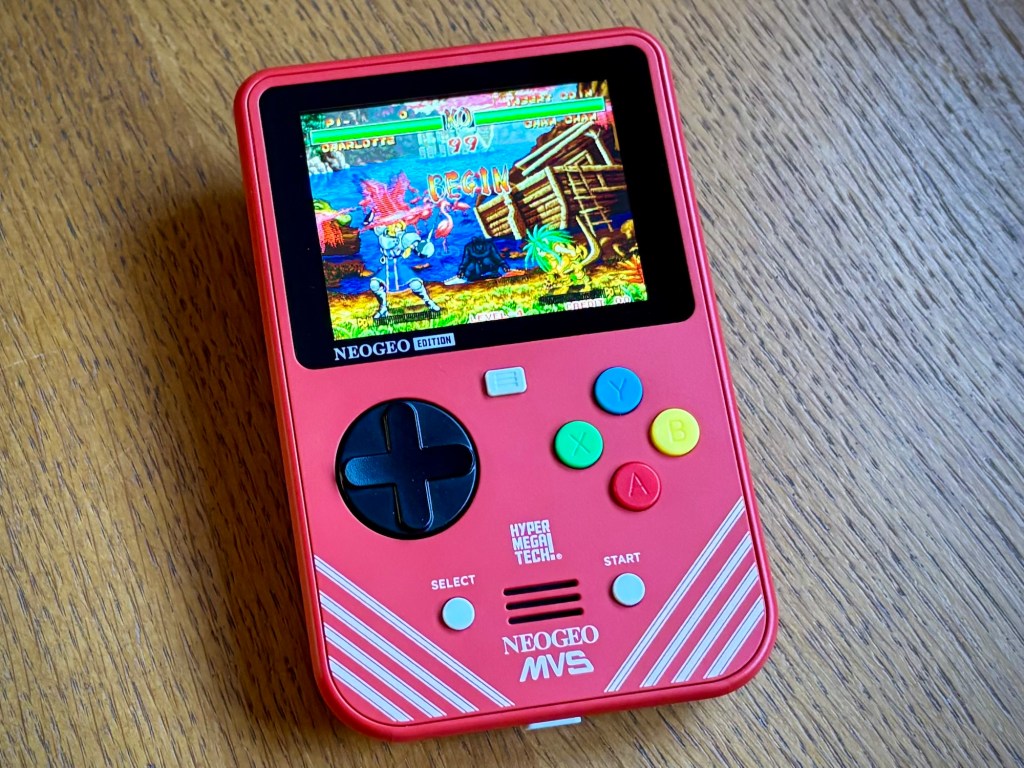
I wouldn’t swap Samurai Shodown II though, possibly my favourite weapon-based fighter that feels great here, with loads of depth and variety, super-smooth combat and so much life in every gorgeous environment. More beat ‘em upping now with Sengoku 3, and this wasn’t just the best of the series but among the best of the genre too, with all the sights and sounds and ninja moves, which, like Metal Slug X, took a while to feel natural but when they did, just wow! Shock Trooper: 2nd Squad is a top-down run ‘n gunner that’s always been a literal blast despite having a bit too much going on for its own good at times, but it’s still as addictive as it is gloriously mindless! With Super Sidekicks coming on an upcoming NeoGeo cart for Evercade, I was pleased to get the lower profile but equally madcap and maybe faster-paced futuristic arcade footballer, Soccer Brawl, included here – takes a bit of getting used to but it soon plays great even solo, and you can’t beat its trademark NeoGeo sports game presentation! The Last Blade isn’t quite our last game but is a beautifully atmospheric, supernatural-infused weapon-fighter with great animation, an accessible move-set, and a real elegance about how it plays. Our last game is Top Hunter: Roddy & Cathy, and while cartoon action-platforming isn’t necessarily my thing, I can see the attraction here, with some clever environmental variety and mechanics, and an easy-going style that belies some fiendish level design! And that’s it! What a selection, and even though I’d ditch the racing game if I had the choice, and I’d have really loved Baseball Stars 2 on here over any other game that was included, this is another awesome Super Pocket for the collection, offering superb value and excellent quality… I could just do with another pocket to put it in so I don’t have to choose which one to take out with me!
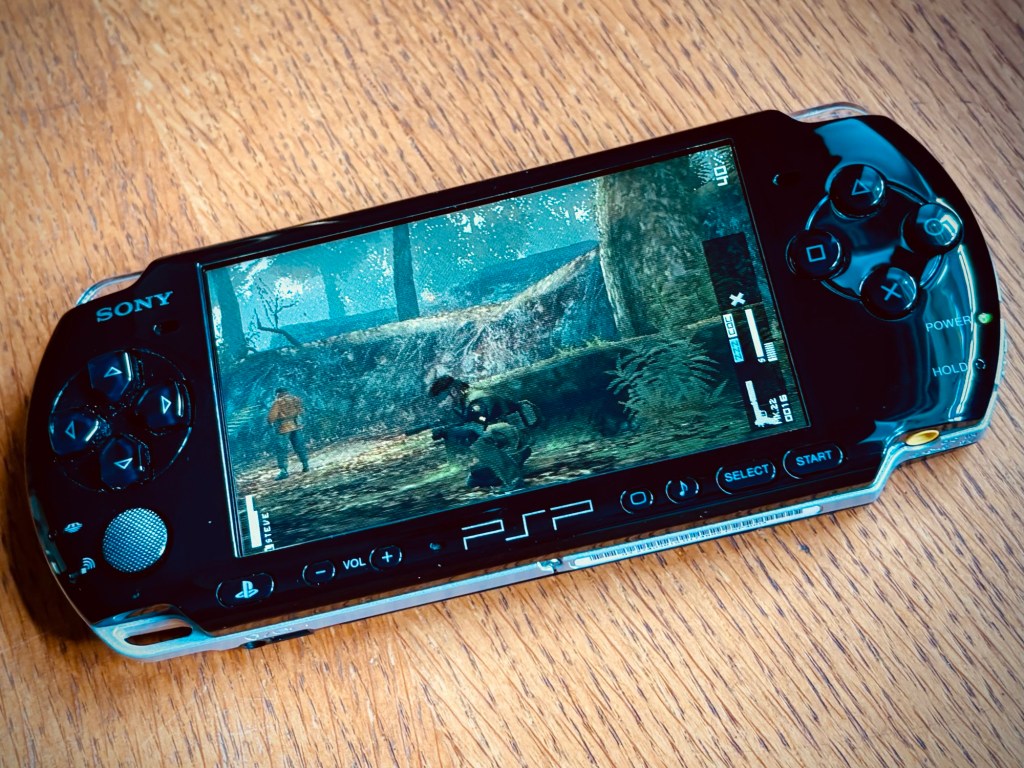
Our next PSP pickup wasn’t on my curated shopping list at all but would have been had I known…I first played Metal Gear Solid: Peace Walker a few months back on the Metal Gear Solid HD Collection on PlayStation 3, but by the end became so captivated by it that I decided to look out for a copy of the PlayStation Portable original on eBay while I was playing my way through the rest of the series… And with mission now accomplished on both fronts, here we are all over again! This started life as the fifth MGS game when it appeared exclusively on PSP back in 2010, and finds our man Snake in Costa Rica in 1974, taking down yet another rogue paramilitary group holding the world to ransom while also running his own private army – which I really wasn’t keen on when it first started interrupting my stealth-action on PS3 but it really grew on me by the end, and was a big part of the longevity I could see taking on the go with me if I ever got hold of this PSP version. Sadly, really getting the most out of the game is no longer feasible with the issues getting a PSP online nowadays that I mentioned earlier, but solo play is plenty, and what’s there is proper Metal Gear too, albeit a bit more bitesize in level design but definitely not in scope, supported by trademark lengthy but sometimes interactive hand-illustrated cutscenes, so pay attention! The voice-acting is all there too, and it looks very impressive on here – more so than I imagined after returning from the upscaled, resolution-boosted, performance-supported HD version… Just wish it controlled the same though! The button mapping is clever and the analog nub is fine but you’ve got to use it in continuous combination with the camera controls on the d-pad right above it, and that never feels natural, and it’s hardly practical in the heat of some huge mech battle either – actually, it’s maybe even worse when you’re in full sneak mode surrounded by regular enemies! You can forgive and forget though, as clunky as it can be, and I did exactly that with its PSP predecessor, Portable Ops, so give it time, and now I’ve got it handheld, I should have plenty of that too!
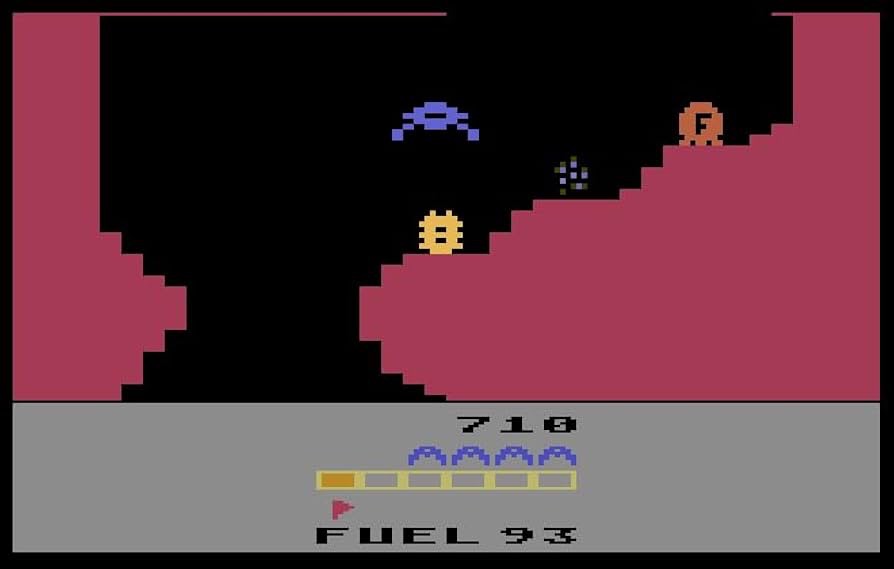
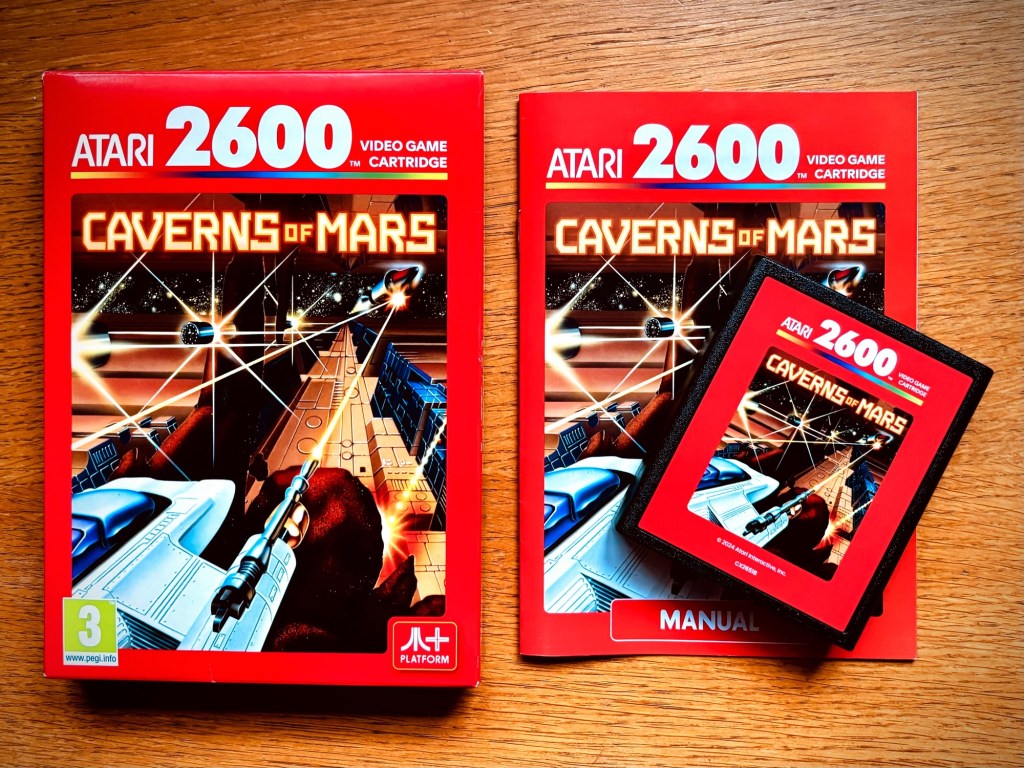
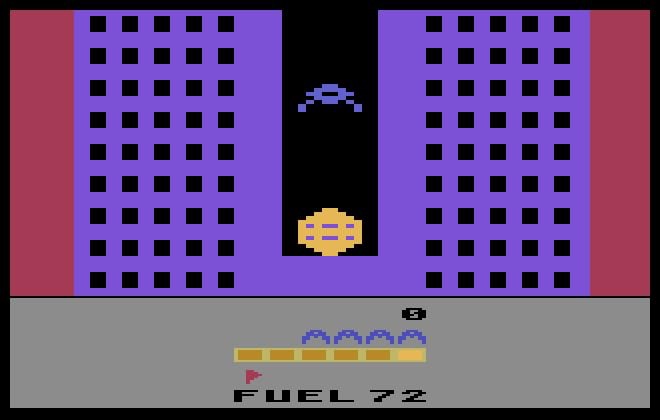
A few months back, this “modern” incarnation of Caverns of Mars on the Atari 2600 was the reason I finally paid attention to the original 1981 Atari 8-bit version, some forty-four years after the fact (more here), and I wasn’t only very glad I did because it was fantastic, but in turn it also convinced me to buy the 2600 copy, and I’ve finally done that too! No doubt targeting the Atari 2600+ console I mentioned getting before, this official boxed cartridge release from Atari in 2024 is also fully backwards-compatible with the original console (and Atari 7800) too. Like the original home computer game, it’s a multi-phase tunnel shooter, with you descending through various fiendishly-shaped caverns to activate a bomb at the bottom, get back out, then move on to the next of six levels, but it’s also a bit of a reimagining as well… It’s actually based on an old homebrew take on the original for the 2600 from 2006 called Conquest of Mars, and offers four skill levels that gradually introduce more stages to each cavern, starting with negotiating a tunnel, then fending off rockets, passing laser gates, avoiding space mines and navigating a maze before piloting your ship through an enemy base to the bomb at the end of it before escaping, which is common to all difficulties. And good luck with anything beyond Novice because it’s proper old-school unforgiving, and that’s before you consider keeping your fuel topped up (Scramble-style) and the limited time to escape! The presentation is great, big and bold with typically punchy 2600 sound effects on top, and as hard as it is, it’s totally fair too, with precise controls that mean getting sent back to the start of each stage is always on you! It does give you continues if you want though, which are great for learning your way because you really have to, but it’s really good fun doing so, before you have one more proper run at a high score, then another and another… And on top of that, I just love the fact that new Atari 2600 cartridges are still being released the best part of half a century on!
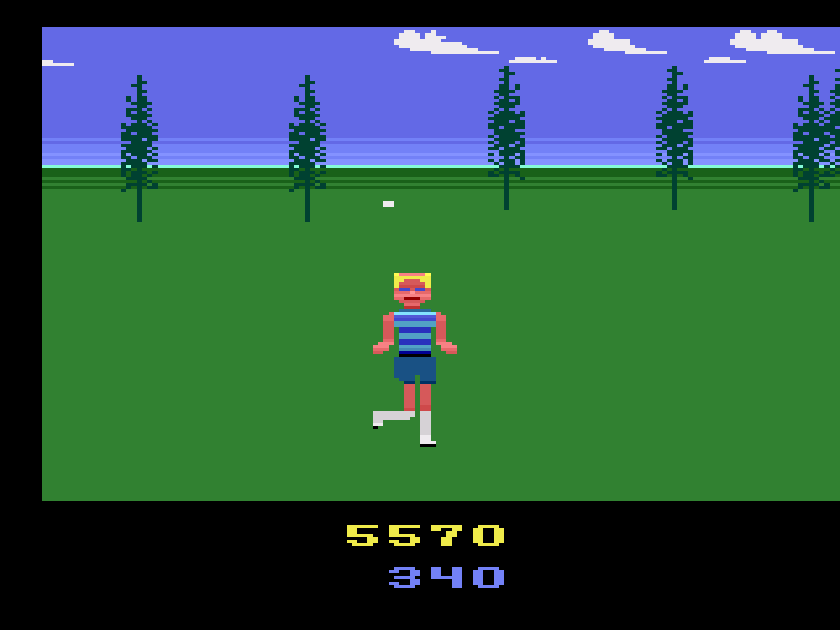
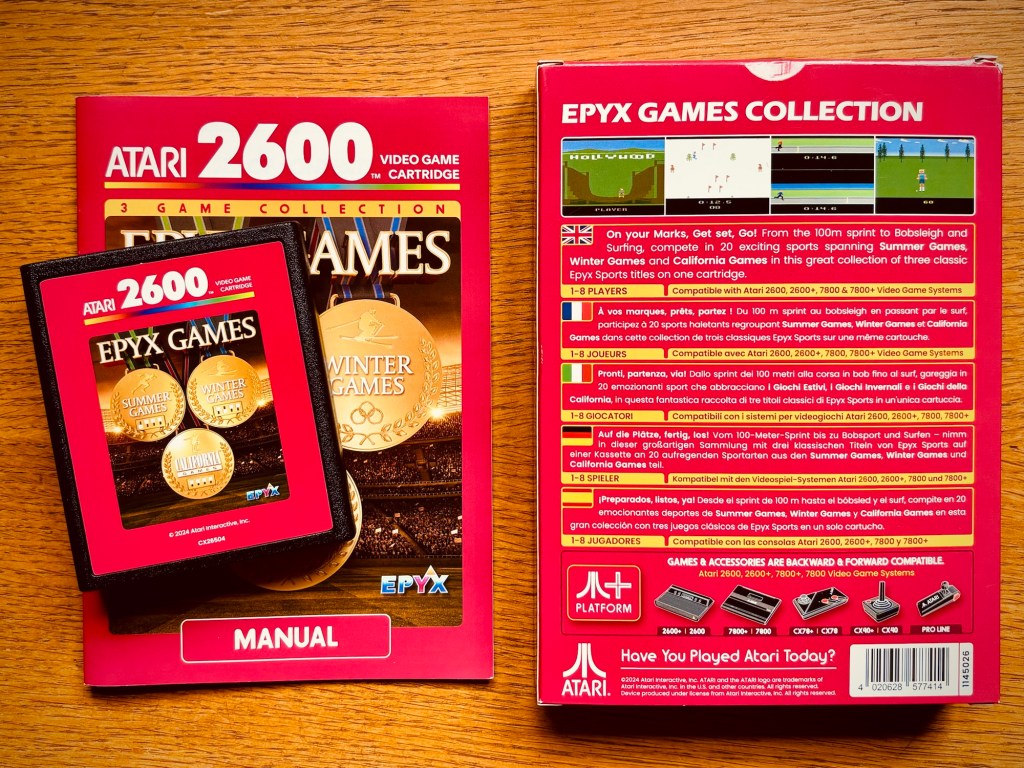
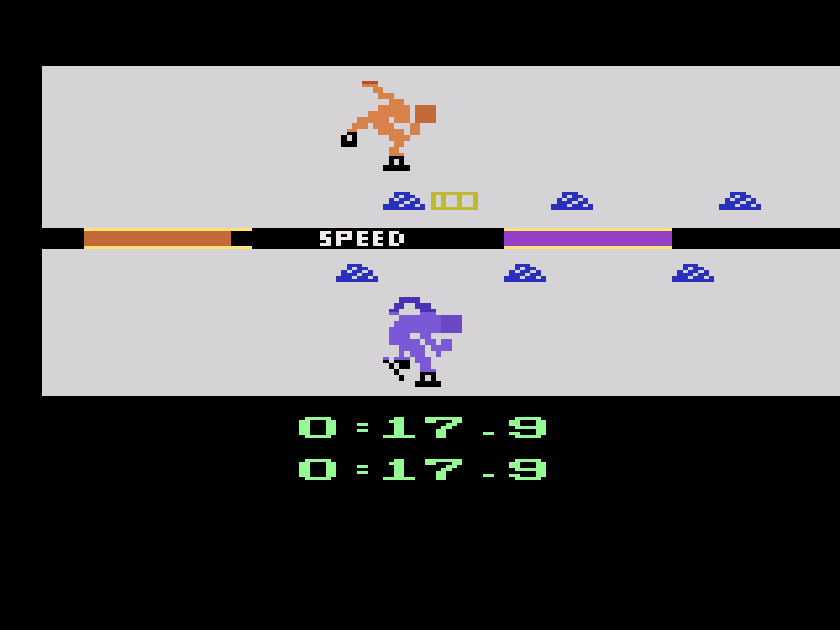
And I love it so much I’m going to jump straight to another one, the Epyx Games Collection, containing Atari 2600 versions of Summer Games, Winter Games and California Games, all on one cart and selectable by four little DIP switches on the back. I’ll quickly run through each, although I did previously cover the latter in a little bit more depth here too, when I may also have picked up the standalone cartridge during my initial cartridge spending spree! Anyway, while it might not be the very best place to play any of them (try a Commodore 64 for that), what’s here is often absolutely remarkable, beefed-up 16K carts originally or not! Summer Games was first released in 1985, and has seven events including hurdles, swimming, skeet shooting, 100-yard dash, swimming relay, gymnastics and rowing. There’s a bit of joystick waggling but really not much, with the action generally more focussed on timing and rhythm, which is going to be the case throughout here; as is everything being better with more than one player (with up to eight supported in each game), although there’s plenty of fun to be had solo too. The events do vary in quality a bit but I’m going with swimming as my favourite here – it’s a timing one and a real test of prolonged concentration! Winter Games is also from 1985, and features another seven events – slalom skiing, bobsled, ski jump, biathlon, speed skating, hot dog (acrobatic skiing) and luge, with the latter probably my favourite in this one, requiring a good sense of timing and positioning, although it’s really nice to see some skiing too, which never made it to my beloved C64 version. Finally, there’s California Games, with foot bag, halfpipe skateboarding, BMX and surfing, as well as one of my favourite title screens in any game ever, with a great version of Louie Louie playing over this mad psychedelic visual effect! The events are all impressive too, and really look great, but I’ll go with BMX as my standout, which I reckon is the best version on any platform. I’m really happy with the lot included here though!

I do have one more of those recent Atari releases but we’ll save that one for later and head back to Evercade next with Delphine Software Collection 1, which originally came out in 2024 but I didn’t get until my birthday a few months back, and then it sat unplayed for a month, hence it being here rather than in my previous recap! Anyway, it’s a compilation of four games from the pioneers of 16-bit “Cinematique” adventure, with a bit of something for everyone… Maybe! There’s a couple of stone-cold classics in the Amiga version of the wonderfully wordless sci-fi action-adventure Another World, and the Mega Drive version (I think) of the stunning rotoscoped puzzle-platformer Flashback. I know they’ve both been released and rereleased on everything to this day but they feel great here, on a TV or handheld, and like Windjammers earlier, you can never have enough ways to play either!

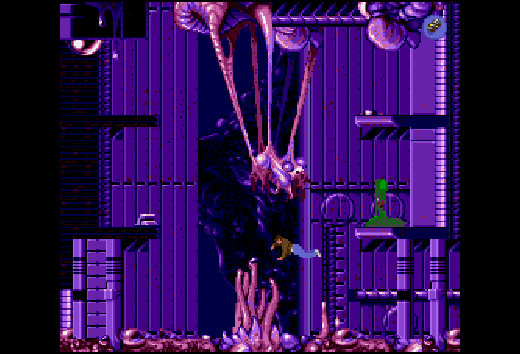

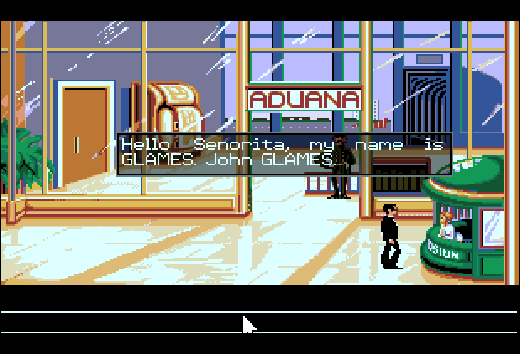
Unfortunately, that’s not quite the case for the other two games, time travelling adventure Future Wars, and the James Bond-like Operation Stealth, which both have their moments and do tell a good tale if you’ve got the patience, but they’re proper old-school Amiga point-and-click adventures with some incredibly unforgiving “action” sections that really need a mouse, fancy interface or not. And yes, I know you can now use one on Evercade VS (the TV console) at least, but that felt even worse! Not the most elegant examples of the genre either, but I did eventually finish the first one and know what to expect of the second now, and it’s always good to discover new stuff on these regardless! The rest of the package is as we saw earlier, with a cool proper manual, slick presentation, quick saves and so on… That lovely Another World poster you can see in the photo above comes with concept art on the back side too! Overall though, if you need another copy of Another World or Flashback then fill your boots but vaguely historically significant or not, I can’t really recommend the other pair.

I’ve been playing the NBA Street basketball games for as long as emulation has allowed, but unlike a lot of “American-interest” sports games from the early 2000s, the second (and my favourite) in the series, NBA Street Vol. 2, actually got a PAL release on both PlayStation 2 and GameCube back in 2003, and I’ve finally got a copy for the latter! The trouble was, despite getting a European release, I don’t suppose it sold a lot in the UK anyway (hence most of these not coming out here), so I’ve been on the lookout for it at a decent price on either platform for literally years, but as is often the case, a bit of patience will eventually bring a bit of luck too! It’s 3-on-3 street basketball with a fast-paced, arcade-like feel and loads of immediate fun to be had, but with plenty of depth to the controls as well, and all-new tricks and gamebreakers, and twenty-nine licensed teams from the 2002-2003 season to play with, plus legends like Larry Bird… Three versions of Michael Jordan too, so you could unlock yourself a team of only Jordans, as well as a ton of more sensible rewards, from other players to courts to jerseys, all through playing the various game modes, which include one or two player quick games and seasons, and the main Be A Legend mode, taking you from zero to the best there is. The cartoon-grittiness of the visuals, as well as the exaggerated realism of how everything moves, is glorious, and while the star-studded hip-hip soundtrack is just right but just isn’t for me, the environmental sound effects like police sirens or the taunts from the spectators really make the game! And once you’ve got a few moves down, you’ll quickly stop getting battered every time and become totally immersed in the brilliantly balanced back and forth. At some point I’ll put together a countdown of my top ten favourite basketball games, and here’s a spoiler – this will be right at the business end!


We’re going to finish with the third of those relatively recent Atari releases now, and it’s another compilation, the Atari RealSports Collection. Although the majority of this series weren’t firsts on the Atari 2600 console – and in some cases were little more than updates to existing titles – they were a sign of Atari upping their multiplayer sports game in direct response to Mattel pulling no punches with theirs on the Intellivision. Between 1982 and 1987, there were six titles released altogether, and back in 2024 they were also newly bundled on a single cart, including the unreleased at the time RealSports Basketball on there too, so seven games in total, which are all accessible through variations of the four DIP-switches on the back, and it comes in a nice authentic box with an authentically weighty manual too! I’m going to quickly run through each of the games in turn now, starting with the first in the series, 1982’s RealSports Baseball, which is also the perfect showcase for the depth found in all of these games despite everything happening on a joystick with a single button! It’s a fully-featured nine-innings game with directional at-bat, runner control (including stealing bases), multiple pitch-types and intuitive fielding. Not exactly a looker but it’s all there, and as fun as it is impressive once you know the ropes. RealSports Basketball was developed in 1983 but, as said, was pulled before release for what I assume was video games crash reasons, but I don’t think it’s that great either. It’s two-on-two for one or two players (also the case for all these games) and most have loads of game variations too, which is one thing I can’t fault this one for – there are loads, covering everything from foul detection to intensity of defense! Presentation is understandably simple but thoughtful and atmospheric, and it’s easy to pick-up, but it’s also very finicky and there’s no flow to the game as a result. I’m following the order of the manual and just realised it’s alphabetical, so RealSports Boxing next, which was the last of the series in 1987, which is very much reflected in the very impressive visuals and equally impressive depth to the gameplay, offering a strategic back and forth against a variety of unique characters. I’m not much into boxing but this is good!


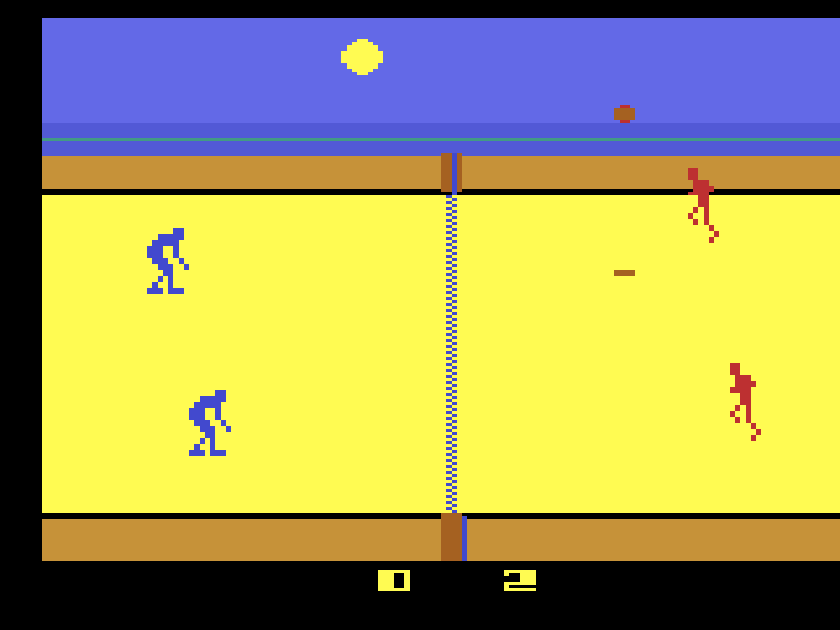
Back to 1982 for RealSports Football next, which might not have the looks of the later last game but definitely has the moves! It’s a simplified take on American football but not so simple that you won’t need the instructions to hand for your first few goes, with both offensive and defensive play calls spread out across all the joystick directions, and that’s before you start trying to get the patterns and timings down! Like its subject matter, it’s not the most instantly accessible but might be the most rewarding… Unlike RealSports Soccer, which is a ridiculously dumbed-down and generally crap three-on-three take on the game from 1983, with possibly the laziest set of instructions ever, by someone whose knowledge of the game is about as deep as their spell-checking… That said, there’s still worse old footy games out there! Right, RealSports Tennis next, and it’s a very good game of tennis from 1983 that was quite the pioneer too, with stuff like a 3D court (and a proper net), multicoloured sprites, decent ball physics, and you can even put your own initials on the scoreboard, which I think was a first for the system! Good flow to the game too, with proper scoring, three different shot types and decent AI if you’re playing solo, with more or less skilful difficulty levels too. But it’s still not the best thing on here! That would be 1982’s RealSports Volleyball, which is also one of my top-ten favourite games on the Atari 2600, offering an effortlessly playable and very atmospheric two-on-two game of beach volleyball. The beach is the star too, with rolling waves and a day-night cycle that eventually takes away the crutch of being able to see the ball’s shadow, while the players’ animations more than make up for their relative simplicity, and the sound is all you could hope for. Serving, setting, hitting and spiking the ball is so easy, as is controlling your side of the net, and it’s such a good time, and the perfect way to end our look at what’s on here. Which might include a couple of duds but there’s more than enough to keep you busy and very happy for a very long time regardless! And I reckon that goes for everything else here too, which sounds like a good place to call it a day this time. We’ll hopefully be back with more of the same in three months though, with all the stuff I shouldn’t have been buying in the interim. In the meantime though, don’t tell the wife!
As always, I’ll never expect anything for what I do here but if you’d like to buy me a Ko-fi and help towards increasingly expensive hosting and storage costs then it will always be really appreciated! And be sure to follow me on Instagram, X (formerly Twitter) or Threads for my latest retro-gaming nonsense, and also on Bluesky, which is under my real name but most of it ends up there too if you prefer!
 Retro Arcadia