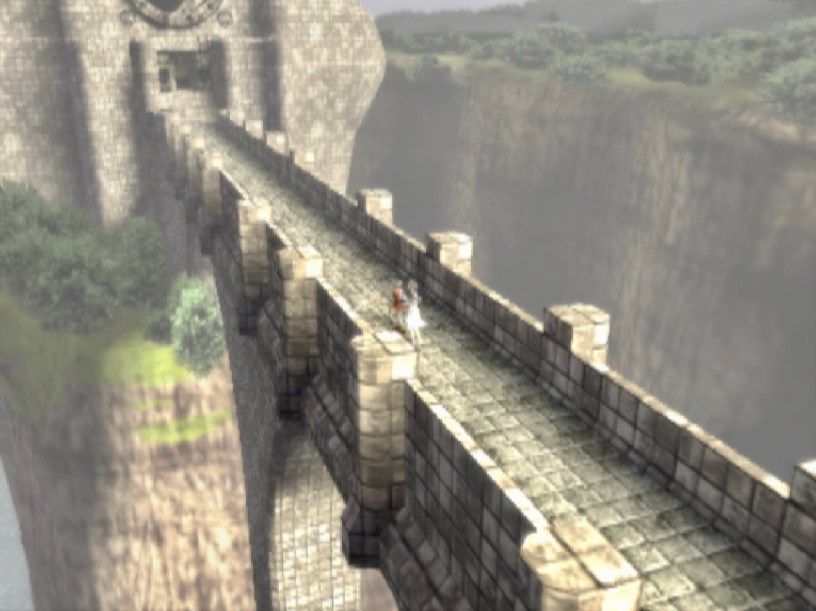
I’ve always been lucky in that there haven’t been many occasions where life has ever really got in the way of my video gaming! I guess the tail-end of my time in university was one, when first I’d spent time working in France as part of my engineering degree, and just didn’t have any way to play or much exposure to anything new and subsequently just lost interest for a while, which then carried over into my final year of study when I simply didn’t have any money for games. Or anything else! That said, looking back now at my Atari ST collection from the time, it doesn’t seem like I did too badly one way or another, and likewise, my PlayStation collection from two or three years later (we’re now talking around 1996-97), when I was in my little goth-punk band that had got pretty serious and pretty full-time by then, although in reality, that was another case of having no money for games all over again… Story of my life!
There’s one other little blip I had in mind though, around the middle of 2002, which, by total coincidence of course, happens to be when a certain game called Ico finally arrived on PlayStation 2 in Europe! I’d recently started a job with a very big Japanese electronics company who I’m still with all these years later, and was already travelling the world with it very frequently, all over Europe, often several times a month, then to Japan and the US a couple of times a year… And all three continents within the space of two days in one ridiculous, never to be repeated instance! Anyway, yes, I’d take my Game Boy Advance with me but I was generally so knackered by the time I got back to my hotel it didn’t get much of a look in beyond my usual Mario Kart, F-Zero or V-Rally 3 sessions on a plane, where those tiny personal lights above you were as good as it got on that dreadful original model screen! I was still on the PS2 at home when I had the chance though, but even that was hit and miss when, at exactly the same time, we were right in the middle of selling our first place in East London (including a crash course in unexploded World War II bomb insurance!) and buying a house back in Bedford, on the site of an old school that the road I’d lived on as a kid backed on to. Oh yeah, we were six months away from getting married too, so understandably perhaps, given all that, I totally missed what I assume was all the hype when Ico made its grand entrance!
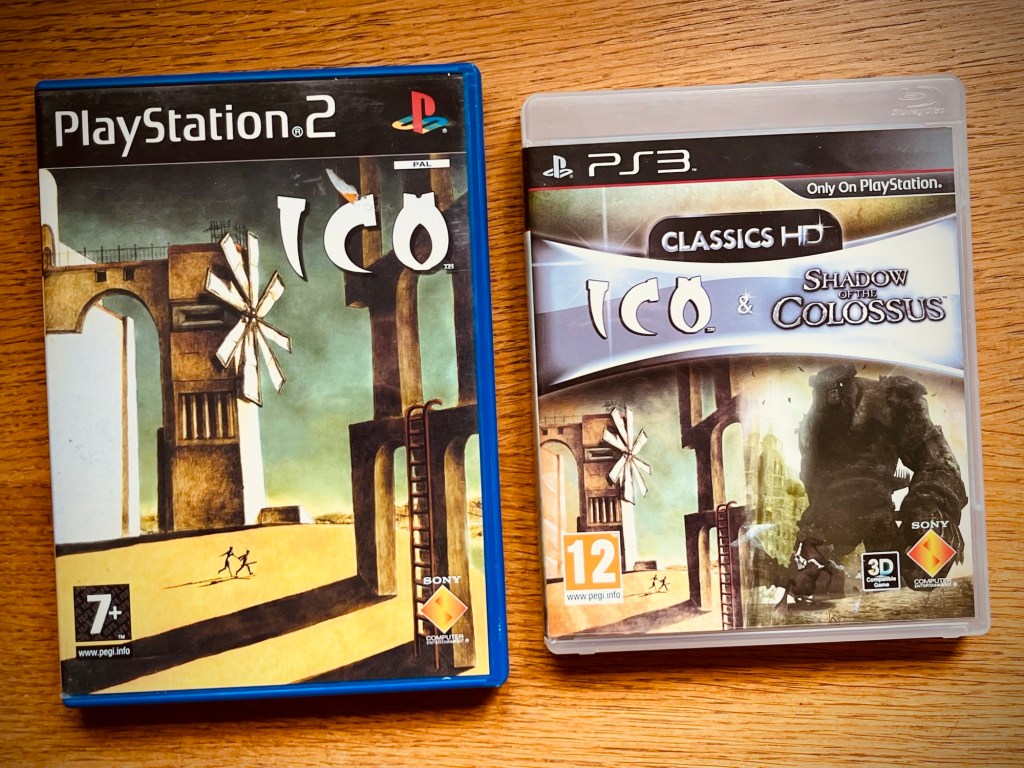
It really wasn’t my thing anyway – I was all about SSX 3, Pro Evolution Soccer and whatever WWF game was doing the rounds on PS2 at the time, with whatever refinement (albeit mostly involving zombies!) I fancied in my gaming coming from the Nintendo GameCube, though honestly it would be a very long time before that ever really got the appreciation it deserved, and I definitely wouldn’t have bought something like Ico on it even if I could have! This would be confirmed a few years later when along came its spiritual successor, Shadow of the Colossus, which I still find tedious to this day, despite all the fanfare for it never letting up ever since! Maybe I’ll give it another chance now I own a copy of the PlayStation 3 version by proxy though… Actually, my recent experience with Ico, as well as Delphine Software’s Another World and Flashback, both of which I suddenly “get” after decades of thinking I really should be enjoying them as much as everyone else seemed to be but had simply never clicked with me, means it’s probably worth another go regardless. Seem to be developing quite the tolerance for all that arty stuff in my old age!

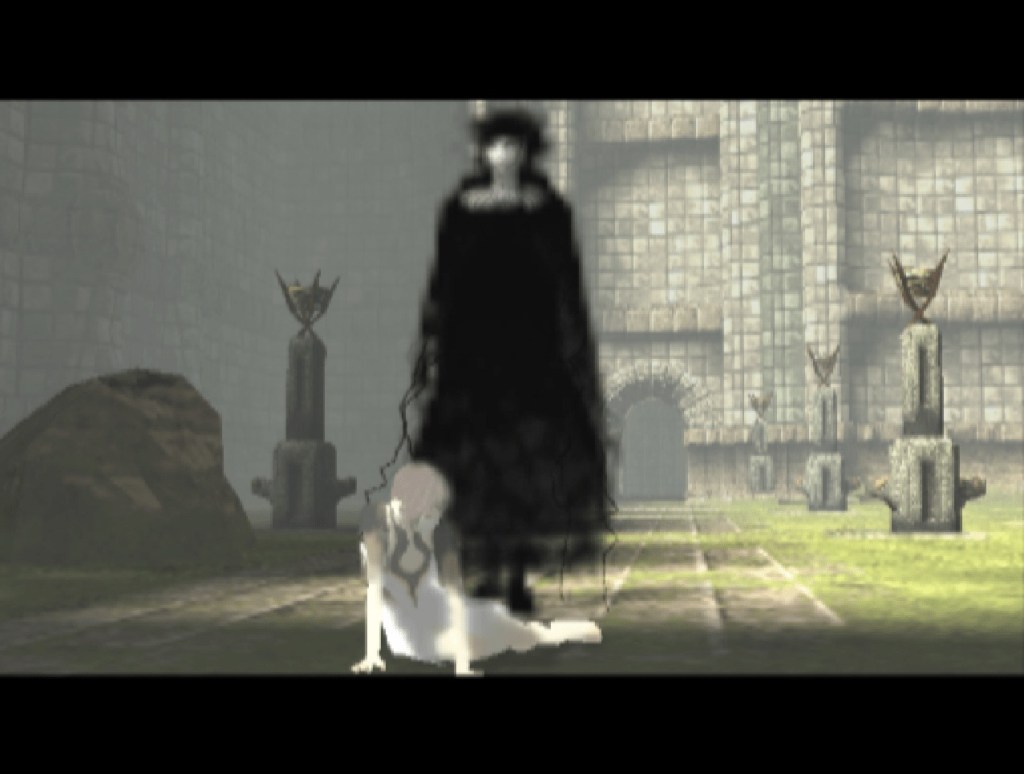
It all changed with the subscription to Retro Gamer magazine I was kindly given for Christmas 2023 – I’ve been buying it on and off since it first came out – long enough ago for it to be retro itself – then had a digital subscription on my iPad for a few years more recently, although again, money dictated letting that lapse and buying a print copy when something of interest was in it instead, which was increasingly every month, so here we are! I think it was actually the first issue of the new subscription arriving back in early 2024 that got me interested in Ico too, albeit just a screenshot of this witchy woman with a girl at her feet jumping out at me as I was flicking through, or more likely flicking past, because I don’t think I’d have read the article at all had it not been for that picture! I did read it though, and before long I found myself playing rather than reading about it, and about ten minutes beyond the opening cutscene, I was totally caught out by the sudden and immediate realisation that I’d stumbled upon one of those holy grail moments all of us retro gamers live for, discovering not only something special, but something that was about to disrupt that long-established sacred space at the very peak of my all-time favourite games list!
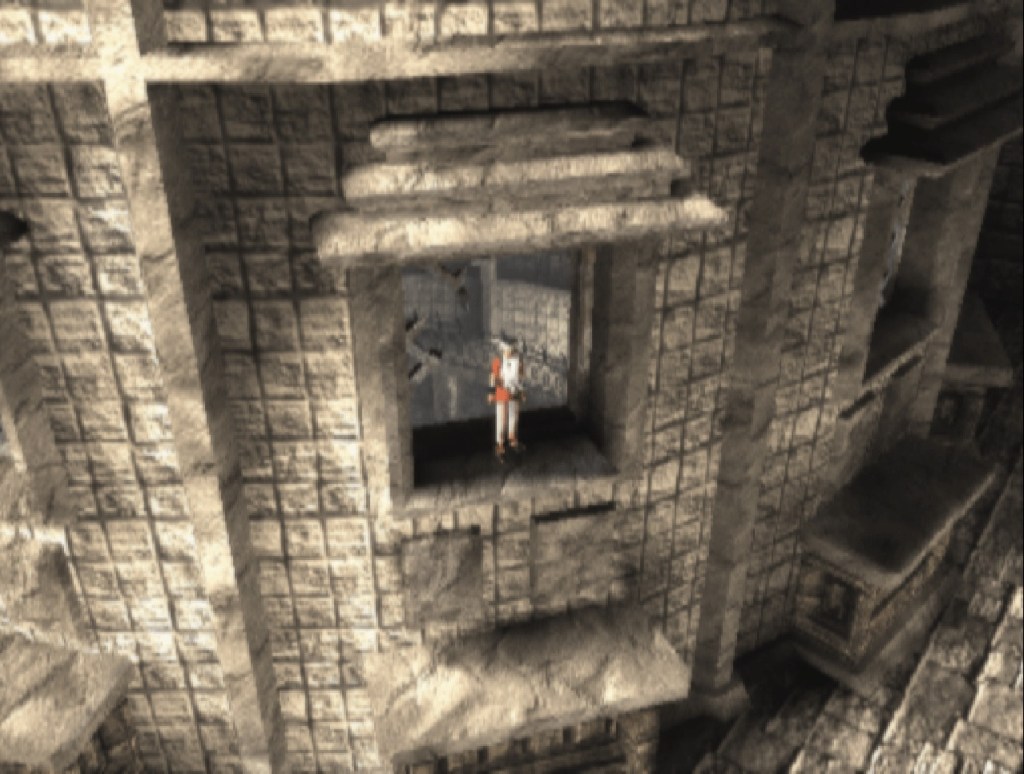
I’ll come back to that later, as well as the aforementioned PS3 remaster, but let’s head back to where the original game came from first. I’d have loved to have seen how Ico would have looked on the original PlayStation, as was initially planned by Fumito Ueda at Sony Interactive Entertainment’s Japan Studio (later known as Team Ico) when he came up with the idea back in 1997! Not sure why but I’m picturing this weird combination of Dino Crisis 2, Tomb Raider II, the original Silent Hill and some nerdy fantasy thing, which would have been the best graphics ever! Instead though, as the PS2 started to emerge mid-development, it seemed more likely that his “subtracting design” vision – where immersion was maxed out by removing anything on the screen that didn’t add to the game’s storyline and setting – was going to be more at home on there one way or another, so in September 2001, that’s where it was released. It seems like not everyone bought into screenshots alone like I eventually did though, as (like the rest of its promotion) they struggled to do justice to Ueda’s vision and convey what the game was all about, or even that it was much of a game at all, what with no scores or health bars or weapon selectors or anything that said “play me” on them, so however much critical success it immediately enjoyed – and would continue to enjoy forever after – that original release never got beyond seven hundred thousand copies sold.
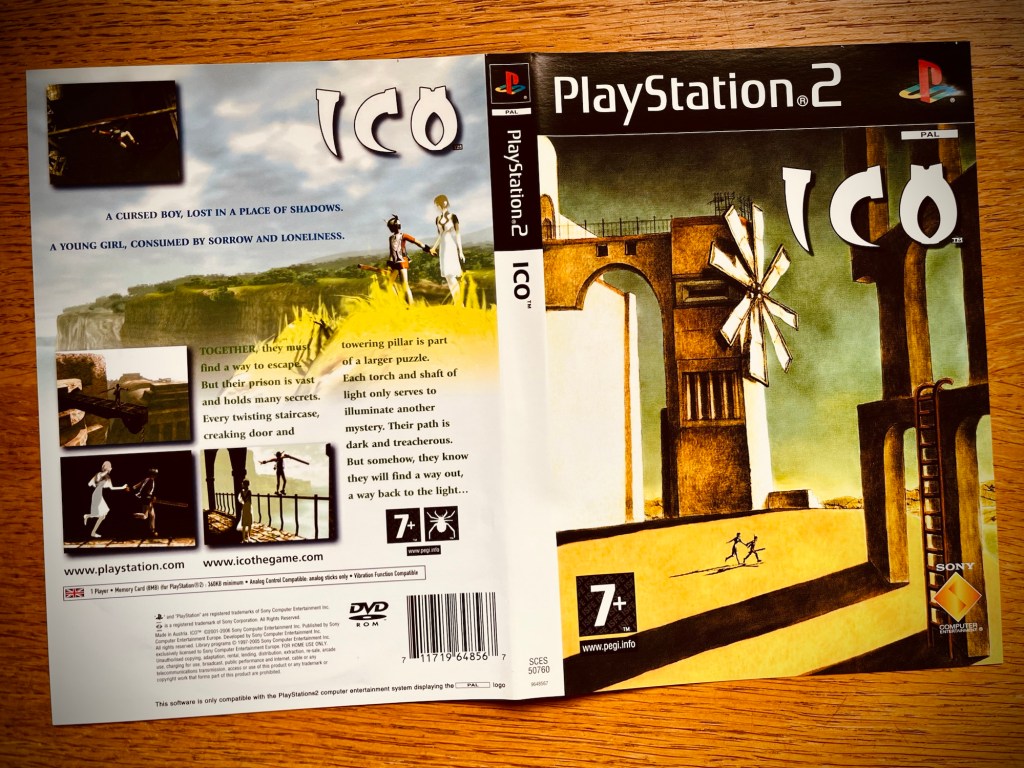
The American version struggled for sales in particular, and it’s worth mentioning that’s also where it appeared first, and in its original form, differing slightly to the Japanese release, which came at the end of 2001, and then the European release a few months later again, in March 2002. Both of these received refinements to some of the puzzles, which I guess came from pre-release play-testing taking place too late for what sounds like a rushed US launch (which some dreadful box art also alludes to), as well as changes to some of the environmental design you encounter throughout the game (and in particular a nasty bit of platforming near a waterfall…), and the ability to bring in a player two to control one of the protagonists on a second play-through, which I can’t deny I would have appreciated a couple of times first time around too! I’ll come back to all that too though because it sounds like it’s time we got into what it is all about! “A cursed boy, lost in a place of shadows. A young girl, consumed by sorrow and loneliness. Together, they must find a way to escape. But their prison is vast and holds many secrets. Every twisting, creaking door and towering pillar is part of a larger puzzle. Each torch and shaft of light only serves to illuminate another mystery. Their path is dark and treacherous. But somehow, they know they will find a way out, a way back to the light…” That’s from the back of the box but the instructions go on to tell us that the boy is Ico, born with two horns, hence the curse thing, which means that on his twelfth birthday, he needs to be dragged off by some sinister-looking horseman to a terrible fortress, filled floor-to-ceiling with rows of stone caskets, one of which has his name on it… For eternity!
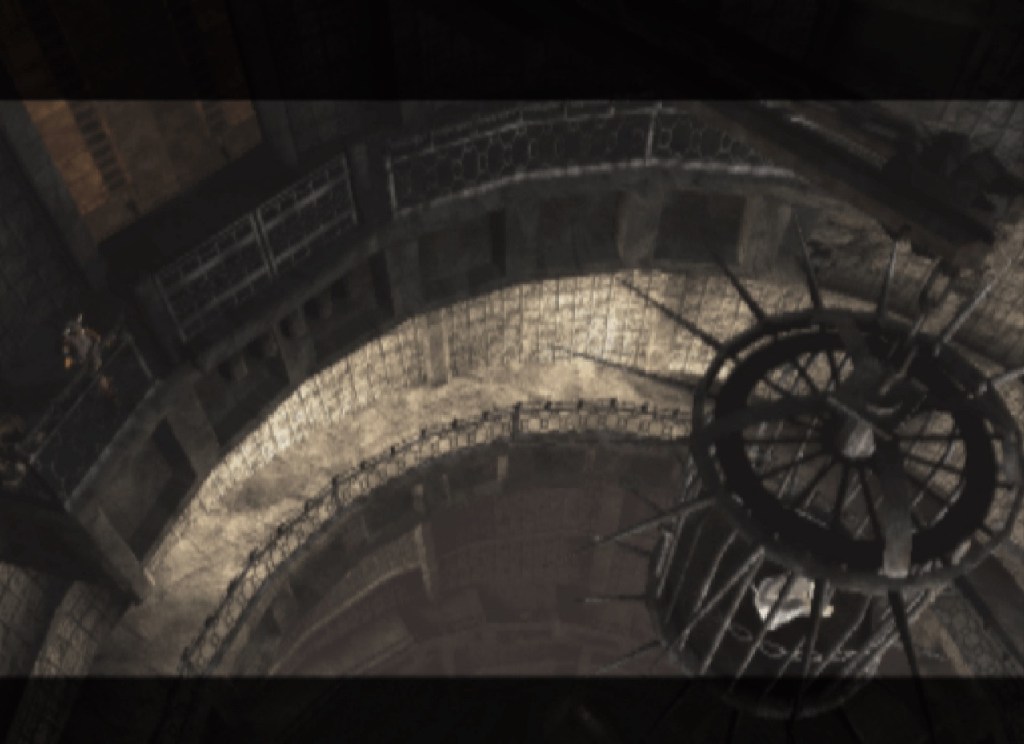
The opening cinematic has us joining Ico en route to his terrible end, hands bound and sitting in front of one of his captors on a big, black, Tolkeinesque horse, on that desperately sad procession through such contrastingly sunlit forests that eventually emerge into ancient stone ruins and the dark waters beyond, where a gondola will transport him across to the magically protected gates of this vast, impossibly architected, clifftop prison, and finally into its darkness, and those rows of stone caskets, as he quickly works out his horrific fate, and, I assume, that of countless generations of his fellow similarly cursed predecessors. No time to dwell on morbid thoughts like that though because the passage of time has done the crumbling stonework supporting his tomb no favours at all, and no sooner has he mischievously started rocking it back and forth, than it comes crashing down, and we’re in business! It’s worth saying that for all the exposition we’ve just been given, from this point onwards, there’s absolutely no hand-holding (figuratively-speaking at least) and virtually no direction, and that’s on top of the aforementioned lack of anything “game-related” showing up on the screen. The two main characters don’t even speak any language you’ll recognise (unless you’re on a second play-through of a non-American version), nor the same language as each other, come to that! And yet, from this moment onwards, you’re totally sucked in to their plight, which intertwines as a bit of initial wandering around, a few opportunities to try out the platforming, some stress-free object interaction and exploratory-puzzling reveals a young girl, consumed by sorrow and loneliness, hanging precariously in a cage over this vertigo-inducing drop at the top of the huge tower you’ll have just realised you’ve worked your way to the top of… Although you really don’t know the meaning of “vertigo-inducing” yet!
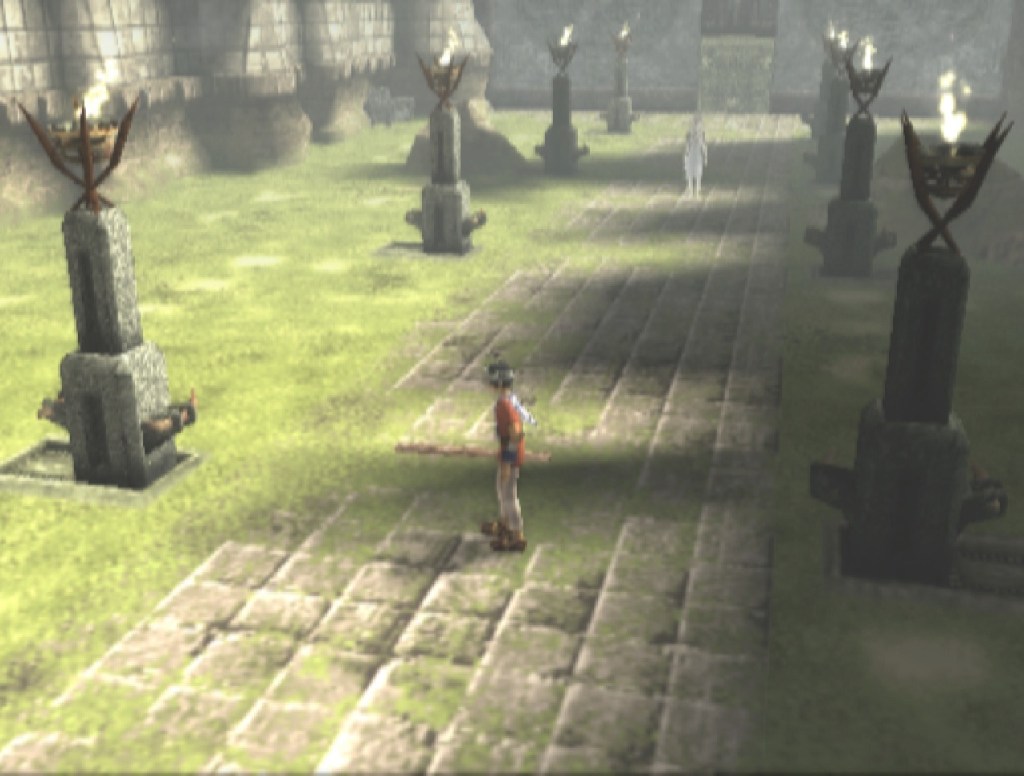
Clearly, the first order of business is to get her down, get you back down, then get her out, as further cutscenes seamlessly come and go, often with just the black borders at the top and bottom of the screen indicating you’re briefly no longer in control, as the almost-wordless narrative is gradually chipped away at. Obviously, we’re still talking about a PS2 game though, so “seamless” is relative, but while there’s none of the technical marvels of something like 2024’s Senua’s Saga: Hellblade II weaving you in and out of actual gameplay, the transition is always treated as part of the game’s mostly meticulous, continuous cinematography, and at the very least is always a welcome breather too! And while there is a clear graphical boost and increased sense of scale (and subsequently a greater sense of grandeur) as these play out versus regular gameplay, stylistically it’s all playing by the same rules, so again, seamless enough. And gorgeous! I know already I’m going to end up jumping all over the place with this but I should probably talk game world before going further into visuals but even that’s a mystery all of its own to speculate on… Apart from the occasional accident involving a set of horns, we’re talking about humans (or thereabouts), and we already know there’s definitely horses there too, and where they inhabit is also familiar and pretty normal looking, with sun and rain, sea and sky, and some lovely picturesque vistas over cliffs and forests to enjoy! But then there’s this fortress, which effectively dominates most of the game, and it’s all very medieval fantasy with maybe with a Mayan influence in its construction, but it’s also full of this primitive but genius technology, made from whatever is immediately to hand but way ahead of its time and on a massive, industrial scale. There are complex, interconnected winches and pulleys, multi-storey waterfall-powered mechanisms, flame-triggered switches and gargantuan solar energy collectors capable of moving entire structures, and of course, you’ll be trying to manipulate all of these to get where you need to!
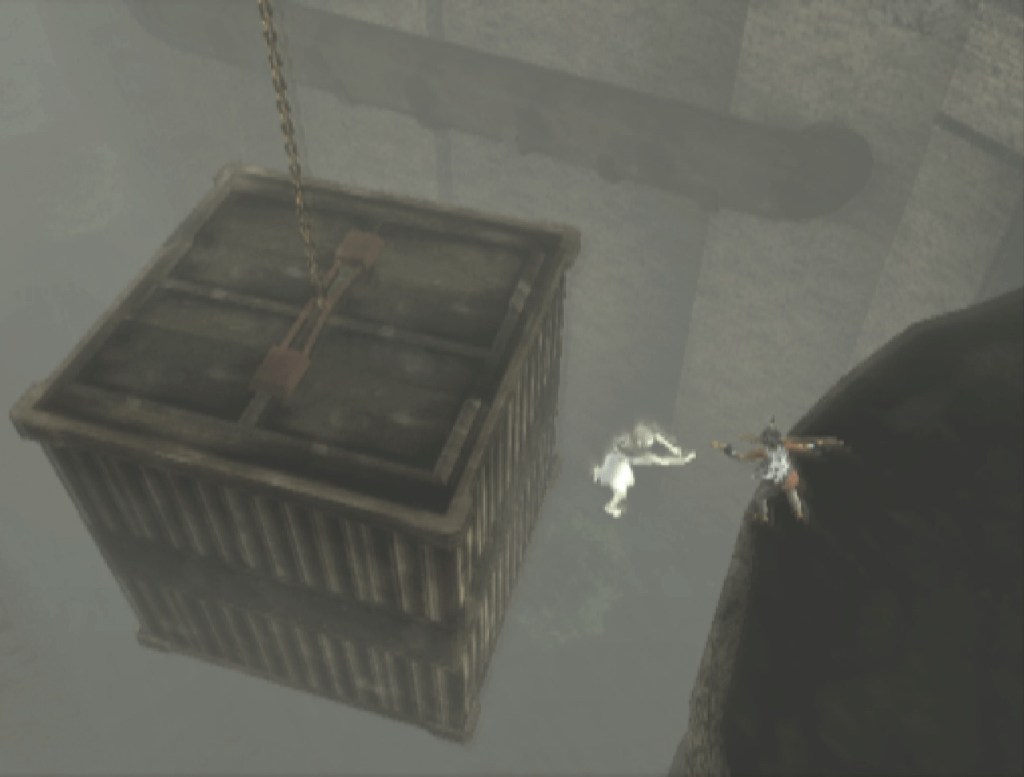
And where you need to get to is out of the castle and away from your new friend Yorda’s evil witch-queen mother… Which reminds me, I forgot about all the dark magic at play in the world as well, which, on the whole, might become less intimidating to deal with as you progress but its main manifestation never becomes less panic-inducing! I’ll also come back to that in a sec, together with the rest of the pile of stuff I keep putting to one side, but while this incredible narrative is still only just beginning, in its own very unique style, I think I’m going to mostly stop talking about the in and outs there to avoid becoming a walkthrough, apart from to say that we also soon learn that Yorda was imprisoned by her mother so she can reincarnate herself in her youthful body as and when she needs to, seemingly because hers is going to pot after she was seduced away from “light” magic (hence the big sun-catchers you come across everywhere) and got into the juicier, dark stuff, the price of which is gradually falling to pieces! And as said, that also results in the pair of you uniting in your common cause of needing to do a runner out of the castle! And just to also conclude on the world-building, I guess that explains the air of abandonment about the place too, with just inanimate remnants of a civilisation left to look after themselves as nature dares to show its face again in places, and things start to decay and break down, or get broken down to suit other purposes! But while such environmental puzzles do become more and more grandiose, I suppose in many ways, the gameplay itself is always as minimal as the way the narrative is delivered. And speaking of which, once you’ve got Yorda out of her cage, hopefully you’ll have noticed the stick that fell to the floor alongside her cage because you’re going to need it as fast as you can press the action button to pick it up!

As you probably guessed earlier from the way I jumped from reading about Ico to playing it, my first time around was using emulation, with a Nintendo Switch Pro Controller, and it was fine if a little clunky in that old tech kind of way, but what I didn’t realise until I actually bought the game and played on original hardware was quite how well-adapted to the PS2 controller the game is! Not just the rumble when the gameplay demands it either, but the control of the character’s movement and the panning camera all feels great on the analog sticks in comparison – way more smooth and intuitive, which to an extent also applies to the button presses, (and the relentless use of one shoulder button in particular!) and that translates both to the gameplay experience and that all-important immersion in it. It was really noticeable when I went back to emulation to grab screenshots too – not to the level of something like the flight-sim Falcon on Atari ST was, moving from joystick and keyboard to controller and keyboard, but it never felt right again all the same! In fact, although the instruction manual makes more of a meal of getting around and interacting than it really needs to, for example entire pages on climbing chains and ladders, or explaining individually in turn how to operate a switch, activate a lever, pick up objects or weapons and throw stuff, when it’s all just one action button on circle, and jump is triangle, and you can run on the analog stick and walk on the direction buttons, and so on. The other stick manually moves the camera as far as your current predicament will allow, and you can zoom on a shoulder button (although I still haven’t really used this) and, as alluded to just now, use another to constantly call to Yorda, or grab her hand, or pull her up, or pull her out… It’s not so bad though, and while her AI can get a little confused from time to time, she’s certainly not just some annoying prolonged escort mission! In fact, she establishes herself as a lot more than that surprisingly quickly, which I’ll definitely return to later but for now, it’s amazing how immediately and how deeply you make a connection with her, with that initial encounter being so intense, in no doubt thanks to both its scale and your not having a clue what’s going on through most of it, which is then further magnified by what comes next…
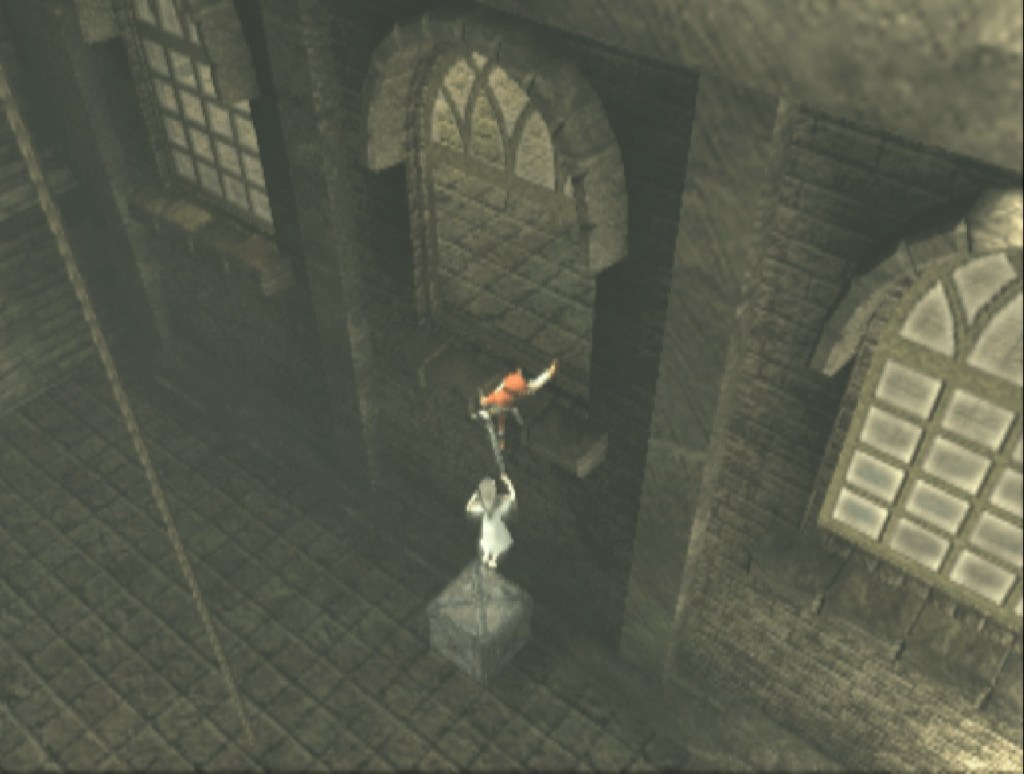
There’s also a the square button for combat, and while I have zero complaints about simplifying things, I know this is one area the game has received criticism for. A while ago, we were getting Yorda out of her cage and I mentioned picking up a stick, and for a while at least, that’s going to be your only weapon, as well as a way of transporting flames from one place to another for some of the environmental puzzles you’ll encounter, which, as you progress, might in turn reveal better weapons, such as swords. There are certainly a few areas I came across almost by accident (although I think by design at the same time because they were also areas with no immediately obvious next direction of travel) that might reveal hidden, optional puzzles to the curious, which might in turn reveal even better stuff… For now though, you’re going nowhere without that stick because the second Yorda escapes the cage, a black murk appears from the castle’s foundations and out come the dark spirits, ready to attack you but, more importantly, drag Yorda back down into the blackness they emerged from, meaning game over. By the way, falling too far is the other way of spelling your doom, which some of these spirits are capable of instigating by chucking you off something high, but mostly you’ll be dying from falling of your own accord, which we’ll get to shortly! In the meantime, your sole defence against these spirits is lunging at them with your stick by mashing square, which is as unsophisticated as it sounds, but I don’t think is really the point. There are four types of spirit – spider wraiths will congregate around Yorda but are more of a distraction for the sentries, who will try to separate you from her and drag her off into their portal. Then there are fortress ghouls, who will try and keep you away from Yorda and their fellow spirits by cornering you and knocking you to the floor, rendering you useless for a few seconds, which is typically enough for Yorda to end up at the portal. If you can clear a path to it though, you’ll have until she disappears into it completely to reach down for her hand and drag her out, which becomes far more difficult if a pair of flying sentinels turn up and get her, meaning you’ll need to find a way to where they’ve come from and get there first, which is likely to be some distance away from the action.

The idea, then, is to protect Yorda from capture by swinging your stick at the spirits, which, depending on their type, might take five to ten direct hits to get rid of, or less if you’ve found a better weapon. They’ll always be working in a pack though, in an impressively coordinated way, so you need to avoid being distracted or overwhelmed and pick your moments, sometimes prioritising getting rid of them over protecting Yorda and vice versa but should they grab her, you ideally want to whack them and get them to drop her before they get too far away. It starts out as a real slog too but while the appearances of these vague, shifting black shapes never become less intimidating, the scripted ones do become more of an inconvenience than a massive threat, although there’s always that fear when you’ve come a very long way since the last save point and they suddenly turn up! The less obviously scripted ones, on the other hand, are always on your mind though because they tend to happen when you’re forced to separate from Yorda for any extended period, so while you’re busy clambering around ledges several floors above, or in a whole different building trying to solve a puzzle that will open a door to allow her to join you, a sudden scream will mean you need to get back to her fast! And again, that connection with her comes smartly into play here – you might have had no choice but she trusted you that just leaving her for a minute would be okay, so these things taking advantage of that trust is a constant lingering fear. And the further the game makes you stray, the more protective you get!
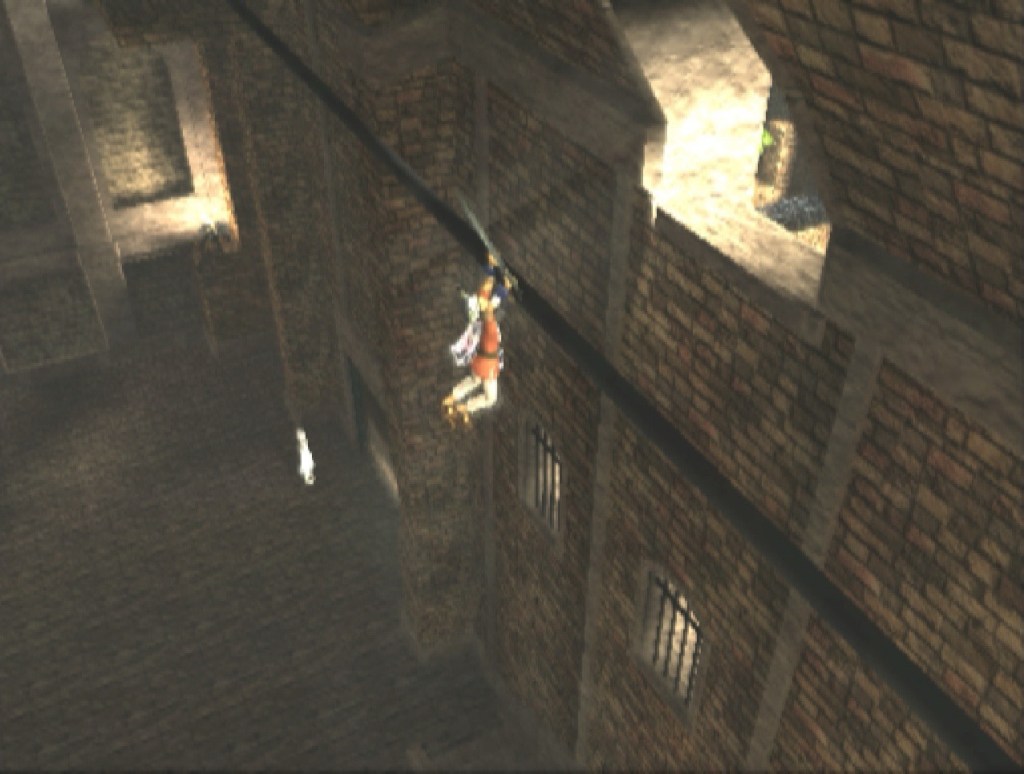
Wherever you come up against these ghouls though, there’s often also the option of grabbing Yorda’s hand and trying to run for a door into the next area if you can because they won’t follow. You spend a lot of time grabbing her hand and running too, which is why I find the animation when doing so can end up looking surprisingly clumsy for a game so clearly influenced by Prince of Persia in that department, like you’re mercilessly dragging a rag doll around behind you that’s bouncing around the environment, rather than elegantly guiding her through it. It doesn’t happen everywhere though – mostly in narrow spaces like rope bridges or on ledges – and performing the action itself does still add more to the gameplay than it detracts from the presentation when it does. Things like pulling her up onto a ledge, or catching her after some ridiculous jump, are conveyed very effectively and very impressively though, overtly lifelike (in that Prince of Persia or Another World rotoscoped kind of way) and therefore always displaying an appropriate level of recklessness to accompany your wild leaps and various acrobatics that always makes you wonder if you’re quite going to make it! And elsewhere, it also conveys Ico’s sense of childlike urgency, Yorda’s waifish, nervous scurry, and the spirits’ shadow-formed spookiness perfectly, while for all the stuff you interact with, from mine-carts to lifts and all the medieval machinery you end up operating, movement is consistently smooth, fluid and generally of the highest order, and carefully considered too, right down to the way Yorda’s hands press down behind her for support as she leans back to sit down.
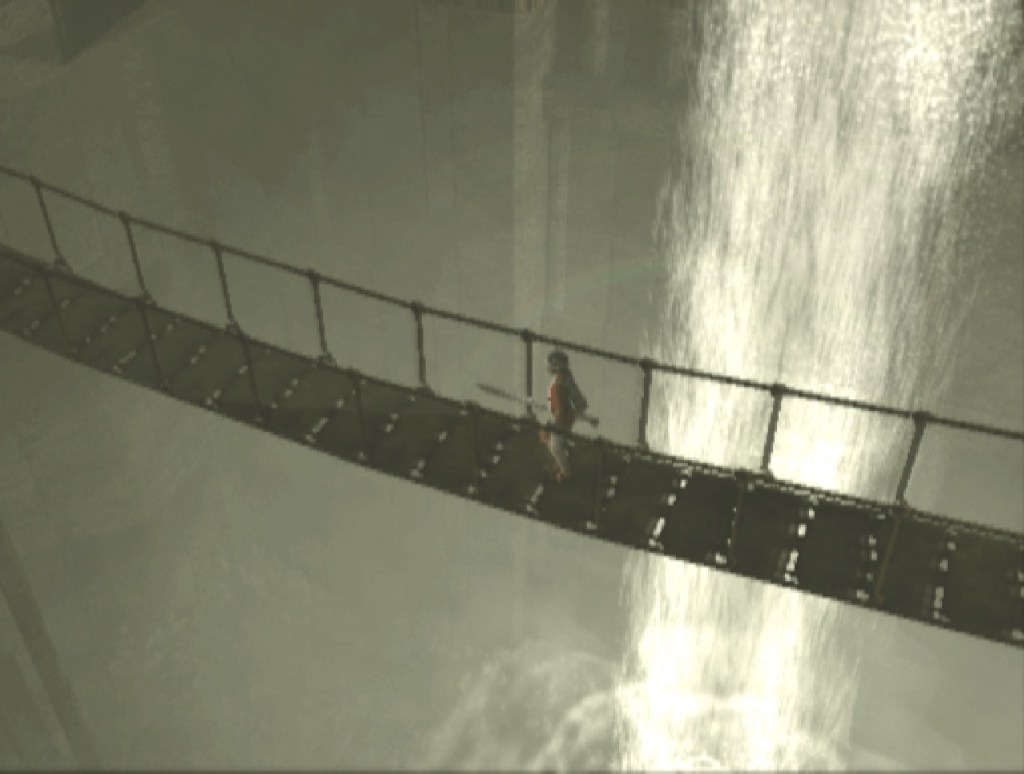
That’s not to say moving around some of the more “platformy” 3D spaces always goes so smoothly though, and there were a few instances where I thought the game was asking too much of both its jumping mechanics and its camera dynamics, Mario Sunshine-style! However, for this first example, it only applies to the US version (which is the one I first emulated), and it’s that area I mentioned before, where you’re trying to shut down power from a waterfall, and once you’re out of any other options, you realise you need to jump over a canal at the source of the waterfall from the very slightly elevated remains of a broken bridge. It’s right on the limit of your running jump distance – and I’m talking about a pixel inside it – so that jump button press then needs to be that pixel-perfect but, combined with the loose directional controls and the weird angle you’re approaching it from, it’s just not built for that, so you fall in and end up right down at the bottom of the huge waterfall, which is an easy but long climb back up, and however many times it takes to make it, you’ll have already been through this loop a load more times while you were trying to work out that’s what you need to do in the first place! It stinks so much that in the European version (and, I assume, Japanese), it now features a fully operational and surprisingly grand, considering, Industrial Revolution-era water-wheel in the canal you can now clamber up on and jump from as it turns, and should you fall into the water, you now also have a way to scramble out before you go over the edge. When you throw in that the puzzle to get into the area to begin with has also been redesigned, cleverly using a piston in another room that’s attached to the back of the new water-wheel to save you a load of cumbersome climbing, that adds up to a lot of changes to make just this one bit more accessible! I did also struggle with a a similarly precise jump required across to an elevator tower near the end (in both versions) that takes too much getting back to as you try and work out what it’s asking of you, although with that one, you will feel a fool for not getting it first time around by that stage if you didn’t! I’m sure many people have ihad similar experiences elsewhere in that whole very platform-heavy section though, full of big rotating barrels and cogs, swinging platforms, tiny pipes and virtual leaps of faith that you might pull off first time but the camera and controls combo mean you can also easily come a cropper, either demanding repeating a whole series of obstacles just to have another go, or after one particularly big fall, the nastiest piece of checkpointing in the game!
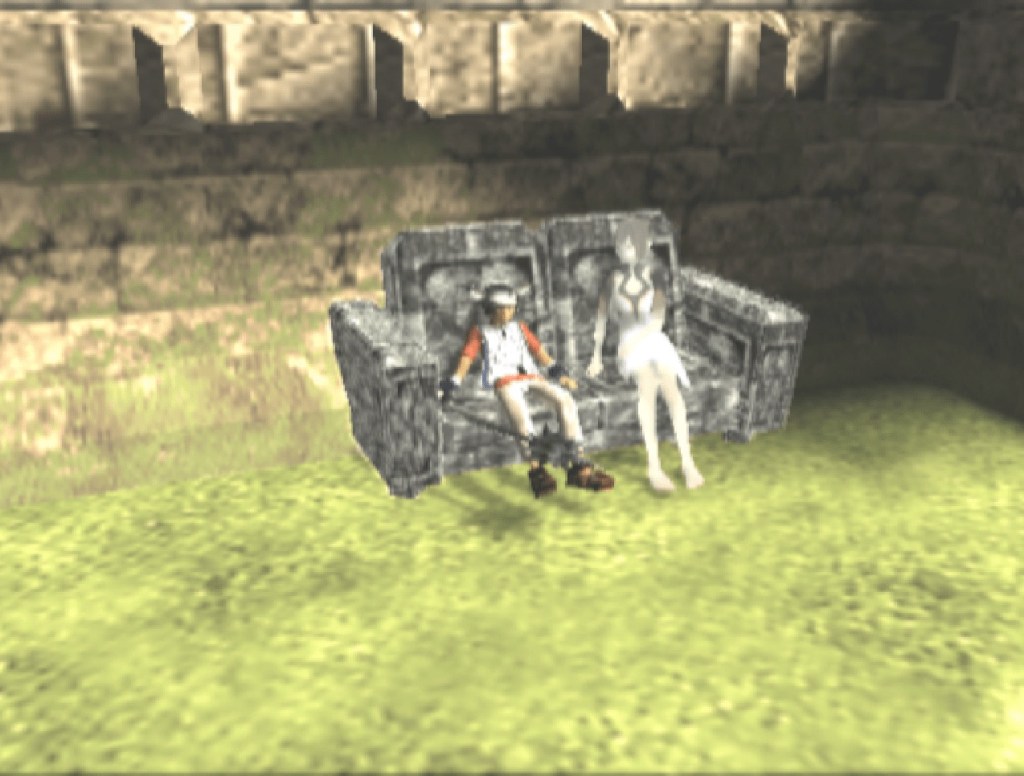
While I’m dealing with a couple of frustrations, I’ve got one more, right in the last phase of the final (and only!) boss fight against nasty magic mother, where it expects you to know you can suddenly pull a certain entire pillar (that’s one of several you can use to protect yourself from the Queen’s magical blast attack) backwards so you can retrieve your sword, which she’s flung all around her throne room over the course of the fight, one last time… I had to do that whole fight so many times, knowing exactly what I needed to do but having no clue from anything I’d experienced previously that I was supposed to do that! Like those platforming bits just now though, maybe that was just me, and there’s more to cover before we get to final bosses anyway! Now, if you look at a play-through on YouTube, Ico can be done in about four hours, although my first time was almost exactly double that, with the second (and also the PS3 version) significantly shorter, mostly because even my increasingly scatty memory helped out with a few of the more laterally-thinking puzzle solutions! Assuming we kept those spirits at bay with our stick back at the beginning, the game progresses through what I think is six stages, although you won’t really be separating any of it into “stages” as you play – more like one big travel from A to B split up into manageable bits! It needs to be too because the fortress is vast, and as diverse as it does end up becoming, it’s also impressively seamless in its design; in fact, even to someone like me with no sense of direction, no matter how much back and forth and up and down you’re doing in any given area, sooner or later you always realise where you are from your surroundings and how you got there, and it’s always such a happy realisation too! Obviously, something on this scale is going to be loaded in more regularly than you’re moving from one major area to the next, although that could also be deemed equally impressive, given how relatively infrequently it happens, except that this also tends to signify checkpoints, so maybe that’s not as welcome as you might think! There are save points too – strangely activated by sitting on a totally out of place modern sofa – and I’m not sure I’ve ever been as relieved to come across a save point in any game as much I have some of these, after working your way through some grand puzzle and across huge expanses of fortress only to have a load of spirits turn up to try and spoil all that progress!
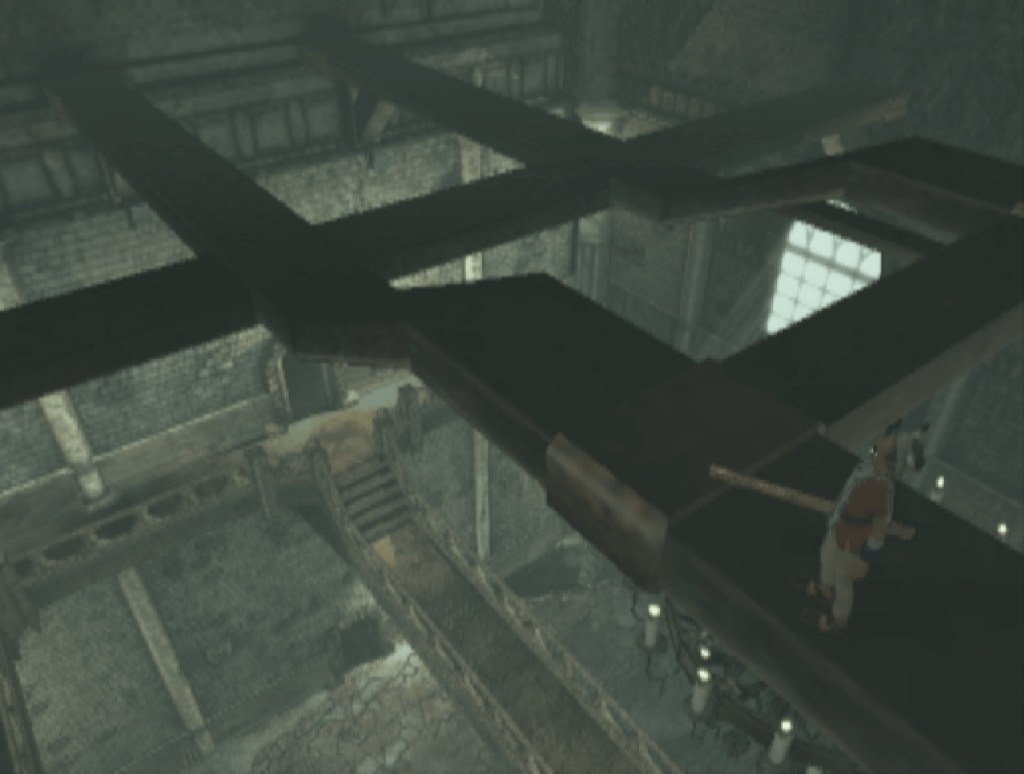
Probably a good time to come back to where those puzzles fit, and I’ll see if I can get into those six stages I just mentioned at the same time, complete either spoilers, so be warned… I think the first section, which will take you from your initial imprisonment, out across the roofs and into the castle courtyards, is as much about impressing the apparent futility of trying to escape on you as it is easing you into how to “communicate” with Yorda (through that shoulder button press to yell at her) and guide her (also through that shoulder button press to summon and grab her) through a few gentle shifting crates onto pressure switches puzzles, moving up to manipulating big objects (or simply demolishing them!) to get her across gaps, or transporting and using bombs to open up new areas, navigating your way to levers and switches to open and close things, lighting flames to manipulate other things, and that kind of thing. There’s one bit very early on where you step outside and see the entirety of the fortress spreading out into the far distance that really takes your breath away, not least because the massive tower you somehow just scaled to find Yorda suspended from the top of had seemed impressive enough in its own right, but suddenly it was nothing, and even more so for the gigantic gates you’re then confronted by that you somehow need to open to get onto the bridge you saw in the distance earlier (before you even think about the big hole in it!), and that’s done, somehow, by – as the manual says – travelling “further into the heart of this bewildering prison!” From there, things start to get very vertical, and as also alluded to earlier, not for anyone with a fear of heights! In reality, it does take some doing to make Ico fall off one of the precarious narrow platforms you soon find yourself criss-crossing – even if you go over the edge, he’ll usually grab it as he falls, but even so, you’ll have butterflies in your stomach regardless, and this will only get worse as you replace the rafters of grand old halls for swinging chains on giant cranes or the moving sails of a windmill balanced on the crumbling walls of the castle battlements, hundreds of feet above a deadly sea!
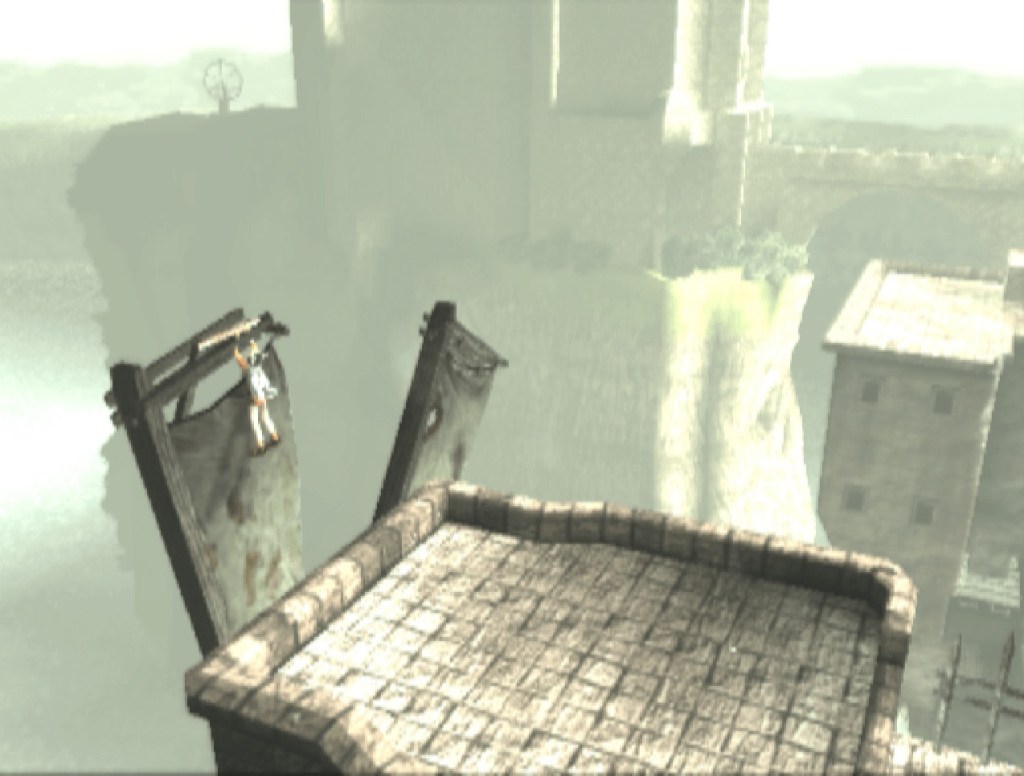
As you navigate the outer reaches of the fortress, working with Yorda (who’ll also help if you’re ever stuck) to find the puzzle pieces that will remove or overcome increasingly complex, increasingly spread out and increasingly large-scale obstacles, reached through increasingly dangerous exploration – both in physical scope and because you’re leaving her at the mercy of the dark spirits for increasingly long periods and distances – you won’t fail to also be regularly stopping to admire the views, whether to wonder at the outrageous architecture or just wistfully admire the glistening sea or the dramatic coastline or the green and very pleasant-looking land beyond. The setting is consistently spectacular in every direction and as far as you can see (whether through the regular fixed but in constant motion view or your own, almost-free, stationary camera control), with the PS2’s inherent talent for fantastical ambient realism, juxtaposed with lifelike textures and bold, natural colours. You just want to sit down in the swaying, comfy-looking grass and stay there every time you seen a patch – so inviting! I can’t emphasise enough how much the success of the presentation owes to its lighting either, and mostly how realistically the sunlight dominating those glorious skies is displayed, whether it’s downright blinding you (usually for very intentional effect), filtering through a cloud or some dust, beaming through a window or a spray of water, or simply creating shadows. And conversely, it can do dark and foreboding just as well where it needs to, I’d even say coming close to Silent Hill 2 for being oppressive at times, especially in the scary wet bits I’ll cover in a sec!
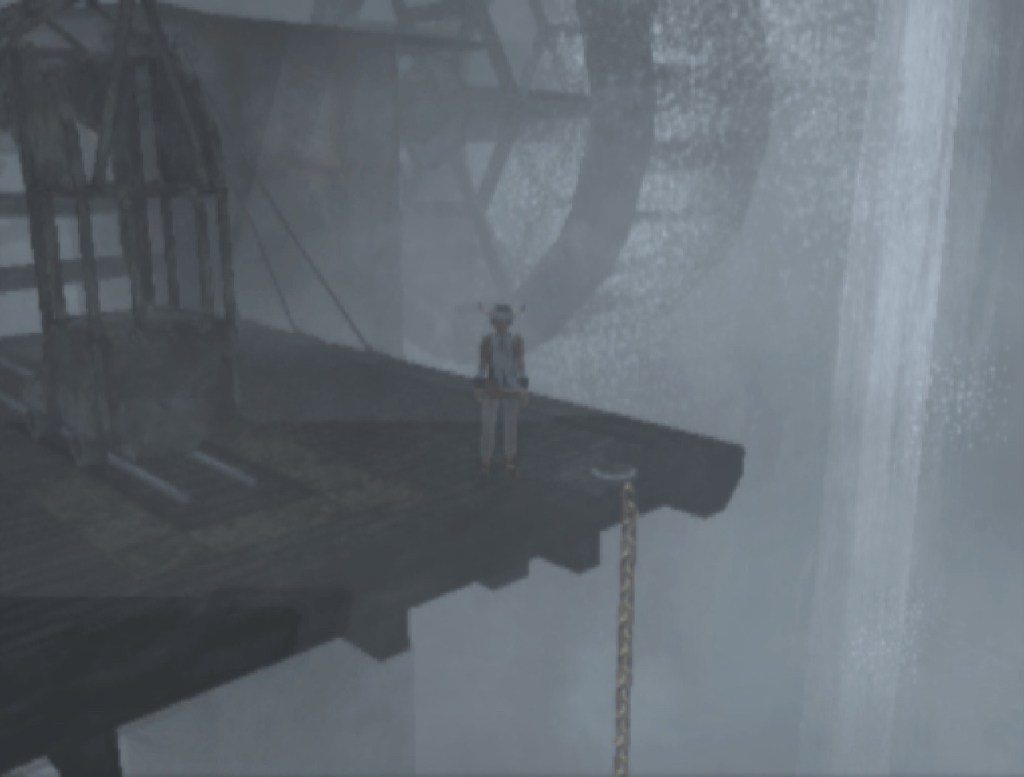
Even small light sources, like the flickering, flaming torches, do exactly what they’re supposed to and where they’re supposed to, and it all adds up to the game oozing atmosphere everywhere. Our protagonists fair pretty well too, simply drawn but always expressive (in no small part also thanks to the mostly superb animation we’ve already discussed), with zoomed-in or cutscene-led detail and characterisation replaced by an almost ghostlike, otherworldly quality during normal gameplay, and that goes tenfold for the spirits, who you’ll come to recognise individually despite them doing an incredible impersonation of nothing more than writhing clouds of smoke! And then there’s the so sinister, effortlessly evil, black-shrouded Witch-Queen herself… So hot! Anyway, good graphics, and as we progress into the next area, there’s more to the view than just admiring it – you’ll start to notice a symmetry, and that’s going to be key to what might be considered the game’s centrepiece puzzle as you manipulate different elements on an all-new scale, scattered across several areas, to open a series of huge, circular stone doors. By the way, I haven’t mentioned that Yorda has inherited a bit of her mother’s former-light magic of her own to get you into a lot of these areas, where you need her to use its power to open otherwise unpassable, magically-powered doorways. I’m sure there’ll be all-sorts I’ve missed by the time we’re done though, so not to worry!
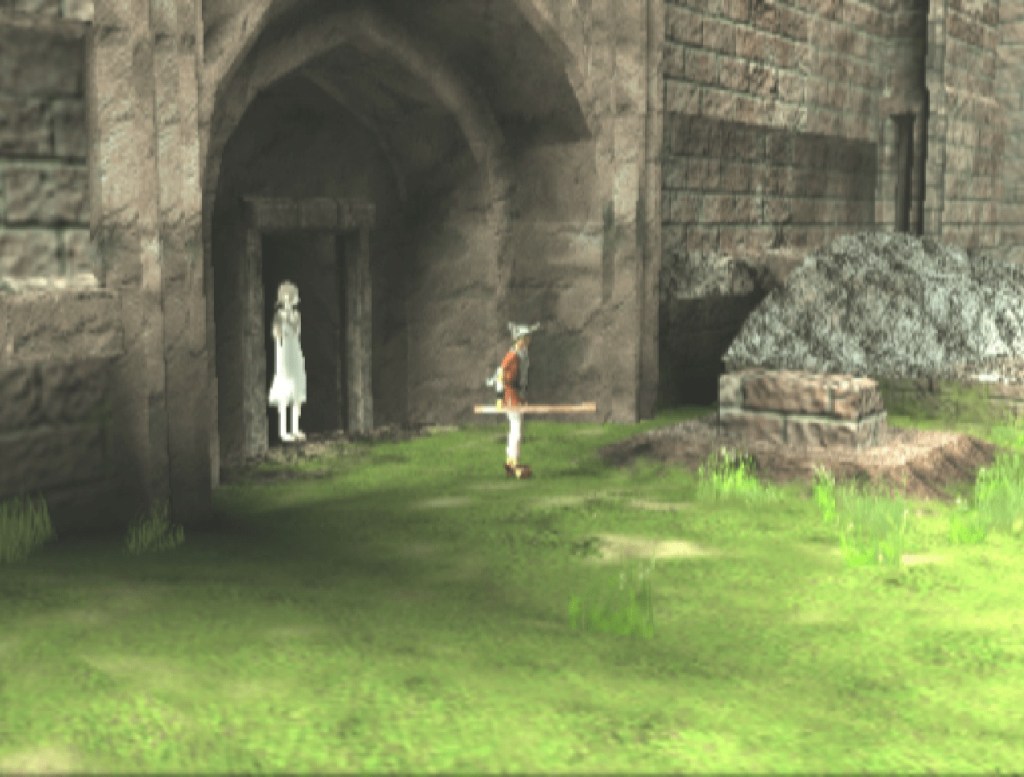
I’ve mentioned the waterfall area this leads to a few times, and despite its size and set-piece feel, it’s relatively self-contained (although it takes you a while to work that out) and its individual challenges a bit more bitesize, having you solve a series of both the traversal-type puzzles you’ll be familiar with by now to ensure the two of you are in the right place to solve it, as well as a number of cause-and-effect environmental puzzles whose various mechanisms cleverly combine to a pleasingly logical conclusion. Assuming you can jump that stupid canal if you’re playing the original American release! The puzzles are always logical in the main though, as long as you keep your eyes open and try to stay aware of your surroundings and how they sit with each other, amd that’s very true of the next area, as you cross a mass of rickety cliff-side walkways, connected (or not) by broken bridges, each a puzzle in its own right as you try to work out which bit of what’s left of the technology that was there before from whatever industry was using it you can manipulate to your own purposes. The manual alludes to this area being a “confusing and deadly place” but I actually found it had an obvious flow to it, way more so than the previous couple of areas, despite all the jumping and crashing through things it demands to actually get anywhere! Or maybe it was just the more forgiving checkpointing here that made those leaps into the unknown a bit less intense! From here, we’re seemingly on the home stretch as we find ourselves back in very familiar territory from right near the start of the game, which now reveals the game’s biggest and most spectacular set-piece of all, but just as you start to taste freedom, it’s snatched away, together with Yorda, while Ico finds himself alone, weaponless and very wet far, far, below! I’m not sure I’ve ever felt as dejected and helpless in a game as I did here, floundering in the choppy, grey seas beneath what was briefly the biggest, most over-engineered bridge you can imagine, wondering how the hell I was even going to get out of the water, let alone back up the slippery rock face, and even if I did, was it going to be worth all that effort anymore anyway?
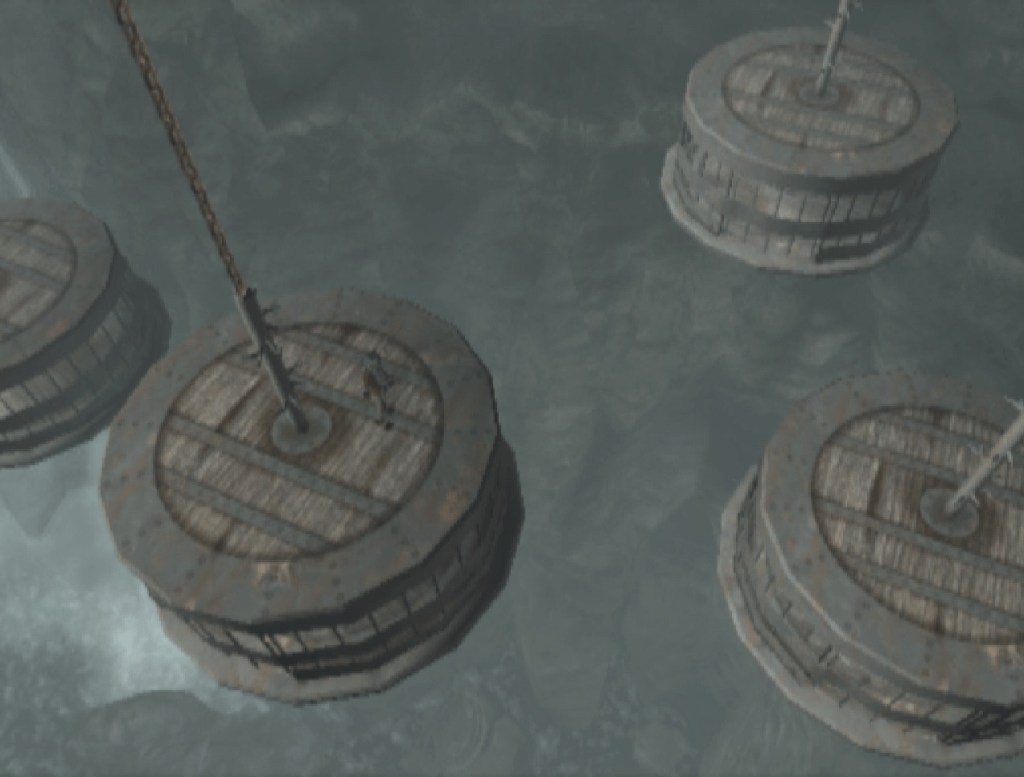
Some fantastic weather and generally damp effects said it was though, and a series of platforms, levers, pulleys, chains and all those 3D Mario-like giant rotating cogs and wheels and things to leap between later, we’re back in business and doing some crazy and, by this point, physically draining mountaineering, as some of the most impressive rain splashing onto wet surfaces I’ve ever seen in a game floods into our already precarious footholds, on our way back up to castle to rescue Yorda. Again. Via the biggest sewer system you’ve ever seen… God knows what whoever had once been up there had been eating to need that thing! Then, after some more high-risk chain swinging, and jumping on and off and up and down and around and around that dilapidated elevator tower with the horrible final jump from earlier, we come across a special sword with its own light magic like Yorda’s that means we can open up the elevator itself (also taking note of the boat that originally brought us here on the way). Now we’re heading for the final showdown, which takes place right back where we started, among all those stone caskets that now possibly explain where all those spirits – the last of which are now circling a motionless Yorda – came from in the first place… Only just thought of it but nasty if I’m right! Anyway, accompanied by a slightly – and terrifyingly – out of kilter piece of opera, you need to chase the whole lot around this huge mausoleum and batter them into final oblivion with your fancy new sword, which can take a very long time by the time you’ve caught them, so don’t get too excited about being done yet, but eventually it’s time to face the Witch-Queen before her transformation into Yorda’s body is complete…

This is a prolonged but not unenjoyable game of hit and move, hide and repeat (assuming you can locate then recover your weapon when it gets knocked out of your hands after each successful hit!), and like the mostly unspoken narrative that got us here, I’m not spoiling the ending or anything that happens after that either! Speaking of unspoken though, I’ll close with the sound design which, in retrospect, is something else that’s pretty minimal but certainly not ineffective – the environmental effects are superb, and they never let up, whether the non-stop roar of the wind, howling over the cliff edge or whistling through the open windows in the stone walls of a tall, narrow tower, or the screech of gulls on a cliff top, the crash of waves, the hot crackle of flames or the grinding of machinery, while footsteps echo and weapons clang convincingly on top. Then it won’t be long before Ico is yelling for Yorda again, speaking in one mysterious language while she communicates back in another, which is subtitled as standard with symbols rather than the English (or Japanese) you get for Ico or the Queen, although you’ll pick up on her tone of voice well enough, especially when she’s in trouble. It’s all very atmospheric too, unless you get a bit impatient and keep hammering the shout at Yorda button! Music is kept for special occasions, creeping in and out as required in a beautifully orchestrated but very somber fashion, ethereal and quietly melodramatic in its delivery, and what’s there couldn’t be more thoughtful. And that’s more or less all I wanted to say about Ico on the PlayStation 2 for now!

I’ve got no plans to get into sequel or prequel Shadow of the Colossus here, but will quickly touch on that PlayStation 3 high-definition remaster of Ico from 2011 it comes bundled with. I already mentioned some gameplay tweaks but on the whole, it’s about fancy new presentation, as well as stereoscopic 3D support and PlayStation trophies, if either float your boat. There’s also a very distinct new smoothness to everything, and not just the sweeping cinematic vistas of the game world and the like, but also how it feels to play – it’s like that step back from emulation to original hardware from earlier and then the same again, if that makes any sense whatsoever! That said, there’s also a bit of the original’s magic lost, as that forlorn gloominess is brushed aside by clean lines and crisp colours; it’s all so polished and clinical and so PS3 now! It’s so Ico too though, adding embellishments and flourishes to the original but staying totally authentic, and if this was the only way I had to play it I wouldn’t be disappointed. I’ve got absolutely no interest in Team Ico’s third game, The Last Guardian, but would like to quickly talk about two other games before we close. The first is the aforementioned Another World by Delphine Software, originally released on the Atari ST and Amiga in 1991, and then everywhere, to this day, ever since. The last time I wrote about it, this is what I said: “…as you try to puzzle or fight your way through every single one of its surreal flip-screens that tell this incredible, minimal tale through minimal interactions with this fantastically atmospheric (and minimal) world! The controls are pretty minimal too, and, combined with zero energy bars, scores or anything else on-screen, results in total immersion and singular focus on whatever the immediate problem you need to solve to progress to the next one. And the next. And the odd terrifying monster to run away from too!”
Sounds familiar, right, and that’s before any connection to an unlikely ally! Then, jumping right past Metal Gear Solid and forwards to 2012, the other game I had in mind was Journey, originally on PS3. Obviously, we’re now talking inspired by Ico rather than inspiration to it, with its shared minimal delivery, mysteriously intense narrative and just leaving you to it, but more pertinently, it’s the only other time I’ve ever experienced this kind of beyond-emotional involvement with a game before, and is what sets Ico apart from something like Another World for me. Now, with Journey, you can play it in one sitting, and actually, that’s how you want to play it, and having done so, as you literally crawl towards that final revelation, you will be both emotionally drained and – strange as it may sound if you haven’t experienced it – physically exhausted! Which is also the case with Ico but you’ll get that feeling every single time you collapse into a sofa and save your game instead… And now I think about it, maybe that choice of gameplay-related furniture wasn’t so weird after all! Anyway, such is the connection you immediately start to build with Yorda, together with the level of trust she’s unquestioningly placing in you, and the level of responsibility and protectiveness that comes with that trust. And yes, it doesn’t hurt that it’s a beautiful place to be with an even more mysterious and intense narrative, and there’s a permanent sense of peril that you’re very limited in being able to fight back against, and it has some very engaging and expansive puzzles to keep you going too, but I could probably describe fifty other games using those words. None of them are Ico though, and I think that ultimately heart-wrenching connection is probably why. And that’s probably also why it’s provisionally slotted into number eighteen in my all-time favourite games list, between Destruction Derby 2 on PS1 and Enduro Racer on ZX Spectrum, although the dust is going to take a bit longer to settle and I’ve a feeling Ico’s not done climbing yet!
As always, I’ll never expect anything for what I do here but if you’d like to buy me a Ko-fi and help towards increasingly expensive hosting and storage costs then it will always be really appreciated! And be sure to follow me on Instagram, X (formerly Twitter) or Threads for my latest retro-gaming nonsense!
 Retro Arcadia