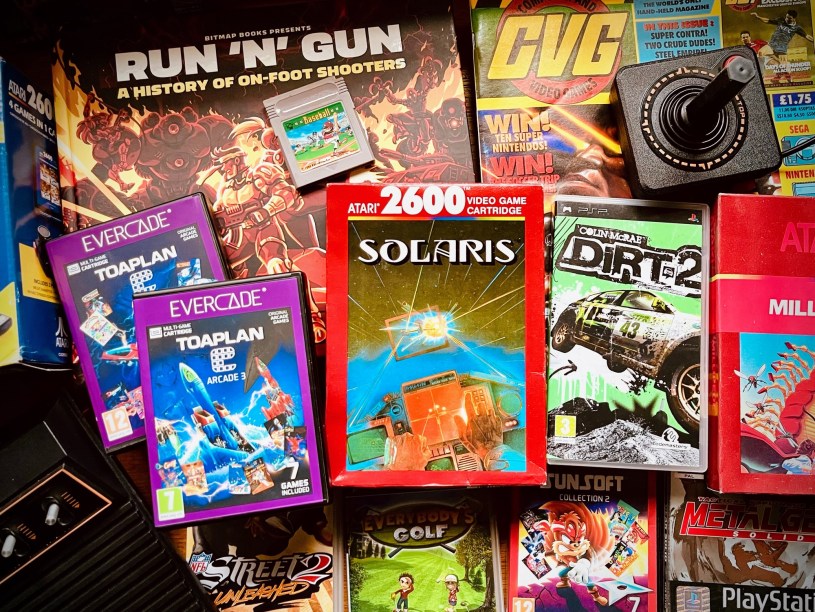
Welcome to another in a seasonal series of features covering everything I’ve been spending money on over the past three months that I probably shouldn’t have! As I usually mention, this was introduced to complement the various forms of weekly deep-dives at Retro Arcadia, in part to keep things fresh but also to take a bit of the pressure off me trying to juggle writing them alongside juggling work and family… Not to mention actually playing the things enough to properly get into them! Don’t worry though, because that’s not to say they won’t continue to make up the vast majority of what’s here, together with the Weekly Spotlights, the Retro Rewinds, and likewise the reviews when I’m kindly asked to do them (or the mood takes me). Right, the format here is a paragraph or two on each of the games and related things I’ve got hold of since last time, and as usual there seems to be loads, so let’s get on with it!
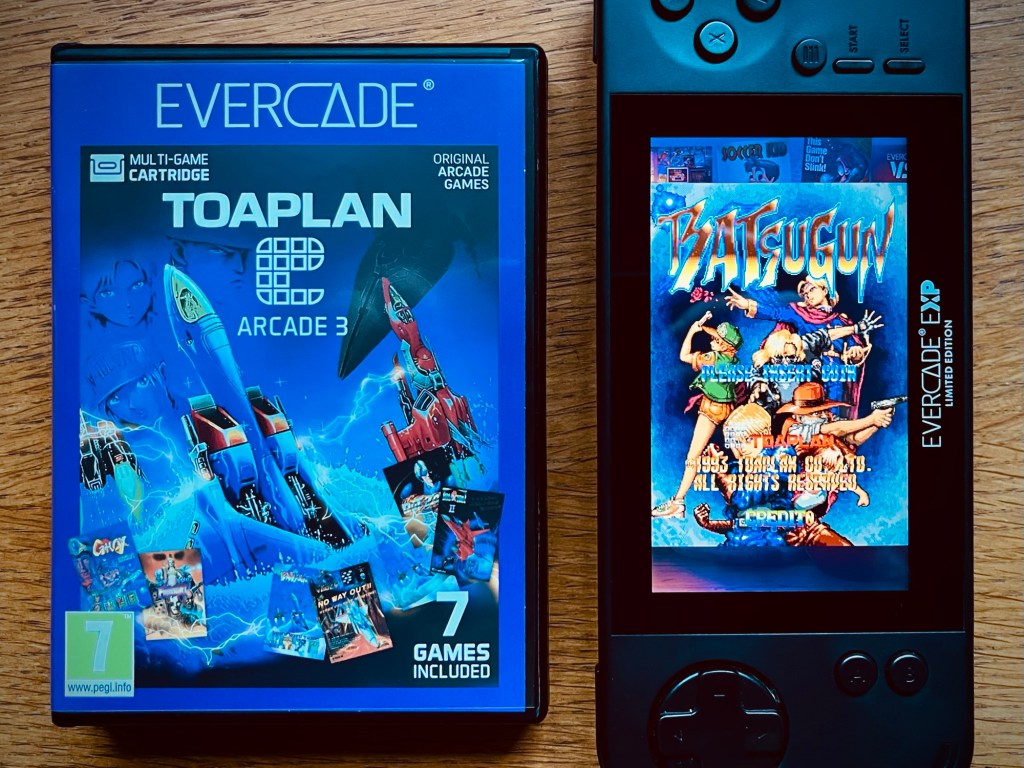
We’ll begin with Toaplan Arcade 3 for Evercade because it unfortunately missed the cut by a day last time out here, but I reckon the six and a half games on this third cartridge representing the legendary Japanese developer make it worth the wait! Before we get into the games, as always for these things, we’re talking top-notch presentation, with game info, controls, quick-loads and stats behind an attractive and sort-able set of game icons on the title menu, and a lot of that stuff is also included in more detail in a real-life manual (with some very cool developer histories for every game on top), and there’s a sheet of stickers in the box too! In-game you then have save states, controller mapping and all the usual display options at the touch of a button, and while they all play fine on the VS console under the TV and newer Super Pocket handhelds, spinning into TATE mode on the EXP handheld is a great way to play all of these. Let’s get into the games then, and first up is 1993’s Batsugun, such an important game, not only laying the foundations for bullet-hell, paving the way for Cave to emerge and pretty much defining the modern vertically-scrolling shoot ‘em up, but it’s also unadulterated fun, spectacle and exhilaration! The 1994 “Special Version” turned out to be the last of Toaplan’s output but its slightly remixed, padded-out and more accessible gameplay makes it an all-time genre favourite for me, second only to the aforementioned Cave’s DoDonPachi, and worth the price of entry here alone! Next up is Out Zone, a top-down run and gun shooter from 1990 not unlike Mercs but heavy on the sci-fi and way more frantic! Great bit of pixel-art too, with high-energy music and a neat twin-weapon system that you collect icons to both power-up and switch between, offering straight ahead and directional fire and a bit of strategy to boot. A few familiar faces from Toaplan’s Flying Shark and Truxton too!

And speaking of Truxton too, or Truxton II to be precise, we might as well go there next! Once again, gorgeous game with great sounds, and I reckon this 1992 sequel might be slightly more welcoming than the first game too, but as much as it’s a superb vertically-scrolling shoot ‘em up in its own right, it hardly moved the genre forward. Glad it’s here all the same though! I should really have gone to FixEight next because it’s kind of the successor to Out Zone but I couldn’t resist the word-play! Anyway, it’s a similar vibe but from 1992, with you and up to two friends picking from eight futuristic (and sometimes alien) mercenaries on an invader massacre, full of explosions and chaotic sound effects and even more really nice music, and it plays so fast and slick, but I don’t like how it looks – it’s all a bit washed-out for my liking. Total departure from anything else we’ve seen on any of these Toaplan collections for Evercade so far next with 1991’s Ghox, which is a souped-up, brick-busting fantasy bat and ball game that starts with two balls and ends up with a screenful! It’s an old formula all the same, but it’s never not been fun, and this is loads of it, with power-ups and treasure chests and enemies and all-sorts all over the place, and exotic music and very-Toaplan visuals despite the simple subject matter. Really pleased to have discovered this one on here! Last up is Vimana from 1991, and we’re back in familiar vertically-scrolling shooter territory, albeit uniquely inspired by Indian mythology. It’s also pretty unique in not being brutally difficult for one of these from Toaplan! It’s alright too but little more, with very uninspired looks and sounds and gameplay to match, and it did make me wonder how the fourth of these collections was going to stack up when that arrived because apart from Batsugun and its spin-off, I do get the feeling we’ve now seen the best of Toaplan with these things. Not long to wait to find out though…
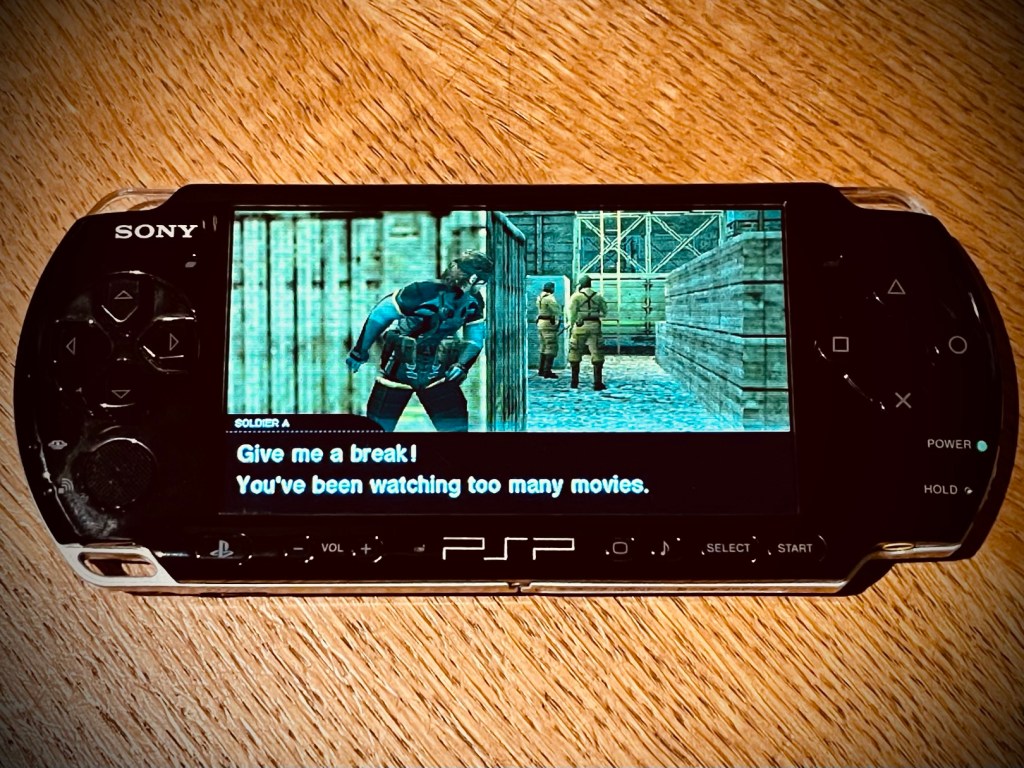
Let’s have a look at some other stuff first though, and having finished Metal Gear Solid 3: Snake Eater on PlayStation 2 for the first time back in December, I couldn’t resist treating myself to what I think was the next game released in the series, Metal Gear Solid: Portable Ops from 2006 on the PlayStation Portable. It picks up six years after the events of MGS3, with Naked Snake finding himself in a 1970 Columbian prison cell having been captured by his former FOX unit, who’ve gone rogue and are in the process of setting up their own military nation, which you need to put a stop to. More or less! As you’d expect, in reality it’s way more convoluted than that, with all the usual nonsensical twists, turns and wild philosophies! It’s very familiar territory having just finished its predecessor though, with some of the game mechanics scaled-back or replaced by physical necessity but it mostly feels similar to play, although it does bring a couple of significant new features of its own, with a new sound-indicator radar system to identify nearby threats, and also the Comrade System where you can recruit allies (mostly enemies coerced by a variety of nefarious means) then sort them into a specialist squad as different missions demand. I’m not massively keen on this, though it does make you think about who you’re planning on killing or not, and how you generally approach missions. Visuals are impressive, lifted from the PS2 engine with a bit of forgivable screen-tear and slowdown, while cutscenes are now voiced, illustrated sequences, and the soundtrack is typically superb! And I enjoyed it enough to see it through but it’s by no means likely to end up a series favourite.
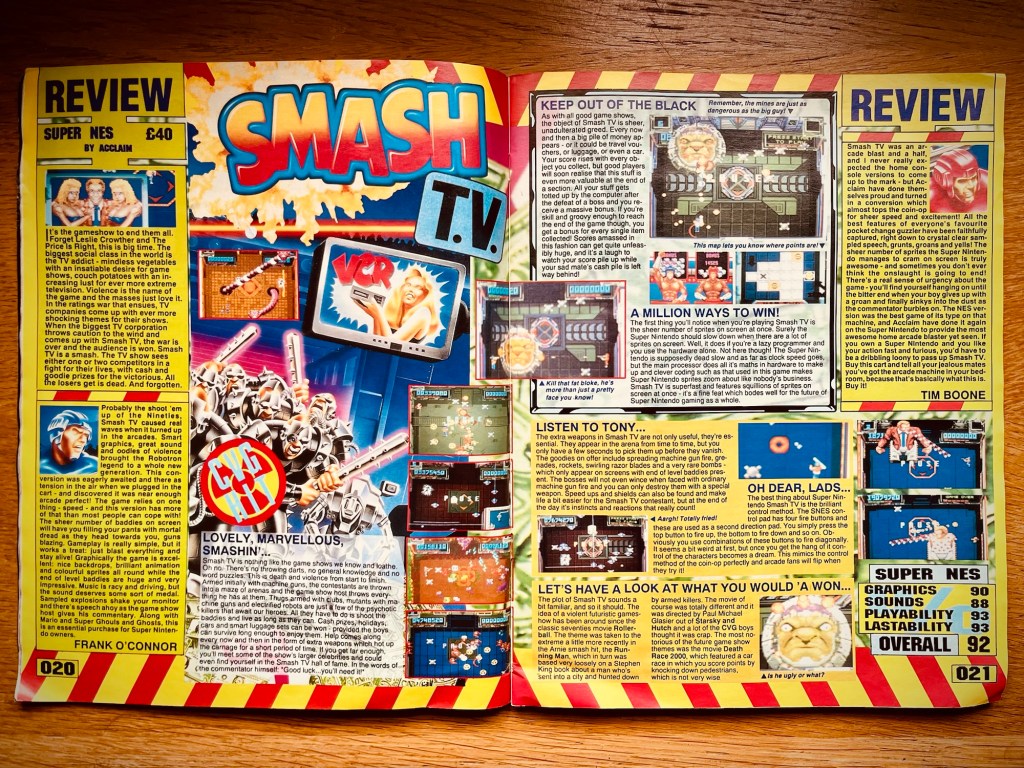
I’m going to jump to not a game at all next! If you’ve followed any of my Retro Rewind features (more on those to come…) you’ll know I’ve been working away at extending either end of my Computer & Video Games magazine collection, which started in 1985 and ended with the April 1992 issue, or at least it did until I got this May 1992 one just before Christmas! I have picked up a few later ones too but it’s strangely way more difficult to get these at a reasonable price. Wider interest I guess! Anyway, this is a real treasure trove, and has the bonus Go! handheld(s) magazine that came with it still stapled in the middle. The big news inside this month is the arrival of the SNES in the UK, retailing at £149.99 and bundled with Super Mario World, while F-Zero, Super R-Type, Zelda III and “Castlevania 4” are on the way soon. In the meantime, Smash TV on there is the headline act in the reviews, scoring 92% and looking wild, although I reckon Contra Spirit comes a very close second. Over on the Mega Drive, Two Crude Dudes isn’t far behind either, and you’ve got a big Sonic the Hedgehog pull-out game guide to help keep any new console envy at bay too! Elsewhere, we have all kinds of cuteness with New Zealand Story finally making it to the NES, and the fantastic cute ‘em up Bells & Whistles making nineteen-year old me want a PC-Engine even more, although even that doesn’t come close to the mouth-watering Last Resort arriving on Neo Geo! Some great stuff in that Go! mag too, with World Class Leaderboard making the leap from the Master System to the Game Gear, meaning it’s the best golf game on both systems now, while Turrican leads the charge on Game Boy… If you can actually see his tiny sprite! There’s loads more besides but fingers-crossed I’ll still be here to eventually give this one a Retro Rewind of its own when its fortieth anniversary rolls around in May 2032, and I’ll be able to tell you all about it!

Sticking with handhelds, I’ve been after a copy of Baseball for the original Game Boy at the right price on eBay for about a year, and finally came up trumps! I always liked the look of this, not least because it was one of the few titles actually available at launch back in 1989, but not having a clue about the sport at the time and even less money, no chance! It has got Mario and Luigi in it though, and a player called Yoshi if you pick Japan Mode rather than USA Mode at the start, although it predates that Yoshi by a few months so maybe not! Anyway player names, interface changes and musical differences aside, both offer a predictably simple, arcade take on the game, with two fictional teams to play with (two-player via a Game Link cable), albeit with plenty of stats behind each one to get into if you wish. It plays pretty much the same as the old 1983 NES Baseball, except you can control the fielders here, assuming you choose to, otherwise the computer will still do it for you. Graphically it’s full of Nintendo personality, with big sprites and a surprising amount of detail and movement, given the tiny monochrome screen, and the music is great! It can run a little slow and jerky in the field but gameplay itself is smooth and easy to handle, and for whatever else it lacks, it’s got more than enough fun to make up for it!

I’ve got a few things to cover I was lucky enough to receive for Christmas, and I’m going to start with the Atari 2600+ console. This is the fully backwards-compatible, as good as totally authentic, modern replica of the 1980 marvel; it’s slightly smaller, USB-powered, and plugs into a TV with HDMI but otherwise it’s got the original cartridge slot, old-school controller ports and all the big weird switches from the real thing! Of course, that also means you need a cartridge to play anything on it, and while you’ll soon find out I have been far too busy on eBay with that since, it does also come with a surprisingly well-rounded 10-in-1 compilation, with some real big-hitting pioneers from Atari like Yar’s Revenge, Missile Command, Adventure and Haunted House, as well as some other old favourites of mine like Video Pinball and Realsports Volleyball. They’re all selectable using combinations of the four DIP-switches on the back on the cartridge, and as said, it’s all wonderfully authentic, including the CX40+ joystick included, which has been recreated with the same size and layout as the one that shipped with the original console, and playing stuff like Combat feels exactly how I remember it at the time! Oh yeah, it also takes Atari 7800 carts too, although not all of them and ideally ones with single-button controls. I’ll see what I can pick up cheap on that front sometime too, although it’s not a priority – I wanted this for the 2600 experience, and so far I couldn’t have asked for more…

I’ll come back to a “few” things I’ve picked up for that shortly, but for now, I’ll jump instead to something else I got for Christmas, The Unofficial GBA Pixel Book from Bitmap Books. This one was put together in partnership with original German publisher Elektrospieler, which is evident from occasionally stiff translation, but otherwise is the usual very high quality we’ve come to expect from these guys, covering over 240 games from the Game Boy Advance’s impressive library, including the likes of Fire Emblem, The Legend of Zelda: Minish Cap, Advance Wars, Final Fantasy Tactics, Pokémon Ruby and Sapphire, Castlevania: Aria of Sorrow, Metroid Fusion, Metal Slug Advance, Gunstar Future Heroes and Mother 3. They’re all brought to life by almost 4,000 screenshots, presented across 300-pages along with pixel art cut-outs, sprite work, vast montages and immense level maps, translating to this fantastic sense of discovery as you read, as well as an element of delightful chaos, supported by its contents being grouped by genre, tracing the GBA’s role in evolving gaming as well as embracing pixel art, in a time when 3D Hollywood spectacle was seemingly everything! Being a bit Germanic aside, the easily digestible mass of accompanying text is full of insight and stacks of information, and it’s all beautifully presented, and printed on heavy gloss paper in a mid-sized hardback format, with a sturdy protective slipcase to keep it pristine! Lovely book, and as always, you get what you pay for with Bitmap Books, who we’ll also be seeing again later.
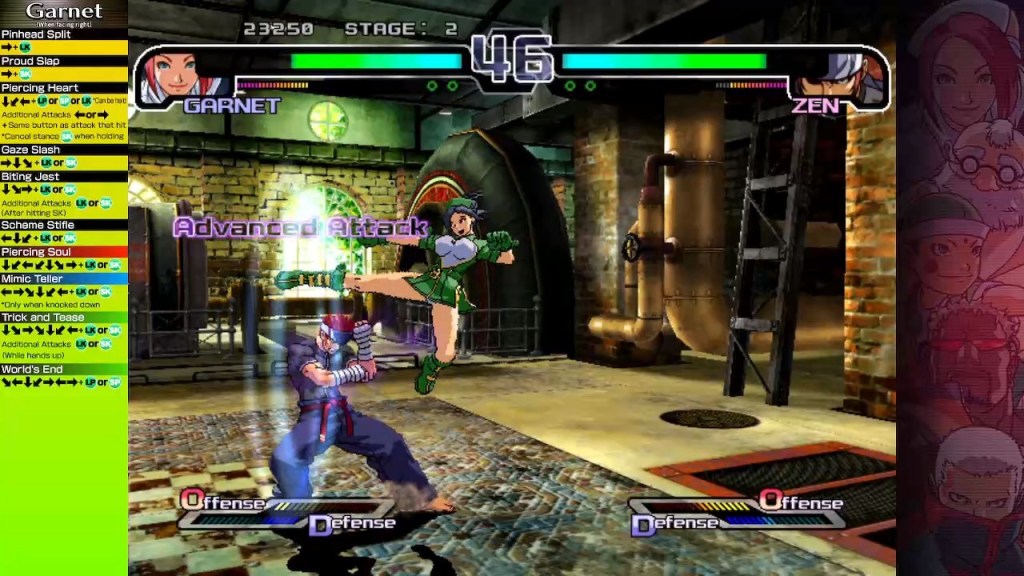
I don’t think I’d ever even heard of The Rumble Fish until PlayStation 2 emulation became relatively easy a few years back, and I came across its 2005 port of the arcade game from the year before during my exploration of all those Japanese exclusives suddenly available to me! It’s a very stylish and pretty welcoming 2D fighter set in a tournament in the slums of a futuristic city that might not have the biggest cast of characters or the deepest fighting mechanics but does have a cool combo system, and unique offence and defence gauges, and is just so much fun to play! And even more so since it got The Rumble Fish + treatment on all the modern platforms in 2023, which I just picked up for just £2.15 in the Nintendo Switch Christmas sale! This update to the original brings remastered visuals with far more fluid animation, arcade, versus and training modes, and a handful of gameplay balances and enhancements, with local and online multiplayer support. All that said, I’m not sure I could have told much of it apart from the PS2 game I know and have quickly grown to love if I hadn’t read the storefront description first, with dramatic and dynamic dystopian cityscapes still providing a gorgeous backdrop to the fast-paced but surprisingly tactical action, where those separate power gauges promise the unstoppable, while wildly dynamic combos can quickly escalate and negate everything else… Except the ridiculously cheap asking price, of course!

Speaking of which, something else I picked up for only a fiver over in the Xbox Christmas sale was Atari Flashback Classics Volume 3. I’ve had the first two on PlayStation 4 for years but this one was always expensive… Well, relatively speaking, even if fifty old Atari arcade, 2600 and 5200 games are your thing and you don’t already own most of them elsewhere, in particular on the more recent and quite wonderful Atari 50 compilation! Anyway, I reckon what we have here is a bit of a treasure trove in its own right, with a load of classics across the various systems like Asteroids, Super Breakout, Centipede and Star Raiders, as well as some lesser-known stuff like Frog Pond, Saboteur, Maze Invaders (pictured above) and Yar’s Return, which I don’t think I actually own anywhere else so money well spent after all! As well as the games, you’ve got all the original manuals, loads of gameplay and display options, and there’s online leaderboards and multiplayer support, although good luck still finding a like-minded soul after a game of Real Sports Football or Sea Battle! Whack in a second controller and you can always play locally if you’re that desperate (and have a friend who’s even more so), but I’ve never been into any of that, and I’ve had a blast by myself as always with these things instead, with clever depth-charge arcade shooter Destroyer and unreleased 2600 scuba-shooter Aquaventure probably my standouts so far. It’s all good though, and I’m glad I finally got it at a more than decent price!
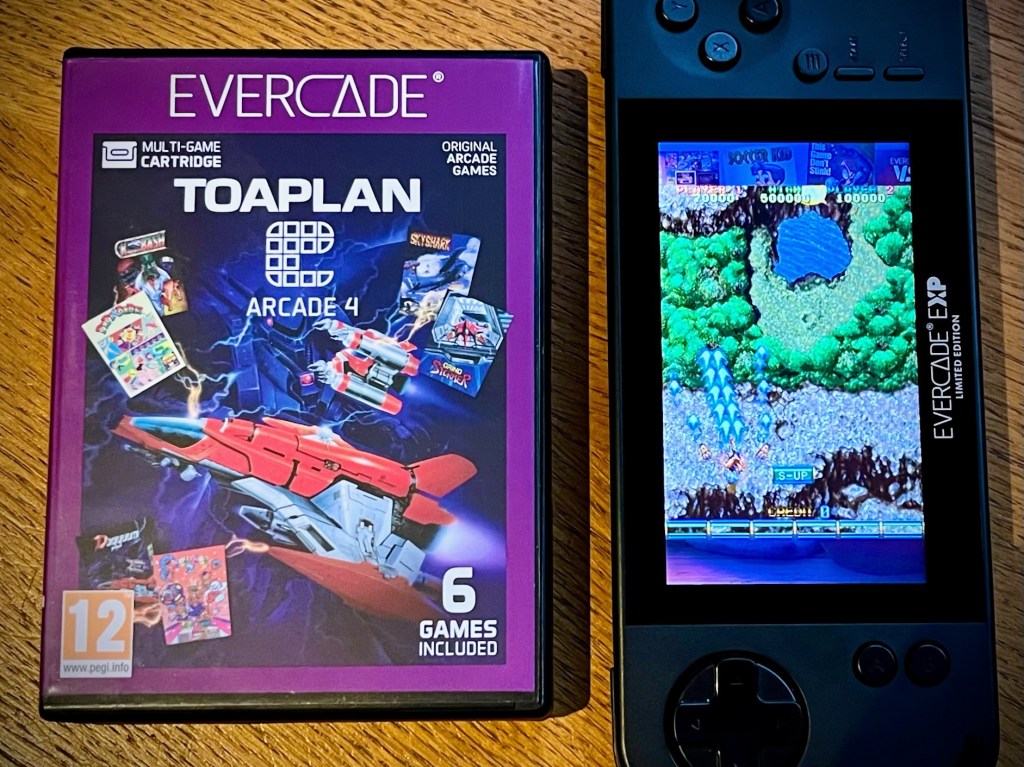
Reckon we’re good to hit Toaplan Arcade 4 now, which was announced sometime after the previous one and was due sometime after it but got an unexpected pull-in just before release and they ended up appearing side-by-side, although mine took a bit longer to arrive. The format is exactly as we saw earlier for the third collection, with another five arcade games and, somewhat strangely, the NES port of Flying Shark, but whatever, let’s jump straight into them! It’s probably no surprise that we’re starting with a vertically-scrolling shoot ‘em up either, and this time it’s Dogyuun from 1993, which I think really comes alive with two players, where you can combine both ships into a single high-risk crazy super-weapon, but if you’re playing solo then it’s a fast-paced and spectacular-looking but unforgiving and not massively exhilarating sci-fi curio. The increasingly awesome soundtrack does do its best to ramp up the thrill-count though, and its score system has loads to sink your teeth into, and it’s my first time playing it on this collection too, so brownie points for discovery at least! Grind Stormer is far more my thing and thanks to its Mega Drive or Genesis port, far more familiar. It’s a spiritual successor to the legendary Slapfight, and is another vertical shooter from 1993 that’s also known as V-V in Japan. It’s another one with some very deep scoring mechanics too, but you can save finding all its secrets for when you’re done having fun with it because while not setting the world alight with either visuals or sound design, this time it’s proper action-packed and, like Batsugan, can definitely be seen as significant steps towards the bullet-hell genre. And once it gets going it’s very hard to put down!

Shooters make up half the games on here but there’s some very nice variety elsewhere to make up for that, starting with Knuckle Bash, which started life as Toaplan’s attempt to cash-in on the success of Street Fighter II but ended-up as a wrestling-themed side-scrolling beat ’em up when it was released in 1993. It’s like a discount version of Final Fight, with no sophistication but is so camp and generally ridiculous that you can’t help but have a good time with it, especially when you’re the Elvis character in his jumpsuit and big cowboy boots! It’s mechanically fine and although not a lot to look at, is vibrant and weird and fun and is a nice diversion here. Next up, I guess the original game was probably Toaplan’s most successful non-shoot ‘em up but when Snow Bros. 2: With New Elves (to give it its full name) appeared just as they were going bankrupt in 1994, it was never going to do so well. Like its predecessor, it’s a lot like Bubble Bobble, with you single-screen platforming and turning all the monsters on the level into snowballs, which can then take down all the rest if you give them a shove. It’s got the worst character select ever, with these awful realistic baby’s faces denoting each of the four of them to choose from, but from there it’s so cute and bright and breezy, with music and sound effects that fit the vibe perfectly, and tough but irresistible gameplay that’s more of the same but no complaints there!

I hate censorship, I hate when Blaze decides it has to censor stuff for Evercade, and despite the cartoon exterior, that’s exactly what’s going on with Pipi and Bibi’s, an “erotic” 1991 action-platformer! There’s a bit of an Elevator Action meets Rod Land vibe here though, so I can’t not give it a chance, as you (and a friend) run around different buildings planting bombs to destroy buildings to destroy the computers they house and all the enemies in them that are after you too, then get out before they blow, which will reward you with a bit of a picture of a nudie anime lady! Forget all that though, this game is a literal blast and all that sexiness adds nothing at all to its mildly strategic slapstick gameplay, and the most wildly character-filled sprites and the prettiest environments. Really great stuff even if what they’ve done to it still really stinks! Okay, one more, and it’s only right we finish on another vertically-scrolling shoot ‘em up, although as said earlier, I’m not sure why this one! Sky Shark is a decent conversion of Flying Shark for the NES in 1987, and does a nice job of replicating the iconic World War II arcade game, which was included in its original form on a previous collection. Which makes me wonder even more what this port is doing on an arcade collection! Okay, would make sense as a secret game unlocked by plugging in two Toaplan collections at once (which, like Toaplan Arcade 3, I’d definitely recommend experimenting with if you can), but it’s here in a lineup of just a handful of games and sticks out a bit. As alluded to earlier, I suppose they were struggling for suitable arcade games by this point though, and I’m happy enough to own a copy of it, just like I’m happy with both of the new Toaplan collections for Evercade! Okay, the first two were properly loaded with some real all-time favourites of mine but I’m always equally pleased to find games I’m far less familiar with, and that’s what you’ve got here, with some of them quite hard to find and certainly never converted to home computers or consoles before. And at well under twenty quid, that’s fantastic value as always.
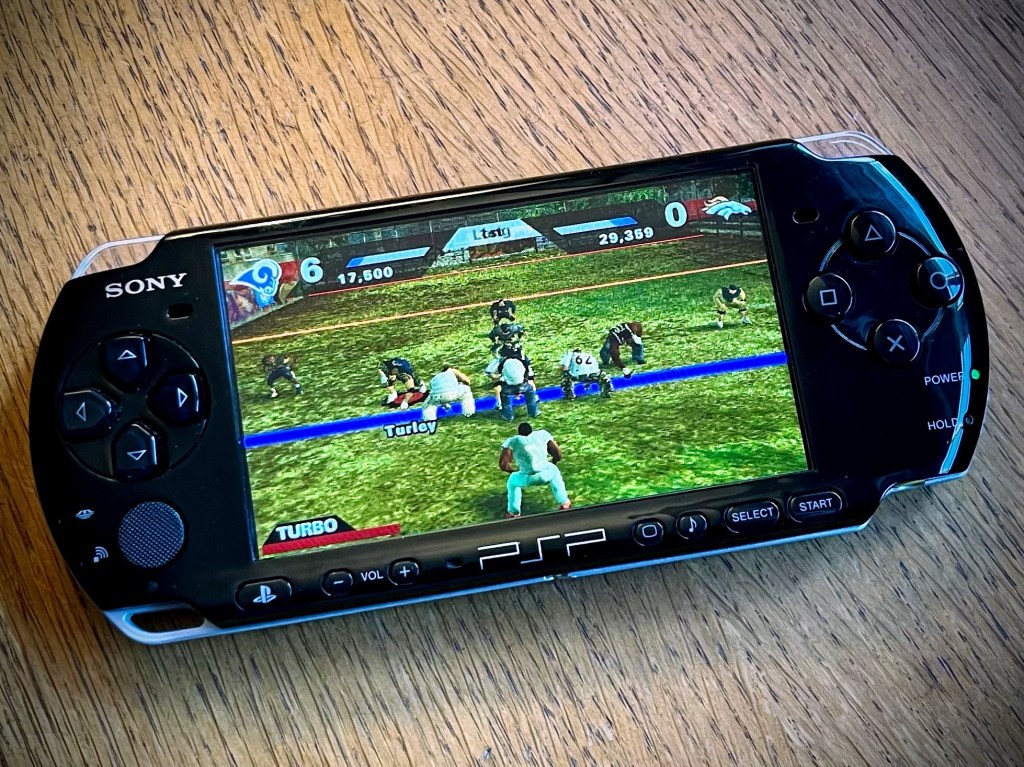
Until the Atari 2600+ came along and took over (watch this space!), I’d just started working my way through a bit of a curated list of titles I still wanted to pick up on the PSP (in addition to buying up all the Metal Gears on there), so we’ll cover a few of those here, beginning with NFL Street 2 Unleashed, which was first unleashed in 2005 on the EA Sports Big label, and as such is fully licensed with all the big stars from then, as well as a bunch of legends, but gives you a totally over the top and “extreme” take on American football! That’s not to say there’s not more than enough depth to play-calling, setup and execution either, but all that stuffy stuff is only improved by this fast-paced, arcade, seven-on-seven street format, complete with wall-hurdles and other wild uses of your environment, then there’s insane Gamebreaker moves, triggered by building up a style meter, and various on-field hotspots offering temporary boosts. Loads of modes too, with regular games in various city settings, create a player where you then have to gradually try and own the city, special street events such as four-on-four and every man for himself, plus challenge modes, gauntlets and tournaments, and multiplayer modes, in the unlikely event you can still pull that off on your PSP. You’ve got all the teams. tons of players and loads of throwbacks to choose from too, but one really interesting mechanic is that everyone is playing offense and defense, so where there’s a bit of management involved, there’s a bit of thought needed too! The presentation is mostly hip-hop throughout, for better or worse, but it’s a very good-looking game and it moves as fluidly as the gameplay itself, which is easy to grasp but with plenty to get on top of, and altogether I couldn’t ask for much more of a handheld football game, and it’s certainly more than enough to keep me going until the third in the series comes along…

We’ll have a look at the other book I got for Christmas now, and it’s another recent one from Bitmap Books, Run ‘n’ Gun: A History of On-Foot Shooters. It’s another absolute beast from them too, spanning almost five hundred pages, and taking us right from the birth of the genre with Gun Fight, all the way back in 1975, then through about three-hundred games up to the present day, taking in the classics like Contra, Gunstar Heroes, Metal Slug, Mega Man, Sunset Riders, Midnight Resistance, Turrican and Cuphead, as well as some lesser known stuff like Demon Front, Nitro Ball and Rapid Reload (all of which it turns out are definitely worth a look)! Each is covered to a greater or lesser extent with histories, behind-the-scenes stories, quotes and trivia, expert gameplay tips and the most stunning high-quality screenshots, often spread across entire double-pages. I know I’m like a broken record with these things by now but that quality once again extends everywhere else too, from the layout and the print to the paper, the binding and the beautifully illustrated hardback cover. The author, Dave Cook, really knows his stuff too, and the research and insight and sheer passion that’s gone into this is nothing short of staggering. Oh yeah, mustn’t forget the all-important ribbon bookmark either, because given how much this thing weighs, you’ll be needing it. Regularly!

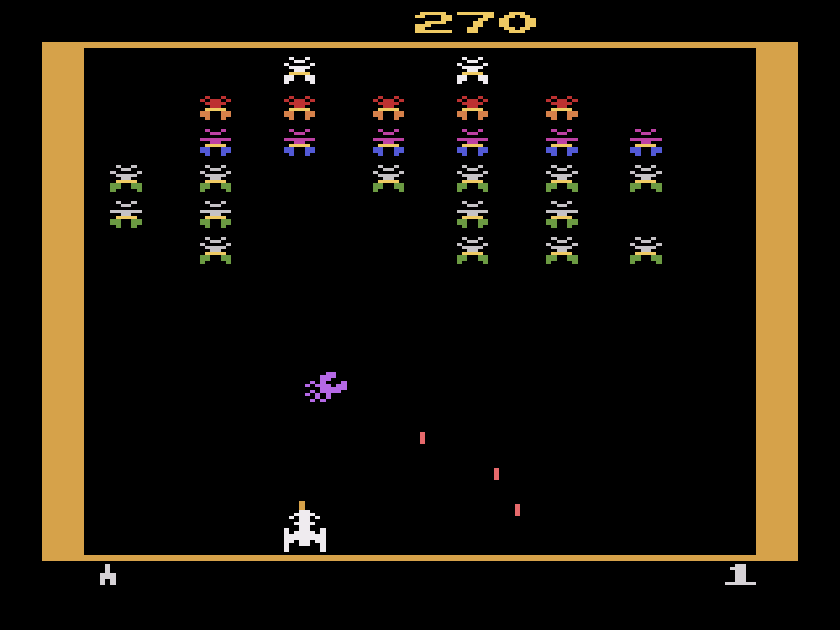
I said earlier there’s more to come on the Atari 2600+ front, and here’s the start of it, and the start of what has very quickly become quite the collection! I think what I’ll do is go through the first batch of cartridges, I picked up now, then we’ll come back to various other bits and pieces later. Right, the subject matter of this first game might not excite everyone else as much as it does me but there’s a cool story behind 1979’s Video Chess involving the box art for the original Atari VCS console, which featured a chess piece, and some looney who decided to sue them for false advertising because there wasn’t a chess game on the system, so Atari decided to make one. Might sound simple too but technical limitations made this far more groundbreaking than it gets credit for, although for me, it’s an admittedly slow and primitive-looking but perfectly challenging game of chess with loads of longevity that I’ve genuinely struggled to put down… Oh for a save feature on this thing though! That said, I have been enjoying going proper old-school elsewhere and writing down my best high scores for stuff like Galaxian in a notebook, and that’s my next game here! I’ve loved this impressively authentic 1983 conversion of the 1979 “death from above” take on Space Invaders for a very long time, and it was the very first game I looked for after I got this new console. It has the sounds, it’s got the colours, it moves as well as it plays, and those dive-bombing aliens are as terrifying as ever!
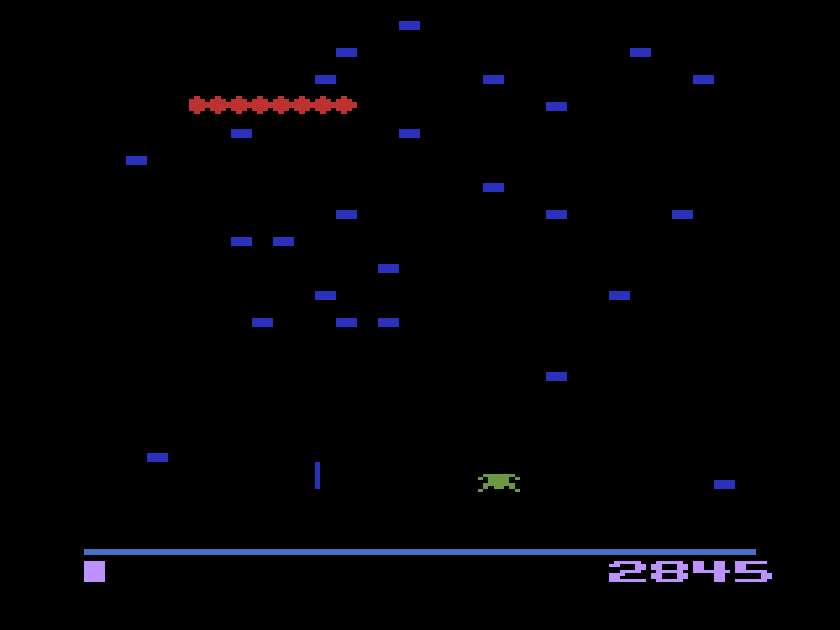

The 2600 got some great arcade ports, which seems to be reflected by most of what I’ve got here, and next up I’ve got Centipede, which you really couldn’t ask for any more of… Well, except for it being a copy of Millipede instead, but I’m sure we’ll get there sooner or later too! This 1983 conversion of the first game is so much fun regardless though – okay, most of the creepy crawlies and vegetation and even you have become little blocks, and you’re stuck playing on a joystick, but you very quickly forget all of that because the most important thing – the insanely addictive single-screen shooter gameplay, and all its little bug-splitting, mushroom-busting uniqueness – is right there and as right in your face as that pesky spider and its relentless siren! I’ll go with Q*bert next, which I wasn’t even a particular fan of until I had a go on the 2600 port a few years back. Once again, it struggles to replicate that very iconic 3D pyramid geomety of the original, but it has a good go, and while it does lose the bottom row of blocks you need to “paint” with your oddball little character, as well as a couple of enemies out to stop you, and also the music, it’s very recognisably a game of Q*bert you’re playing, and it feels like one too, maybe a little faster-paced, but once you’ve got used to the diagonal joystick controls, it’s ridiculously good fun!

One more arcade conversion, and although I’m not sure it’s the best of them, it’s definitely one of the most spectacular on the system! I probably first played Namco’s pioneering 3D arcade-racer from 1982 around the same time this came out on the 2600 a year later, and I can confirm it was truly a showstopper in the arcades, as much as I can also confirm this version is nothing short of a miracle! It is understandably massively scaled back, with just one track to race on in one racing mode, but what the hell, it’s a 3D racer on your TV in 1983, and like Q*bert just now, it’s totally recognisable, and it controls as well as it can without the original’s steering wheel (which I can still feel to this day!), with some clever use of the single-button joystick for gear-shifts and everything else. It moves at such pace too, with those exotic backgrounds and sunny sky sweeping back and forth in the far distance, and your car looks great, with spinning wheels and animated turns, although other racers do take a bit of a hit in the looks department! All the tunes though, and despite the lack of depth, it’s a real showcase for the system!
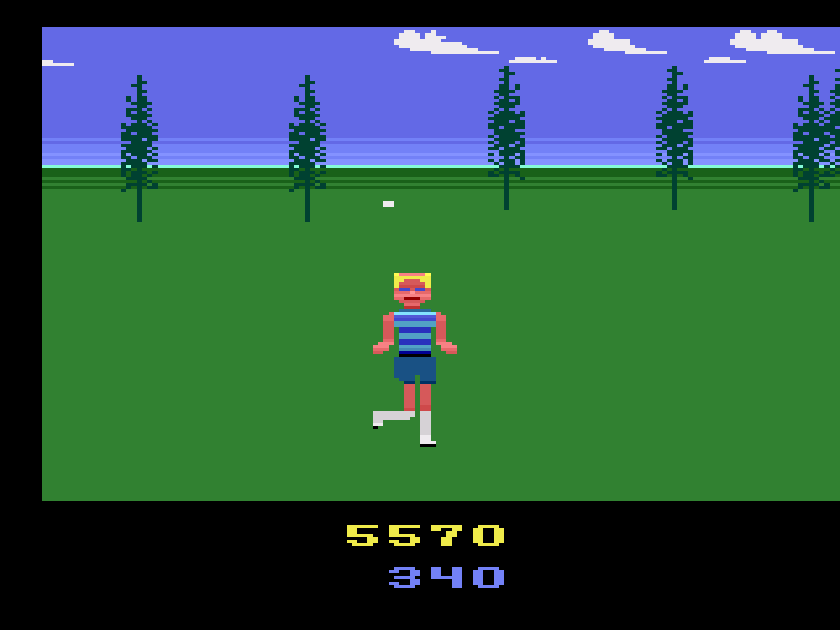
I went a bit longer than planned on Pole Position, although I reckon it’s deserved, and that’s also not about to change… The last game from my initial haul is California Games, an all-time favourite of mine on the Atari Lynx, where I was first introduced to it when my brother got one, but more so since on the Commodore 64, and I still really want to get my teeth into the Master System version sometime too because from what I’ve played, that might just be the one to be playing! Similar to Pole Position though, while it might not be the best version out there, this 1988 multi-sports epic from Epyx existing on a 2600 cartridge at all is totally remarkable! One of the better-looking games on the system too, aided by a whopping 16K memory expansion inside the cart, which also allows for a surprisingly complex rendition of Louie Louie playing over a wonderfully psychedelic title screen that’s one of my favourites anywhere! We are limited to four events, theoretically playable one after the other for a final points tally by up to eight players, although the 2600+ seems to struggle with the third in this mode, or they’re selectable individually on the Game Select lever. Either way, they picked the right ones and they’re interpreted brilliantly, with the picturesque, big-sprited footbag kicking us off, then the skateboard half-pipe against the backdrop of the Hollywood sign, a Trials-like BMX downhill that’s one of the more accessible versions of this event anywhere, and finally surfing, which is the opposite but I’m glad they had a go, and at the very least it looks like a wild ride! Shame about some issues with the emulation here but I’m still thrilled to have yet another take on this game, and such a unique one too!

The Metal Gear journey I’ve embarked upon began and has now reached the PSP as we saw earlier actually began with a cover feature on the 1998 Metal Gear Solid PlayStation game in an issue of Retro Gamer magazine last year, and while I’d never been interested by it in the slightest at the time, reading this got me interested enough to give it a go on the PlayStation Classic Mini (where it’s built-in) and I’ve been blown away by how much I’ve actually enjoyed it ever since – several play-throughs on we’re now talking a top fifteen all-time favourite game, which is why I’ve now also splashed out on an original copy, complete with Silent Hill demo! In the unlikely event you know as little as I do, it’s action-stealth by Hideo Kojima, where you play super-soldier Solid Snake, trying to get into a nuclear weapons facility, rescue the hostages, neutralise the terrorist threat and prevent a nuclear strike. It’s an incredible, seamless mix of 2D and 3D, top-down, third-person, first-person and in-engine cutscenes, making for this totally cinematic experience unlike anything else I can think of today, let alone at the time! Obviously, the PS1 isn’t always great at letting things age gracefully but this still looks great, with some really lovely lighting (although some sections are overly dark), as well as decent voice acting and an excellent original soundtrack that often really adds to the drama. As does that cone of vision map gadget that helps you evade enemy attention, and the sheer panic of running away and trying to hide when you fail! I remember the buzz when this first came out and obviously I didn’t buy into it, but I’ve no regrets about that today because I wouldn’t have liked it back then anyway. Now though, I reckon it might just be a bit of a masterpiece, stealth and all, and I’m over the moon to finally have a copy of my own!

More on Evercade now with Sunsoft Collection 2, which I think launched around April 2023 but was something else I was fortunate enough to get for Christmas! It’s seven more hits and cult classics from the well-regarded but sometimes obscure publisher, spanning multiple systems from 1990 to 2000. I’ll have a quick look at each in turn in a sec but as usual with these cartridges, you’ve got save states, display options, a sortable game menu with details and controls for each behind, then there’s a bit more information in the proper manual in the box. With that, let have a look at them in their default alphabetical order… I was never that fussed about the original but I’ve had a surprisingly good time with Aero the Acro-Bat 2 (pictured above), originally released on the SNES in 1994 then a year later on the Mega Drive or Genesis, which I think is the version we’ve got here… Never totally obvious with these multi-format Evercade collections because heaven forbid they actually tell you anywhere! Anyway, the controls must have had an overhaul in this sequel and they now feel great, as you platform to the exit of eight very good-looking, very well-designed levels, looking out for all sorts on the way. Really happy finding this one here! Next is Blaster Master: Enemy Below, a Game Boy Color title from 2000, and as such, it plays really nicely on the Super Pocket handheld (pictured below). That said, I’m not a huge fan of the series, where you switch between tank and human form in side-scrolling platform and dungeon areas, and unlike Aero 2, this really does nothing to change that – in fact, I’m not sure it does anything new at all. It’s polished, it plays well, there’s loads of challenge and I had fun experiencing it for the first time, but I just find it a bit bland.

After the event probably isn’t the ideal time to get the most out of Daze Before Christmas but I’ve played a fair bit of this relatively obscure 1994 SNES platformer previously, so it was nice to come back to (and actually finish, albeit all the way into February) all the same! It’s very simplistic, as you play Santa recovering all the presents from the meanies, but so polished and so full of festive cheer that it’s hard not to love it, although I’ll definitely love it more next December! I think this is the 1996 PS1 version of Galaxy Fight: Universal Warriors we’ve got now, which was originally developed for the NeoGeo, where it would have been a decent fit alongside all the better known SNK fighters on there. It’s a pretty old-school, 2D, one-on-one fighter with just a couple of modes, eight sci-fi-inspired characters and three buttons for everything (plus a taunt), and despite being a bit floaty, I’ve had a great time getting to know this one. Another looker too, with some lovely animation and an even lovelier soundtrack! The latter also goes for Pri Pri Primitive Princess, an original Game Boy title from 1990 that I don’t think has ever had a proper Western release before so it’s about time it did because I love it! It’s a puzzle-platformer where you’re trying to get a caveman to the princess at the top of a tower made up of fifty single-screen levels full of traps, monsters and the odd jewel or two. Ladders and doors will only get you so far though, and you’ll have to also use your trusty Stone Age hammer to strategically demolish or rebuild floor tiles to create routes to the exit. It gets fiendish very fast but it’s always logical and a joy to solve, and there’s so much character in every little monochrome screen. This one’s a real highlight in the collection so far!

I’d honestly never heard of Ufouria: The Saga before I got hold of this but apparently it’s one of Sunsoft’s most sought after games, and I think I can see why! It’s a NES (or an NES) 2D platforming, metroidvania-type thing that was originally localised for Europe in 1992, following a Japan-only release the year before, under the name of Hebereke. Either way, it’s very cute, it’s very polished, and the seemingly vast open world that you and the four friends you’re searching for have mysteriously ended up in is just begging to be explored! You’ll come across all sorts of challenges to overcome and items to help you do so, and it’s all just a very pleasant time with an irresistible soundtrack to boot, and something else I’m really pleased to have discovered here! Last up is Zero the Kamikaze Squirrel, who’s Aero the Acro-Bat from earlier’s arch-enemy, which makes this a spin-off meets sequel from 1994, and I think this time we’re playing the SNES version. You’re trying to save your island from an evil lumberjack, which involves fast-paced and frequently acrobatic (rather than Acro-Batic) platforming across a series sprawling and gorgeously colourful levels hiding plenty of secrets along the way. The controls do feel a bit too clever for their own good at the start but are soon rewarding you with intricate swoops and dives, while elsewhere you’ll also be rewarded with so many little flourishes and clever touches. More tunes too! Okay, it’s not quite Sonic but it’s also not far off at all! That’s the lot then, and my only regret is that I missed out on eighteen months of enjoyment by not really fancying it day one! Some real hidden gems here, and I know it was a present but tremendous value all the same!

I showed way more patience waiting for more Amazon UK stock of two the CX30+ paddle controllers and 4 Games In 1 Cartridge packaged with them than I did amassing all the other games here for my Atari 2600+ console! When it became clear they probably weren’t getting any more any time soon though, but are the sole UK distributor, I paid a bit extra to get them shipped over from Germany, and it was totally worth it! It’s two paddles on one DB9 port, and to all intents and purposes they’re authentic, right down to the stickers, to the point they will also work on original 2600 and 7800 hardware. And for stuff like the games included in the pack, you can’t do without them! We’ve got Breakout, Night Driver, Canyon Bomber and Video Olympics as a taster here, all on one cartridge and selectable by DIP-switch configurations on the back. Breakout feels good up to the point it gets way too fast a bit too quickly; Canyon Bomber really needs one more player than I’ve got but doesn’t really need a paddle until you get deep into its game variations for a take on another Atari arcade game, Destroyer; Video Olympics is fifty variants of Pong, which is all the Pong you could ever wish for; and Night Driver is just superb, pioneering, 3D racing, and I’ve now spent hours and hours playing it for high score (which I’m also recording in my notebook from earlier)! Nice set of games, nice controllers, and when I’m feeling less restrained again (yeah, right!), I’ll hopefully add some more carts to my collection that can take advantage of them.
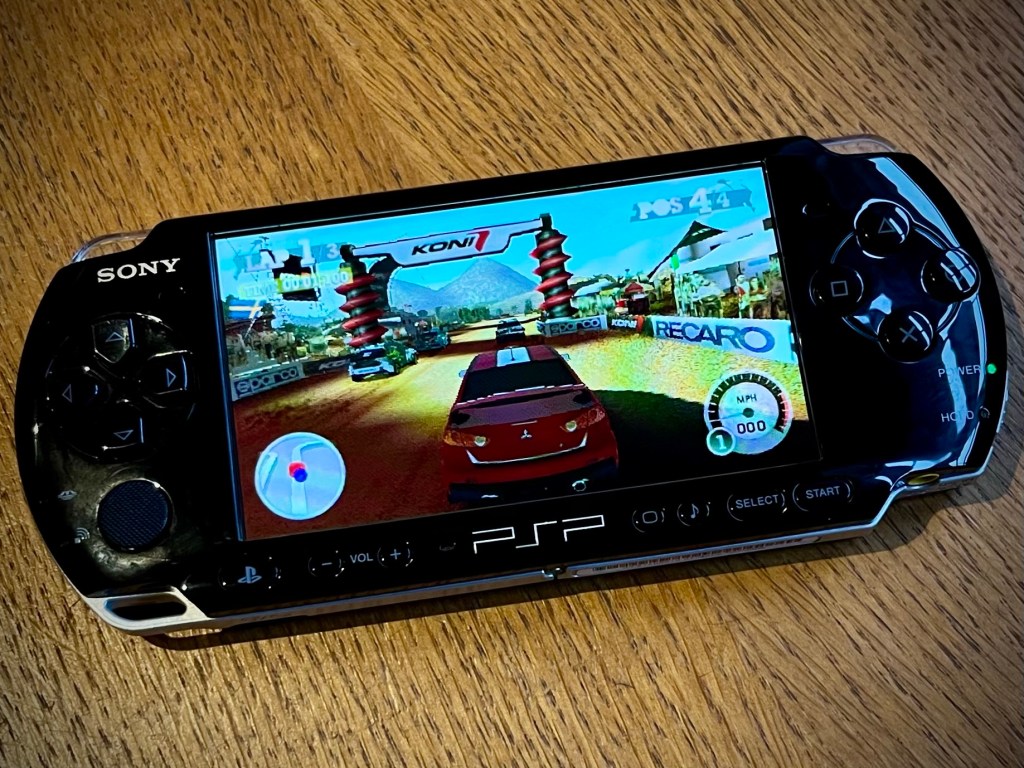
A couple more PSP games now… According to my carefully curated to-buy list, Colin McRae Dirt 2 was supposed to be Colin McRae Rally 2005 on there, but that’s not appeared at the right price yet, and this was a couple of quid, so I decided to take a punt while I’m waiting! And for that much, I’ve certainly had my money’s worth already, although I’m sure there are probably better places to get the most out of it… It originally arrived in 2009, and was the first in the series to be released after McRae’s death a couple of years earlier, and also the last to feature his name in the title. It’s very much at the arcade end of the rally spectrum, with the main (and pretty much only) mode, World Tour, taking place all over the globe across forty mostly off-road races against three other drivers (rather than more traditional stage-based rally events against the clock), and you’ll unlock these as you win races through four ranks. Two problems though – firstly, the controls are really sloppy, and I don’t just mean that intentional rally game sloppy, but more never really in control at all; secondly, your competitors are total morons, although that does sometimes work in your favour too! The different venues vary from really good-looking, like the Mexican desert ones, to could-be-anywhere generic – like most of the others in fact – and the different surfaces and conditions they throw at you can never really compete with the inherently dodgy controls. It’s well-presented though, and the sound is alright, and once you get a few races under your belt, it’s not not fun, but just not as fun as I know the game I really wanted is going to be when I finally track it down!
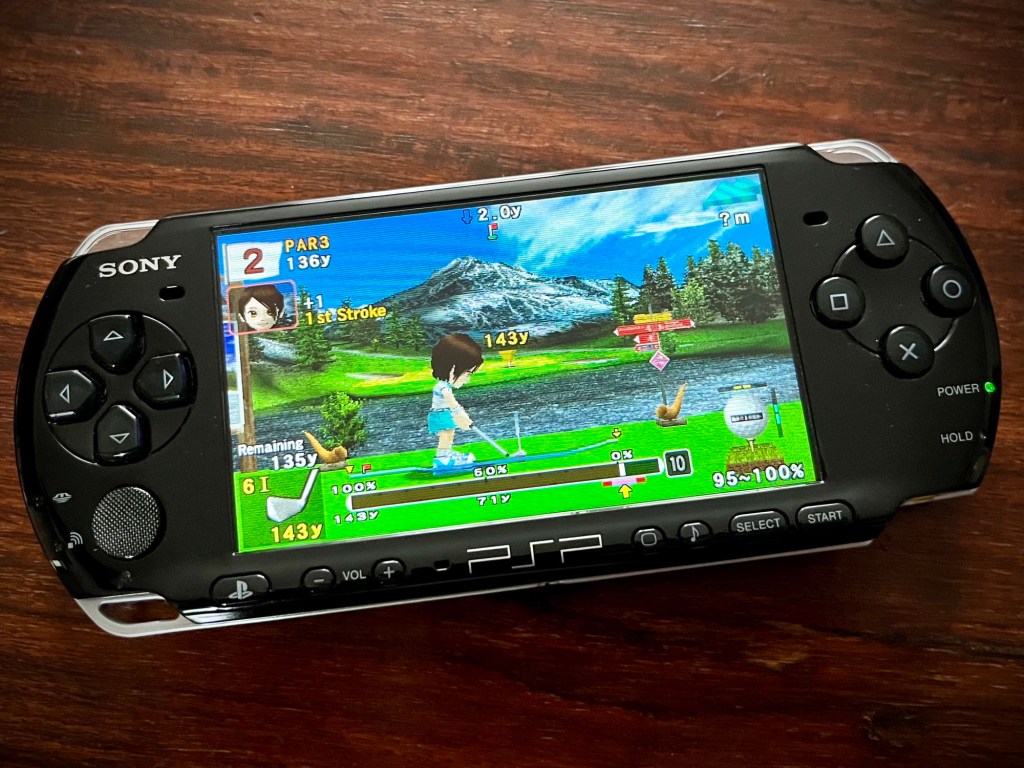
Everybody’s Golf is the next thing to tick-off on my PlayStation Portable shopping list, which I think was a European launch title when I first got that wonderful handheld back in 2005, but was actually the fifth in the series. It was on my shopping list because of a much later entry with the same name though… I’m a big fan of Everybody’s Golf from 2017 on PS4, and while messing around with it again on there recently, I thought it must be a really good fit on the PSP too, where I’ve always had a good time with the similarly approachable but totally different vibe of Neo Turf Masters on the SNK Arcade Classics Vol.1 compilation. And here we are! It’s equal parts cute and gorgeous, with some truly spectacular courses to gradually unlock and get to grips with across a bunch of game modes, and the better you rank, the more other stuff you’ll unlock as well, with all sorts of different playable characters, costumes and other prizes. As usual though, the mass of customisation here is totally lost on me, just like the various multiplayer options, although once again, given the PSP’s inability to connect to virtually anything anymore, no choice regardless. There’s plenty to keep the solo player busy though, with single game stroke play taking you all over the world, a big Challenge Mode, a Putt Golf mode and training too. Gameplay is the standard three-press system for power and impact, with the latter also subject to spin if you wish, and reading the conditions and also the lie of the green is visually intuitive, and it all just combines perfectly for as good a game of golf as you could ever hope for in a handheld video game! The different courses really are stunning too, with detailed, sweeping (and daunting!) landscapes successfully contrasting with bold anime characters, and the special effects and excellent camera work giving the game far more life than the reality of the game of golf might suggest, just like the cartoon sound-board and easy-going soundtrack. And it’s all exactly what I wanted from it!
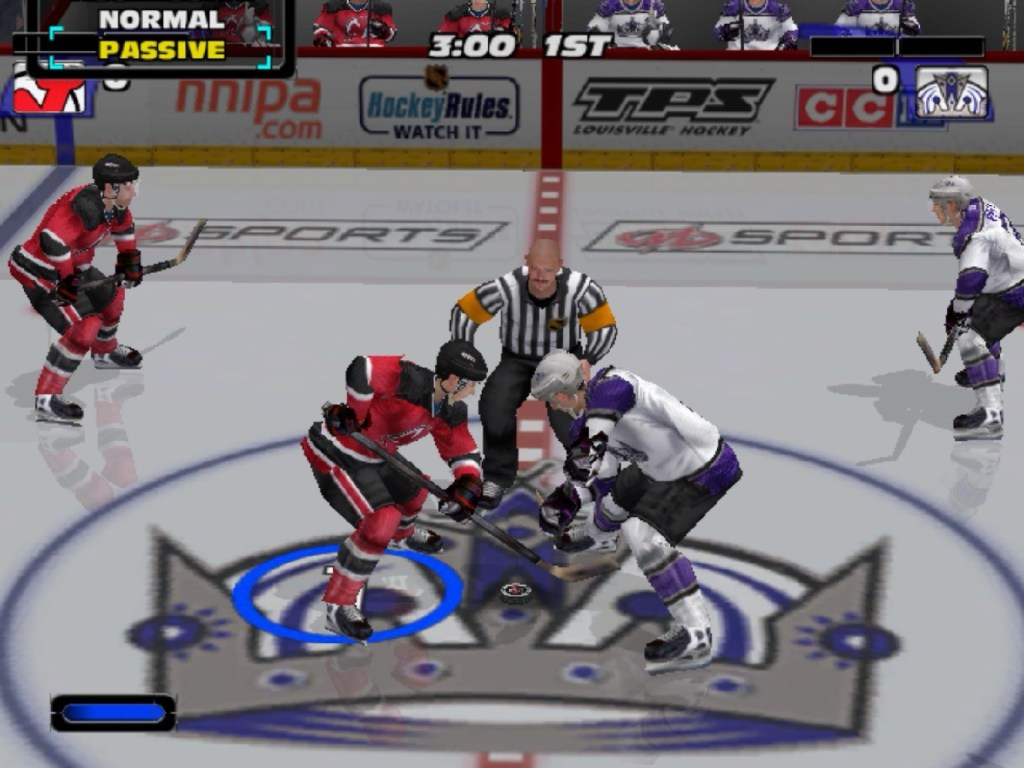
After watching Vancouver Canucks play Pittsburgh Pirates while visiting family in Canada recently, I fancied a new ice hockey game, and ended up with NHL Hitz 2003 on Nintendo GameCube, mainly because I’ve always thought it looked decent, but also partly because I haven’t given that much love of late! It’s from 2002, and gives you a fully-licensed but fully-exaggerated, high octane and big impact 3-on-3 take on the sport, meaning each game moves at a lightning-pace, with rocket-fuelled goals and hard-hitting brawls that are hard-hitting enough to send your opponents straight through the safety glass and into the crowd! That’s not to say there’s not some wild depth to the gameplay too, with all sorts of sim-like advanced controls on top of regular with- and without-puck action, as well as your turbo and “on-fire” buttons. There’s also loads of stats being tracked everywhere if you want them, and coaching and management and trading, and more game modes and mini-games and training stuff than I’ll ever get to… Season mode with my New York Rangers is doing me fine for now though, and despite the depth and occasional intentional stupidity, it’s playing a very accessible and generally realistic game of hockey too, with a great flow and that early TV-style presentation that’s kind of cartoon-lifelike (give or take a few polygons) and just moves beautifully… Especially when it’s Rob Zombie’s turn on the soundtrack! Not sure it’s quite my favourite hockey game yet but with the huge but still-untapped Franchise mode to tackle, there’s definitely potential for it to be.

We’ll finish with a few more of initial Atari 2600 cartridge pickups, but I’ve now gone so long here that unlike the previous batch, I’m limiting myself to a sentence or two on each this time, starting with 1987’s Kung-Fu Master, which is another of those arcade ports that shouldn’t exist on this thing, but while it’s scaled-back, it also captures the spirit of the original original beat ‘em up perfectly, and has all the fun too. Like that one, Millipede is another port that came well after the arcade game, and is one of the best on the system, hence me not being able to grab it way before I was done with its predecessor! It also arrived in 1987, and while the delay didn’t do much for the very simplified visuals, the high-energy gameplay is still spot-on! Chopper Command from 1982 isn’t a port but is effectively Defender in a helicopter, with you protecting a convoy of trucks from enemy aircraft across a left and right scrolling desert. It’s fast-paced, smooth-moving and one of my favourites on the system, so once again, I couldn’t resist!

Another excellent port and the grandaddy of arcade shooters next, Space Invaders. This is from 1980, and while there’s a bit less happening on the screen in this version, there’s no doubt what it is and how it plays, and it does also offer over a hundred of its own game variants on top, with moving bunkers, invisible invaders and all sorts more! Megamania is a fixed shooter from 1982, with wave after wave of different aliens hitting you with a bunch of different and increasingly fiendish attack patterns from all directions, against a dwindling energy meter that’s also worth big points. I’d actually never played this before but it looked well put together and it certainly is! Last up (for now) is Solaris (pictured above), the spiritual follow-up to Star Raiders, and quite possibly my number one favourite game on the 2600! Released in 1986, it’s a more focussed, more arcade-like take on that pioneering Atari 400 space epic that’s way more suited to this machine than the port of that original game was, and is simply astounding to boot, and perfectly rounds off another decent haul of loads of stuff, and far too much Atari 2600 stuff!

Wonder if I’ll slow down on that front when we return for more of the same in three months time? Well, slight spoiler, but given what the postman just handed me (pictured above), and what I’ve also just jotted down for the Spring 2025 recap that’s also on the way, probably not! It keeps me out of trouble though, and Christmas presents aside, I don’t think what I’ve covered here cost any more than a couple of new full price games would have, which is something I have been a very good boy with of late, so it’s all good! And with that, I hope you’ve enjoyed running through all the stuff I probably shouldn’t have been spending money on over the past three months all the same, and I hope to see you back here for more of the same in three months from now. And as always, don’t tell the wife!
As always, I’ll never expect anything for what I do here but if you’d like to buy me a Ko-fi and help towards increasingly expensive hosting and storage costs then it will always be really appreciated! And be sure to follow me on Instagram, X (formerly Twitter) or Threads for my latest retro-gaming nonsense!
 Retro Arcadia