
Back again for our regular Sunday roundup of quick-fire reviews and impressions of everything under the spotlight at Retro Arcadia this week, old and new and a bit of both…


And I’m going to keep you waiting for that new Castlevania collection because I think I’m going to start with a book for a change instead! I just picked up a copy of The Rainbow Book of BASIC Programs, produced exclusively for WHSmith in 1984, long before it became the sorry shell for knock-down stationary, energy drinks and a handful of magazines it is today. Anyway, it contains fifty programs for you to type in, including games, educational problems and puzzles, and they all work on the ZX Spectrum, VIC-20, BBC, Electron and Dragon 32, with a common main program then subroutines handling the quirks of each individual machine. There’s also a bunch of variations suggested for some of the programs, such as upping the difficulty in a car racing game by increasing the scrolling speed. It’s all presented in a very educational way too, so stuff like this is there for understanding and advancement as much as adding challenge or variety, and each program is also explained line by line. There’s a good mix of relatively simple games – fruit machines, golf, dungeon crawlers, fishing, Battleship and so on, plus loads of puzzles like Mastermind, crosswords, word-searches and pick-up sticks, and the educational stuff is pretty fun too, with things like Pascal’s Triangle in action in an old pinball game, and the theory behind that even gets an explanation. All seems to work too! It’s definitely aimed at kids but I’d have loved this at the time, and I’ll hopefully report back on what I’ve tried out from it soon!

I use my Taito Egret II Mini all the time but remembering the Paddle & Trackball Controller is tucked away in a cupboard – let alone actually getting it out and connecting it – takes a bit more effort! Always worth it though, even if for nothing more than a few sessions on Arkanoid, the brick-breaking classic from 1986 that has you piloting your Vaus ship after its mothership, Arkanoid, was destroyed by a space entity called DOH, bouncing an energy ball off its bat-like surface onto space bricks blocking your way towards revenge about thirty-three levels later. None of that matters though – like many others that appeared at the time, this is a fancy update of Atari’s Breakout, and being an old favourite of mine, was a prime reason for wanting to buy this beast of a controller and the Expansion Pack it came with! Anyway, you need to bounce the ball to clear all the bricks off the screen to move on to the next one, and they increasingly display different behaviour, such as multiple hits to break, and you’ll also be on the lookout for power-ups, which might extend (or shrink) your bat, slow down the ball, give you a laser cannon, a multi-ball and all sorts, but no matter how much I’ve played this over the years, I still can’t remember which is which when they’re falling towards me in the heat of battle! It’s such a great-looking game too, with a clean, Tron-inspired, neon futuristic vibe, as only the mid-eighties could pull off with such authenticity! The soundtrack is so iconic too, and despite harking back to the very dawn of video gaming history to play, there’s just so much polish everywhere, including on this lovely paddle, at least since a firmware update nailed its sensitivity. Still two sequels to enjoy on here before it goes back into hibernation again too!

I did come across Jaleco’s Bases Loaded for the NES from 1987 when I was making my way through the entire history of baseball video games all at once back in 2023, but the problem with that kind of insanity is that unless something grabs you instantly, you tend to pass it by. Which I did! Owning a game is a powerful thing though, especially when there’s little other choice if you want a baseball game on Evercade, where it’s included on the Jaleco Collection 1 cartridge. I’ve actually been dabbling with it on the Super Pocket handheld spin-off for months but while I did soon start to have some fun, batting in particular is far more nuanced than you’d typically get from a game like this from back then, with realistic depth to positioning and directional play on top of the timing demanded by an equally nuanced pitching system, and that means a lot more than dabbling to get even vaguely consistent and competitive on either end of an inning! Fielding is more straightforward, although working out who’s going to be where and when takes some practice to get down too, as you wait for them to scroll into view with the ball after a hit. Works fine though, and some thrilling plays soon feel perfectly intuitive! Before the ball gets in the air, presentation is TV style, with a view from behind the pitcher, whether that’s you or whether you’re at bat, which I guess also doesn’t help with swinging at the ball but anyway, it looks very cool and I’m sure was ahead of its time. There’s a bit of sampled speech to back that up too but sound is mostly cheery beeps and blips and plenty of simple chiptune melodies, and it’s all very pleasant, albeit in a primitive way. You can play a single game, one or two player (on an Evercade VS in this case), or a twelve team season – named after US cities rather than any licenses – which might not sound like much but makes for some fantastically-poised games once you know what you’re doing, and now I finally do, I’d beèn playing two or three full nine-inning matches every single evening this week, at least until something else came along out of the blue…

Right, here’s the main event, although given the amount of content here, and it only shadow-dropped after the Nintendo Direct a few days ago, you’ll have to stay tuned for a more in-depth look at the games included on the Castlevania Dominus Collection, which I’m playing on Switch but I think it’s on other platforms too. For now, we’ll have a quick look at the overall package, which includes three hard to get (meaning very expensive) titles from one of my all-time favourite game series, previously released on the Nintendo DS long before I ever owned one, so I’m very excited about this! We have Castlevania: Dawn of Sorrow from 2005, Castlevania: Portrait or Ruin from 2006 and Castlevania: Order of Ecclesia from 2008, then it also includes the 1987 arcade version of Castlevania, Haunted Castle, and the brand new Haunted Castle Revisited, a reimagined, redesigned and redrawn version. This is also where I’ve spent the most time so far because I am a fan of the original but it’s a too bit hard (to say the least!) for casual sessions, while this one seems a bit more balanced by default but also has selectable difficulty levels, as well as the quality of life stuff like save states present throughout, although no rewind on this like the others. Looks and sounds absolutely gorgeous too, with this heavy on the gothic, almost painterly meets pixel-art style replacing what was already a stunner for the time!

I have played a bit of Dawn of Sorrow too, where the old touch-screen functions are replaced by quick-time events if, like me, you’ve once again forgotten your permanently docked Switch has a touchscreen (where I think they still work), and there’s a bunch of neat and surprisingly seamless options to handle the two screens, while the rest translates beautifully, even if the Pokémon-style presentation takes a bit of getting used to when you’re so familiar with what came before it! Seems like a hell of a game though, following on from my old Game Boy Advance favourite Aria of Sorrow, and really nailing the best of the series’ epic metroidvania heritage while adding even more RPG-like tactical depth. Definitely more on that and the other two here soon! In the meantime, I also want to mention the bonus material included, which is phenomenal – unreleased artwork, development sketches, original instruction booklets and packaging, then an encyclopedia with an insane amount of information on enemies, equipment, items and more for each game, and a music player where you can listen to every sublime track for every game too! Oh yeah, you can also switch between regional versions of them, although that’s something else I’ll need to come back too to see where any differences lie, which is often the case with Castlevanias (especially that original Haunted Castle). Overall though, this compilation is a dream come true, and despite being a total surprise when it came, is way above expectations in pretty much every respect too. Good work Konami!
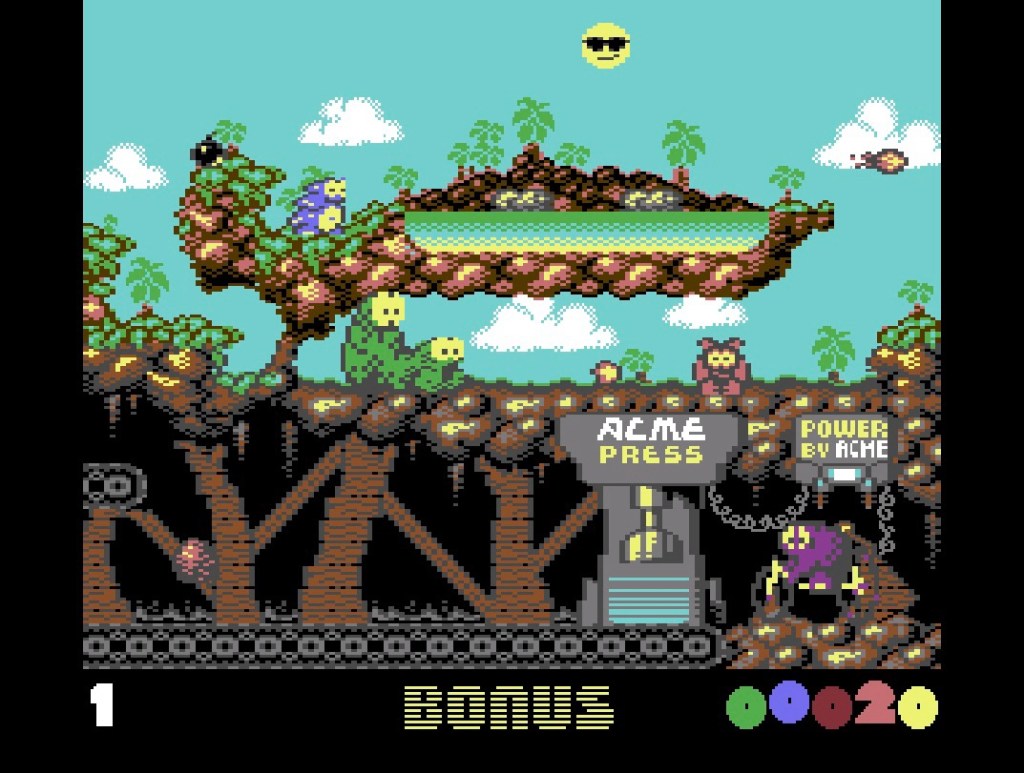
That’s going to do us for this week but as said, more on that to come! In case you missed it last Wednesday, we’re now into September, so it’s time for the Retro Arcadia Gaming Pickups Summer 2024 Recap, a seasonal feature covering all the retro games and related stuff I shouldn’t have been spending money on over the last three months! Then be sure to check back again next Wednesday for a bumper review of the brand new Thalamus Collection 1 for Evercade, with a detailed look at all eleven Commodore 64 classics included on there, now it’s finally available after a bit of a release delay! See you then!
As always, I’ll never expect anything for what I do here but if you’d like to buy me a Ko-fi and help towards increasingly expensive hosting and storage costs then it will always be really appreciated! And be sure to follow me on Instagram, X (formerly Twitter) or Threads for my latest retro-gaming nonsense!
 Retro Arcadia