
There was a time when you’d often have little more than a screenshot to go on to help make a decision on a game but I can’t remember the last time I knew I was absolutely going to love something from a screenshot alone! I guess the closest I’ve come to that for a while was the trailer for Resident Evil Village back in early 2022, where you enter Castle Dimitrescu to be confronted by that huge, shimmering chandelier hanging down alongside the ornate wooden staircase circling the gothic opulence of that luxurious grand hall. Genuinely my favourite sight in any game ever, as documented in my Wonderful Sights in Gaming – Part 1 feature from the same year, if you’d care to see it! However, back to screenshots, obviously that wasn’t a screenshot at all, even though an actual screenshot would probably have had the same effect, although given it was for a new entry in one of my all-time favourite game series, I was going to love it regardless! No, you’d probably have to go back to the eighties for something like Winter Games or Feud for exactly that kind of love at first sight… Until almost seven hundred pages of a beast of a book called From Ants to Zombies: Six Decades of Video Game Horror came along in 2023!

Again, you can read my review for more on that, but I’ll give you a quick quote from it anyway, just to set the scene here… “From the very first time I flicked through the book, one image has absolutely enthralled me over anything else I’ve seen in there, and that’s the double-page spread introducing the none-more-PS1 Echo Night by FromSoftware in 1998!” I’ve got quite the collection of Bitmap Books’ titles now, and they’ve been responsible for me discovering all sorts of wonderful games; in fact, they’re also just about directly responsible for me discovering an absolute passion (or borderline obsession) for actual baseball too (more here)! However, in this case, with its combination of two of my other passions for horror and video games, I didn’t hold out much hope for discovery here. Wonderfully wrong! I knew about 70% of the one hundred and thirty games covered, and I’ve had a blast getting to know a lot of those I didn’t since, but none more so than Echo Night!

You might have heard of FromSoftware! Now, I’m not the biggest fan of what they’re now best known for but I have tried really hard to like Bloodborne, and I even spent almost a hundred hours playing Elden Ring, but that Souls stuff really isn’t my thing. It’s hard not to know all about it regardless though! Echo Night, however, was something else – totally new on me, although in my day one original PlayStation-owning horror nerd defence, I think we can probably say it’s not one of their higher profile titles. There was more to it than just a picture of a pretty ghost girl in the book though, even if that’s all it takes for me, so in case you’re in a similar boat – no pun intended – let’s find out where it came from! When Japan-based FromSoftware made the shift from business software in 1994, its first three games, released over the next couple of years, were also the first three games in the King’s Field action-RPG series, which did surprisingly well for them and would set the foundations for Demon’s Souls then the rest of the Dark Souls series fifteen years later. Legendary mech shooter, Armored Core, and its prequel follow-up would come next in 1997, before dungeon-crawling RPG Shadow Tower and Echo Night in 1998, published internationally by Agetec. I don’t have specifics but it must gave done alright in Japan at least, given its first sequel there then another sequel everywhere (both of which I’ll cover later) but aside from sales, despite being a bit of an oddball in their more action-focussed lineage, it’s another game that clearly inspires that lineage, introducing the mystery-laden narrative style that FromSoftware’s later titles are known for.

At this point, I’ll pick up the tale from the manual, which is mostly a bunch of disparate diary entries from different people, vaguely setting the scene, so I might also mix it up with my big book and their interpretation as well! As a mega-fan, I definitely concur that there’s a Lovecraftian air to the opening, as we meet our protagonist, Richard Osmond, somewhere in the U.S.A. in 1937, who’s just been sent a mysterious key by his estranged father… As he’s pondering why, the phone rings and he’s informed by the police officer on the other end that his childhood home has burned down, and his father has been missing ever since. Over to the game, and the opening cutscene – drenched in a very Arkham Horror vibe (in a very PS1 cutscene kind of way!) – then transports us to that once-grand old estate, accompanied by a local policemen, who soon leaves us to have an explore around the burnt-out ruins. I’ve just realised Richard’s diary then spells out exactly what you need to do in there too, which is part on-the-job tutorial and part laying foundations for what’s to come, involving a lot of looking around, a bit of puzzling, a bit of running away and a lot of more careful observation. And I mean a lot!

Once you’ve got to grips with how a walking simulator played long before they were invented, you’re overtaken by a strange sensation, and suddenly find yourself on a steam train, soon witnessing a murder and some even stranger behaviour that introduces more of the eccentric cast, before a bit more exploring and another psychedelic trip, right onto the deck of the ocean liner Orpheus, which is going to be our base for most of the rest of the game. Imagine the early 20th century splendour of the Titanic and you’re in exactly the right wheelhouse, and from the manual and further cutscenes – of which there are many around this point – it seems like the Orpheus was sunk around the same time as its inspiration, several decades earlier, taking with it the wildly wealthy Rockwell family who owned it, and, it seems, may have attained all that money in a questionable manner… But here we now are, face-to-face with the ghost of its captain, and before long, many more ghosts, whose personal tragedies are going to direct us through the next six or so hours! Or just scare the hell out of us!!!

The game plays out in first person, with the most annoying crosshair ever pointing the way, although that’s easily turned off in the options menu! However, doing so doesn’t make the task of picking up the items you find any easier – it’s finicky at the best of times, especially when you’re picking up tiny objects like keys or engagement rings. Actually, while I’m picking fault, they can also be a complete nightmare to see in the first place, often blending right in with the background, virtually invisible until you know they’re there! Then, when you’re in position to pick something up, it will briefly flash to indicate you’re good to get it, which is handy because it can take forever to manoeuvre yourself into a position to do so even with that! Like the graphics, the controls are none-more-PS1 – meaning before the days of the analog stick – so regular backwards and forwards, left and right directional controls are on the d-pad but look up and down are on the two left shoulder buttons, while “strafe” left and right are on the two right shoulder buttons. As much as that was the way of the world at the time, it is jarring for a while but does soon come back to you, and your eyes do also adapt to spotting those tell-tale little irregularities in the carpet! Apart from that, it’s circle to crouch, triangle to examine, square to get at items you’ve picked up and X for everything else. And except for those little niggles, it all works just fine and you’ll be dashing around the ship and your ghost-related adventures elsewhere with gay abandon in no time!

There’s a bit near the start of the game that takes you into the ship’s pilot-house, where you’ve got the wheel and all the navigation stuff and a lovely, almost panoramic view of where you’re going, although that’s mostly just very basic sea and sky with stars and clouds, and sun and moon, all moving as time passes. But that’s all it needs to be for me because, weird as it may sound, I absolutely love this room, and have spent almost as long just hanging around in there as I have playing the game through two complete play-throughs; I’ve even got a save file solely for doing that! I’m not sure what it is but it’s exactly the same attraction as the rollercoaster operator’s hut in the amusement park near the end of Silent Hill 3 or, in real life, my Grandad’s shed when I was a kid – just a very lived-in, happy place of refuge where you can just hang about and potter around, although in this case, always with the lights on because if there’s one thing you need to do the second you enter any room on this ship, it’s look for a light switch! As well as occasional bouts of possession, the main threat to your (physical) health is being attacked by malevolent spirits, and for the most part, those are a young girl, who appears and floats towards you and vanishes and reappears somewhere else, as well as an older woman who doesn’t mess around as much but is possibly less terrifying as a result – that girl really knows how to come at you too! Hang around in the dark for too long and she’ll do you some serious damage too, indicated by your depleting health meter, which can be recovered by curing potions you need to look out for tucked away in drawers and the like, while possession needs holy water, although it does seem to eventually wear off by itself and isn’t really the relentless worry that the next appearance of that awful, giggling girl is!

The sound is minimal but atmospheric throughout, with sampled footsteps complemented by similarly sampled environmental sound effects, like the the waves crashing by when you’re on the deck, or the creak of moving wood in a cabin, while things like engines, doors and other interactive items each have their own distinctive sounds, although not as distinctive as the swirling whoosh indicating you’re about to be sent otherworldly! They might be simple but a lot of care has gone into them too, like getting louder and quieter as you come and go to enhance your immersion. Music comes and goes too, used sparingly to greater effect, and when it comes, it’s all of the highest quality as well, ranging from dramatic, Indiana Jones-type orchestral pulse racers to jazzy casino lounge, to the more magical and ethereal. And then there’s the voice acting!!! I just mentioned Silent Hill and it’s right out of that school, totally stiff in its delivery, totally overwrought, totally unconvincing, and totally so bad it’s good… I totally wouldn’t have it any other way! It comes from a surprisingly varied cast of characters too, and – sometimes despite their own best efforts – you’ll buy into them, whether they’re nameless ghosts and the associated memories holding them hostage on the ship that you’ll only spend minutes getting to know, or the recurring guide-types, or the living and dead attached to the past and future fate of the ship, slowly being revealed as entwined with your own longer term predicament.
I’m not going to spoil the story too much beyond what I’ve said already because puzzling it out and seeing it emerge is everything the game has got, but it’s one of those you’ll gradually get the jist of even though you’ll never fully understand it! It’s well written enough though, and well-paced too, with the general flow of the game having you solving problems and riddles of the exact nature you’d find in any good survival horror, which in turn will allow you to get further into the depths of the ship, giving you access to more ghosts to send into the light, which will involve more puzzles set in their past, and that will reward you with an astral sphere. Collect enough of these and hand them over to one of those guide-type characters, a medium, and you’ll get one of four endings. There are twenty-six astral spheres in total, and the number of those you’ve collected throughout the game will influence how you finish but as long as you’ve taken certain paths and made a bit of an effort with the very final puzzle, revealed by the medium’s final words, it shouldn’t end up too bad! As you’d expect, the puzzles start out pretty simple – let’s say there’s a ghost waiting for redemption but getting to it is going to involve not being alone in the dark, so you need to do something with that faulty electrical wiring in the fuse box you hopefully saw earlier, meaning you need to find the crew room with the tool box in it, and then to touch the wires you’ll also need the gloves you found in one of your otherworldly excursions just now. Things do get more complicated and laterally-structured but it’s no Monkey Island, and as said earlier, actually spotting some of the items you need will be the biggest challenge, but it’s mostly a case of going back and forth, both literally and figuratively, and putting pieces together.
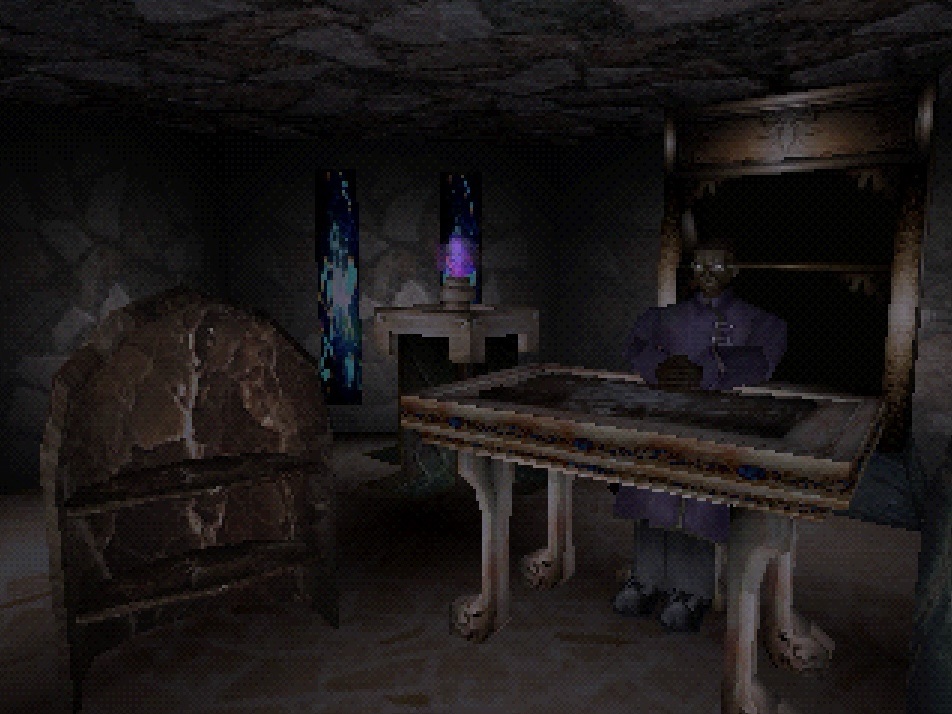
Things also get far more imaginative as you go, and those flashbacks allow for some real variety in the conundrums you need to face, with you ending up in mine-carts and on merry-go-rounds, fixing swimming pools and even solving medieval murders! There was one puzzle near the end that particularly stood out for me, where you’ve just bizarrely escaped a ghostly king to find yourself needing to distract one of the crew on watch duty, which is only the first part of getting into a subsequent multi-part puzzle involving opening a locker with a cool bit of observation and mathematical logic, to then get someone else to give you another clue to find a combination that will eventually lead to a broken pipe you need to get fixed to continue on to the next bit. Unfortunately though, the combination you’ve just spent ages trying to find, and were thrilled when you eventually did, doesn’t work, so you start looking around again for whatever you’ve missed, and then you’ll be trying it again because it has to be what you already had, and so on… And then you realise it’s simply upside down and you’re so pleased with yourself again for eventually working it out! I think that area is about as hard as it gets, and is also one of the more (relatively) action-packed locations, but there was one other area where I got really stuck and it seemed increasingly likely it was a case of having to find one of the ship’s old telephone save points and load again from the last one…

The problem was, I knew I’d somehow missed picking up a pendant I now needed, and at this point it could only have been from a past life scene in a graveyard that I’d already been forced out of and back into the present. It seemed like there was no way I could progress the story without it, and in parallel, I hadn’t saved for ages so was panicking about that too. I tried to trigger the time portal thing again by following the steps that had opened it first time around but that was no good, and it just seemed like there was no way back, so in desperation, I started to backtrack further, step by step, eventually speaking to a ghost involved in this bit of the story again. And to my total surprise, he said I’d missed the pendant, and not only triggered the portal but took me back to the precise place I’d find it. Of course, the game was totally prepared for what could also be viewed as a deficiency in its signposting but I just saw it as such a nice touch! There are a lot of them too but for me the absolute highlight remains what brought me to the party in the first place, and that’s how it looks!

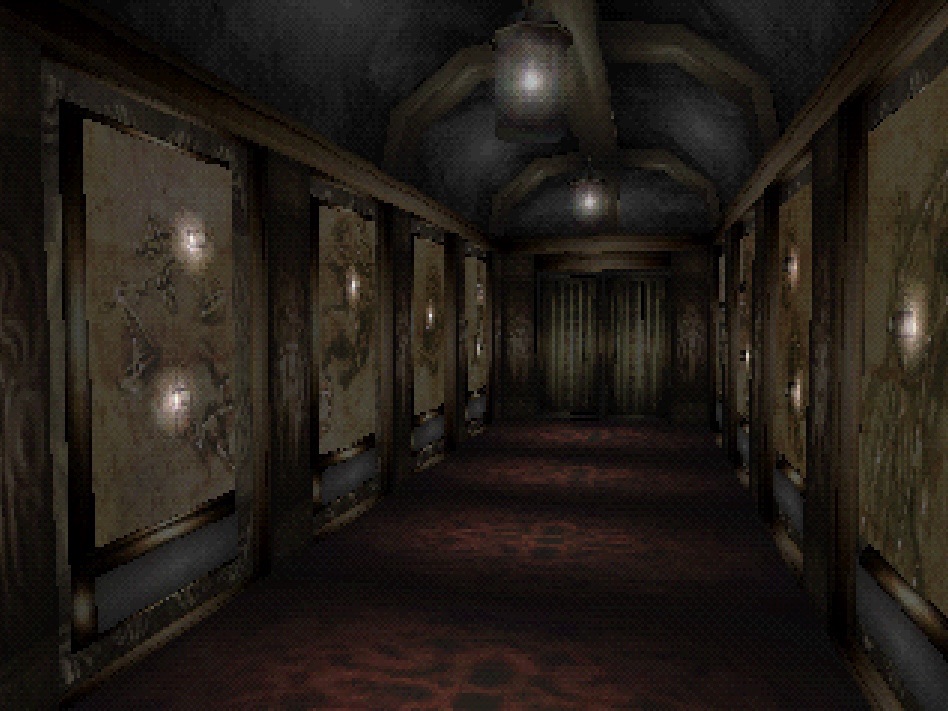
As much as the PS1 once had the ability to blow you away with pretty much everything it had to offer at the time, I think nowadays there are two types of game on there – those that look like crap, full of jagged edges and primitive textures, tearing and pop-in, all from a rubbish fixed-camera viewpoint with a dash of fog on top if the developer could get away with it; and then there were those that possibly also did all of the above but have somehow developed a unique charm in their old age as well, like a black and white movie that really wouldn’t work any other way! And this is one of the latter, maintaining this incredible sense of melancholy and atmosphere that you only got on the original PlayStation, where overly prominent polygonal geometries, earthy tones and dimly lit locations seem more like a design decision to me today than hiding any “limitation” that we were simply ignorant of originally. There’s a richness to the environments and their inhabitants here too, both in period detail whenever it’s possible but also a kind of abstract decadence where it’s not, with polygonal blocks layered to create convincing but part-imagined character, and none more so than the pitiful but exquisitely formed ghost lady that sold me on the whole thing in the first place! Its overall effectiveness is also starkly highlighted by the few occasions where it isn’t effective at all, such as on the brightly lit train sequence at the start, which in turn strips out all semblance of atmosphere to play out like a grotesque post-gothic cartoon that really accentuates things like the lack of facial detail and janky animation, and definitely falls on the crap side of the modern PS1 spectrum… Turn out the lights!

Echo Night 2: Nemuri no Shihaisha, or The Lord of Nightmares, followed hot on the heels of the first game in 1999 but as said earlier, was Japan-only. However, a fan translation did appear a few years back, and either way it’s definitely worth a look! It plays exactly the same, with our man Richard Osmond now looking for his missing girlfriend, last seen at the creepy old library she works in, so that’s where you start your quest and quickly come across a creepy old book that sends you across time and space to a creepy old mansion… It’s all comfortably familiar, with maybe a bit more polish and a bit more depth too, even if it understandably doesn’t quite have the same impact second time around. Echo Night: Beyond then came to PlayStation 2 in 2004 or 2005, depending on where you live, and it’s the same principle again but this time it’s a sci-fi tale, with you (still Richard Osmond but in a few years) off to the Moon for your honeymoon, when ghostly spirits cause your space shuttle to crash and off we go again! I’ve tried to like this more than I do a couple of times but while it’s kind of the same, it’s just not the same… You need the original PlayStation for that! Okay, I am more into straight horror too but you get the point. Echo Night was totally love at first sight for me but while it certainly lives off its definitively PS1 looks, there’s also a hauntingly atmospheric and well-crafted proto-walking simulator there that’s years ahead of its time, and with the beginnings of FromSoftware written all over it. But mostly I just can’t resist a pretty ghost!
As always, I’ll never expect anything for what I do here but if you’d like to buy me a Ko-fi and help towards increasingly expensive hosting and storage costs then it will always be really appreciated! And be sure to follow me on Instagram, X (formerly Twitter) or Threads for my latest retro-gaming nonsense!
 Retro Arcadia