Back again for our regular Sunday roundup of quick-fire reviews and impressions of everything under the spotlight at Retro Arcadia this week, old and new and a bit of both…

I’ve been messing around with a top ten favourite Amiga fighting games feature for a while now, and although I’ve always been fond of it, I’ve developed a new-found appreciation for Master Axe: The Genesis of MysterX along the way. Like most of their games, it came from Islona Entertainment very late in the Amiga’s life, in 1997, which amazingly positions it alongside Street Fighter III but we’ll ignore that because I’ve been playing it loads this week and I reckon it’s a decent, polished game in its own right all the same! It’s based on the adventures of Neil Axe, possibly a real person who travelled around doing kung-fu, and while that translates to a very familiar format for one or two players, it’s got plenty of secrets and some unique modes on top of regular tournaments and training, like Endurance, taking you across America to fight the locals, from a presidential bodyguard outside the White House to a Voodoo priest in a Louisiana swamp, and Spiritual Warrior, where you take on your own inner demons! You’ve got a choice of eight characters, some with weapons, and all with what becomes a very fluid, almost combo-driven move set, which is impressive considering the one-button joystick controls. I guess single player is a bit easy and you will find a few spammable attacks but there’s plenty of variety to compensate, and the backdrops can be gorgeous. Sound is alright too, crunchy and with enjoyable enough music. Despite all that, I know it probably wasn’t what anyone wanted in 1997, but I’m enjoying it today all the same!
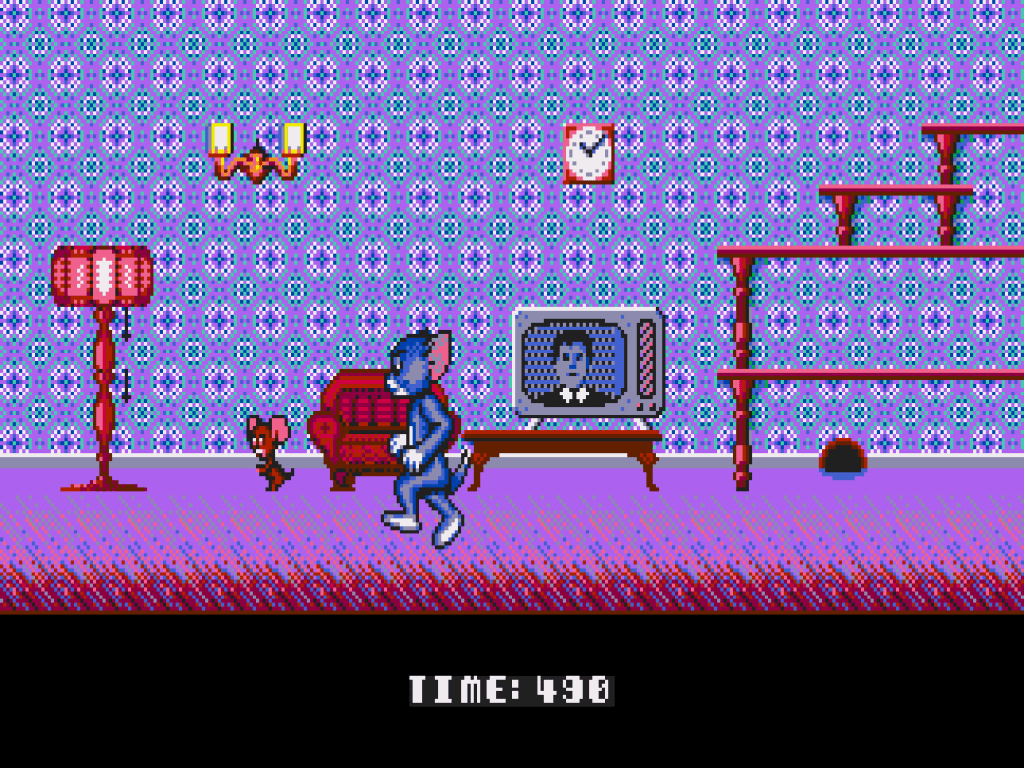
Normally I wouldn’t waste my time (and subsequently yours) writing about a game I absolutely hate but when you’ve just come across one of the worst games you’ve ever played in the best part of five decades of gaming, then I think it deserves some recognition, so I give you Tom & Jerry on the Atari ST! Now, I’ve always loved Tom and Jerry – which does make me wonder how I’ve thankfully avoided this for so long – but it’s on a par with stuff like Highlander and Miami Vice as one of the worst licenses ever to grace a home computer, that no amount of passion for the subject matter is going to give you a higher tolerance for! The culprits for this monstrosity are German developer Magic Bytes, who released it in 1989 for the ST, Amiga and Commodore 64 (I dread to think!), with all three, plus the Spectrum, CPC and MSX, getting an almost identical sequel almost immediately after that I definitely won’t be following up with here next week! Anyway, you play Jerry the mouse, who has to gather bits of cheese against the clock from a handful of rooms in an utterly depressing house with Tom the cat on your tail. Which wouldn’t be so bad if it weren’t for some of the worst platforming controls ever across some of the worst platform designs ever! There’s no rhyme or reason to what you can walk past and what you can’t either, so while a TV might be fine, there’s no way past a tyre lying on the floor without the stickiest, most imprecise jump ever! And that means once Tom appears, you’re screwed, unless you can get into a rare mouse hole, which triggers a terrible 3D auto-runner where you have to jump stuff apparently being thrown at you down the conveyor belt seemingly in the wall of the house, although hitting anything doesn’t seem to do a lot so who cares! And it all looks and sounds so crap, with the characters nothing like their cartoon counterparts, which there’s no excuse for on any of these machines, let alone an ST or Amiga. I can’t go on anymore. It stinks!

All the way back to 1985 for our next game, which thankfully smells great, and that’s Konami’s pioneering arcade cute ‘em up Twinbee, which I’m playing on Nintendo Switch on the fantastic Konami Arcade Classics Anniversary Collection from 2019. I’m a big fan of a lot of this series, which would eventually evolve into well over a dozen more games that not only included more really fantastic shooters, such as the masterful Pop’n TwinBee on the SNES and Detana!! TwinBee (or Bells & Whistles) on PC-Engine, but also extended to RPGs, rogue-likes and puzzlers! For the shoot ‘em ups at least, the premise is similar in all of them though – a kind of cartoon-Xevious, with your airship fighter TwinBee (together with WinBee if you’ve got a player two) battling the evil King Spice who turned up from outer space and invaded your home, Donburi Island. As well as shooting and bombing his forces, including a bunch of madcap bosses at the end of each of the five stages (such as the brilliantly named Onion Head) you’ll also want to shoot all the passing clouds because they might hide bells, and that’s where you can amass some really big scores by collecting them in combination, or you can keep shooting them to change their colour for speed-ups, gun upgrades, shields or a second ship for extra firepower. This literal juggling act quickly forms the game’s central mechanic, with you balancing the possibility for chaining regular bells for score or shooting them just enough times (and not once more) to change their colour for survival, and all in the midst of relentless enemy bullets from the air and the ground, where you also have a bomb to deal with the latter. It’s a unique and thrilling concept, heightened by the cacophony of bells and whistles (not just a good name!) and relatively simple but imaginative and vibrant graphics. Timeless game!

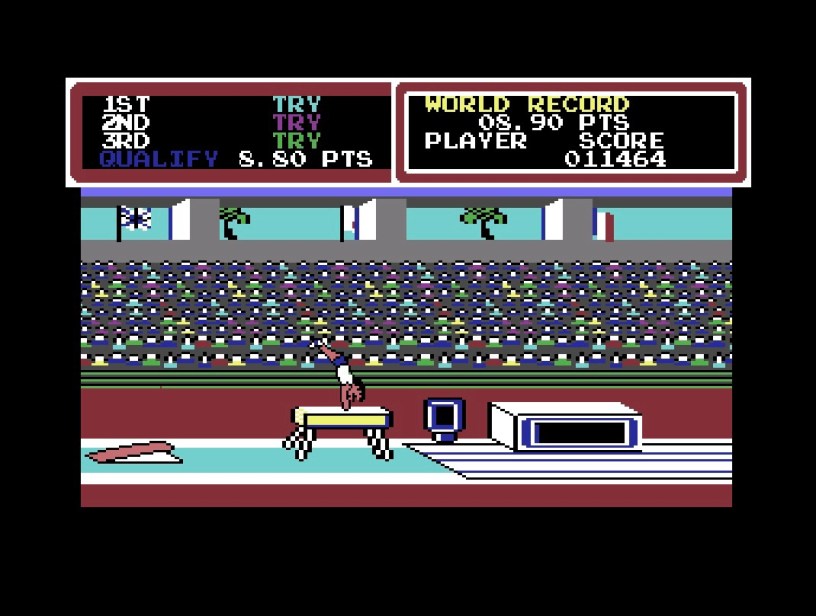
Quick topical one to finish with, and one of the Commodore 64’s great arcade conversions, Hyper Sports! Konami’’s sequel to Track & Field arrived in arcades in time to get an official 1984 Summer Olympics license in Japan (only) and featured seven events that mixed button-mashing and timing, meaning your poor fingers generally got a break between beatings! Plenty of variety too, with swimming, skeet-shooting, long horse gymnastics, archery, triple jump, weight lifting and pole vault, which, like other 8-bit versions, was missing on the C64, as was multiplayer, which I realise is a bit of a showstopper for many but didn’t stop for some fantastic world-record chasing fun at the time that’s still among my most memorable multiplayer experiences, and I’ve been playing solo ever since, so no big deal for me. The presentation of the original was very transferable to the C64, and while I love the Spectrum port too, it didn’t look or sound as real as this does – great detail, smooth scrolling, and loads of character and humour (mainly when things go wrong)! And every event is pretty much perfectly tuned, although heavy-wagglers like swimming and weight-lifting are a bit of a stretch on a modern controller! Risk something with a stick on it, or just stick with keyboard, and you’re still in for a great time though!
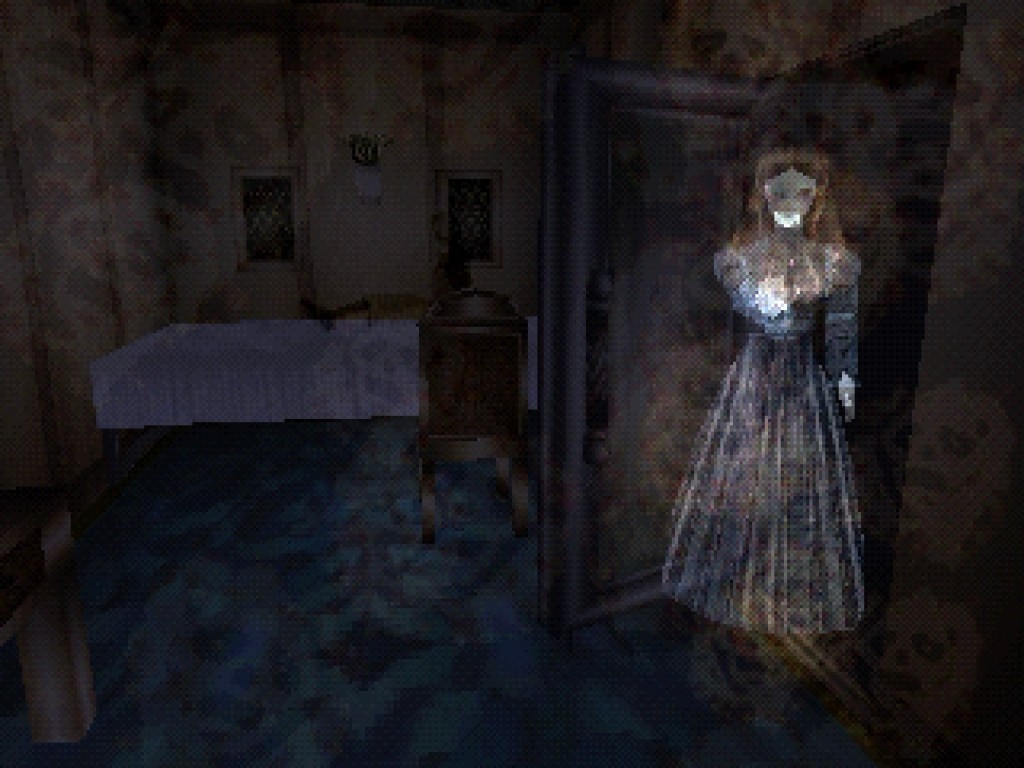
I am still playing The Case of the Golden Idol on Xbox (see last week), Metal Gear Solid (a couple of weeks ago) and Octopath Traveller (a bit further back) but I don’t have much new to offer so I’ll leave it there for this week. In case you missed it last Wednesday though, be sure to check out my deep-dive into Nintendo’s 1982 Popeye arcade game, as well as its fantastic Atari 2600 port and a look at the man himself! Then next Wednesday, it could be love at first sight as we discover FromSoftware’s hauntingly atmospheric Echo Night on PS1, but is it more than just a pretty ghost face? See you then to find out!
As always, I’ll never expect anything for what I do here but if you’d like to buy me a Ko-fi and help towards increasingly expensive hosting and storage costs then it will always be really appreciated! And be sure to follow me on Instagram, X (formerly Twitter) or Threads for my latest retro-gaming nonsense!
 Retro Arcadia