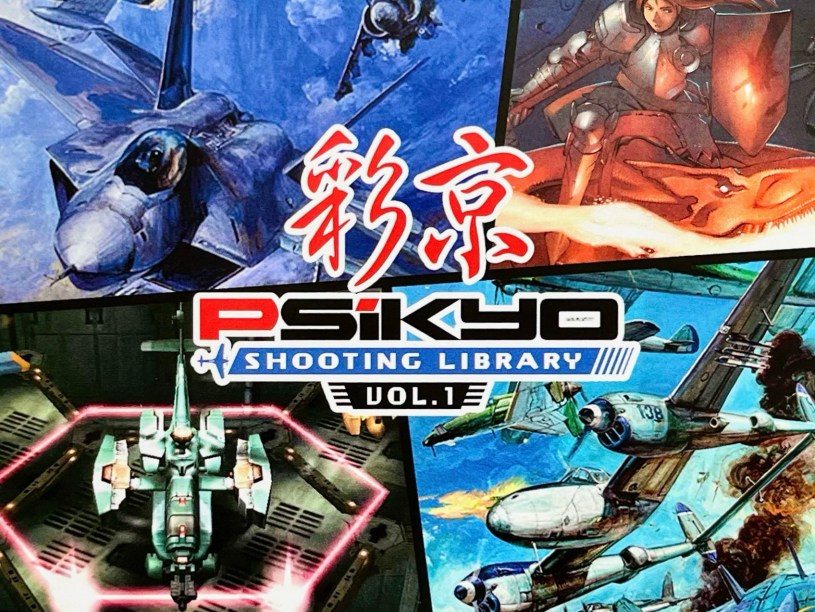
As I write, I’m gradually working my way through a series of top ten features covering my favourite shoot ‘em ups. It started back in August 2023, when we looked at horizontal ones, then we span ninety-degrees and went vertical at the start of 2024, and there’s one on the way for fixed, single-screen shooters, such as (but not necessarily including) Space Invaders. Whenever I can get to them after that, I’m then going to attempt to do isometric (although that direction isn’t particularly my thing), multi-directional, 3D and potentially on-rails or lightgun shooters, which I originally had in mind simply because Star Wars is more that than 3D shoot ‘em up, but it has that feel about it. However, something like Operation Wolf or Virtua Cop 2 doesn’t at all… We’ll see, and at this rate it’s a way off anyway!

The reason I mention these now though, coming back to the two I’ve already done, is while several of the games we’re going to look at in a sec had automatic passes onto my original shortlists, and a couple might even have made it to honourable mentions at the end, there’s not a single Psikyo game in either of my top tens. Which only really occurred to me when I was playing through everything on the two Psikyo Shooting Library compilations after I finally picked them up on PlayStation 4 recently, and it just didn’t seem right! We’ll come back to these in more detail shortly, but I’ve already got versions of the Strikers games all over the place – love them – and while I was very late to Tengai, the 1996 Feudal Japan blockbuster of a horizontal shooter, the second I found it, I was buying a copy for my Nintendo Switch… Some things are just too good for MAME! Which also goes for the two Gunbird vertical epics that, like Tengai, are on the second compilation, and I’ll also get to covering that one here in the end too!
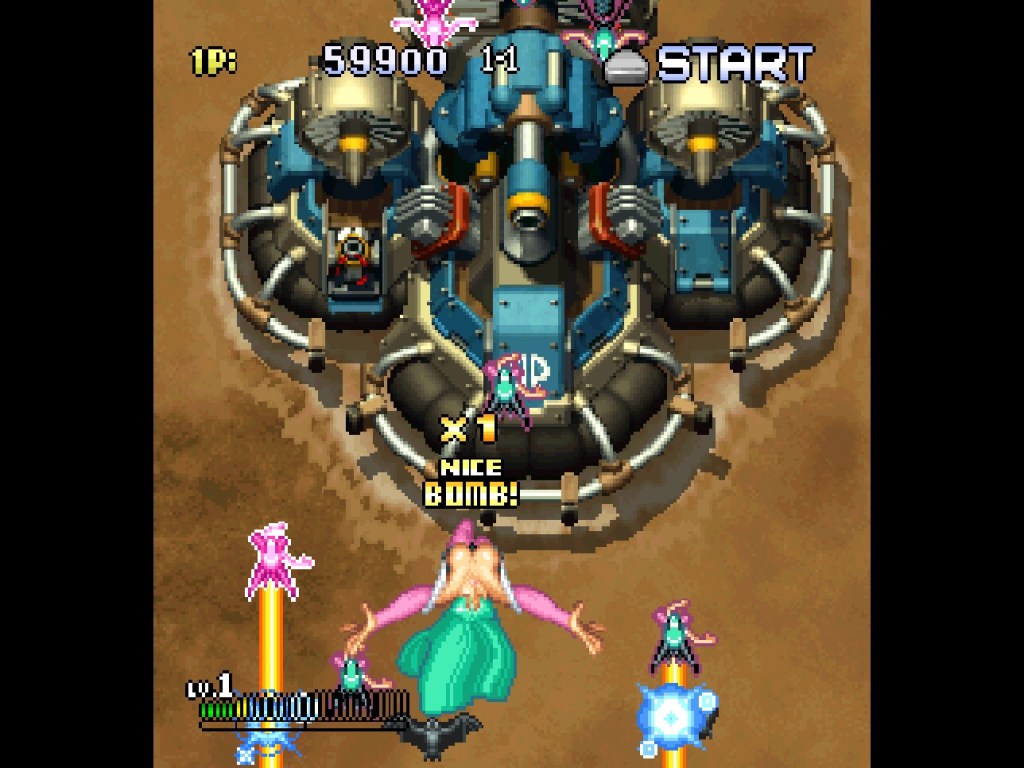
Even so, I’d certainly consider myself a fan of Psikyo and their distinctive gameplay imprint (and just to confirm, I’m specifically talking about shoot ‘em ups rather than their sexy mahjong lineup)! They were founded in 1992 by a bunch of devs from Video System, who’d done the Aero Fighters shoot ‘em up series, and while a few of their titles also hit PS1 and PS2, Sega Saturn and Dreamcast (including the lovely Morrigan from Darkstalkers’ guest appearance in Gunbird 2 on there, pictured above), the majority of their thirty or so titles released up to their acquisition (and effective shutting down) by X-Nauts in 2002 were arcade games, and more than half of those were shoot ‘em ups, which is probably why that’s probably what they’re now best known for… Unless you’re a dirty old Japanese man! I’m not going to go mad on more histories or all the games I’m not going to cover but I should mention that from 2003, there have also been a load of Psikyo-labelled games not developed by them, which were mainly remixes, remasters and compilations for PS2, PSP, Switch and mobile.
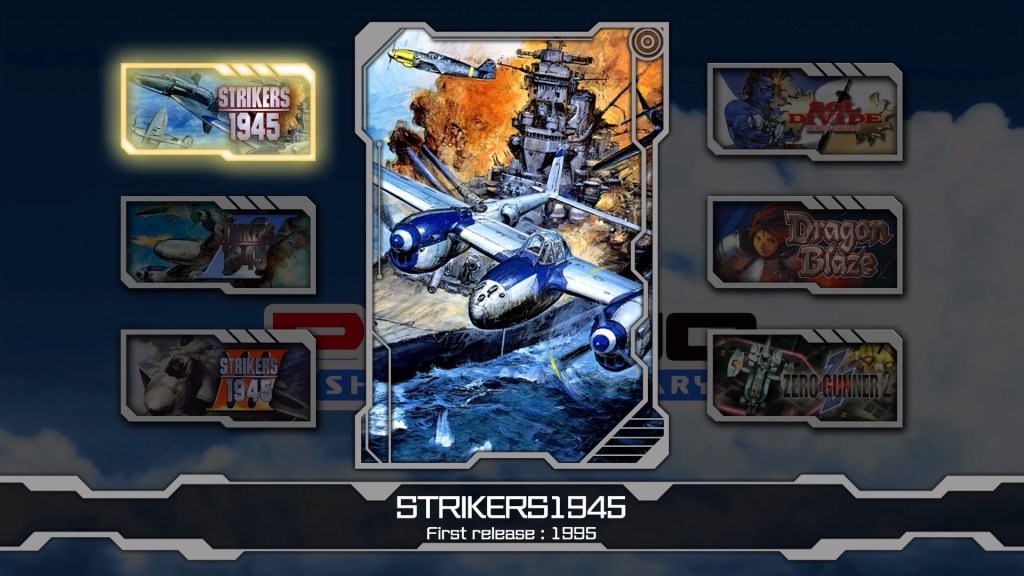
Which brings us up to date and is a good place to start heading towards what’s on Volume 1 of this compilation, but just to complete the picture, Volume 2 further includes Samurai Aces Epidode I, the aforementioned Samurai Aces Episode II: Tengai, Samurai Aces Episode III: Sengoku Cannon, Gunbird and Gunbird 2, and the not-shooter-at-all Gunbarich! And with that, let’s jump into Psikyo Shooting Library Vol. 1… I believe both volumes originally appeared on PlayStation 4 and Nintendo Switch at the same time back in 2019, from City Connection (who I think also own the Jaleco name now) but it seems like only in Asia, then made their way elsewhere in 2022 at around the $30 mark, though I think they were sub-£10 each physical when I eventually got to them two years later. Whatever you pay, you’re not getting much beyond the games for your money – it’s all very slick and easy to navigate from a central game menu but once you’re in, you’ve got a couple of screen filters, an optional wallpaper and arcade user interface, the ability to rotate the screen if you can, some DIP settings, a barebones manual and online leaderboards. No other bonus material or mod-cons like rewinds or save states, so you’d better get ready to just get good!
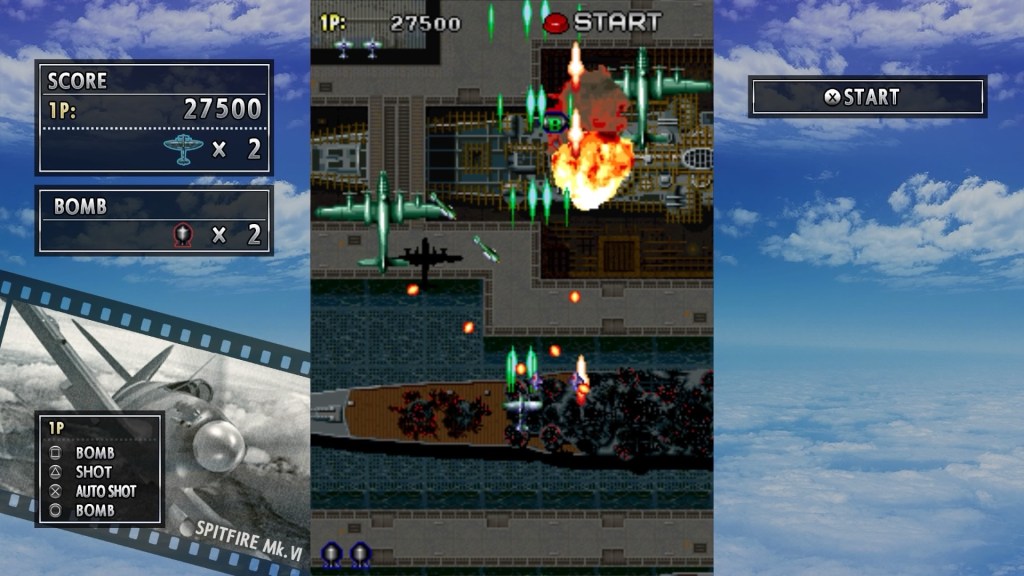
Right, I’m going to run through each of the six games in turn, a paragraph or two on each, and I’ll go in the order their fancy illustrated and individually-orchestrated icons are listed, which is chronological, and that means we’re starting in 1995 with Strikers 1945! First, I should also say too that while I’m into the genre enough that I’ll tap the fire button as standard rather than hold it down, I’m not a nerd about it, so most likely won’t be commenting on stuff like fractional input lag because I won’t even know it’s there! And with that, this is the first of three Strikers games we’re going to cover, and it’s set right after the end of World War II, when everyone’s very happy until a mysterious organisation called C.A.N.Y. turns up with a load of transforming, robotic super-weapons that may or may not be of alien origin… Either way, it’s like a glamorous 1942 with a bit more tech and some giant mechs, so we’re talking vertically scrolling across eight levels, five of which are set in Europe and come in a random order (remember that Psikyo imprint I mentioned?) before you head off-planet for the rest. It’s fast-paced, with equally fast bullets that often approach bullet-hell, literally spewing out of everything in dense patterns, all of which are also classic Psikyo. The environments veer between hugely atmospheric to watching miles of clouds, especially when there’s a boss at play, but throw in enemies and there’s usually loads going on to keep your eyes occupied. Bosses are impressive too, full of movement and drama and various phases of danger, but that does contrast with a lot of mundane regular enemies, which also goes for some cool sound effects but annoyingly repetitive but surprisingly forgettable music! Lots of power-ups (and -downs) though, interesting scoring mechanics and a bunch of planes to suit your play style. The gameplay feels great too, with loads to sink your teeth into with those five random starting levels, and while it’s very challenging, it feels good and is also very learnable, and getting into space is definitely achievable at the normal difficulty level, but there’s also a bunch more if you need them. Fantastic start!

I know I went a bit long with that one but there was a bit of scene-setting to be done and the next two games are effectively more of the same, so I think we can catch up with Strikers 1945 II from 1997. Just going back to those different difficulty levels quickly, they’re common throughout, and this game, for example, offers seven, which isn’t just about letting everyone get more out of the game but also learning it and gradually improving whatever their level. And I reckon this is the entry in this series you want to spend time getting to know! The structure is the same as before, with eight levels (five random) set right after the last game, where another mysterious organisation called FGR has stolen the defeated C.A.N.Y.’s weapon designs and made them bigger, faster and with even more bullets! On your side, you’ve got a range of mostly brand new planes to choose from and an all-new three-level, metered charged shot that replaces the options (little satellite support planes) from the first game and definitely adds a bit more personality to this one. So much more polish too – it’s often gorgeous, full of detail and texture and variety, from dirty old train tracks to fragmenting icecaps, and there’s a lot more about the enemies too, although the big explosions are still a bit too pixellated. The sound effects benefit from being way more heavy though, and there’s way more of them all at once, and the music here is a huge improvement, although I’m not sure how authentic high-octane eighties action movie soundtrack-style is! Fits the action perfectly though, and changes dynamically with it, and that action is a proper thrill-ride, with every plane equally responsive but each bringing its own thing, including the unique bomb styles carried over from the original, and the bullet sprays are just so well thought out. This should have been in my top ten!
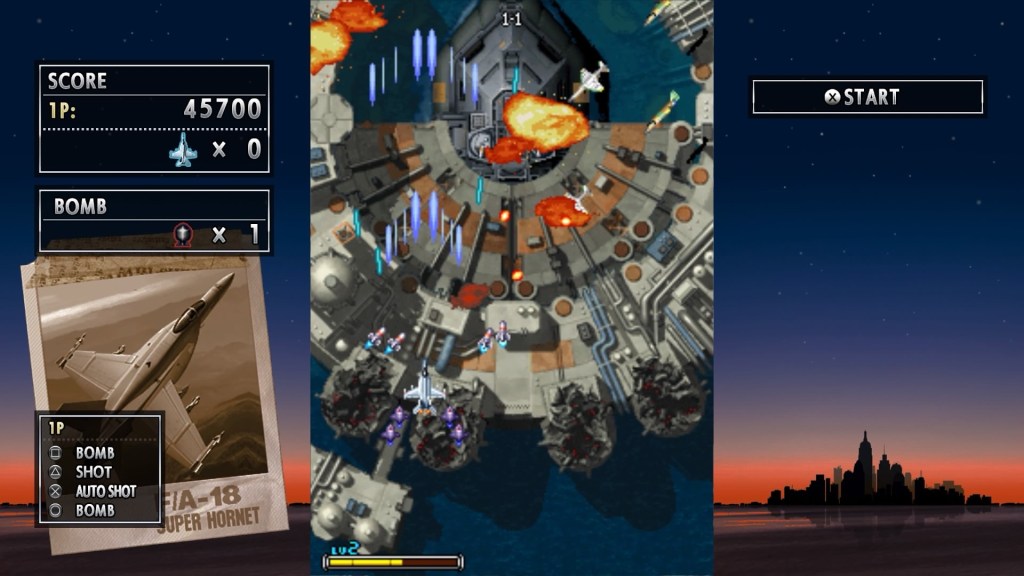
So much for not going long again but we can definitely make up time with Strikers 1945 III, which is also known as Strikers 1999 because that’s not only when it was made but also when this one is set. More or less the same story though, with what turn out to be the same aliens behind a mysterious organisation back across another eight levels, starting with a random selection but this time there’s a second loop to get through as well. Obviously there’s a whole new aesthetic to go along with this, with vibrant modern cityscapes (and life seemingly going on as normal beneath this all-out robot war!) and all the latest planes to choose from, this time going back to that option mechanic for their super-shot. There’s a couple of interesting new risk-reward scoring mechanics too, with timed, collectible medal-chaining and certain instances where a boss’ core will glow blue then red, not only giving a big technical bonus if you time it right but it might also take it down with a single shot if you’re lucky! Bosses and enemies in general are more aggressive than in the previous two games, and there’s more variety in what’s being thrown at you, which is now pretty much full-on bullet-hell a few levels in, but I think the controls are slightly floatier than before and while it’s still precise enough, it lacks a bit of that feel-like-a-boss exhilaration as a result. I think there’s generally a bit less care and imagination here than went into the second game in particular, so while levels can be impressively alive, they can also be a bit generic, and that goes for those bosses too. And the music. For all of that though, it’s got all the polish and it’s by no means not enjoyable, with loads of challenge and even more to keep coming back for.
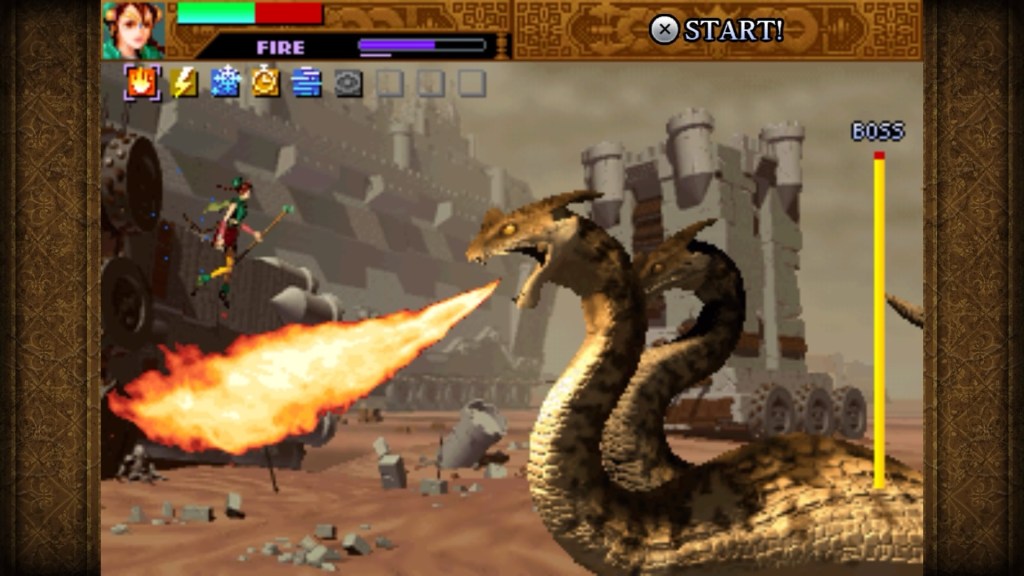
While I definitely enjoy some Strikers games more than others, it’s a series I’ve always been familiar with, and had a good time messing around with over the years, and I think fully justifies its dominance in this collection. Sol Divide, on the other hand, is completely new to me and I’d be perfectly happy if it had stayed that way! Okay, I’m being harsh, and while it’s in no way my favourite thing on here, one of the things I love about compilations like this is discovering new stuff, and for that at least I’m glad to have finally made its acquaintance! It’s a horizontally-scrolling shoot ‘em up from 1997 in a medieval fantasy setting, with some evil thing after some stone of power or something, and he’s killing everything with a sword called Sol Divide in order to get his hands on it. I think! You’ve got a choice of three of the usual fantasy suspects to try and take him and his army of skeletons, wizards, dragons and all sorts of other nerdy nonsense down, and as well as being able to shoot at them with either your regular shot or magic from spells you collect, if you get close enough you can go melee on them as well for a proper beating! It sounds way more fun that it is though – there’s little rhyme or reason to what’s being thrown at you, it’s too stop start, the magic system is too convoluted, and your little hit-box is too indistinct on a sprite that’s too big and clumsy for its own good. It’s too hard with only one player as well, even with the difficulty lowered, but there’s not enough to the gameplay to want to do anything about it. The backgrounds are occasionally atmospheric but generally look like poorly pre-rendered PS1 stuff, which does give a bit of a Ray Harryhausen vibe to some of the lumbering bosses that attempt a similar photo-realism but even they’re a bit bland, which also goes for the music. Given how many ports and rereleases this thing has had, somebody must like it, but unfortunately that’s not me!
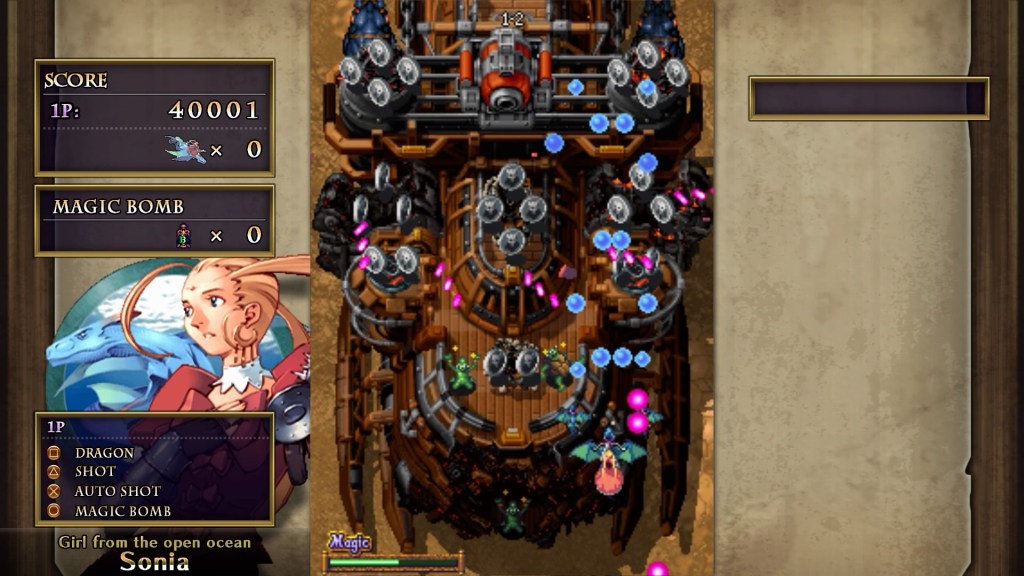
More fantasy stuff next but it’s also a return to more familiar Psikyo territory with Dragon Blaze, which is another vertical scroller, this time from 2000, although it does have a Cave vibe about it as well, with a bit more of the bullet-hell going on but also a character-based narrative behind it too. Such as it is! You’ve got a choice of four of them this time, all of whom are dragon-riding knights, and all of whom have enough of a personal vendetta against the naughty-sounding Demon King to want to traverse seven levels (four random) and a second loop to open up a portal to hell to track him down. They’ve all got unique shot types you can power up, metered magic types and dragon attacks too, all as you’d expect, but where the game does do its own thing is you can also jump off your dragon and use it as a tank while you carry on fighting behind it as normal. That’s something you’ll be doing as much as you can too because it’s often the only way to punch a hole through some of the more chaotic areas! It’s certainly a tough game but unlike Sol Divide, it’s one that will reward your perseverance, and the relatively simple risk-reward scoring system will keep you coming back too. It’s got that glowing core, technical bonus thing we saw on the bosses in Stikers 1945 III too, but while the bosses also play similar to that, they’re really impressive here – it’s all multi-form demons and dragons and stuff, with some really cool movement about them, and some fantastic sound effects as they fling out these huge high-speed bullet curtains! Environments are very organic and often vibrant but while always pleasant enough, there’s not a lot going on down there in those jungles and deserts and oceans, and if we’re talking the year 2000, it’s not really much of a graphical showcase, as impressive as the amount of bullets zipping about all over the screen at once can be, which certainly elevates the presentation, as does the bombastic soundtrack that’s everything Sol Divide’s wasn’t! Which is a sentiment we can probably extend to the rest of the game too – it’s polished without being spectacular, is built on simple, tried and tested mechanics, and just lets you focus on dodging bullets and having fun.
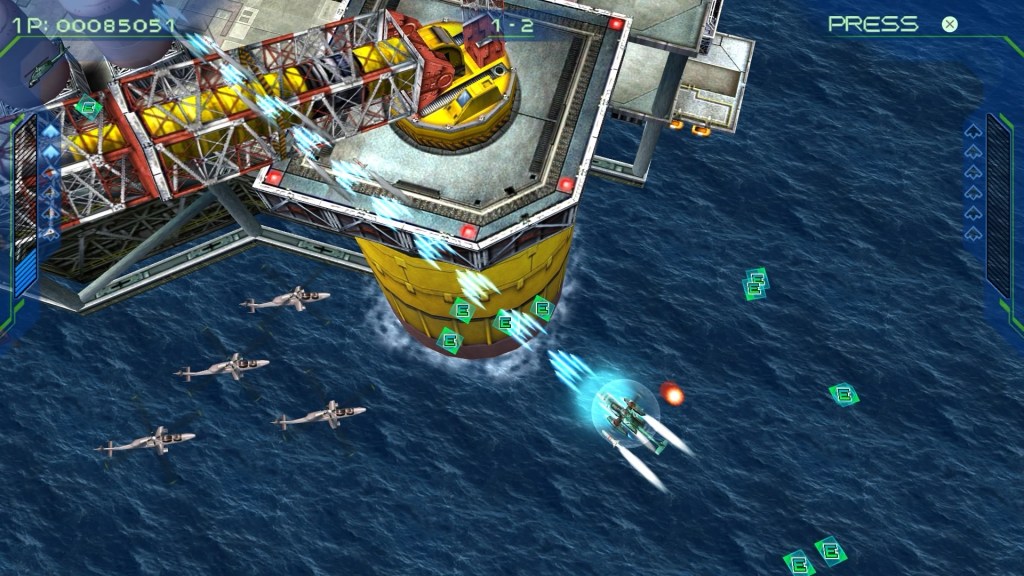
And there was I trying to be a bit more brief a few games ago but we’re on the home straight now with Zero Gunner 2! It hit the arcades in Japan around the middle of 2001, closely followed by a Sega Dreamcast version, which I think was as far as it got at the time but that makes sense because it’s the most Dreamcast-looking game you could ever wish for! Fancy little beast too, offering top-down, pseudo-3D, often vertical but regularly in every direction scrolling, and that’s not the only thing that’s in every direction because you can also shoot whatever way you want too! It’s a sequel to the 1997’s Zero Gunner, which did a similar thing but had more of a Thunder Blade vibe, and was really ambitious too, so it’s a shame that’s not also here! The sequel picks up the story of the Zero Gunner helicopter force, set in the near-future (although the first game was in 2016 so it’s probably near-past by now), where a new energy source has led to the development of a weather control machine being used by “an Asian conglomerate” to take over the world, which you need to put a stop to. One or two players choose from three helicopters, each with their own firing style and each with the ability to be rotated to shoot in any direction, which starts out a bit jarring but you’ll soon be attacking everything everywhere with gay abandon as you wonder how you ever lived without it! The rest is pretty standard Psikyo as far as mechanics go – seven levels with a random starting order, power-ups, metered specials and inventive transforming vehicle-robot bosses. Seven difficulty levels on this one too but it’s not the hardest game we’ve seen here, and default is probably about right for most, doing a great job of appearing overwhelming in some of the more chaotic sections but in reality it’s not really! The bullets have been scaled back here too, with the focus more on explosive set-pieces as the direction of movement swings one way to another over some brilliantly bold, detailed and gorgeously lit polygonal structures, although the oceans, deserts and military bases you find them in once again vary in quality, with some very lively built-up areas contrasting with those plain old clouds that Psikyo seem to have a thing for. On the whole though, it’s a stunner, supported by generic but dynamic and punchy synth-pop, and a cacophony of individual gunfire and explosions, and it’s such a blast to play too, familiar but innovative, technically impressive and so well balanced. Great place to finish!
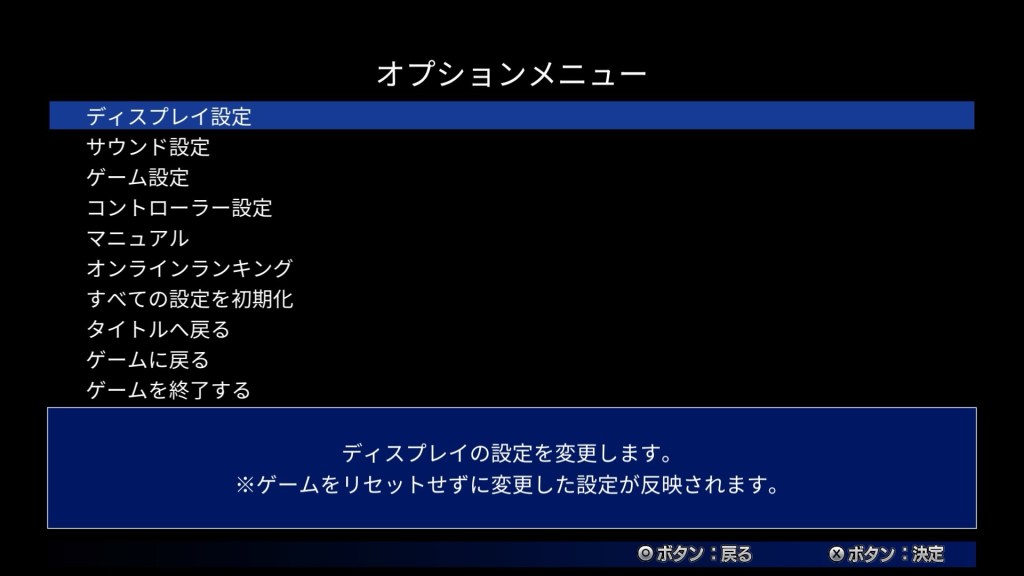
One real oddity with Zero Gunner 2 though is that it’s the Japanese version here, which would normally be fine, but I’m talking Japanese version of the compilation version too! All the menus are in Japanese, so if you want to change some settings or even quit back to the title menu then you’re going to have to work for it! Really weird oversight that’s hardly a showstopper but given it’s the only borderless game here, even knowing what button does what takes some experimentation, where the controls are all laid out on the in-game wallpaper for everything else. I’m not going to let that ruin my experience though because, as barebones and then some as this is for a modern compilation, the games are the stars here, offering more than enough value by themselves, and I’ve had a wonderful time properly getting into all of them! Even Sol Divide, which is certainly a weak point, but I would never have known that otherwise! And with that, our work here is done, and now I just need to try and resist the urge to do exactly the same thing for Psikyo Shooting Library Vol. 2 straight away, and follow my carefully laid out schedule instead… Yeah, right! I promise not to leave it too long though because, like this volume, it promises to be filled with some classics, some favourites, and some new stuff to discover, which is all you can really ask for… Stuff like development artwork, operator manuals, video galleries, save states, rewinds and English translations aside! Who knows though, maybe that’s what volume two is all about, and hopefully I’ll see you there to find out!
As always, I’ll never expect anything for what I do here but if you’d like to buy me a Ko-fi and help towards increasingly expensive hosting and storage costs then it will always be really appreciated! And be sure to follow me on Instagram, X (formerly Twitter) or Threads for my latest retro-gaming nonsense!
 Retro Arcadia