
Back again for our regular Sunday roundup of quick-fire reviews and impressions of everything under the spotlight at Retro Arcadia this week, old and new and a bit of both…
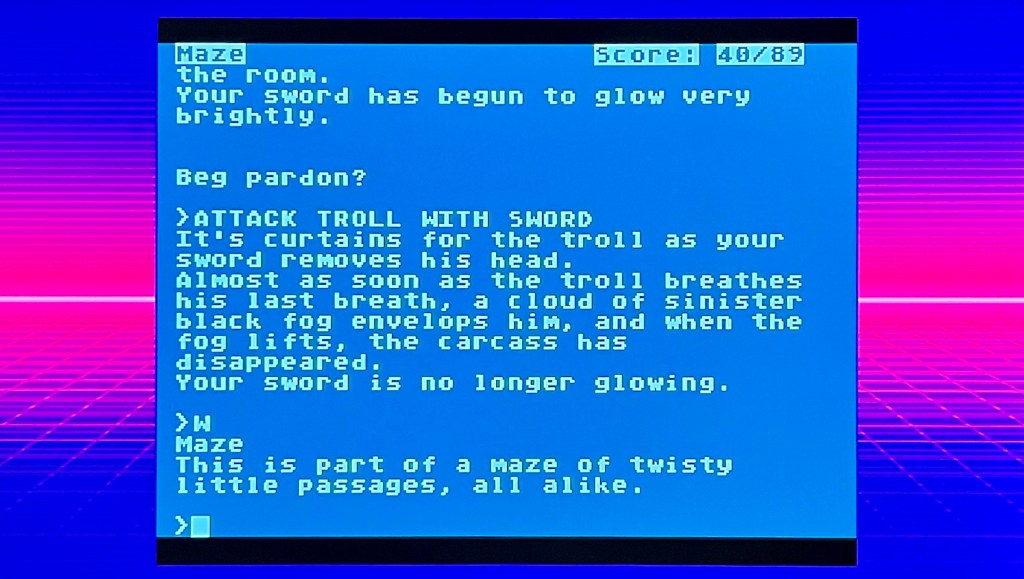
I’m going to start with something ancient this time, Zork I: The Great Underground Empire! Its original 1977 mainframe computer incarnation wasn’t just a pioneer of interactive fiction and the grandaddy of the text adventure, but also a first taste of how a computer could bring an immersive world to life, allowing the player to explore and experience it, solving problems and overcoming challenges. Zork, as it was known, was then split into three connected but standalone episodes for its commercial release in 1980, and I’ve been playing the 1983 Atari 8-bit version of the first of those on The 400 Mini (with real keyboard attached!), which was my first time playing in a long time and was even more impressive for it! By the way, that’s also the reason for the crappy phone pic of a TV screen here! Anyway, you begin outside a very regular white house, which, once you’re in, will be both gateway and hub to your exploration of the ruins of The Great Underground Empire, a massive set of caves that expand ever further downwards over the course of the three episodes, built by an advanced but forgotten civilisation led by someone with a thing for large-scale vanity projects, like building huge dams or museums down there! These, as well as more natural locations, then play host to the treasures you need to find and get back above ground in one piece, as well as the dangers you’ll need to avoid and the puzzles you’ll need to solve to recover them, which can be some proper, drawn-out conundrums, but it’s all so well described that you’ll get there in the end if you’re paying attention, and with a bit of lateral thinking! What impresses me most about this game though, is how it’s relatively small number of locations (albeit bolstered by many pass-through areas) are so smartly interconnected, giving them a very impressive “false” sense of scale, while also remaining easily navigable once you’ve been around them a few times, and without being a chore once you have through some neatly evolving joints. The limited vocabulary and primitive parser means it takes a while to adapt to what it’s asking of you but you do latch on and it all becomes comfortably familiar soon enough. And with no reliance on any presentation beyond displaying text whatsoever, it’s absolutely timeless and still so enjoyable today, although beating it took some doing, so I might have a break now before I jump into episode two!
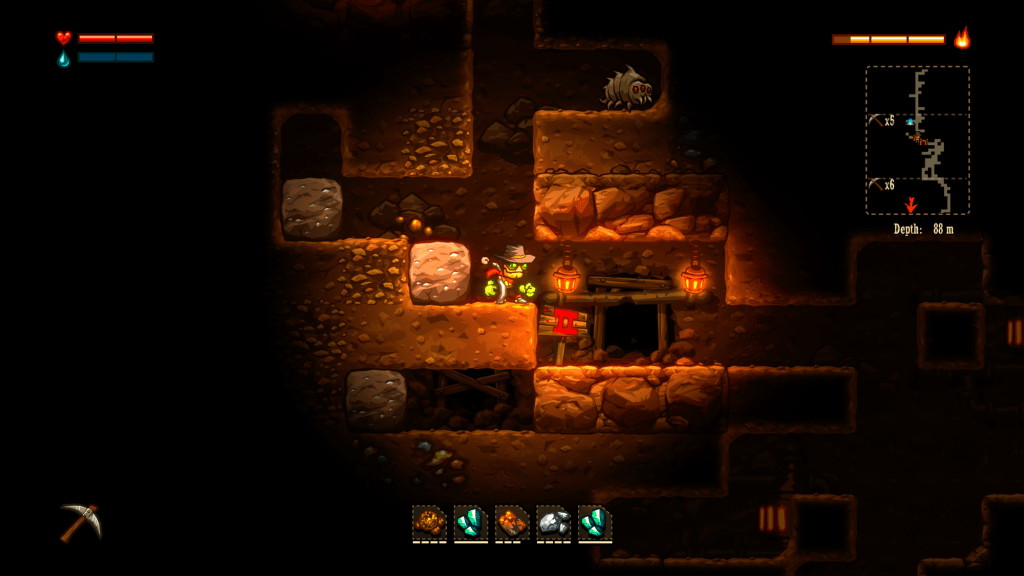
On a coincidentally related subject, I’m not sure I’ve ever played 2015’s Steamworld Dig before but it’s recent arrival (together with its sequel) on Xbox Game Pass was reason enough to give it a go, and while I’d had my fill within a few hours, I’d also had an unexpectedly good time up to then! It’s a platforming metroidvania of sorts with you taking the role of Rusty, a robot miner arriving in a cartoon-steampunk Old West mining town and finding himself investigating the tunnels below, digging further and further to find precious metals and stones, as well as collecting resources, and then trading them back on the surface for upgrades and new tools to get you a bit further next time. You’ve got plenty of platforming skills too, keeping the game fast-paced as you traverse back and forth around the unique environments you’ve created, with plenty of Boulder Dash-inspired thought required before you dig in (or under!) certain areas, plus lots of obstacles to avoid or puzzle your way around, and simple combat against increasingly dangerous beasts lurking below. It’s all created in a gorgeous, character-filled art-style that’s cleverly lit to up the drama, which is also helped no end to by the evocative Spaghetti Western soundtrack playing throughout. Lovely game that I’m glad I’ve properly had a go at now even if it’s not really my thing, and I’ll see if I can have a go at number two for next time.
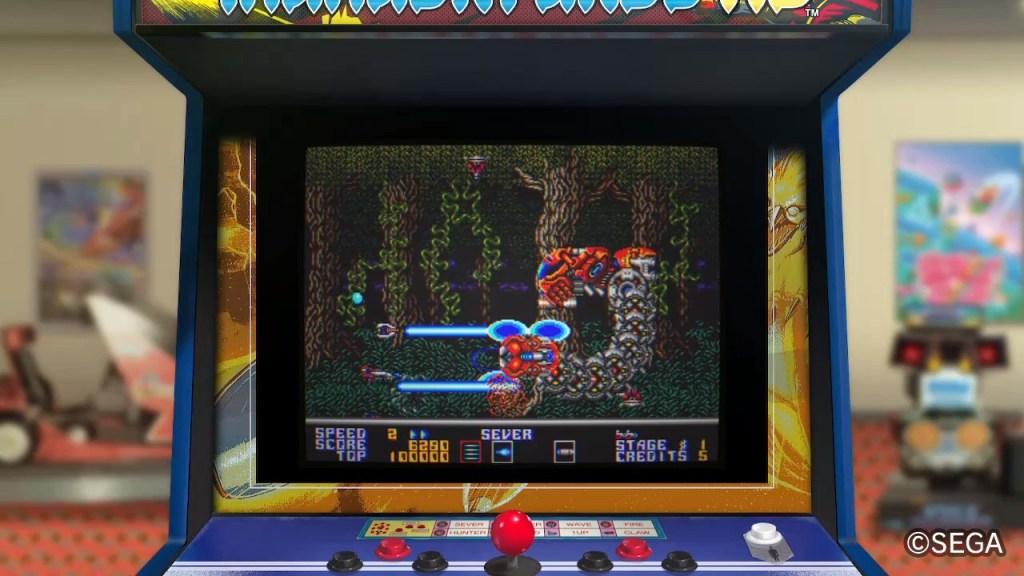
Next up now though is Thunder Force AC, the 1990 arcade reworking of the Sega Genesis or Mega Drive horizontally scrolling shoot ‘em up Thunder Force III, and it’s also an absolute favourite of mine! I’ve been back on the Sega Ages version on Nintendo Switch this time, which includes unlockable ships from other games in the series, as well as some fancy (but not necessarily practical!) display options, online leaderboards, a Kids Mode and save states, both of which are more suited to someone as useless as me because blasting your way through the armada of the evil ORN Empire across five alien planets is no mean feat! Actually, those environments can be as dangerous as their inhabitants, so you need to make use of being able to alter your ship’s speed almost as much as the ability to instantly switch between loads weapons you’ve collected and powered-up as you go, so one second you can be firing front and back and the next you’ve got this huge pulse wave firing up and down and forwards. You’ll want to hang on to them as long as possible too because things gets frantic fast, but it’s always learnable frantic, and a lot of what’s going on is often from your screen-filling weapons, or some really cool big bosses, so no panic! The soundtrack is great if not not quite Thunder Force IV great, although there’s so much other sound going on over the top you won’t be comparing the two as you play! So much going on is what I love about this one though – as well as the sound, there’s graphics everywhere! It’s like the best-looking Mega Drive game ever, built on those foundations but full of multi-layered tricks and flourishes that machine could only dream of, and so much diversity too, from organic forest worlds to psychedelic lava caves to gorgeous star-fields and beyond! And I love it all!
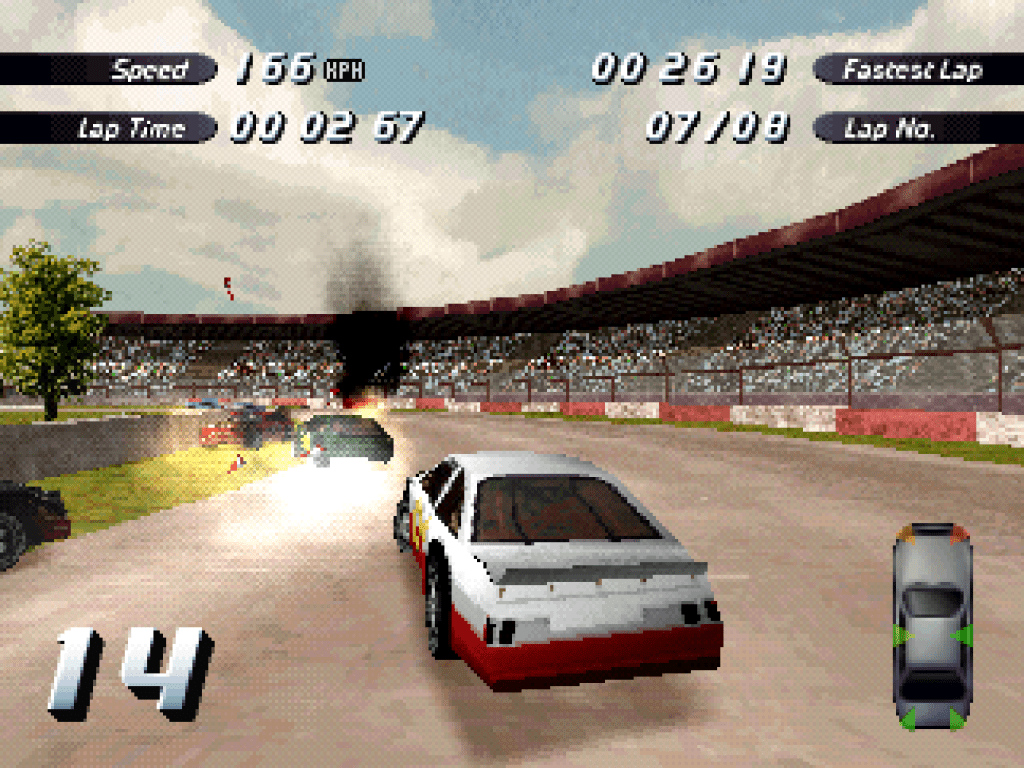
Last but never least this week is Destruction Derby 2 from 1996 for the original PlayStation! Like its predecessor, it’s a wild racer where you need to balance smashing your opponents to pieces with simply surviving, from a choice of various race types over three modes, including Wreckin’ Racing, where you get points for damage done as well as finishing; Stock Car, which is just about finishing as high as possible; and Destruction Derby, set in crash arenas rather than race tracks, and is all about destruction until everyone’s cars are destroyed! I’ve always favoured the Stock Car Championship (or career) mode, where skill will get you far enough through each snappy season of four races to maintain your place in your current division but you’ll need a whole lot of luck to start climbing them! The original got some way there but to this day, I can’t think of any other game that’s so successfully used sheer chaos as its central mechanic, and that’s means nothing but fun! With twenty cars racing on either short or carnage-infused (or both!) tracks, each with multiple damage zones on their extremities, anything can happen, from plain old massive pile-ups to either pick your way through or just get out of, to coming from out of nowhere to a decent position past a field of burning cars on the last lap, or limping your way home on max damage yourself, where one more scrape means your radiator blows! Apart from the pop-in and limited draw-distance, the graphics hold up well considering, with plenty of detail and variety between tracks, and the rocking music and relentless sound effects reflect the action brilliantly, especially the limited but exuberant commentary! Big improvement on the driving and collision mechanics here too. This is one of my top twenty favourite games of all-time, and as always, going back to it on the PlayStation Classic for a change this week has been such a joy!

I am still playing Octopath Traveller too (see last week’s Spotlight) but not much new to say so I’ll leave it there for now. In case you missed it last Wednesday though, do check out my (literal!) deep-dive into Silent Service on the NES, which is a weird place for a World War II submarine simulation but it really works! And in case you were wondering, that very last-minute change to our scheduled programming mentioned here last week was because the release of the Commodore 64-based Thalamus Collection 1 for Evercade was delayed by a month, just two days before my planned launch day review! Hopefully no such panics next Wednesday though, when I hope you’ll also join me as we discover Brutal Sports Football on the Atari Jaguar of all things… Horizontal Brutal Deluxe or just the best version of a 16-bit game for a 64-bit machine that money can buy… Maybe? See you then to find out!
As always, I’ll never expect anything for what I do here but if you’d like to buy me a Ko-fi and help towards increasingly expensive hosting and storage costs then it will always be really appreciated! And be sure to follow me on Instagram, X (formerly Twitter) or Threads for my latest retro-gaming nonsense!
 Retro Arcadia