Back again for our regular Sunday roundup of quick-fire reviews and impressions of everything under the spotlight at Retro Arcadia this week, old and new and a bit of both…
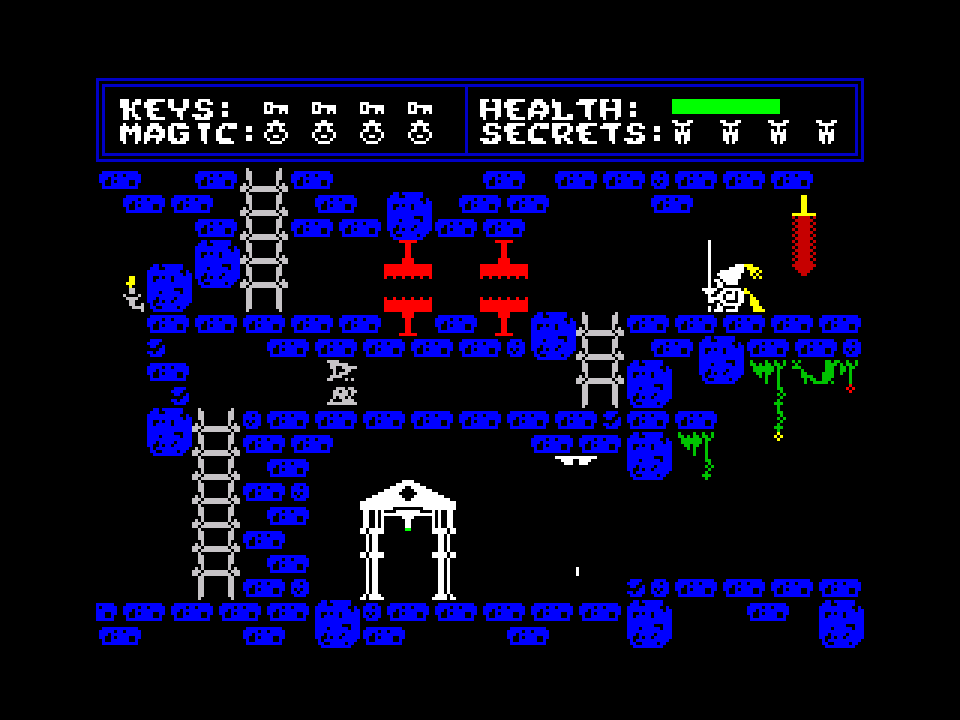
I’m going to start this week with a review of a brand new game for the 48K ZX Spectrum! It’s called Secrets: The Castle of Doom and is available on cassette or digitally from Wizbit Games, who kindly provided me with a copy. It’s an arcade-platformer set across sixty screens in the mystical land of Triok, where an evil wizard named Veldor has cast a dreadful curse upon the realm, which has not only made the place generally miserable but also sent the beautiful Princess Lindura into a never-ending sleep! As the local resident hero, you need to head to Veldor’s labyrinthine castle, face its traps and undead guardians, and find the coloured keys that will open corresponding doors hiding the different magic artefacts you’ll need to combine to open the final door in the throne room, where the corresponding secrets you’ve also uncovered on the way will break the curse and free the Princess. These secrets have been nicely tied in to the overall package with an old-school riddle in the instructions hinting at their whereabouts but I’ll stay spoiler-free here and get into the gameplay instead! It’s a super simple left, right, up, down and jump, and it’s all very responsive, precise and predictable, all of which are important because it’s old-school hard too! You’ve got an energy meter but you’ll need to look after that as you traverse each screen because it can disappear very fast on certain hazards, and it really is labyrinthine, so you might be encountering those hazards more than once to reach where you wanted to be! The layout is really clever though, starting a bit bewildering, and with clever variations of platforms on each screen – from quick leaps of faith to complex tests of movement and timing – really ramping up the sense of scale, but you’ll soon get familiar, and the gameplay is such a joy that you’ll also keep coming back to get a bit further when death inevitably comes! Which reminds me, there is a hard mode too, and completing it will “earn you a prize” but that’s way out of my league so I can’t help you with whatever that may be! Sound is limited to inoffensive beeps and blips but I love how this looks, with bold but thoughtful use of colour on consistent, detailed surfaces, with what moves doing so without fuss, and while there’s plenty of character in the various enemies, it’s your little guy that’s the star of the show – so tiny but so much to like! I know there’s plenty of choice when it comes to Spectrum platformers, both old and new, but this one is very polished and clearly full of love, so I definitely recommend spending the £2.99 (or more) because you get what you pay for and you’ll definitely get your money’s worth out of this! And you can get it right here: https://wizbitgames.itch.io/secrets

I’m not sure I’d have ever even tried Wavy Navy had it not been for its inclusion as a pack-in game on The [Atari] 400 Mini – it’s something I’d heard of over the years but the prospect of a seafaring Space Invaders clone has really never excited me! Well, it turns out that it’s more of a Galaxians clone, and the sea bit adds a really fun new dimension to the formula, and to top it all, it’s really thrown the cat among the pidgeons as far as my upcoming top ten favourite single-screen shoot ’em ups feature is concerned because that was supposed to be all sorted out by now… Wavy Navy was originally released for the Apple II in 1983, closely followed by ports for Atari 8-bit and Commodore 64, and it has you moving left and right across the bottom of the screen as usual in your little (but fully armed!) boat, facing off against a familiar-looking formation of enemy planes and some very mean-spirited helicopters, which are soon joined by heavy bombers and Exocet missiles, as well as mines floating to and fro in the water around you. And that water makes things really interesting because the waves not only add a verticality to your movement (that’s helpful with avoiding those mines) but you’ll also have to take them into consideration as you line up a shot or move to dodge everything being thrown at you, especially the kamikaze diving attacks! They vary in height, direction and ferocity between levels, and add a surprising amount of quick-fire strategy to proceedings, given how simple they are in reality! The graphics, which are equally simple but clear and colourful and move well enough, although I’d have like a bit more to the fine but functional sound, considering how much it adds to its original inspiration’s gameplay. But it gets the rest right, and while I’m not sure it’s actually going to disrupt a favourites countdown that’s otherwise been decades in the making, I’m really quite taken with this one!
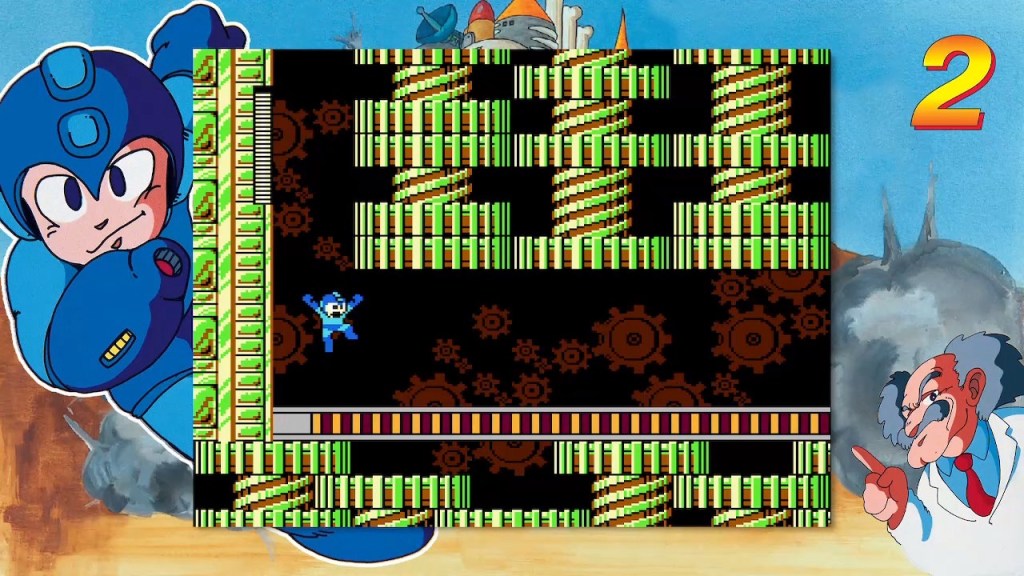
Speaking of favourites, I just finished Mega Man 2 again, which I had an urge to have a quick go at the other day and subsequently played right through over the course of a couple of sessions because there’s no such thing as a quick go with this bona fide NES classic from 1988! This time I’ve been playing it on the Mega Man Legacy Collection, which is generally available dirt-cheap in every sale on Nintendo Switch, and sees you facing off against the evil Dr Wily and eight of his new Robot Masters, such as Wood Man and Bubble Man, each with their own suitably themed level to platform and shoot your way through before a showdown, where beating them will give you their powers as a special weapon or new ability that might just be beneficial when you come to face the next one. This makes the order you choose to tackle them in important, although if you’ve got a decent amount of health, you can simply brute force your way past at least half of them with your regular gun, then once they’re all down, it’s off through Wily’s fortress to the big final battle with him. Not unlike Sonic the Hedgehog, this sequel mostly refines what was already there to become something close to perfection, and here those refinements would in turn go on to become series staples going forwards. And while it’s definitely still no walk in the park, removing a few of the original’s old-school rough edges keeps you focussed on the challenge rather than frustration too, and combined with deliberate, pixel-perfect controls, that makes it feel so good in action! It’s also so good to look at, with plenty of variety in the stages and character everywhere you look, and the music is the same, establishing the series as having some of the best on the system. Forever fantastic!
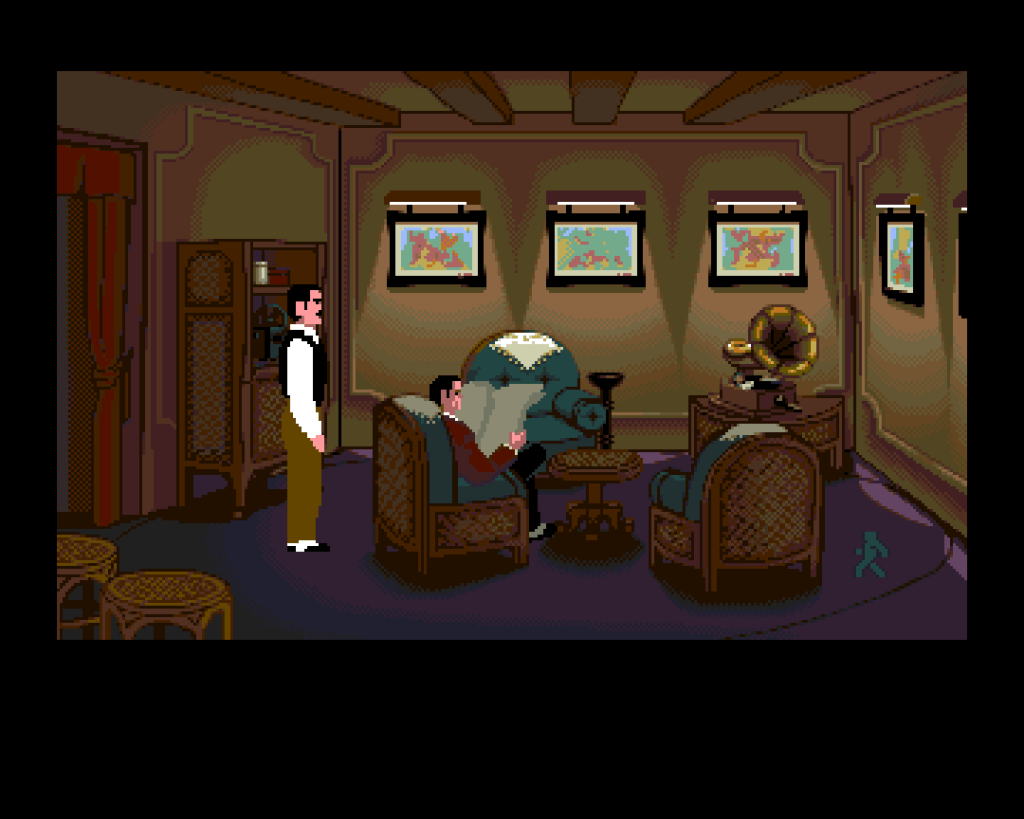
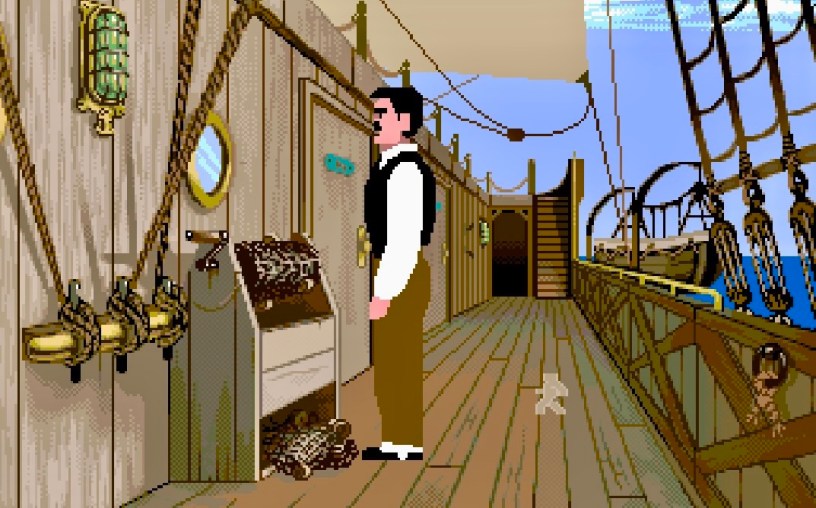
Last up with this week, Cruise for a Corpse, a point-and-click, Agatha Christie-inspired murder-mystery by Delphine Software in 1991, which I’ve been playing on the Amiga A500 Mini, as a policeman investigating a death on what I guess is an early twentieth century cruise ship. It all takes place over a single day, with you advancing the clock by ten minutes every time you progress each part of your investigation or reveal the next clue. There’s an elegant control method behind this, all on a simple right-click to browse possible courses of action then a left-click to select one, intuitively leading to further possibilities beneath. You’ll need to keep your eyes open though – the next clue might be well hidden, and life is going on while you play too, so it might have appeared somewhere you’ve already been since you were last there! And that includes the many interactions you’ll have with the characters (or suspects!) you’ll meet, who will become quite familiar throughout the day, and are a varied, well-written bunch with increasingly complex relationships with each other and the mystery at hand. It plays out in an attractive, cleverly animated, polygonal meets almost cel-shaded pixel-art period cartoon style, with conversations on a more realistic, personal scale, as was often the case with these games at the time. Sound is occasional but atmospheric, whether a jolly incidental chiptune or the caw of gulls on deck, which, incidentally, also has a lovely swaying motion when you’re out there! There’s usually some kind of movement to add interest to the various environments all over the ship though, such as the gramophone turning as it plays in the smoking room or the swinging doors in the bar, all reflecting the overall polish you’d expect from these guys at their creative peak! The interface might be unique but in typical point and click fashion, you need to go everywhere and try everything, and there are times where you’ll be tearing your hair out trying to work out what you’ve missed so you can experience the relief of the clock appearing and finally moving time on, but I found this added realism over any kind of frustration… Less so for the continuous waiting for the next bit to load though! But that’s the price you pay for something as complex, puzzling and cinematic as this, I guess, and is still totally worth it!

That’s me done for this week but if you fancy a bit more and missed it last Wednesday, we’re at the end of June and that means it’s time for the Retro Arcadia Game of the Year 2024 Halfway Hotlist, with a full countdown of the current top ten as it stands at the halfway point of the year! I love putting these together, so hope you enjoy it too! And I also hope you enjoy what I’ve got coming next Wednesday because that’s been two years in the making, and from a shortlist of over fifty, but this week at Retro Arcadia I’m finally ready to count down my Top Ten Favourite Atari ST Loading Screens! See you then!
As always, I’ll never expect anything for what I do here but if you’d like to buy me a Ko-fi and help towards increasingly expensive hosting and storage costs then it will always be really appreciated! And be sure to follow me on Instagram, X (formerly Twitter) or Threads for my latest retro-gaming nonsense!
 Retro Arcadia