Welcome to the third in a seasonal series of features up my sleeve to complement the various forms of weekly deep-dives at Retro Arcadia, in part to keep things fresh but also to take a bit of the pressure off me trying to juggle writing them alongside juggling work and family… And not to mention actually playing the things! Don’t worry though, because that’s not to say they won’t still make up the vast majority of what’s here, as well as the Weekly Spotlights, the new Retro Rewinds, and likewise the reviews when I’m asked to (or the mood takes me). Just like I said back in the first edition of these at the end of last summer, the plan here is to simply mix in what you’re reading now as a new seasonal flavour every three months. The format is a paragraph or two on each of the games or related things I’ve got hold of since the last time, and as usual there seems to be loads, so let’s get on with it!

As well as a few games and a couple of new consoles, we’ve got a bit of reading material to cover this time, starting with The Art of the Box, first published by Bitmap Books towards the end of last year but something else I was lucky enough to receive for Christmas, which seems an awful long time ago now I’ve written it down! Anyway, even by their own high standards, this thing is enormous, with 560 coffee table and then some hardback pages celebrating video game box art, right from the early Atari stuff of the late seventies to the present day, and covering arcade machines, home computers and consoles. Along the way it takes in the work of 26 iconic box-artists from around the world, including the likes of Bob Wakelin, Susumu Matsushita and the late, great Oliver Frey, many of whom are interviewed, and features over 350 artworks, each officially supplied by the artists. It also chronicles the fascinating evolution of the media from pencil, paint and airbrush into the computer-based workflows introduced in the nineties, then up to the current era of rendered 3D graphics being combined in Photoshop. I got such a kick out of seeing all the eighties stuff in particular, and the original artwork that would go on to influence what I spent my pocket money on in the shops, as well as adorn my bedroom walls when it turned up on adverts in Computer & Video Games magazine! A lot of it is presented in all its full-page glory too, although this thing is way too special to be cutting pages out of like I used to! As always with Bitmap Books, it’s a luxury item, but you certainly get what you pay for!

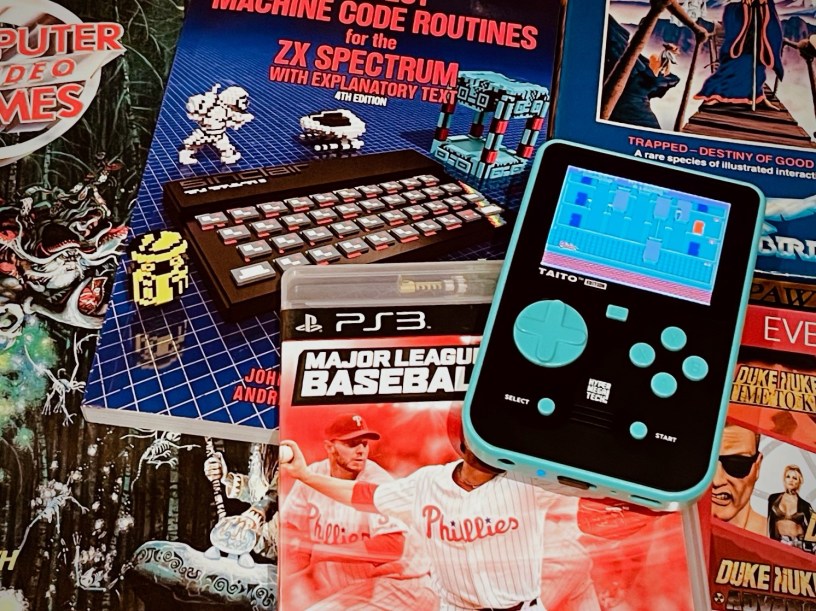
We’ll go with one of those consoles I mentioned next, and the Taito Edition of the new Hyper Mega Tech Super Pocket handheld console by Blaze Entertainment, the Evercade people. Which it’s also got a cartridge slot for in the back! The main attraction is the eighteen officially licensed arcade games though, including Space Invaders, Operation Wolf, The New Zealand Story, Rastan, Growl, Bubble Bobble, Elevator Action and more of a similar vintage, alongside the console version Space Invaders ‘91. Really good value and a great build for the price too, with an excellent screen, surprisingly decent sound and plenty of battery life, although it is properly pocket sized, which makes me appreciate having girl hands, especially on the shoulder buttons! Not much need for them with the in-built games though, and I guess my only criticism on that front isn’t so much the selection but the suitability of some of them, like Volfied, which is portrait, so what’s already small on-screen ends up being tiny. You can stretch the screen to full size if that doesn’t bother you though, and there’s various other display options, as well as save states, but not much else, which is exactly the idea! I’ve loved dabbling with this since I also received it for Christmas, and 15-year old me still can’t believe I’ve got actual arcade Operation Wolf in my hands, even if a little d-pad isn’t a cab-mounted Uzi, but most of it is absolutely timeless wherever you play. In particular, shoutout to Football Champ, which is still proper, wild fun even if it’s not boozy multiplayer in a pub anymore, and Don Doko Don, which is Bubble Bobble with sledgehammers and exactly as good as that sounds!

Major League Baseball 2K11 on PlayStation 3 is a really interesting time capsule, bridging the old-school sports stuff I really love from the PS1 or PS2 eras, where you got an increasingly great-looking and complete experience that still played like a video game, and the as-good-as-TV authenticity you get now. I’m not just talking groundbreaking presentation that still stands up today either – we’re seeing stuff like the introduction of dynamic player stats, with the game always online and updated in real-time from real-life information, and even the commentary and stat overlays were reflecting real-life news and box scores at this point. Obviously, this is long-since redundant on the copy I just picked up but I appreciate it all the same! The thing that really dates it, though, is its use of gesture controls, which you couldn’t escape anywhere on the PS3 back in 2011! Wrestle the right stick into various shapes for different pitch types or batting swings, and how accurately you do it dictates how well the play goes, which means it’s not the most accessible game but once it clicks it means you’ve got serious control. All the same, I am kind of glad the later MLB games found another way of achieving that! Great stuff though, and while my favourite baseball games might still be back a generation or two, this one really nails the almost laid-back feeling of being at a game like I’ve not experienced elsewhere, which is definitely better than watching it on TV! By the way, sorry for the crappy pic of my TV screen from my phone here!
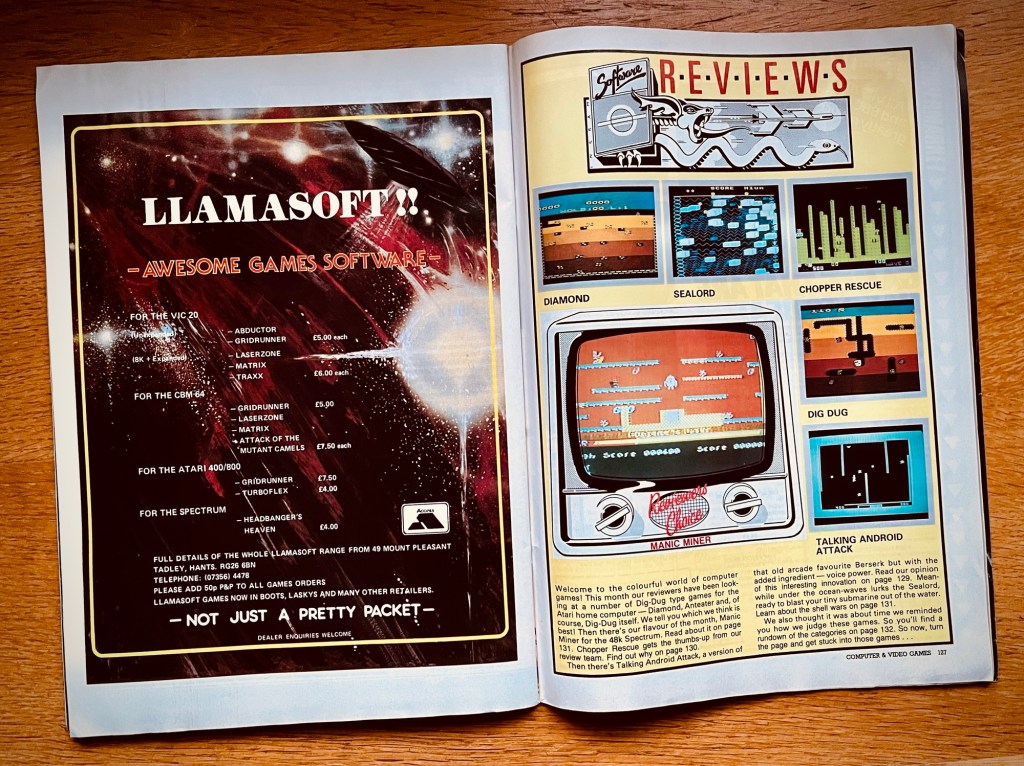
Next up is some more reading material, and an ancient copy of Computer & Video Games magazine, which unfortunately just missed out on being part of my new Retro Rewind series, where we flick through the magazine together exactly forty years after original publication. The September 1983 issue, which was previously missing from my almost decade-long collection now, arrived a bit too late for that, so we’ll have a much briefer look at what’s inside here instead! This is the month that saw Atari abandon plans to launch the 5200 console in the UK but you could get a fiver off Centipede on the 2600 if you moved fast! Best of the arcades was the wonderfully bizarre single-screen shooter Satan’s Hollow, while Colecovision’s maze ‘em up Mouse Trap leads the way in console reviews, and some platformer called Manic Miner on the Spectrum does the same on the home computers. Nice version of Dig-Dug on the Atari 400/800 too, though Donkey Kong is still topping the charts on there, with Arcadia (deep-dive finally coming soon!) at number one on the VIC-20, Jet-Pac on the Spectrum and Flight Simulation on the ZX81; I like an old flight sim and I’ve never played that one so watch this space! Also all the usual type-ins for every system, where I’m picking Star Trek on the Dragon 32 as my personal highlight – not only a beast of a listing but also an old nerdy favourite of mine on the VIC-20 that I’ll definitely be giving the deep-dive treatment at some point too. Love these old mags, and keep an eye out for my Retro Rewind features at the start of each month, where I currently have a copy to share, which is increasingly frequently and will be every month non-stop very soon!
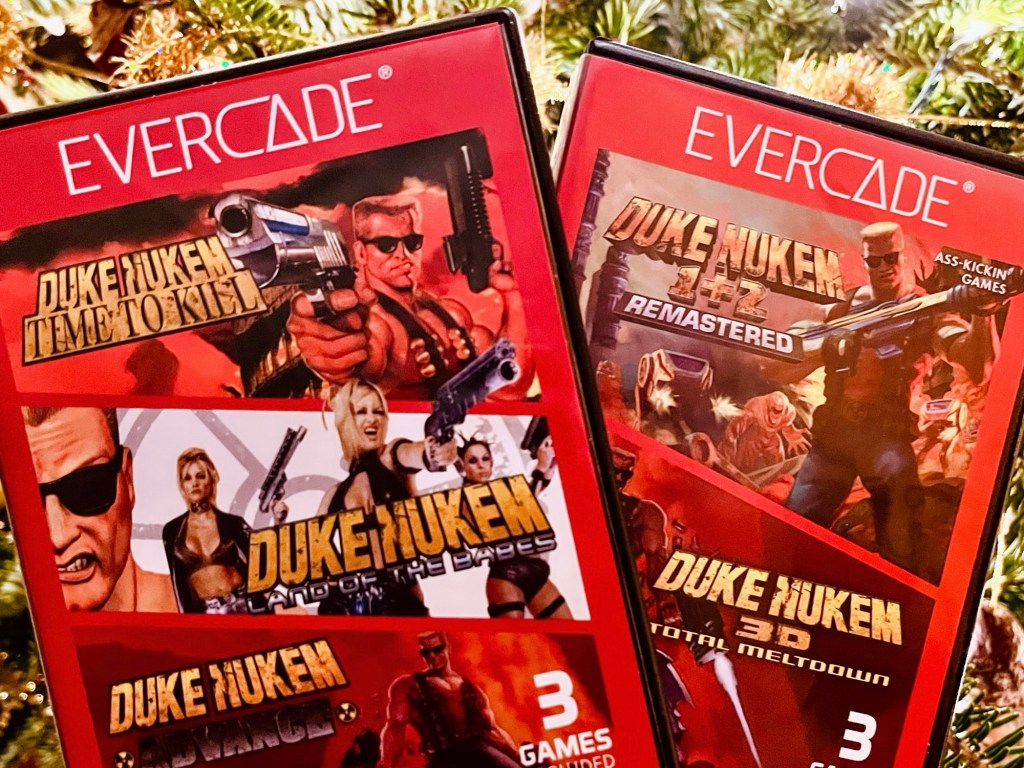
Over on Evercade, I just did a big review of The C64 Collection 3, which was launched right at the end of February, so I’ll skip it here and let you read that instead, and focus on the two Duke Nukem collections that arrived on there towards the end of 2023. I really didn’t fancy either of these until weeks of gushing YouTube videos finally wore me down and I asked for both for Christmas! It was Duke Nukem Collection 1 that got me, with fully remastered versions of the original MS-DOS platformer from 1991 and its sequel from 1993, neither of which I’d ever played before but were just getting the most glowing reviews, as well as Duke Nukem 3D, which brought new levels of complexity to the first-person shooter when it first arrived back in 1997, as well as just being loads of very crude fun for those of use who remember how to appreciate such things! As much as I’ve been a fan of that one for a long time, those two platformers totally blew me away, with the remaster treatment taking them to a whole new level in every respect, to the point I’m thinking about where the first one in particular is going to end up in my big all-time favourite games list! Duke Nukem Collection 2 features both third-person original PlayStation adventures, Duke Nukem: Time to Kill from 1998 and Duke Nukem: Land of the Babes from 2000, and I’ve enjoyed going back to both well enough, even though they’ve always been a bit clunky, but it’s 2002’s Duke Nukem Advance for the Game Boy Advance that stands out for me here. It’s a joyful and polished first-person shooter that’s particularly suited to the Evercade EXP handheld (for obvious reasons) that might not be particularly sophisticated but is fast and fun, and that’s hardly why you come to a Duke Nukem game anyway! Overall, two fantastic cartridges, great value, and that first one is definitely up there with Gaelco Arcade 1 as a personal favourite on the system.
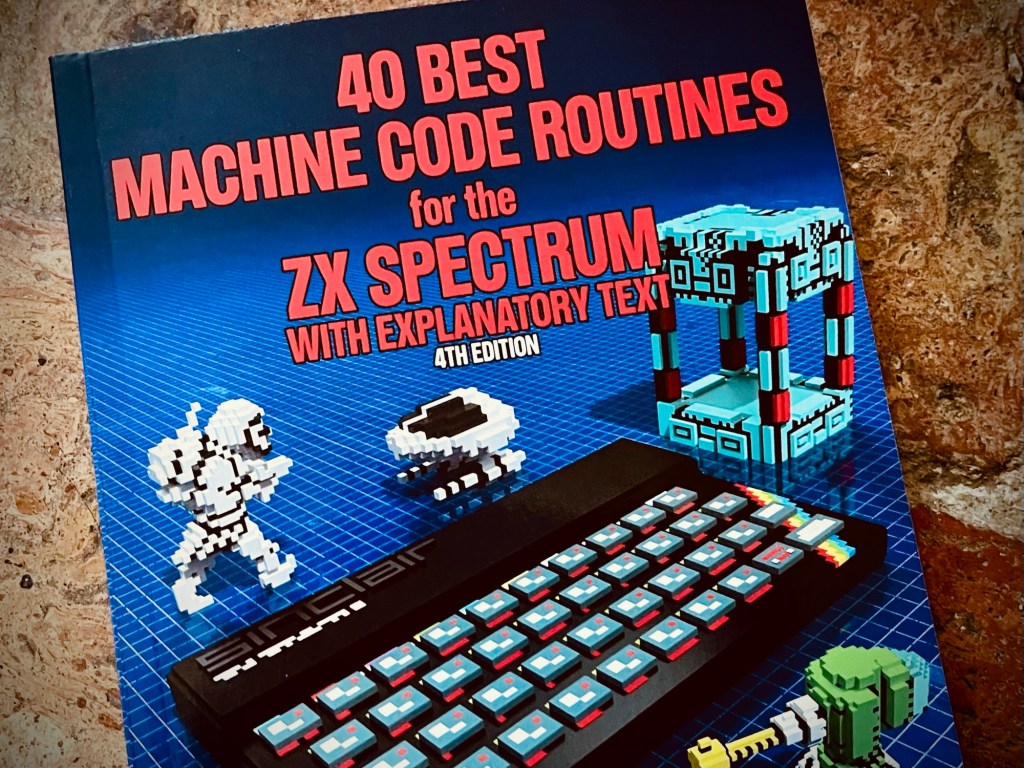
One more book to cover, and while it’s a bit more specialist this time, 40 Best Machine Code Routines for the ZX Spectrum is another wonderful time capsule, not to mention the platform that launched Hewson Consultants, who would go on to become one of the great Spectrum (and more) game pubishers! It was first published in 1983, and this Kickstarter-funded fourth edition includes the full text from the original release plus two new forewords from John Hardman and Andrew Hewson, as well as a brand new chapter by Jim Bagley covering the Spectrum Next. And while you’re certainly getting exactly what it says on the cover, with all sorts of scrolling routines, display routines, routines to manipulate programs and various toolkit routines, it’s way more than just a bunch of esoteric letters and numbers, with extensive introductions and explanations, and that’s before you even get to any code! Whether you’re realistically ever going to use any of this stuff or not, if you ever dabbled with programming the Spectrum (or anything else!) at the time, or even just typed in a game listing from a magazine, then you’re going to get a kick out of this book!

I’ll finish this time with another little console I got for Christmas, and one I’ve fancied but never bit the bullet on since it first came out in 2018, when I think the Neo Geo Mini was launched to coincide with the fortieth anniversary of SNK. Whatever, it’s now available for £60-70, and the forty absolute classic arcade games built-in behind the 3.5” display on its 6-inch high frame make it worth every penny (especially when you’re not the one paying)! That said, it’s not even in the same league as something like the Sega Astro City Mini or the more recent Taito Egret II Mini in terms of build quality, which isn’t to say it’s not perfectly functional, but the size of the screen (albeit a very clear and vibrant one) and the stick (albeit very smooth) and the buttons just don’t feel as premium. It’s way smaller than both of those too! The sound quality is surprisingly good though, and, apart from it missing Baseball Stars 2 just for me, you can’t argue with its library – loads of Metal Slug, loads of King of Fighters and its spin-offs, loads of Samurai Shodown, and my old favourites like King of the Monsters, Last Resort, Blazing Star and Super Sidekicks, plus the likes of World Heroes Perfect, 3 Count Bout, Top Players Golf, Magician Lord (with some of the best video game music ever!) and so on. The emulation seems perfect across the board, and any issues from things being a bit cramped can be mitigated by connecting to a TV and adding one (or two) control pads, which have to be the official ones at more cost, unfortunately, rather than plugging in your own arcade stick or similar. I love this thing just how it is though, even if I’ve barely scratched the surface so far and simply been having a few goes (and a few more in the case of original Metal Slug and Last Resort) on absolutely everything. Which is a lot of games! With that, I think we’re done here, so I hope you’ve enjoyed reading it, and I also hope you’ll join me in three months for another seasonal recap. Just don’t tell my wife!!!
As always, I’ll never expect anything for what I do here but if you’d like to buy me a Ko-fi and help towards increasingly expensive hosting and storage costs then it will always be really appreciated! And be sure to follow me on Instagram, X (formerly Twitter) or Threads for my latest retro-gaming nonsense!
 Retro Arcadia