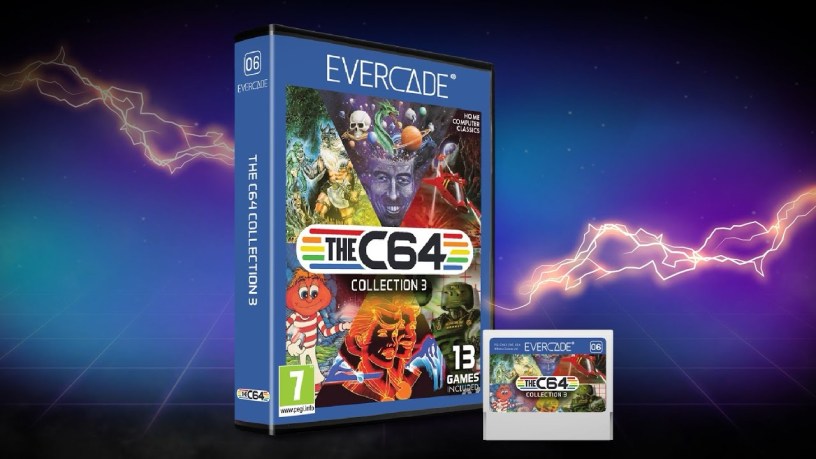
If I had to name my three favourite Evercade cartridges, at least one if not both of the first two Commodore 64 collections should be a no-brainer (together with the Gaelco Arcade 1 cartridge). However, more than any of the rest of nearly all the Evercade cartridges I now own, they’ve intermittently been more hassle than they’re worth! Despite working fine out of the box, they’ve both been replaced as faulty, only for them to work fine again for a while then either not be recognised by one or both of the VS and EXP console variants, or have some or all of the games stop working sooner or later, with the Epyx “Games” games being a particular nuisance. After a lot of further back and forth over several months, the support team eventually identified a firmware update problem, and to their credit, got it fixed in the next one. Kind of… Those two carts are still temperamental! As I write though, this new, third collection hasn’t been subjected to any software “enhancement” as yet and is working fine so far, and long may that continue!

This cart brings with it another thirteen vintage C64 games, some of which are sequels to games that appeared in the previous ones, such as the previously alluded to Summer Games II or Deliverance: Stormlord II, while some are more from a series already represented, such as Street Sports Soccer, while there’s little rhyme or reason to the rest. And all of the above works great for me, mixing up stuff I played on the original machine at the time and things I’d have loved to try! I’ll come back for a look at each in turn in a sec, which reminds me, I should mention I bought this with my own money rather than being given a review copy, because I’d always do so when the opposite is true! And while I’m on disclaimers, you’ll see some screenshots here from VICE rather than the cart, just so you don’t need to suffer too much dodgy phone photography of my dodgy old TV! Right, aside from the cartridge, in the box you also get the usual manual, covering brief information and instructions for all the games, some of which you’ll definitely need to have a look at, and some of which I may paraphrasing shortly, but as usual, it’s one of my favourite things about the package – I’ll always love a manual! From the menu screen, which you can sort however you want (but we’ll stay alphabetical), clicking on a game will also give you similar information, including a useful diagram of the mapped controls. From here you can also load your last save rather than booting from scratch, either from the last quick save point or a dedicated save slot, also accessed in-game whenever you want. And there’s all the usual original ratio, pixel perfect or stretched to full screen display options and various levels of scanlines. And with that, I think we’re ready to dive in!
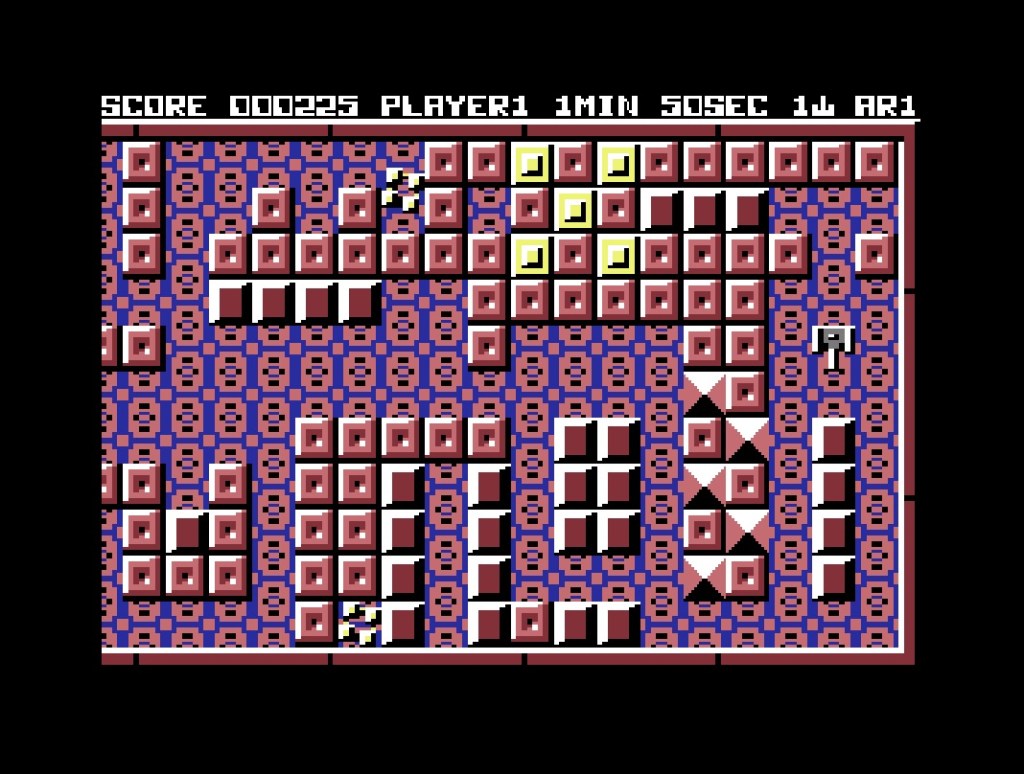
I’ll do a paragraph on each of the games here, and we’re going to start with Anarchy, a deceptively strategic top-down, partially side-scrolling mazey shooter from Hewson in 1987, where you’re trying to bring order back to the planet of Sentinel 4 by shooting rebel weapon dumps from the comfort of your own tank. You can’t just go blasting everything willy-nilly though, and critically, you can’t blast anything from right next to it, so you’ll need to plan out where to go and what to shoot and in what order, in turn opening up new paths to the next target, while also avoiding robot guards and trying to beat the two-minute time limit on each of the sixteen levels. Getting rid of all of them will open up an exit to the next level, where you’ve also got a nuclear weapon – protected by a homing robot – to dispose of every five levels. Everything about this game is minimal but incredibly thoughtful, from the repeating patterns of individually textured and lit blocks, to similarly simple but perfectly individual sound effects, to the level designs themselves, which demand puzzling out on the fly as you try to cope with the movements of the enemy robots, whose slightest touch means you have to start the whole thing again, which should be heartbreaking but somehow makes it even more compelling instead! Feels great when you finally nail a level though, and the exit appears alongside this fabulous vertical scrolling effect that’s as straightforward as the rest but never fails to surprise. Which sums up the game. What a start!
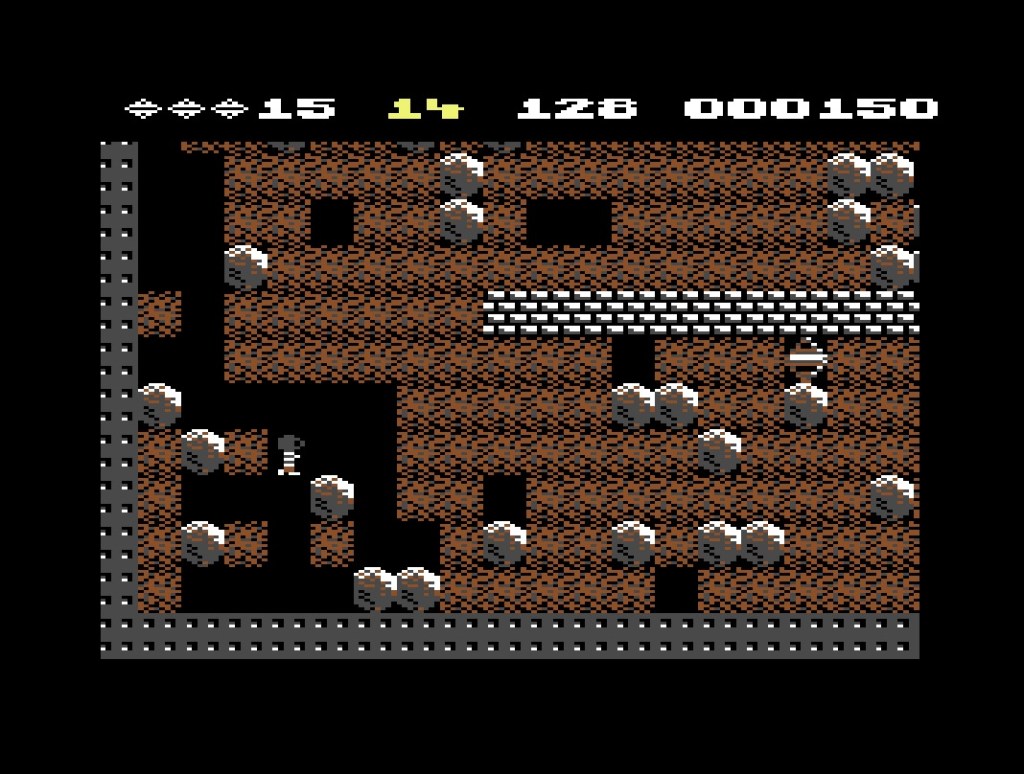
And what a way to follow that up, with Boulder Dash, which might not have begun life on the Commodore 64 all the way back in 1984, but has certainly become one of its most iconic and celebrated titles! You play as Rockford, who’s on the hunt for diamonds in a series of monster-infested, scrolling caves… You have to collect a certain number of diamonds in each one to open up a portal to the next level, of which there are sixteen, and as well as monsters, they’re also full of rocks, and when you walk under one it’s going to fall behind you, so watch out below if that’s where you’re heading because it won’t stop until it reaches something solid, meaning you can also use them to squash enemies too. The further you go, the more complex the level designs (and in particular the rock placements) are going to become, which makes Boulderdash as much a puzzle game as a Dig-Dug-infused maze-action game. And while the same might not be said for its primitive but perfectly adequate (not to mention perfectly C64!) looks and sounds, that gameplay is absolutely timeless, and is a standout reason to own this collection all by itself!
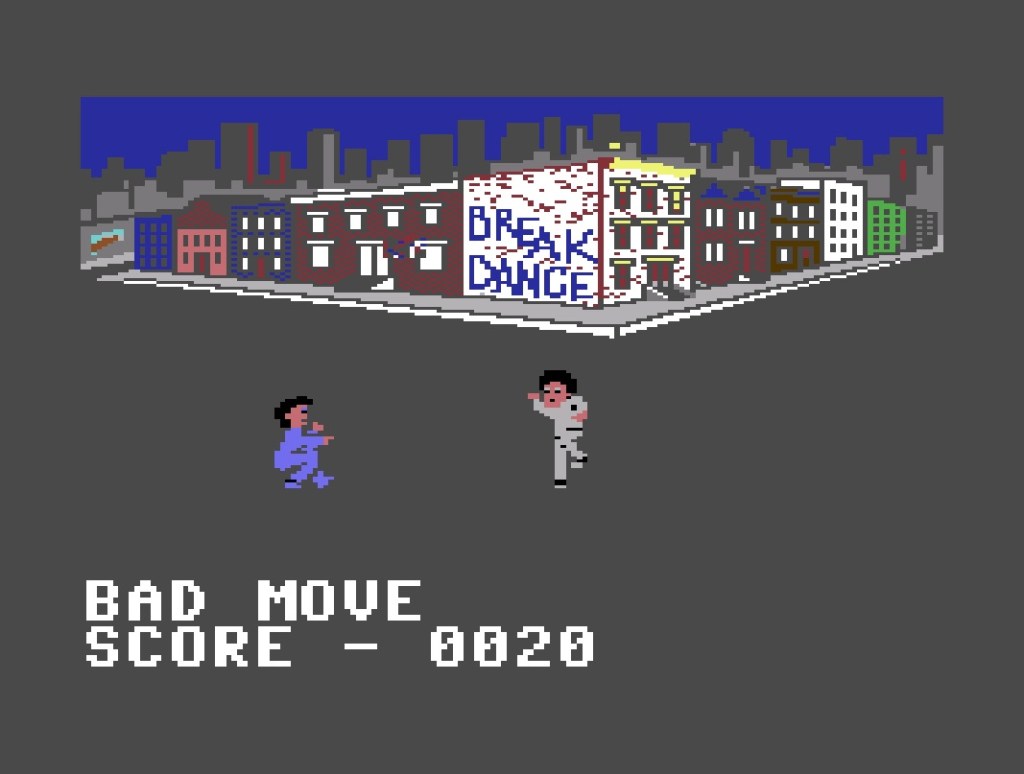
There may be a case for the exact opposite being true of Break Dance (or Breakdance), but I have to confess to having a soft spot for this, despite never having even played it until now! Back at the start of 1985, in the very first issue of what would become an almost decade-long collection of Computer & Video Games magazine, there was a picture of Break Dance, which didn’t only bring to life the biggest thing since the BMX at the time, but just looked so exotic to this still new VIC-20 owner! Which I appreciate might be hard to believe nowadays, but it was, so there! As exotic as it might or might be though, it’s a rhythm game from Epyx in 1984, who, like Hewson, I’ve just realised we’ll be hearing a lot of in this collection! Anyway, it plays like that old electronic tabletop game Simon from around the same time, where you had to press the lights in the order the “computer” had just lit them, obviously getting more complicated and harder to remember as you go, but in this case you’re pressing up, down, left, right and fire to repeat a breakdance move, hopefully resulting in a lovely routine of squats and spins and robot stuff! There a four game modes on offer to do this in, with a dance-off doing the above against an opponent called Hot Feet, a battle where you try to avoid getting pushed into a river by copying the descending gang’s moves, a dance move sequence puzzle thing and freestyle mode on a nice stage to make your own dance, and then you can also combine them all for the Grand Loop best breakdancer contest. These modes do partially dress-up there not being a huge amount to any of this, although it’s more fun with two players if you can, and there’s still a contemporary charm to the dance animations and environments and SID-hop music, but unless you have nostalgia for it then it’s probably the weak point on this cartridge.
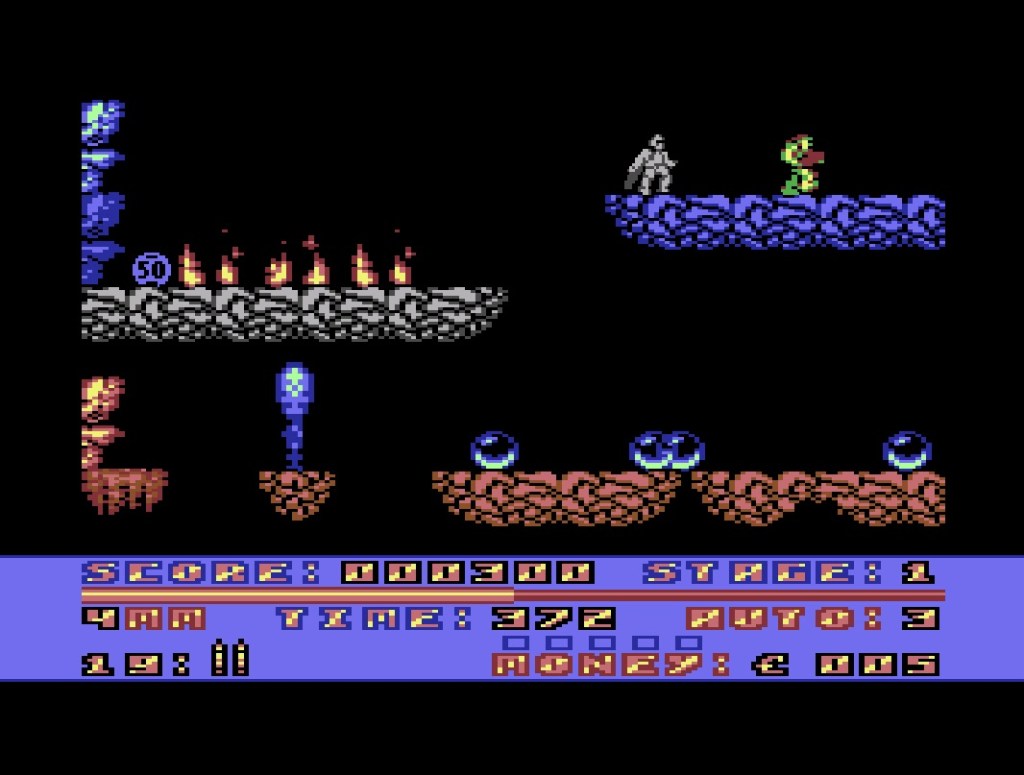
We can return to form with Cyberdyne Warrior though, a sci-fi fantasy action-platformer by Hewson in 1989 that I remember the name of from back then but couldn’t have told you anything about until right now! But I can now tell you it’s huge, it’s brutal and it has an absolutely wonderful title tune that’s somehow ominous and upbeat all at once, and could only come out of a C64! That goes for the chunky and earthy graphics in each of its three sprawling planets too, where you’ll find stylistic nods to Salamander, Space Harrier and R-Type in turn, and a splash of Warhammer 40K throughout. On each of these planets, you’re trying to recover some escaped, self-destructive droids that will take down everything else with them if you don’t do it in time, although you’ll pretty much have to do the same with the hostile locals to get at them! You’ll also be collecting coins to buy upgrades or replenish your energy and ammo, usually tucked away behind some hazard, and pretty much every screen you flip into is going to have a new set of them to work out. Real nice surprise with loads to explore and loads of depth too. Oh yeah, press space before you press fire to start the game and you’ll get strobe mode, with a lovely visual effect with every single gunshot. You’re welcome!
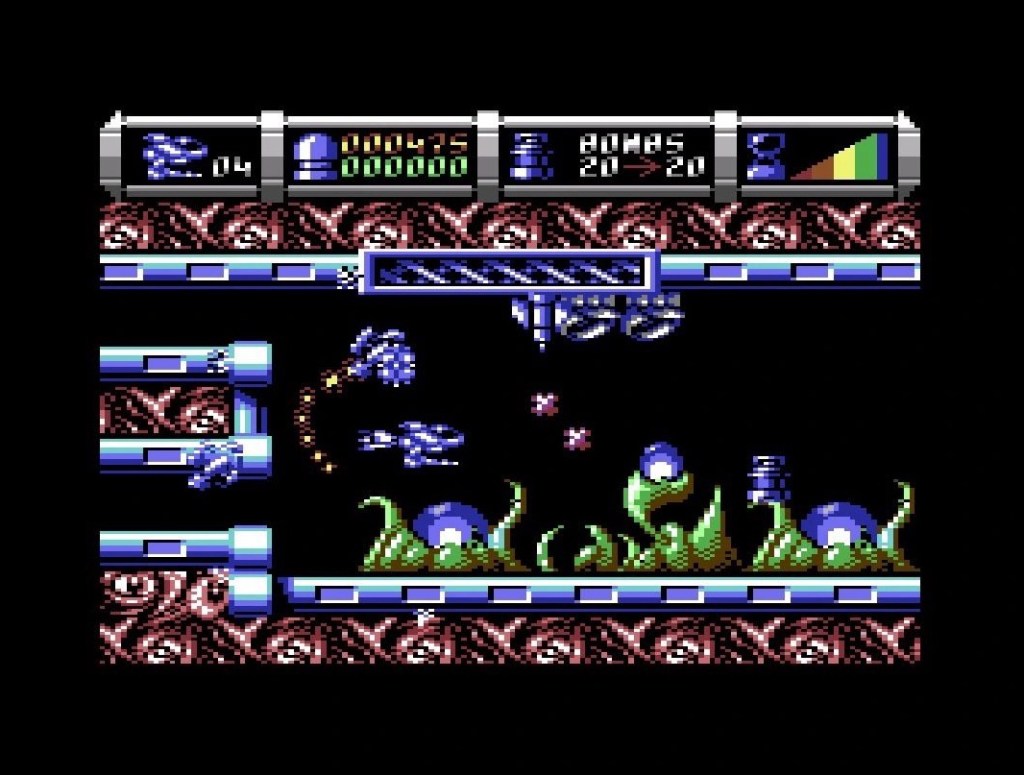
I always like the idea of the original Cybernoid (which appeared on the second C64 collection for Evercade) far more than actually playing its weird blend of shoot ‘em up and platformer, but I think I get the sequel, Cybernoid II: The Revenge, a bit more. It is very much more of the same though, and also more from Hewson in 1988, with you once again piloting your Cybernoid ship and its various weapons (mapped to individual controller buttons here) through a maze of danger-filled, flip-screen, sci-fi environments to get back your stolen cargo from space pirates. There’s no denying that, like its predecessor, this thing is crazy difficult and is going to take some commitment to make more than just a few screens of progress, but I think you do make that progress a bit quicker this time around, which makes repeating everything over and over just to get a bit further even more addictive too. Shooting pirate ships will recover some of your missing property, and depending on what’s going on in a particular screen, your choice of weapon (which includes regular shots, side shots, homing missiles, bouncing bombs, timer bombs and wall-hugging bombs) will be critical for doing this, although sometimes it also better just to get out of there as quick as you can instead! And this is where the “platforming” bit comes in, as you manoeuvre your ship through tunnels and around obstacles. As well as being marginally more welcoming, it looks absolutely gorgeous here too, mixing organic and metallic to great effect, with some really spectacular explosion and destruction effects! Just wish you didn’t have to choose between music or sound effects because they’re also both great!

Things don’t get any easier with our next game, Deliverance: Stormlord II, where you’ll be lucky to progress more than a single screen for your first few goes… Maybe it was just me who didn’t find the extended jump mechanic immediately intuitive though! The first game also appeared on the first C64 collection for Evercade, and while this might look like more of the same, what it gains in some really good-looking (but very brown!) visuals, it loses something in gameplay, opting for a far more linear action-platformer approach than the original’s quite innovative exploration and item use on top. That’s not to say there’s anything wrong with what’s here though, which is another one from Hewson, this time in 1990, where once again you’re rescuing imprisoned fairies with an aversion to clothes from six levels that take you from the very depths of hell all the way up to heaven! Along the way there’s all kinds of dangers to negotiate and supernatural enemies to dispatch, including some really clever boss battles, and once you forget about what the original was doing on top then you’ll have a great time here too, as cruel as it is, which reminds me, another cruel decision to make here about the sublime music and sound effects!

As a ZX Spectrum owner at the time, I’ve got a problem with Exolon being next because Exolon will always be Spectrum game to me, and one of its most iconic at that, so its inclusion here is like putting Boulder Dash, for example, on a Spectrum collection… By the way, isn’t it about time we got one of those for Evercade?!?! Whatever, this is a sci-fi run (very slowly!) and gun game from 1987, once again by Hewson, and is nicely positioned here because it might also be considered the forefather to the Stormlord games we’ve just looked at! You play as a futuristic space marine making his way through well over a hundred (if I remember right) flip-screens full of aliens, cannons, land mines and the like, most of which you can shoot with your regular laser gun or your limited supply of rocket-propelled grenades. Should you make it about halfway through each level, you’ll have the chance to equip the titular exoskeleton mech-suit thingy, making you way more powerful (but if you’re playing for score then you’ll want to avoid it)! As said, you’ve got to get there first though because this thing might look absolutely gorgeous, and full of sound and colour (as far as its Spectrum heritage would allow), but it’s as hard as nails! I’m not sure it plays quite as smoothly as the Spectrum version either, but don’t let any of that worry you because it’s a classic piece of 8-bit computer game design wherever you’re playing.
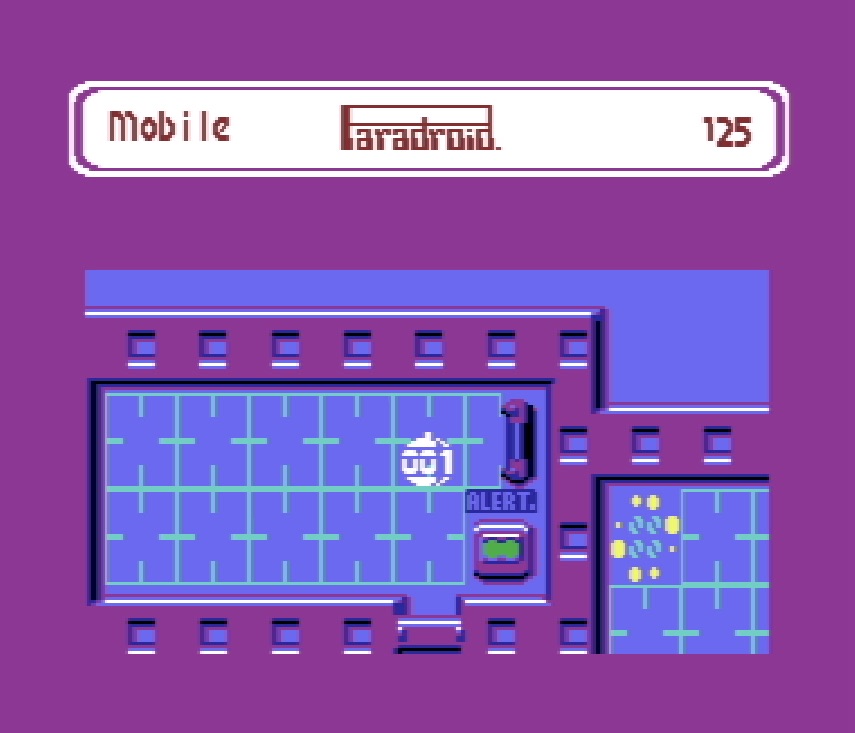
Not for the last time in this review, this is one of those times I mentioned earlier when I’m going to suggest you read the instructions first if you’ve never played any version of Paradroid before because if you don’t, you won’t have a clue what’s going on, but if you do, then you might just find yourself playing one of the best games to ever grace the Commodore 64! The version we’ve got here is Heavy Metal Paradroid, which the legendary Andrew Braybrook’s original plus faster, smoother gameplay and some enhanced graphics. It was a 1989 budget release, no less, too, on Hewson’s own budget label, Rack-It! The principle is always the same though – you’re a kind of floating robotic helmet, sent to clear a big spaceship of hostile robots by either shooting them or “possessing” them via a power transfer mini-game, which is part puzzle and part reflex, and involves making the wires on your side of the processor circuit more dominant than the robot’s by changing their colours. It takes a couple of goes to get used to but when it clicks you’ll be quickly moving from your initial weakling state up through the ranks of increasingly powerful robots as you clear each deck of the ship, and you’ll need to, not only so you are physically capable of catching them all, but also because you can only hang around in any given host for so long. Dynamic use of colour and fast scrolling in all directions enhance what are simple but very effective visuals, and sound effects perform in a similar way, but this one is all about the gameplay, which is intuitively complex and still utterly brilliant! Like Boulder Dash, I’d say buy this collection just for this.
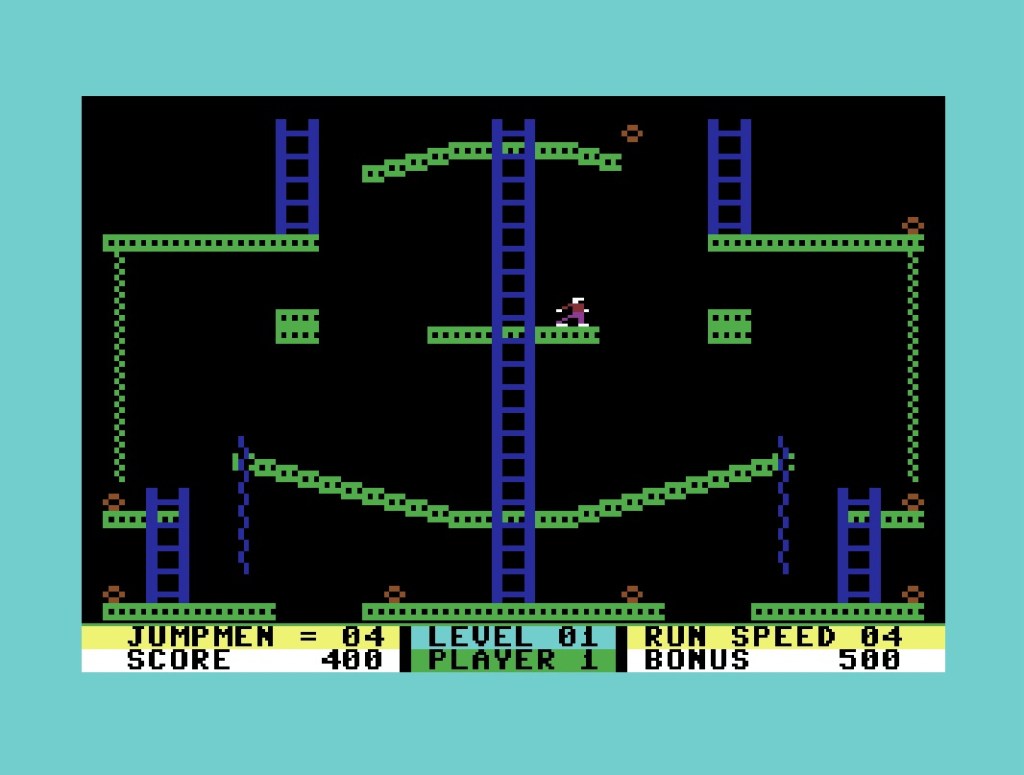
Jumpman Junior also picks up where a predecessor left off in a previous collection on Evercade, although I think it’s still the oldest game on here, all the way from 1983. I also think “Junior” in this case refers to its twelve levels, versus the original’s thirty, which was apparently so it could fit on a cartridge, though I’m not sure whether that was for a C64 cartridge, or an Atari or ColecoVision one where it also appeared. Regardless, it’s exactly the same single-screen platforming action as Jumpman’s, with you running and climbing around the far side of Jupiter, disarming bombs and avoiding each level’s themed obstacles. Plays fast and loose like that too, like Miner Willy’s worst nightmare, as you take full advantage of some intentionally imprecise platforming! It’s old school hard all the same though, with loads of unfair deaths demanding just one more go! It looks and sounds very home computer circa 1983, all very small scale but with some nice attention to detail, which would soon become Epyx’s trademark, especially in the limited animations on display here, and there’s plenty of quick and dirty arcade melodies too; actually, fans of the “Games” games, which we’ll come back to shortly, will get a particular kick out of the familiar title music! It might not be the best game on here but it’s a welcome inclusion all the same!
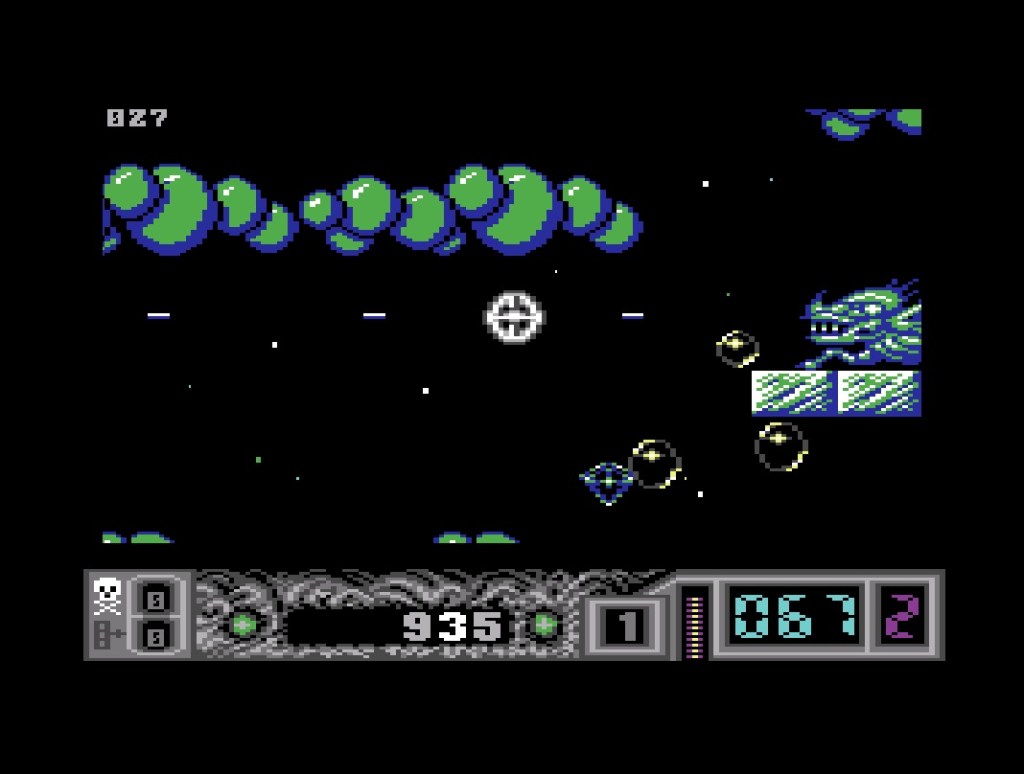
I remember Hewson’s Netherworld from a C&VG review when it came out in 1988 but this is my first time playing, and it’s really not what I thought it would be, except for being a bit surreal! It’s a multi-directional shoot ‘em up that, like Cybernoid from earlier, also has a bit of the platformer vibe about it, albeit to a much lesser extent. You find your little wheel-like spaceship trapped in a hellish alien world, and your only chance of escape is buying your way out with the specified number of diamonds you’ll find around the place, although the demonic locals aren’t going to make collecting them easy, and neither is the clock! It’s less frantic than Cybernoid all the same, and you’ll come across tools to help, from time extensions to battering rams and squeezers that will crush rocks into diamonds, plus plenty more besides. There are also teleporters to get you around each maze-like level, and transforming walls and the like, giving it a bit more depth than the average shooter, even if it does sound a lot like one! Looks nice though, with plenty of effort gone into making aliens look much less generically monstrous than they might have. There’s a lot of game here with a nice learning curve once you’ve got a handle on your ship’s movement and how the enemies and collectibles work, and I’m really thrilled to have found it here!
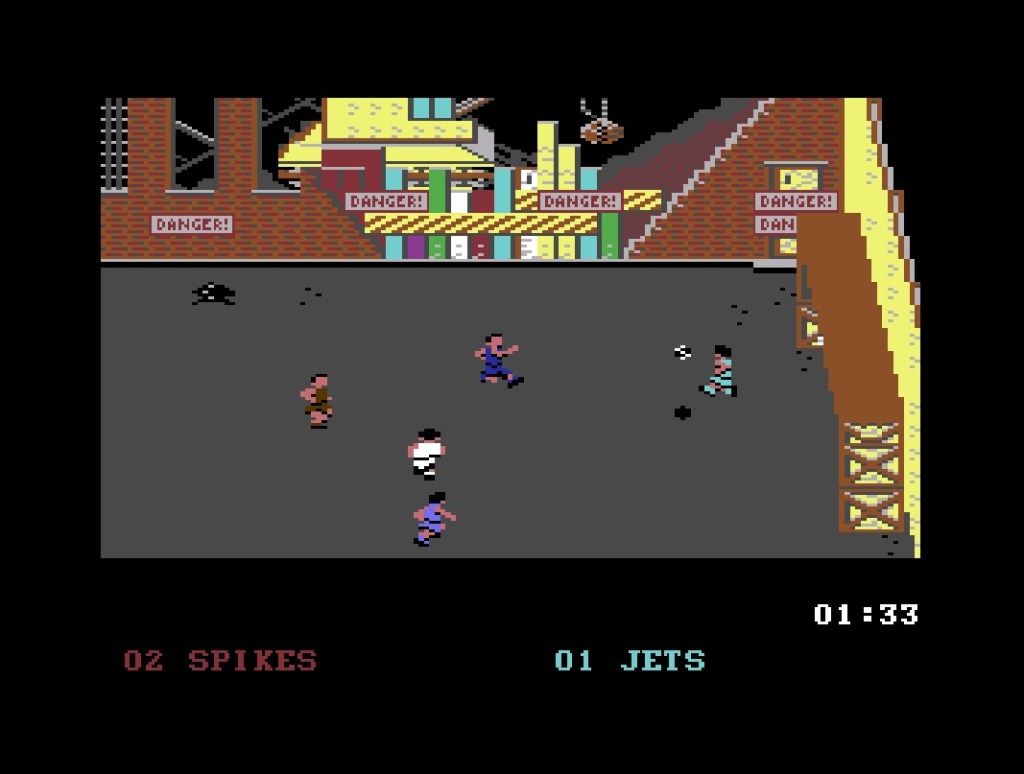
I’m still playing Street Sports Baseball from the first C64 Evercade collection, less so the basketball game on the second, and I reckon Street Sports Soccer here will end up somewhere in the middle! This was by Epyx in 1988 and continues the series’ relaxed, few-rules take on football, just like you’d have played with your mates as a kid. You even take turns to pick your teams, although in comparison to those other two games, it doesn’t seem to make as much difference who you end up with here, so pressing “random” will get you into the action quickly, which is three-on-three and your choice of first to a certain number of goals or the most in a certain amount of time, as well as one of three difficulty levels. There’s very little to the gameplay, which does make it fun in short bursts but that’s probably about all you’ll get out of it, with simple directional passing and shooting when your on the ball, or moving towards it to try and get it back when you’re not. Computer AI isn’t the greatest, there’s not much to the sound and the graphics are way smaller than in the series’ other games but for all of that, I still like it! It’s harmless, mindless arcade football and little more, and as such it’s alright!

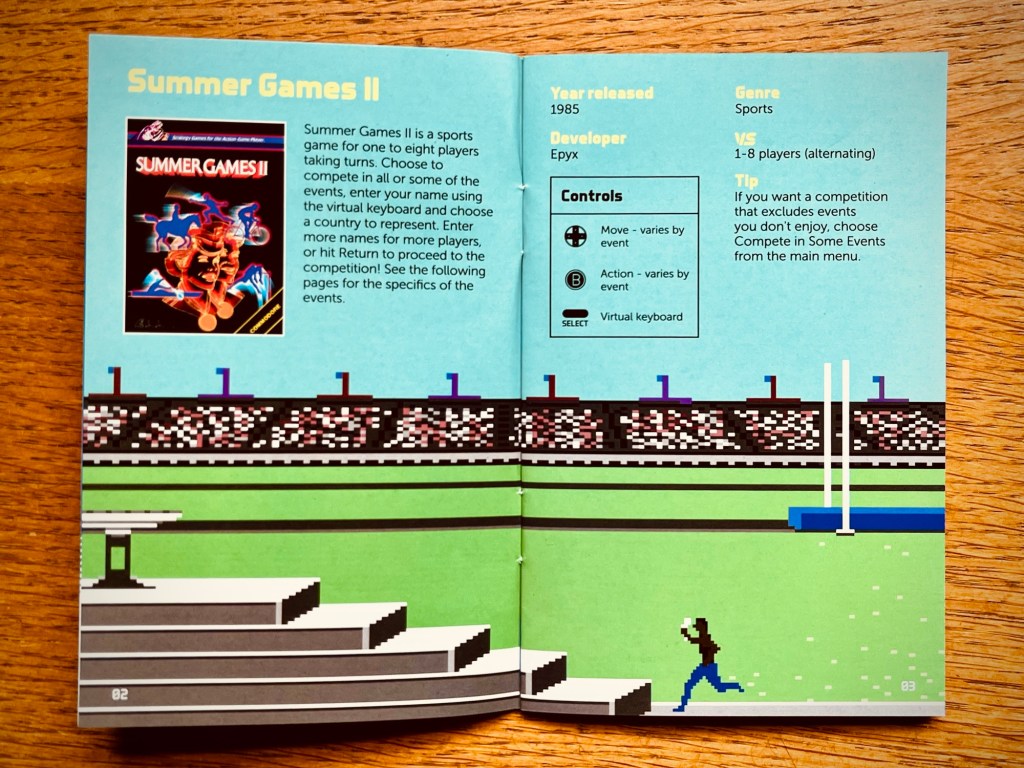
The Epyx “Games” series is really special to me, but while it was probably the first one I ever came across, just before it launched in 1985, I only got to playing Summer Games II far more recently, which I’ve documented at great length in a deep-dive on it right here! In short though, you’re competing with up to eight players across eight events – cycling, equestrian, fencing, high jump, javelin, kayaking, rowing and triple jump. You can practice them or go through the lot, one player at a time, with medal tallies and world records recorded (which, as a solo player, is where I tend to get my longevity from these things nowadays). There’s also a very cool option brought over from the original cassette release(s) to import the original Summer Games events, giving you a total of sixteen here, and, unlike those originals, it looks like you don’t even need the previous Evercade cart with it on to access them… Although that might have been more cool! As always with these games, it’s another where you’ll want to read the instructions because every event has its own controls and they’re not always obvious (but thankfully rarely involve button mashing), and likewise, some work better than others, like cycling, for example, which was clever on a joystick but rotating a d-pad like a pedal is a stretch for an entire race! Kayak, on the other hand, is so good it could have been a standalone title, while fencing plain stinks, but in-between there’s a lot here to reward practice and perseverance. Seriously polished presentation too, and as good as it got at the time!
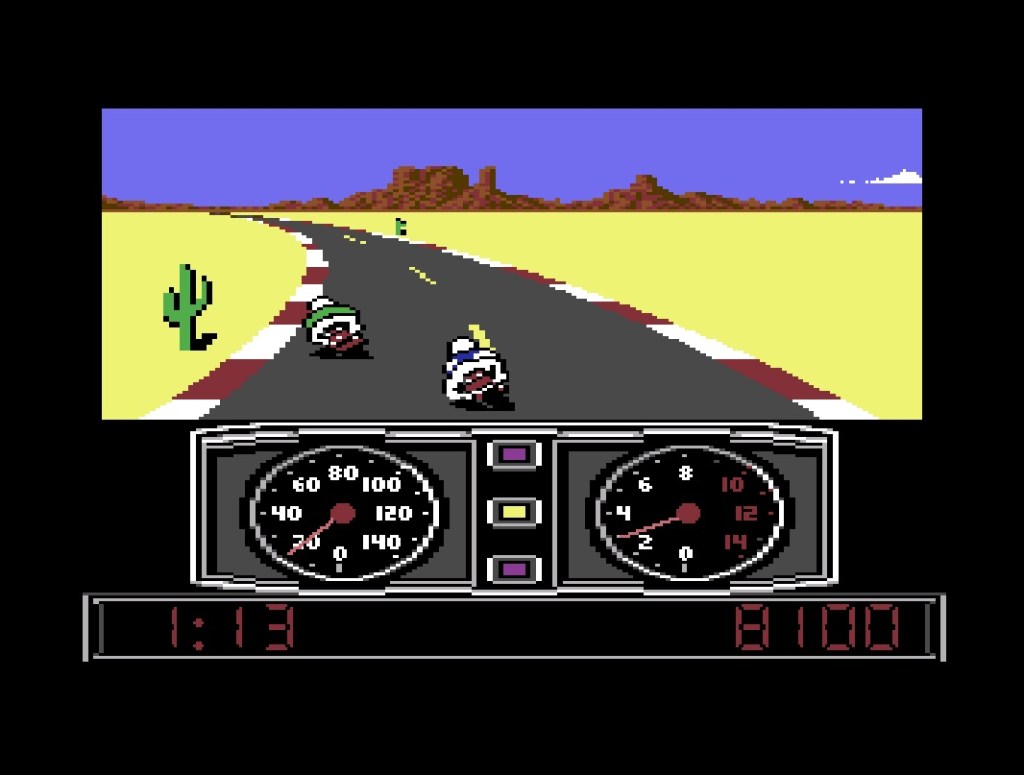
I’ve always been very fond of Super Cycle too, and would even rank it in my top ten games on the Commodore 64… Who says it can’t do racing games?!?! This is an arcade motorcycle racer, also by Epyx in 1986, where you’re going against the clock through mountains, deserts, forests and cities, both during the day and at night, and through water, ice and various hazards on the road, as well as the pack of fellow bikers. It’s a lot like Hang-On, and although it’s a bit more sparse to look at, what’s there is nicely detailed and coloured, it moves smoothly and at real speed, and controls really well once you’ve got a feel for throwing the bike around. Probably a bit easier than Hang-On too, although you’ve got three increasingly unfair difficulty levels to choose from, which reminds me, you can also choose your bike colour, and the style and colour of your leathers. Take that, Sega! Some really thoughtful button-mapping to save your poor old thumb on the d-pad here too! The whining engine noise does grate a bit once you’re in top gear and with nowhere else to go but apart from that I’ve got nothing bad to say about this. Love it!
And that sounds like a good place to round off this review because, as you can maybe tell, I don’t have much bad to say about the rest of it either – even Break Dance, which 12-year old me is over the moon to finally own a copy of! While I get that your own mileage with that one in particular will very probably vary, you’re probably better off focussing on Paradroid and Boulder Dash instead, which few who know them would argue are not among the greatest games of all time on any system. And although I’ve not done any research whatsoever to back this up, I reckon the magazine reviews I’ve alluded to a couple of times above from when they first game out will probably reveal some pretty high scores for almost all of the rest too! Speaking of which, if you’ve also got The C64 Collection 2 and an Evercade VS console, whack this cart and that one in next to each other at the same time and you’ll unlock the wonderfully unforgiving horizontally-scrolling shoot ‘em up, Zynaps, as a secret game! Regardless of that though, just based on what’s there as standard, this is probably the strongest of the three Commodore 64 collections on Evercade so far, and is going to keep you occupied way beyond your money’s worth!
As always, I’ll never expect anything for what I do here but if you’d like to buy me a Ko-fi and help towards increasingly expensive hosting and storage costs then it will always be really appreciated! And be sure to follow me on Instagram, X (formerly Twitter) or Threads for my latest retro-gaming nonsense!
 Retro Arcadia