Back again for our regular Sunday roundup of quick-fire reviews and impressions of everything under the spotlight at Retro Arcadia this week, old and new and a bit of both…

As mentioned here last week, I’ve been jumping in and out of the MSX version of 2017’s ZX Spectrum fantasy platform adventure, The Sword of Ianna, for a while now. I’m playing on the recent Home Computer Heroes Collection 1 for Evercade, although mainly on its new handheld spin-off, the Super Pocket, where it mainly plays great… Except when there’s story text, which only comes between the very lengthy, metroidvania-type levels, so not very often, but all the same, the font they’ve used is horrendous and simply impossible to read on that small screen, so I’ve been saving and switching to Evercade VS, connected to the big TV, as and when needed (and where it also plays great)! Not ideal though, especially when you’re mostly playing away from home! Aside from that, the game itself is superb, with wonderfully animated characters in colourful and very atmospheric environments that house some fun, thoughtful and almost Dizzy-like back and forth puzzling, but with more sword fights against walking skeletons! The controls are initially a bit daunting but they soon click and then you wouldn’t change them for anything, and there’s a slick weapon and inventory system too, all on single face buttons. And the music is excellent! My first MSX game and I have to say I’m very impressed, so will keep plugging away to the end if I can, which still seems a way off over three hours in! By the way, credit to Blaze Entertainment for the screenshot because my own photos of the Super Pocket screen were as bad as that font!
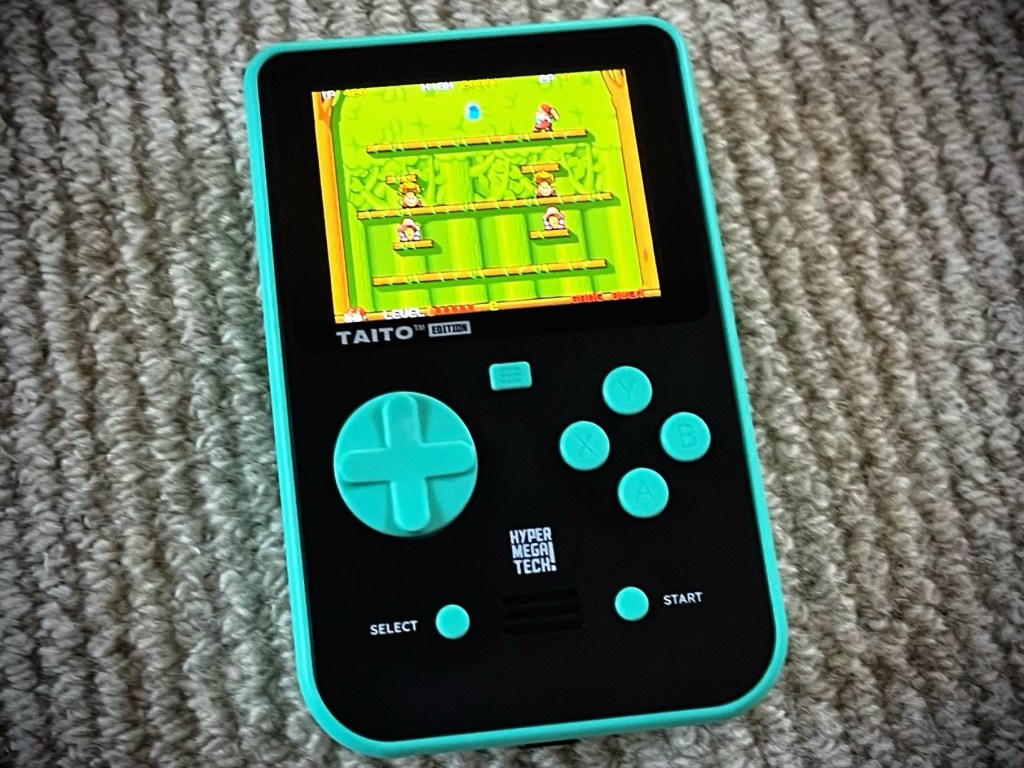
Just to prove the point, here’s another game on the Super Pocket, although the photo of Don Doko Don is marginally more passable. If you don’t look too close! Anyway, this is one of the pack-in games in the Taito Edition of the console I got for Christmas, and it’s a beauty! I remember a review in an ancient copy of C&VG also loving the PC-Engine port – Bubble Bobble with sledgehammers is what I think they said – and while it’s not quite at that godlike level, we’re talking fine margins! It’s super-cute, single-screen, two-button platforming from 1989, making it a perfect fit for this little machine, apart from it being single-player only, unlike the original arcade version. Can’t remember that I ever played it any other way anyway, so doesn’t make a lot of difference to me! The game has you playing a carpenter on a quest to rescue the the king and the princess from their adorably monstrous captors, using your trusty hammer to flatten your enemies who can then be chucked as a weapon too, like some kind of corpse frisbee! Clear the screen of them and you move to the next level, which become wonderfully infuriating very quickly because it’s just so simple and you really shouldn’t be dying where you just did! It’s full of bold, richly textured backgrounds, as well as tons of detail, animation and humour in the character sprites. Sounds great too, with a really epic fairytale soundtrack! I’ve grown to love this game since it appeared on the Taito Egret II Mini a couple of years ago (although I did own it on a regrettably unloved old PS2 compilation too), and this is another place I’ll be happy to play it.

Took me a while to get to after I spent ages waiting for a decent copy on eBay but I finally did more than dabble with 1990’s R.B.I. Baseball 2 on the Atari ST, which followed on from last year’s deep-dive I did into its predecessor, R.B.I. Baseball on the NES. Does everything you want from a 16-bit sequel too, with real polish, big and bold on-field presentation and some really great touches like the little cheerleaders, the desperate sliding animations and the wacky illuminated scoreboard cartoons recapping the latest key plays. Plenty of speech as well, although any kind of crowd noise is missing while the ball’s in play, which is a bit weird. Gameplay is familiar, whether you know the original or simply any other baseball game from the last forty years, and whether you’re batting, pitching or fielding, and the overall game flow is relatively fast-paced but otherwise authentic. Unfortunately, fast-paced isn’t really true of the batting animation, but you do quickly adapt and acclimatise to it. Everything is licensed, so proper team and player management is there should you want it, or it’s easy just to get into some games… You can even just watch the computer play out a game, which I still always find surprisingly enjoyable to have on in the background whenever it’s on offer in one of these games!

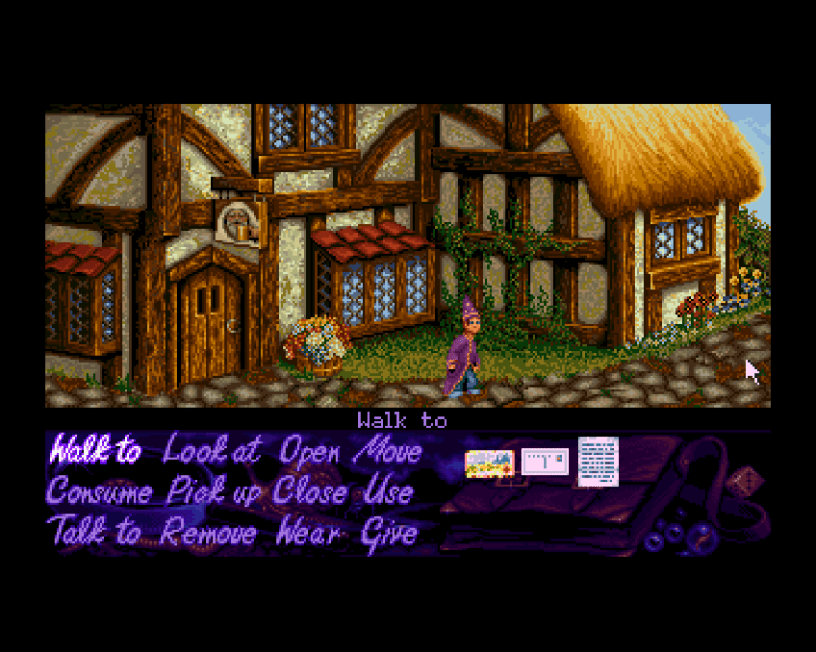
I’ve been meaning to get to Simon the Sorcerer – a pack-in on the Amiga A500 Mini – for ages, so while I find myself between big games, I thought I’d see how I got on with its very 1993 flavour of point-and-click adventuring! It’s very LucasArts too, with a boy named Simon ending up in a magical, Terry Pratchett’s Discworld-inspired parallel universe, where he needs to rescue a wizard so he can get back home. There’s worse places to be stuck though! It’s full of gorgeous locations that you’ll interact with using twelve verbs that are always below the main play area, and are used in combination with objects and characters you’ll often need to painstakingly seek out, or with items you’ll need to painstakingly try and combine with others to get some obscure use out of to progress things just a little bit further! As said, it’s familiar territory if you know Monkey Island and the like, as is the story, where you’ll soon find references to all sorts of fairy tales and parodies of stuff like The Lord of the Rings, most of which land perfectly well, although you are little more than an observer for a lot of these prolonged set-pieces. It’s unlikely to become a favourite in the genre but I’m liking it well enough after a couple of hours, and it’s incredible pixel art is probably worth the mind-bending cost to your sanity on its own!

I’ll quickly mention I finished Duke Nukem 2 Remastered on Evercade (see last week’s Spotlight for more) and it was mostly brilliant to right near the end, where the platforming just got a bit too finicky for the game’s own movement mechanics, but I really loved it overall! Aside from that, I think that’s going to do us for this week but in case you missed it last Wednesday, be sure to check out my deep-dive into Konami Arcade Classics on ZX Spectrum, and five all-time classic ports that couldn’t be more suited to it! Then next Wednesday, I’ve finally got to the second instalment in the series as we spin 90-degrees and countdown my Top Ten Favourite Vertically-Scrolling Shoot ‘Em Ups, so I’ll see you then!
 Retro Arcadia
I played “Simon the Sorcerer” years ago.
It does indeed look great, but the writing/comedy never lives up to its potential.
LikeLiked by 1 person
Have to admit I’ve got a bit fed up with it since I wrote that. Made a bit of progress but I’m struggling to stay invested in the writing or the puzzles. Think I’m so far in I want to see it through now though.
LikeLike