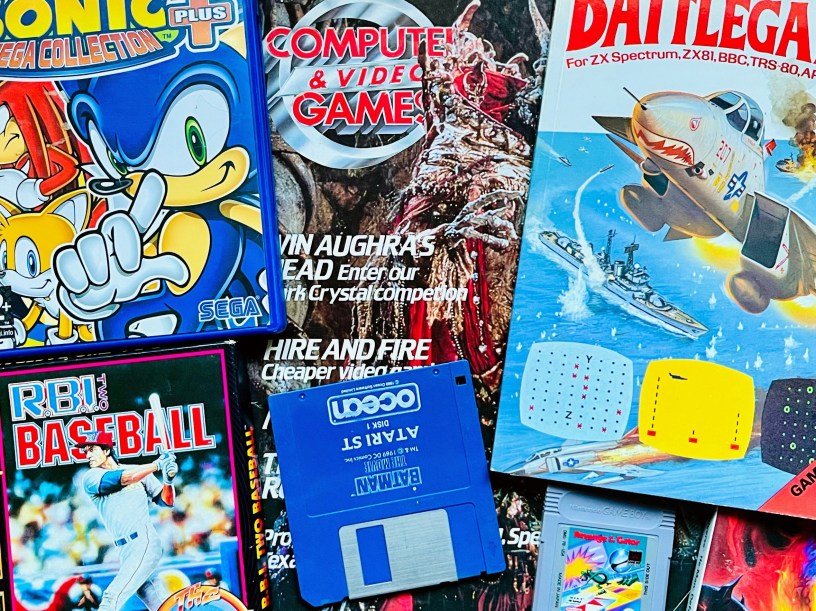
Welcome to the second in a series of one of the new regular features up my sleeve to complement the usual various forms of weekly deep-dives at Retro Arcadia, partly to keep things fresh but also partly to take a bit of the pressure off me trying to juggle writing them alongside juggling work and family… And not to mention actually playing the things! Don’t worry though, because that’s not to say they won’t still make up the vast majority of what’s here each week, as well as the Weekly Spotlights, the monthly On The Retro Radar feature, likewise the new Retro Rewinds, and reviews when I’m asked to (or the mood takes me). Just like I said back in the first edition at the end of the Summer, the plan here is to simply mix in what you’re reading now as a new flavour of deep-dive every three months. The format is a paragraph or two on each of the games or related things I’ve bought since the last time, and there seems to be loads of them, so let’s get on with it!

I think Mario’s Picross was my greatest extravagance this time around so I’ll start there… Not that it was particularly extravagant but at £22 for what was a pristine cartridge and manual it does sit at the lower end of the relatively rare tier of Game Boy games, where the others we’ll see later were all £5-10, which is more like it for cartridge-only, commercially popular titles. Given that current price, and that the sequel never made it out of Japan, it’s obvious this one didn’t do so well at the time, but is definitely in my top five games on the system! It’s a number-logic puzzler from 1995, with Mario chipping away at increasingly complex grids, guided by the numerical clues at the side of each row and column, to reveal a picture of something. It’s like Sudoku meets a crossword puzzle, with each part of the picture located correctly then potentially revealing clues about other squares, which start out 5×5 and end up at 15×15 over 256 separate puzzles. It’s all against the clock too, with the initially generous thirty minutes for each one soon being whittled down by a big penalty every time you chisel away the wrong bit! I’ve adored this from afar for years and there’s no doubt I’ll more than rinse out what I paid for it now I’ve got it for real!
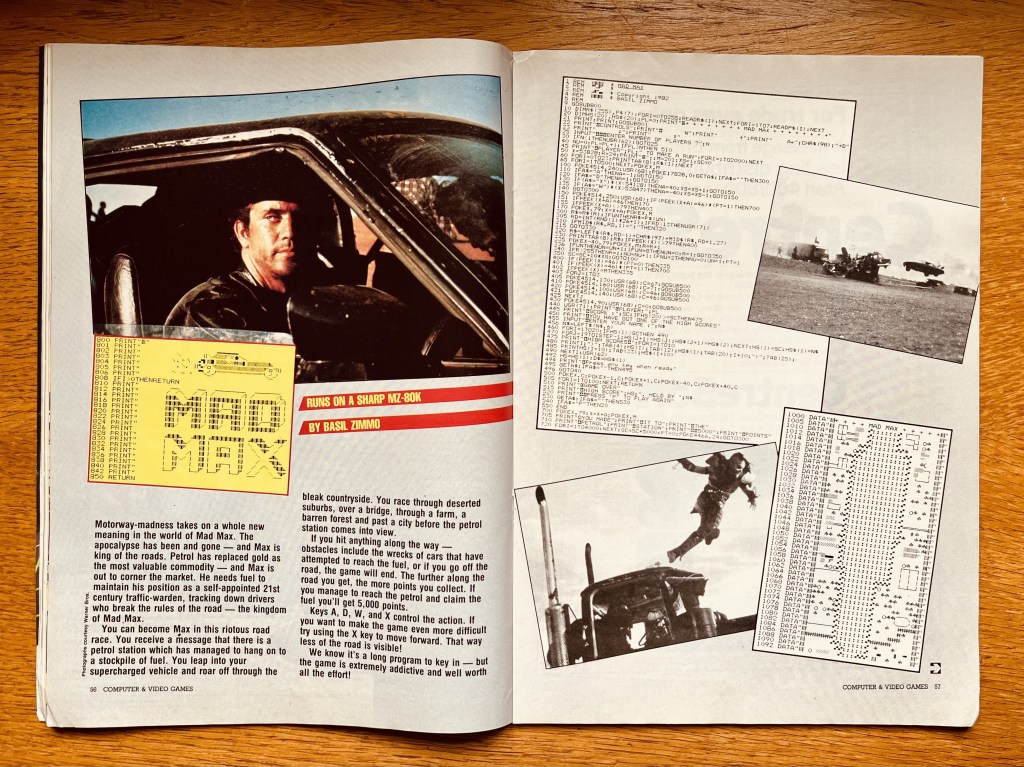
There’s more Game Boy to come later, but as I’ve had some nice feedback when I’ve done these in the past, I’m going to jump to the May 1983 issue of Computer & Video games, which I bought as part of my ongoing attempt to work all the way back from when I started collecting at the start of 1985, so let’s take a look at what’s inside… In the news this month, Atari 400 and 800 users have some great arcade ports to look forward to, with Qix, Zaxxon and Donkey Kong all announced, while Spectrum owners need to look out for Map of UK, an educational hot air balloon game, but really not a long going on, which might explain the full page devoted to the fourth World Computer Chess Championship, complete with some riveting gameplay commentary! Things are a bit more exciting in the arcades, with reviews of Pengo, Millipede, Time Pilot and Popeye, which is a hell of a lineup to get all at once! From there, the first of ten type-in game listings, with Formula One for the Atom, which seems like a pretty authentic (for what it is) race against the clock. There’s also stuff for the TI99/4a, PET, ZX81, BBC, Atari 400/800, Spectrum and Dragon, but I want to highlight Mad Max for the Sharp MZ-80K for how ambitious the BASIC graphics you’re creating are – you’ll be racing through farms, deserted suburbs, forests and cities all thanks to several pages worth of text symbols to type in! Things then get really bonkers on the VIC-20, where Doctor Vic is going to diagnose all your ills, although the act of typing it in is going to totally ruin the eventual punchline! Those things take up about half the magazine’s hundred-plus pages, but we loved them at the time (as we’ll see later!) and it’s better than the mass of adverts that take up most of the rest!

Thankfully it’s the dawn of the big full-colour ones, with Imagine’s Arcadia (also see below!), as well as Catcha Snatcha and Molar Mauler jumping out in particular from countless Space Invaders, Galaxians and Donkey Kong clones! Speaking of which, Krazy Kong on the VIC-20 gets a review, and despite “more bugs than a flea-bitten old moggy” and only having one screen, “plays a reasonable game” apparently… Glad I opted for Crazy Kong at the time all the same! There’s a double-header on the 16K ZX81 with Super Glopper (Pac-Man) and Frogs (Frogger) coming on two sides of a single cassette, available at £4.95 from most large branches of W.H. Smith, we’re reliably informed. A lot less than the £29.95 you’d be spending on the Atari 400/800 conversion of Defender too, which we’re first told shouldn’t be compared with other conversions because that “can quite often be erroneous” but in the conclusion we’re then told the BBC version is cheaper and better, so buyer beware or something! On the consoles, Demon Attack goes head-to-head with Phoenix on the Atari VCS (or 2600) and wins out for being tougher and prettier, while there’s also previews of what would be an excellent port of Vanguard on there, and “the latest video hero” Pitfall Harry coming to the Intellivision. Apart from that, we’ve got the usual features on machine code, programming 3D graphics and the like, but we’ll leave it there for now. If you like this kind of thing though, do check out the first proper episode of Retro Rewind, where we did the same thing but in more depth for the October 1983 issue, exactly forty years on, and that will be another more regular feature from the start of 2024!
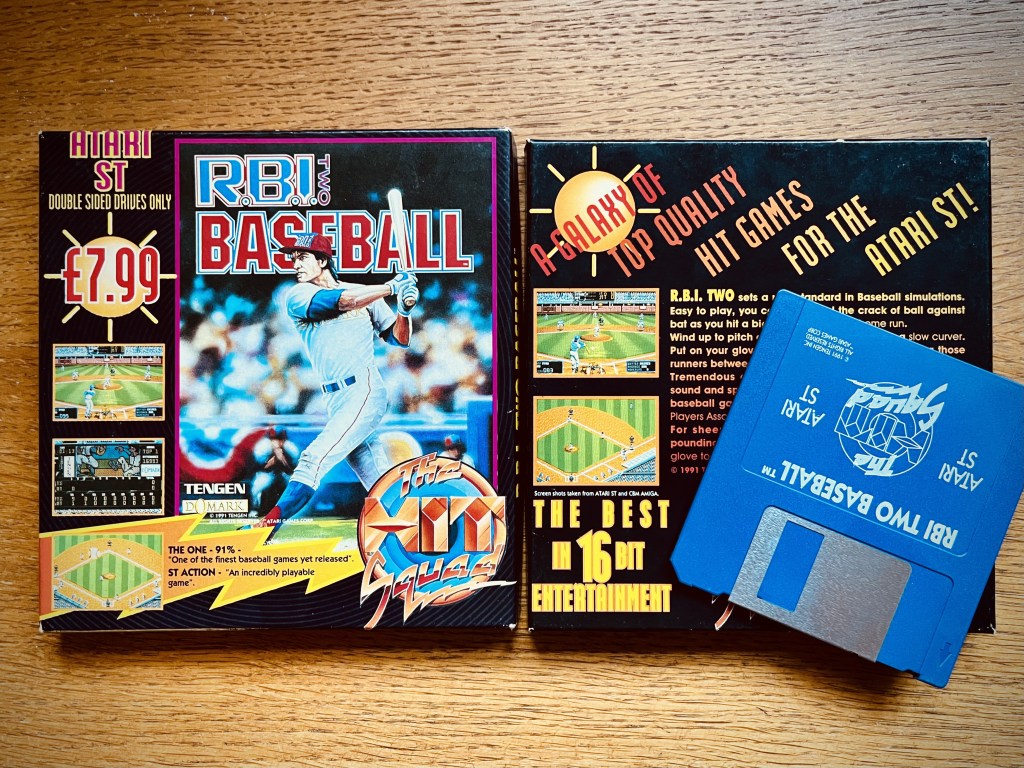
Following-on from my recent deep-dive on R.B.I. Baseball for the NES, I’ve now moved on to its 1990 sequel, R.B.I. Baseball 2 on the Atari ST, which took a bit of patience as I don’t suppose it sold particularly well over here at the time so there’s no many around, particularly at a decent price, but I ended up with a really nice boxed copy for less than a tenner! Proper polished it is too, with big and bold on-field presentation and some really great touches like the little cheerleaders, the desperate sliding animations and the wacky illuminated scoreboard cartoons recapping the latest key plays. Plenty of speech as well, although it is strangely lacking in ambient crowd noise while the ball’s in play, which is a bit jarring. Gameplay is familiar (particularly if you’ve been cramming forty years of baseball games into a couple of months like I have!) whether batting, pitching or fielding, and the overall game flow is relatively fast-paced but otherwise authentic. The only thing that isn’t quite as fast-paced as it should be is the batting animation, but you soon adapt and ignore it. It’s all licensed so all the teams and player management is there should you want it, or it’s easy just to get into some games… You can even just watch the computer play out a game, which is surprisingly enjoyable to have on in the background too.

Clicking “Seller’s Other Items” on eBay isn’t always the smartest move, but this time I don’t think the result was too egregious! You’ll have no doubt noticed the word “Arcadia” in the site name here, and as well as just sounding alright at the time, it was also the name of the first game I ever bought, although there’s also a chance it was Crazy Kong instead! Regardless, it’s a significant piece of my gaming history that, like the rest of my VIC-20 games, had to be sold in the mid-eighties for the greater good of getting a ZX Spectrum, so when I saw it for a few quid, bundled with the next game we’ll come to, I thought it totally justified the price, particularly as I’ll finally be getting to a dedicated feature on it early in 2024! It’s a frantic single-screen shoot ‘em up from Imagine in 1983 (when it also came out on the Spectrum) with a graphically impressive onslaught of aliens scrolling across or dropping down the screen and shooting at you, which you need to survive until the timer ticks down to zero when you start the next of the twelve levels, each with a different breed of alien. It was brutal even by the regular brutal standards of the time, with the screen a wash of colour and explosions, and backed by the absolute chaos of the sound effects. Crazy additive even today though, and I still love the thing that started my journey to right here. Maybe!
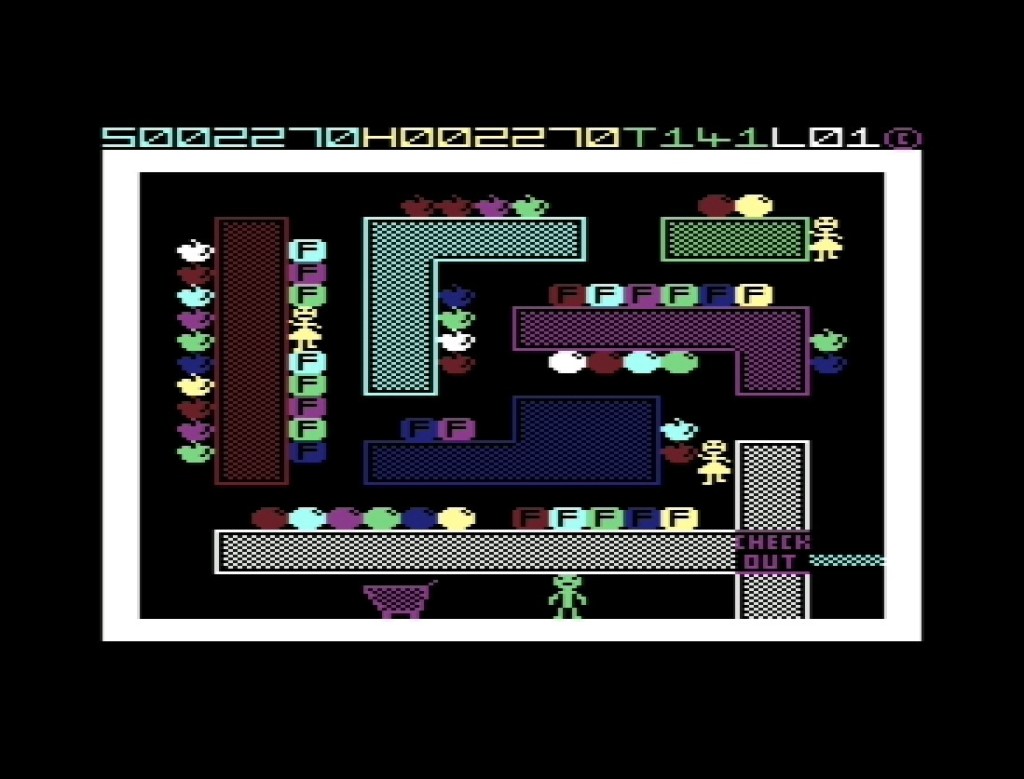
Psycho Shopper was the other game in that mini-bundle for the VIC-20, and this time was a budget release by Mastertronic in 1984, which I’ve also now bought twice in the space of nearly forty years, although in my defence it did work out at even less than the £1.99 I spent on it the first time around! Anyway, it’s absolutely classic budget-fodder, mixing up a lot of Frogger with a bit of Pac-Man (exactly the opposite to the masterful Alien on Atari 2600) across four screens of crossing roads and railways, collecting coins while avoiding cars and Gladys the Granny on the way, before grabbing the trolley and running around the supermarket collecting your shopping and avoiding a whole gang of rampaging grannies! The presentation is great for what it is, there’s plenty of variety and multiple skill levels, and it’s really addictive. Just like its inspirations! Absolute budget classic and worth every penny even two times over!
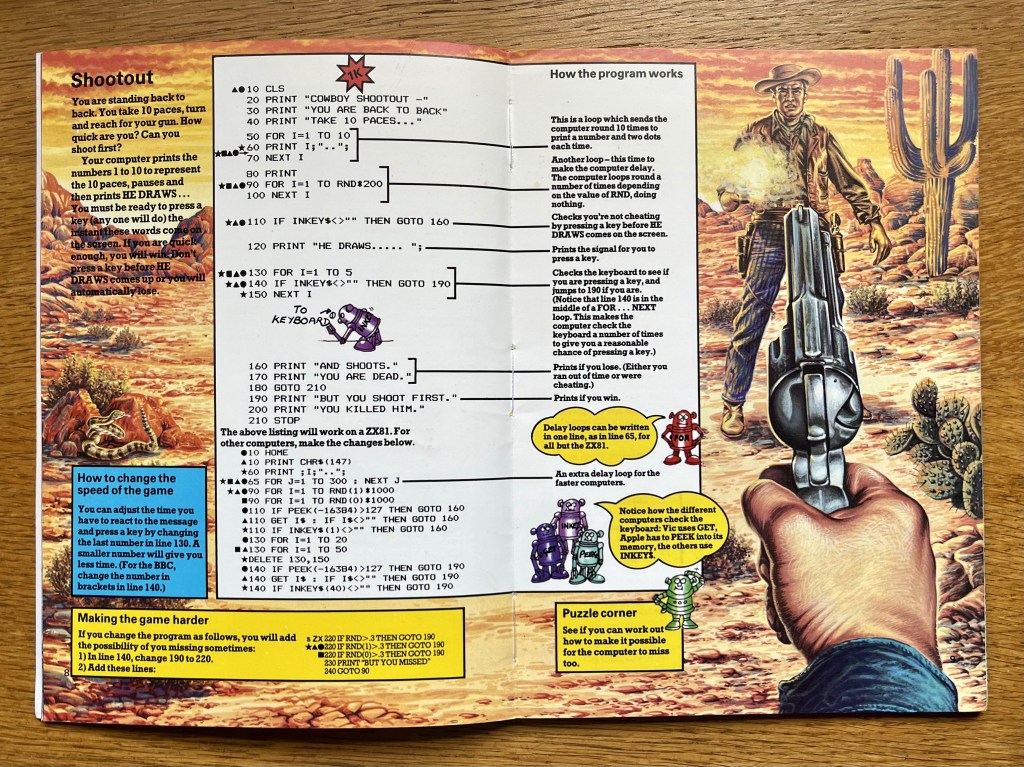
I reckon I spent almost as long typing in games for my VIC-20 as I did playing them, more often than not from magazines like we saw earlier, but I also built up quite the library of books full of them, as well as more specialist stuff like graphics demos, music players, utilities and even the black arts of machine code! They’d usually cost about the same as a new game though, so there were limits, and as such I tended to go for dedicated VIC-20 books rather than general ones, although the benefit of those was you’d also find them in the local library, as was the case with Computer Battlegames by Daniel Isaaman and Jenny Tyler, and published by Usborne in 1982! Despite being multi-format though, this one is really cool because as well as individual listings for each of the TRS-80, BBC, ZX Spectrum, ZX81, Apple and VIC-20 for the feature game, Missile, the other twelve games included tend to be based on ZX81 code with instructions for porting it to other formats shown afterwards. For what this costs in complexity though, it more than makes up for in beautifully coloured illustrations for every one, line-by-line information on how each program works, programming challenges and tips for things like speeding up the game. The games range from standard simplified Space Invaders fodder to desert tank battles with the classic guess the range and elevation then fire gimmick or a kind of castle-based Whack-a-Mole! Loads more info on making your own games, how BASIC works and so on on top, so educational as well as the mindless joy of typing stuff in and even playing it, assuming it works!
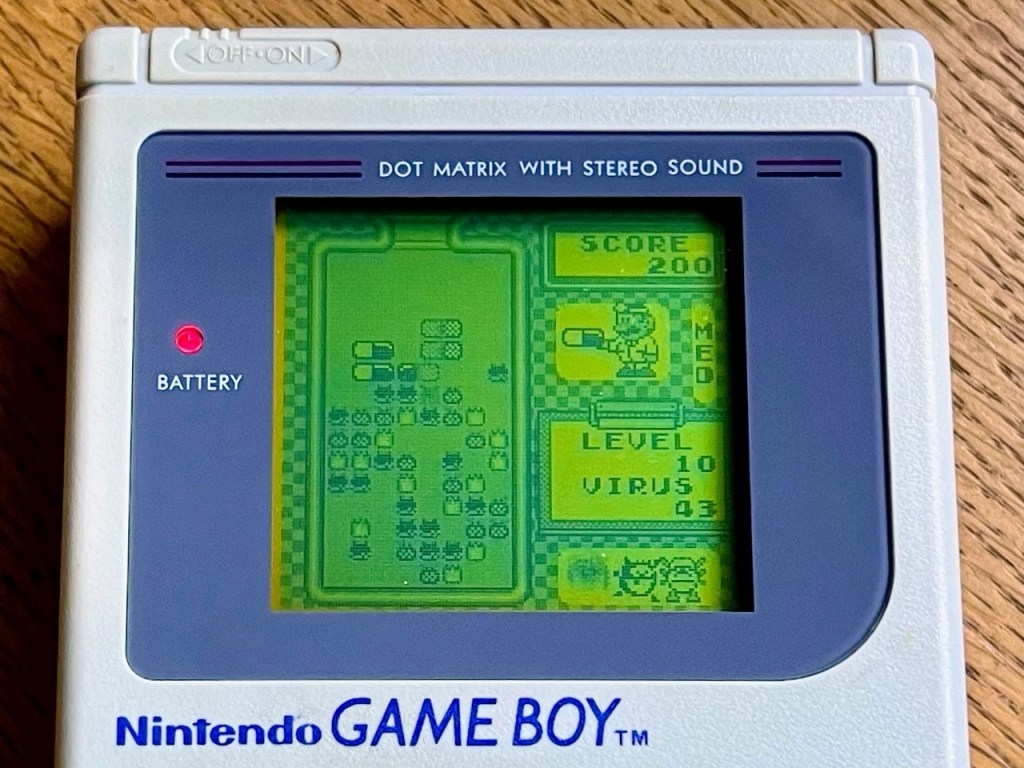
I’ve just realised how long I’m going, which is fine as long as I don’t start adding up what it all cost, but I’m going to head back to the Game Boy and start winding things down with Dr Mario, which came out here and on the NES in 1990. It’s a falling-block game that plays a lot like Tetris but this time you’re trying to rotate and position two-sided medicine capsules to create a line of four identical colours or patterns to make them disappear, ideally made up with one of the same coloured or patterned viruses dotted around the screen (a medicine bottle) when the level starts. You need to do your business before the capsules reach the neck of the bottle, but get rid of all the viruses and you move to the next level where it gets harder. I think there’s twenty of them in each of the three difficulties, with cutscenes rewarding you every so often for playing on the harder two. I’ll be honest, I’d rather be playing the NES version, where it’s one of my top three games on the system, because my aging eyes struggle with the different virus types in particular. Need one of those magnifiers you used to get for the Game Boy… Watch this space after the Winter! Couldn’t really ask more of it here though, and the detail is superb all the same, as is the music, and the gameplay is as sublime as ever – strategic, sometimes frantic but usualky with a chance to recover when you screw up, at least until you inevitably panic and it all goes to pot! So glad I got this at last.
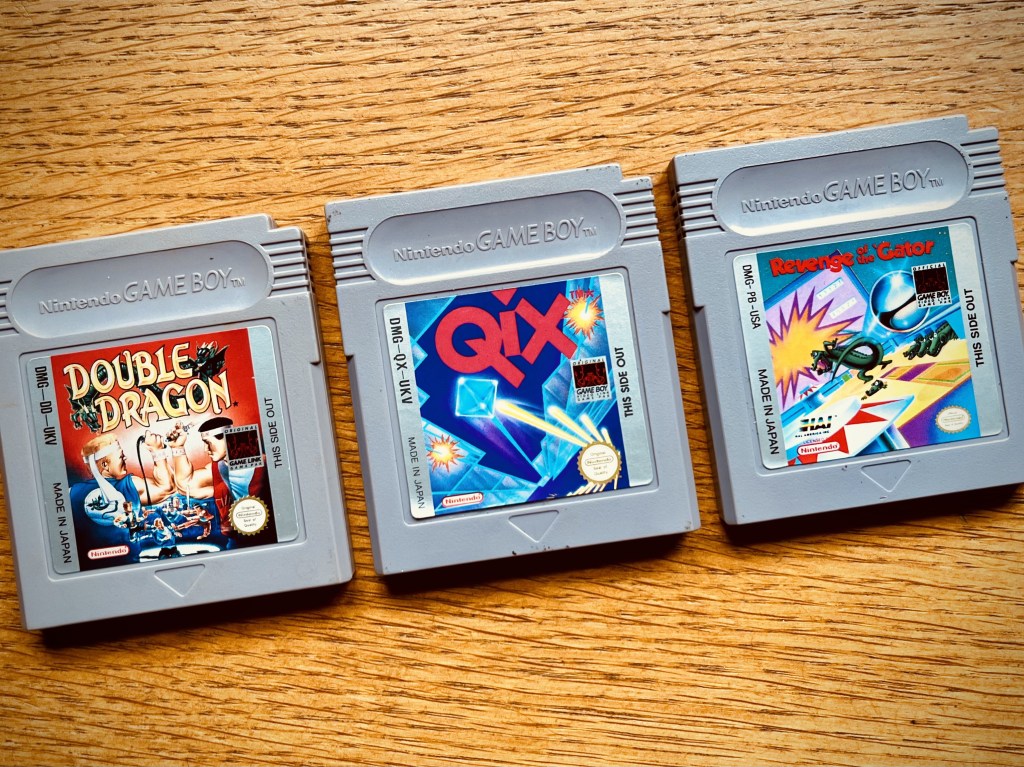
As you’ve noticed, and also as predicted here last time out, I did go a bit Game Boy mad after picking up a new console to replace my dead original one a few months back, but rather than go too overboard, I’m going to give you a sentence or two on the three others I’ve got but have already covered in more detail in various Weekly Spotlights over the past three months, then I can link to each one of those if you fancy a bit more! Actually, Pinball: Revenge of the ‘Gator has already had its own deep-dive too! Anyway, it’s four varied flip-screens and three bonus tables full of impressive alligator-themed detail, nice tunes and some very decent ball physics for a handheld in 1989. Qix is a line-drawing, screen-filling action-puzzler based on the 1981 arcade game that solves all the colourblindness problems I had with the original by having none and is a masterpiece as a result! Finally, Double Dragon might be more built for fun on a handheld over perfectly recreating the 1987 arcade game but it looks, moves and sounds great, and the combat feels just right, with the welcoming challenge soon picking up over its four stages.

I never owned a copy of Batman: The Movie on Atari ST at the time but I’ve tried to since… Several times! Disks aren’t always what they used to be, unfortunately, but this time I’ve come up trumps and both of them seem to be intact. This came out on everything alongside the Tim Burton film that was everywhere you looked in 1989, and would be a mega-seller for masters of the tie-in, Ocean, as well as coming bundled with an awful lot of Amigas! It’s set over five levels, each representing bits of the movie, and with their own distinct gameplay styles. You start out platforming through the maze-like Axis Chemical Plant with the help of your batarangs and grapple gun, finally sending Jack Napier into the toxic vat that’s going to turn him into The Joker. Speaking of which, what an iconic health bar this had, with Batman’s face gradually turning into his as you take damage! Equally iconic, level two has you racing through Gotham in the Batmobile in glorious 3D, then level three is a more sedate puzzler in the comfort of the Batcave before you take to the skies in your Batwing for level four, cutting loose Joker’s poison balloons. Level five then returns to the platforming format as you clamber up the cathedral for the big showdown with The Joker at the top, not that I’m anywhere near that yet! I reckon this is up there with Ghostbusters on the Commodore 64 and Robocop on the ST or Amiga as one of the all-time great movie licenses! Every level is stunning in its own right, with exquisitely detailed graphics, great sound and really tight gameplay – at least once you get used to grappling around corners in the Batmobile! It’s not the first time I’ve played this but I love it even more now I’ve got it for real, and I’ll definitely be doing a deep-dive on it sometime soon! And before this becomes anymore of a deep-dive, I’ll call it a day for this installment, which I hope you’ve enjoyed, and I look forward to seeing you around the start of March 2024 to see what I picked up between now and then in the next one!
 Retro Arcadia