
A whole year ago, as I write, I was putting together the finishing touches on the second part of this sightseeing tour you now join me on again, which followed right behind the first one and only really existed because that ended up way bigger than I originally envisioned! And even then, by the time I’d finished I was still spouting out stuff I’d forgotten to include, so I decided to put them all to one side and let what you’re reading now evolve as a standalone list in its own good time. And this time it’s just one part – there’s already more than the list I’ve got here but I reckon it will make a nice annual feature for as long as new sights keep coming, so once again, we’ll hold some back for next time…
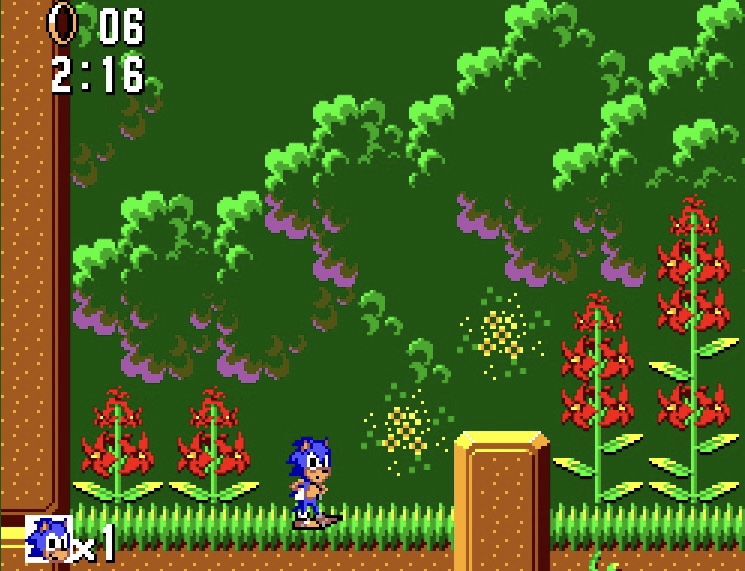
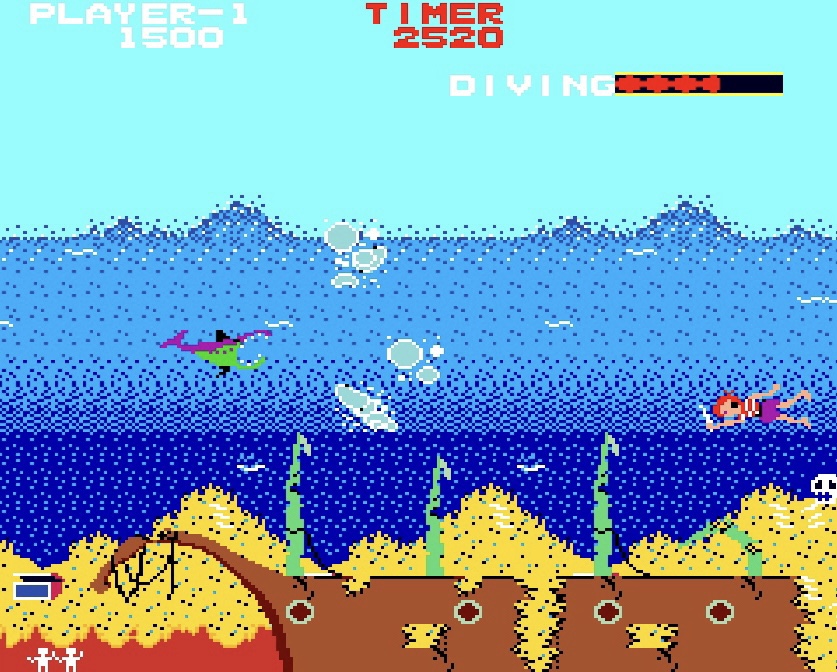
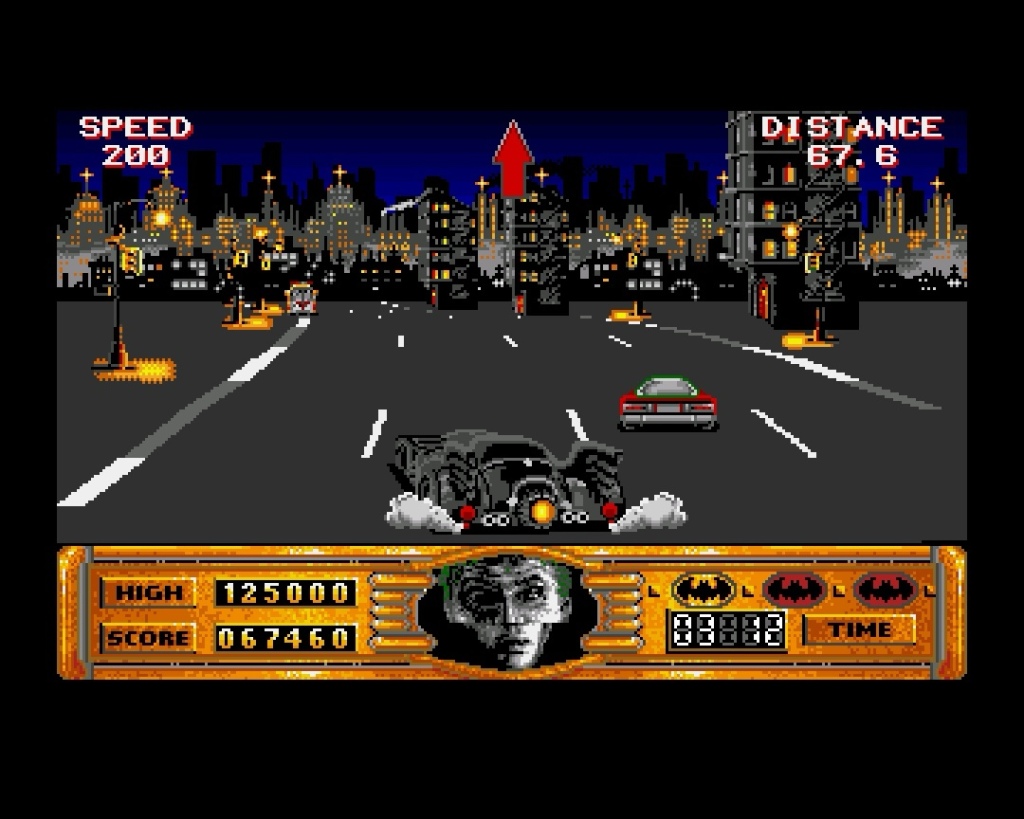
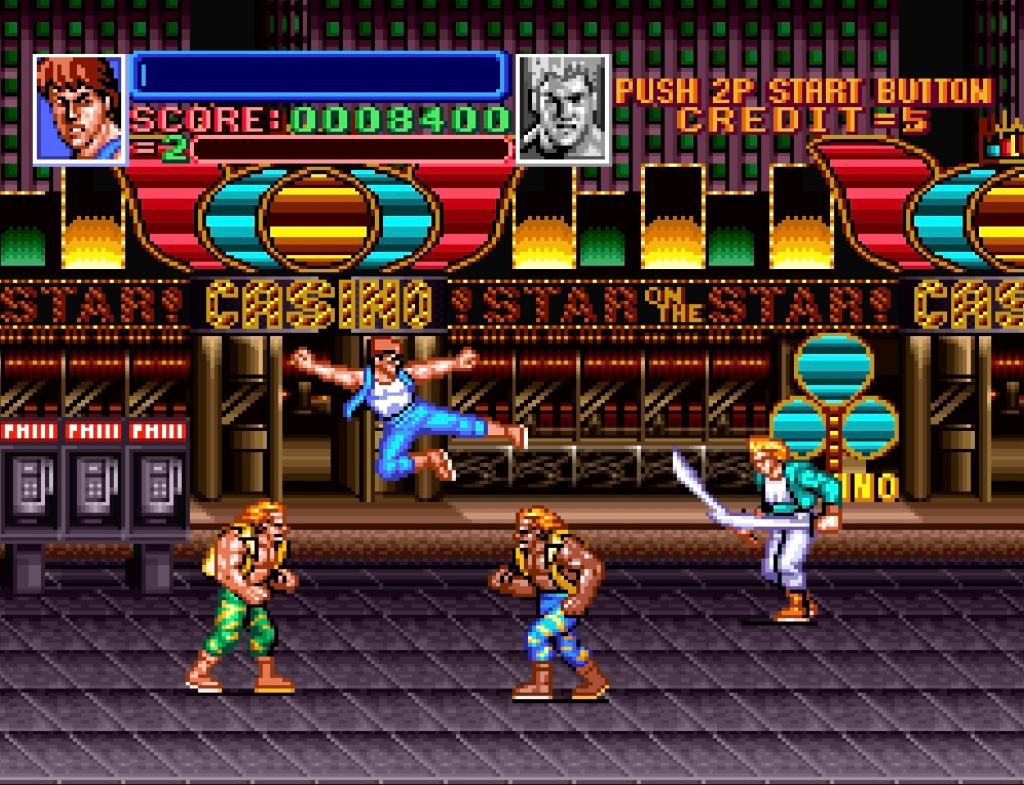
I’ll come back to a few of those at the end but first I want to explain what we’re doing here, which is to once again take a look at some really cool sights I’ve come across over the last four or five decades of gaming, explain where they’re from and why I think they’re cool, or, if that all sounds like too much reading, you can just enjoy some pretty pictures! Before we jump into each one though, I want to mention a few that were originally supposed to be here but when they moved from the on-screen action I had in mind to a screenshot, they just didn’t quite do it for me… And just like everything else listed here, these are in no particular order, starting at the top of the waterfall from the Jungle Stage in Sonic the Hedgehog on the Sega Master System, then the car stage from Batman: The Movie on Atari ST, then the swimming bit in arcade Pirate Pete, and finally, outside the casino at the start of Super Double Dragon on the SNES. And if I ever do a video version of this, they’ll all be my first port of call!
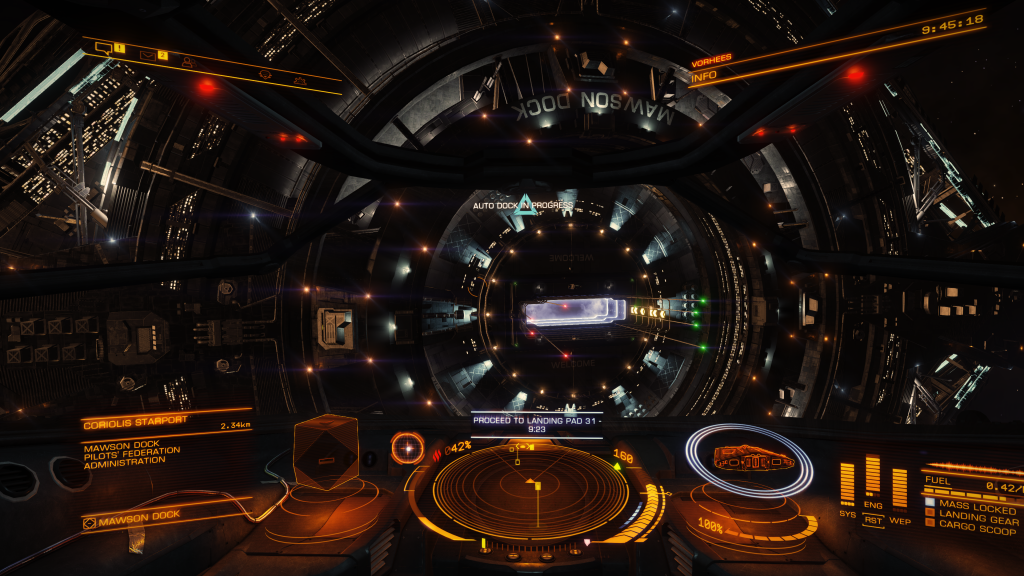
All incredibly subjective though, but what isn’t subjective is our first wonderful sight proper because this one was the image I left you with in part two of this journey as a preview of what you’re reading now! Despite its original predecessor being one of my top ten favourite games of all time, I didn’t get to Elite Dangerous until two days before it left Xbox Game Pass not that long ago, which might not be enough time to even find the surface, let alone scratch it, but was more than enough to realise this is a remarkable and often stunning game! Fortunately it’s also a game that’s always on sale, so a couple of months and a fiver later, I had my own copy of this absolute behemoth from 2014, which keeps to the original space exploration, combat and trading sim-RPG format but today has evolved into this vast, massively multiplayer, persistent universe with all sorts of roles available, factions, mission types and even first-person shooting across more star systems than you can imagine. And what we’re looking at here is one of several types of space station you’ll come across – the Ocellus type to be precise – which is a spectacular, intricate and beautifully lit structure where you’ll be able to get missions, buy and sell stuff, repair your ship and all sorts more. Always a thrill to come across one of these, and the docking approach never gets old, providing you a fleeting few seconds to admire this intimidating but awe-inspiring mechanical complexity.
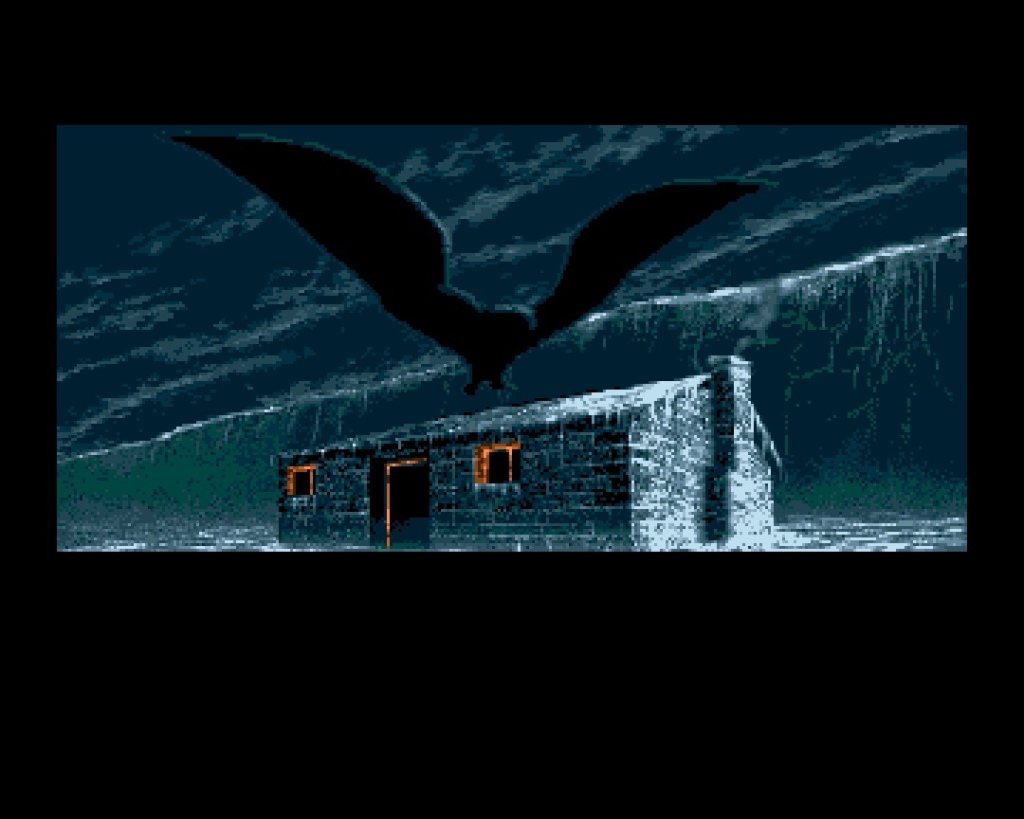
No rhyme or reason involved in where we’re going next – from here on in I’m just going to be throwing these out in the order they’ve been written on my list, and that means we’re now heading back to 1990 and the Amiga… The game over music – ripped straight out of Miami Vice – might be one of my top ten favourite gaming anthems but I still don’t really get Shadow of the Beast II, just like I never got the original on my Atari ST. Not going to stop the opposite end of the game making an appearance here as well though! It was more of the same side-scrolling fantasy nonsense from Psygnosis, wandering about with occasional crappy combat and now some puzzles and a conversation system, and I seem to remember my Amiga-owning friend having it on the title screen for another great piece of music more than actually playing! Before you get there though, there’s this letterboxed opening animated cutscene showing a bleak old cottage in a big storm as we learn the bad mage from the first game is back and after any unsuspecting infants required for his latest evil plans, like the one we can hear crying inside, which is about to get stolen by this giant black winged thing coming through the roof! You first see it coming in the distance, appearing out of the eye of the storm behind the cottage, where smoke innocently drifts out of its chimney and a warm glow streams from behind the door and shutters, emphasising this feeling of safety and shelter from the elements outside. And then suddenly the thing disappears from sight before emerging again in all its huge, bestial glory right over the roof. Such an atmospheric, terrifying effect and one I’ll happily keep reloading for. Before I keep dying for that game over music!
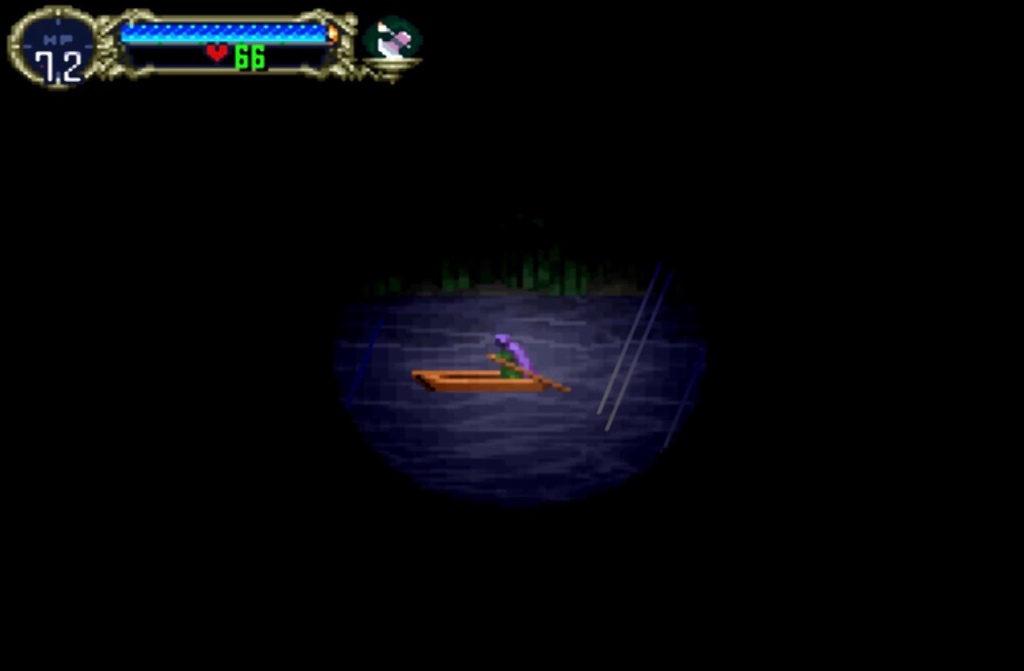
I always say Super Castlevania IV on the SNES is my favourite Castlevania unless I’ve played through Castlevania: Symphony of the Night again in the previous twelve months, but the latter is definitely where we’re heading next, and its original release on the PlayStation in 1997, where actually it didn’t do very well at all for a while, although it certainly got there in the end, seeing releases on all the modern systems and inspiring entire genres of games ever since! You play as Dracula’s half-vampire son, exploring Dracula’s Castle after its latest reemergence to try and stop his latest impending resurrection, which translates to non-linear, 2D side-scrolling fighting and platforming across a map that expands (before it totally inverts!) as you discover new abilities and powers, like turning into a bat. It’s incredibly polished and atmospheric, and the soundtrack is one of the all-time greats, but what I’ve got here is totally missable, in a room hanging from some chains under an outer wall, containing a table and chairs and a telescope, which you can use if you go over to it and press up. And through the telescope you can see series regular The Ferryman, going about his rowing business, no doubt waiting to take you somewhere otherwise inaccessible for the right payment! It’s such a small, “demade” pixel-art image, viewed through the lens and zoomed in across a body of motionless water in front of a gloomy forest, with him indistinctly hunched over his nondescript raft, slowing moving his oar as a fish leaps from the water behind, but it’s all perfectly recognisable all the same, and such fan-service, and just such a pleasure to see him here again before you find him for real!
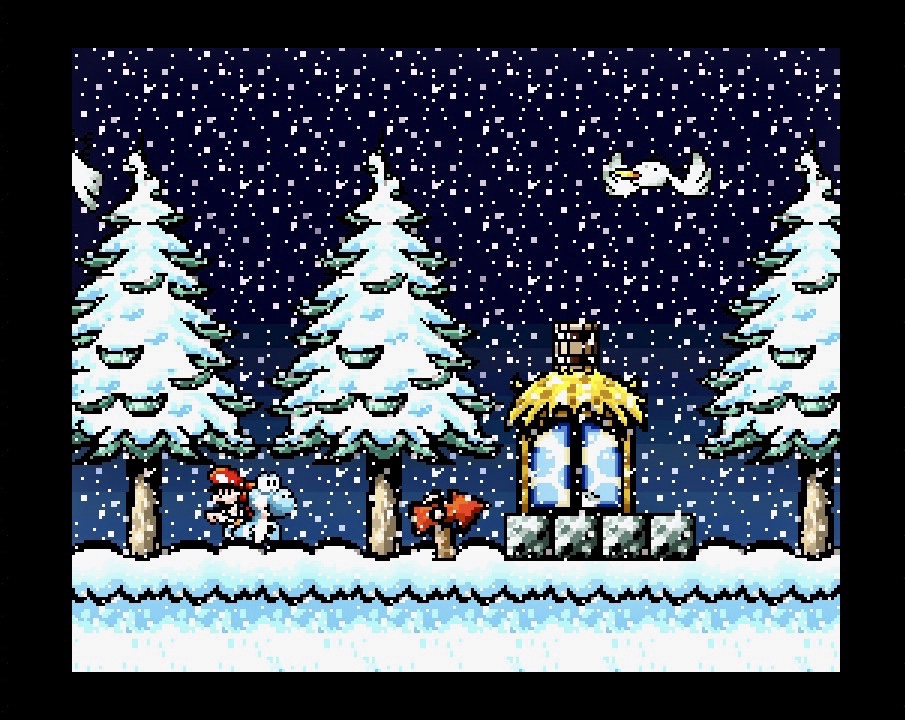
Now for something that couldn’t be further away in tone, and this time the SNES is taking centre stage with Super Mario World 2: Yoshi’s Island from 1995. This is one I was annoyed I totally forget about the last time I was putting these things together, although it’s also a game I don’t have any really detailed recollection of playing through, which I can only really put down to totally obsessing over its predecessor, which I played relentlessly for weeks until I’d 100% found or done absolutely everything! Hard act to follow I guess, although the whole Yoshi the friendly dinosaur and baby Mario thing isn’t really my vibe either! Anyway, if I remember right, what we’ve got here is from quite deep into this last of the classic 2D platformer Marios – as well as one of the most widely beloved – where you’re making your way through this multi-layered, alpine landscape full of ski-lifts to negotiate and giant snowballs to roll around, as well as a few time-based challenges and things to puzzle out. The hand-drawn art style really works here too, but none more so than when the sky darkens and the snow starts falling with this incredibly dense parallax effect across thousands of individual snowflakes! Throw in some vibrant, contrasting buildings and madcap wildlife, and while it might not be my favourite Mario to play, I don’t think the series ever looked better than in this moment!
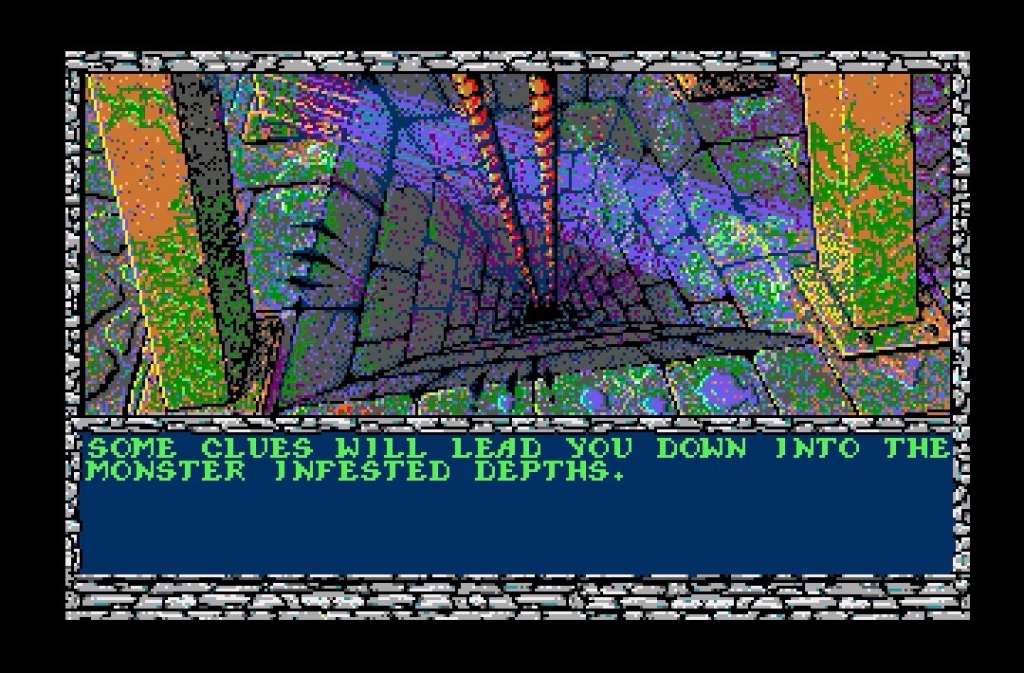
Time we went full nerd, and there’s no better place to do that than on the Amiga in 1991 with Secret of the Silver Blades, the third of four games in the Advanced Dungeons & Dragons Forgotten Realms Gold Box series of RPGs! Joking aside, I love these things, particularly the first one, Pool of Radiance, which I first played on the Commodore 64 around 1988 I guess. This one plays much the same, with you creating characters, forming a party and adventuring your way through the usual forests, ruins, mines and mountains before taking on the Dreadlord in his castle. It’s all elves and halflings, stats and dice rolls, with some really deep systems that are proudly displayed in masses of text and numbers all over various screens, and while this is where the action really is, you move about in a first-person 3D window, which sometimes switches to a scene-setting landscape or conversational character view, while battles are played out in a simple isometric view. But you also get these absolutely stunning pieces of visual exposition, such as dragons and horned ne’er do wells skulking in mysterious underground caverns like you can see at the very top of the page here, or the trippy shaft here warning you of “the monster infested depths” you’re going to be led down sooner or later. Looking at this again with very black and white eyes, I can’t believe I’m including some bricked hole with a couple of ropes hanging down it in a feature about wonderful sights in gaming, but just look at the way the colour creates this incredible texture here, and what colours! Total psychedelia that’s totally out of context but works so well and brings such interest to something that really isn’t interesting!
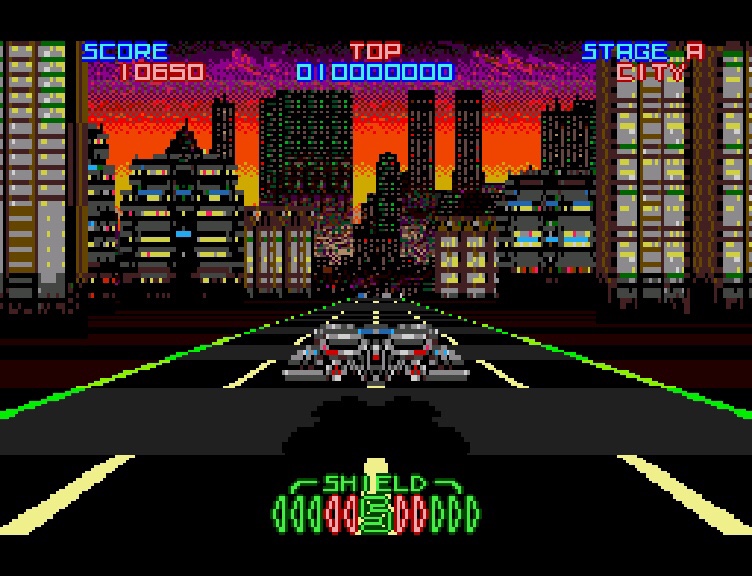
I know there are many who will wholeheartedly disagree (including the magazine reviews at the time), but the first time I fired up the Mega-CD (or Sega-CD) port of Night Striker on the Mega Drive Mini II console, I thought it looked absolutely stunning, and played great to boot! The original Taito arcade game arrived in 1989, playing something like Space Harrier meets Thunder Blade meets Out Run, and likewise it’s really beautiful (which the magazine reviews at the time did agree with) – so much so that it took another four years for a home port to appear, when the Mega Drive’s Mega-CD power boost finally offered the grunt its 3D road combat demanded. And however much Mean Machines might hate how it looks, and however much they think it’s the worst game on the system (it’s categorically not), the first stage’s shimmering “cubist” city skyline in the distance never looked better than in this conversion, its brilliant neons emerging from a fiery sunset filled with purples and oranges and yellows. Who needs resolution or definition when this kind of vibrancy is flying at you?
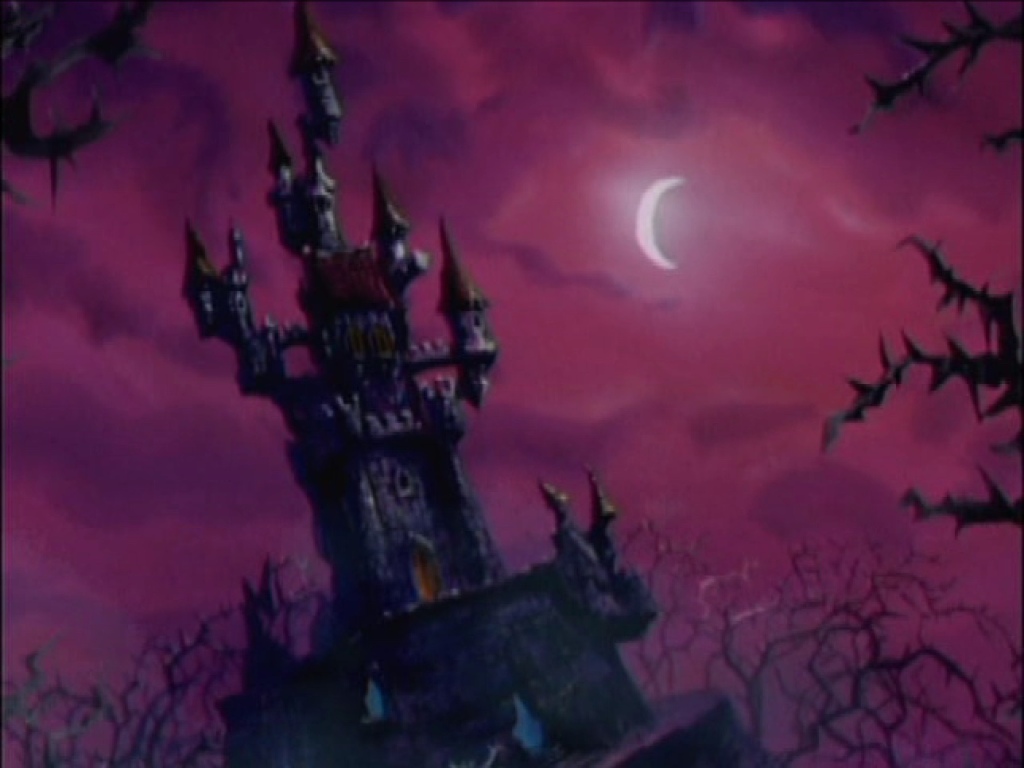
If I’d been putting this together forty years ago, we’d now be on part three of Wonderful Sights in Dragon’s Lair because nothing else even came close to this full-on, virtually-Disney quick-time cartoon. Played like crap though, and is still the ultimate example of video game style over substance. Just over twenty years later, in 2004, along came Dragon’s Lair 3D: Return to the Lair on PlayStation 2 (and elsewhere), and while it didn’t necessarily play like crap this time, it was one of dozens of very average 3D puzzle-platform-type adventures on the system. Cool cel-shaded art-style though, and anyone familiar with the original will recognise many of the locations and characters, as well as the plot, which we catch-up with in an introductory cut-scene put together by none other than legendary Dragon’s Lair creator Don Bluth, featuring a very buxom and scantily clad Princess Daphne being kidnapped by the dragon Singe, leaving your brave knight Dirk the Daring to go and rescue her. Again. And this is where we also catch-up with our next sight, which I know could also do with a bit of that resolution Night Striker was apparently lacking just now, but I reckon is still wonderful in its own way! Actually, it’s wonderful in a very Scooby Doo way too because it could be straight out of there, with the classic, impossibly gothic evil wizard’s castle seemingly carved straight out of the mountain it’s perched on, surrounded by a mass of massive thorns, which are the last thing you probably want to see as you finally emerge from the choking forest full of them you thought you’d just got out of, still surrounding the view as a cruel reminder of what’s to come. Even the slither of moon can’t alleviate this feeling of suffocation, as all those shades of purple compete to snuff out both you and it! I’d live there all the same though!
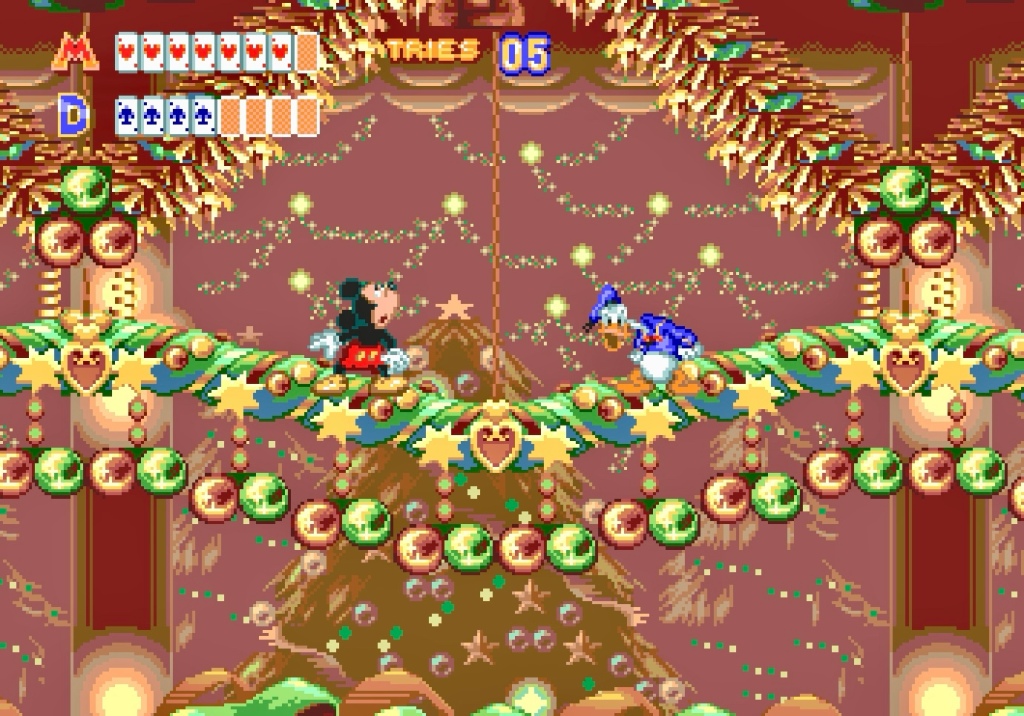
As this feature you’re currently tolerating seems to have become an annual one in the run-up to Christmas, it’s only fitting we have a Christmas game here too! World of Illusion Starring Mickey Mouse and Donald Duck is among the best of the many great platforming games that graced the Sega Mega Drive or Genesis, arriving in 1992, and seeing one or two players trying to get the pair home from a magic place after they opened a magic box they shouldn’t have. I’ve played through this solo but that’s no use to us here because a few levels in you find The Library, and if there’s two of you in there rather than one you’ll find an open Christmas present box you can both jump into, revealing a hidden Christmas level! For the purposes of including it here though, I’ve cheated, connecting a second controller to my Mega Drive Mini, where the game can currently and legitimately be found, and I’ve used the password system (based on some very cool Disney playing cards) to dump me at the start of The Library, then finding the Christmas level by inching my way to the open box, one player at a time, all by myself. Which I reckon cancels out the cheating! The payoff is worth it though, and while the level is a bit mundane to play through, it’s absolutely gorgeous, hearkening back to those Christmases past that in reality never existed but were full of old-fashioned light and cheer. And lots of glitter and gold! Those character designs will never get old either, impatiently waiting for me to get a picture!
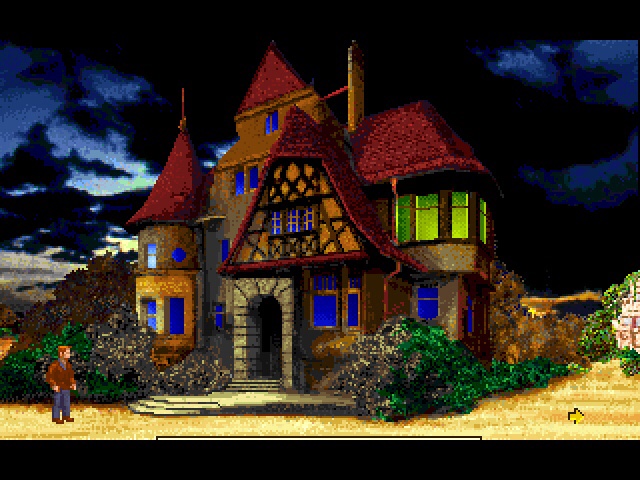
If that represented the ultimate Christmas, then this is probably the total opposite because there are few things less Christmassy than Call of Cthulhu: Shadow of the Comet, a sometimes stunning DOS point-and-click adventure from 1993, which I only only discovered when I reviewed The Art of Point-and-Click Adventure Games by Bitmap Books, but the double-page image in there alone was enough for me to instantly buy in to not only see it for real, but also do what turned into a monster deep-dive here to boot! Didn’t hurt that I’m both a Lovecraft fan and recovering Halley’s Comet nerd either, which both combine to form the unnameable horror you end up investigating. Interestingly, it didn’t start life as a “point-and-click” but used key controls instead, which made the mouse-enabled enhanced rerelease I played a little clunky, but turned out to be an engaging piece of fan-fiction for the duration all the same. Some of the most bizarre voice acting you’ve ever heard though! But just look at that austere, perfectly dressed and beautifully lit piece of New England architecture you come across one night! It’s not the only example of its kind in the game either, and I really had to resist the temptation to turn what I wrote about it into a walkthrough, just so I could share all my screenshots! There’s a reason this one made it into the book too though, and what a way to sell a game!
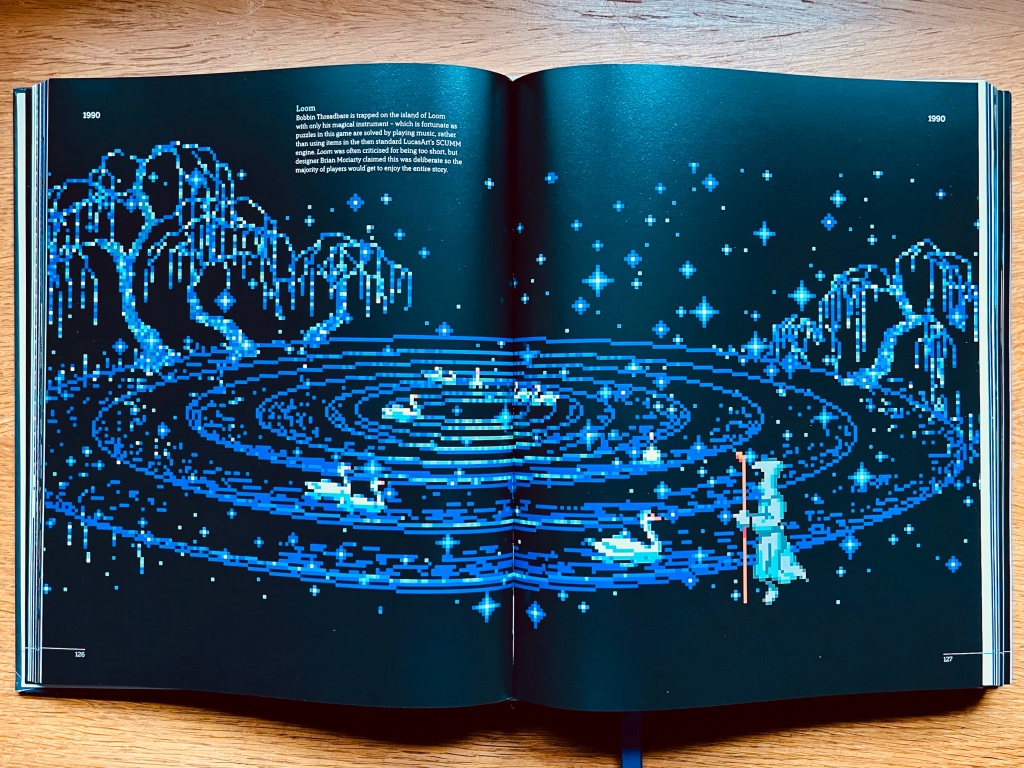
I think I’m going to stick with that book for the next one, and what the hell, I’ll even give you our next wonderful sight straight from its pages! Actually, it’s mainly because I’ve not played Loom for a very long time and don’t fancy doing so again just for one screenshot but either way, it’s a wonderful way of showing it, and it is what reminded me to include it here after all! Loom is another point-and-click adventure game I know best from the Atari ST back in 1990, and it’s another I could easily have picked several scenes from because it’s a proper stunner throughout, whatever you’re playing on. Pretty unique as a LucasArts adventure of this type too, in that most of your interactions take place using a four-note musical instrument rather than the usual pointing and clicking. Came with half and hour of audio tape to set the scene too, which is high-fantasy nonsense involving weaving and magic swans! It all works though, and if I remember rightly, this scene is from quite a way in (hence not being easy to get to), and depicts The Shore of Wonder, home of the dead and the transcended, and a mysterious dimension you need to get to that’s outside of the regular and more grounded gameplay locations. Here we find a cosmic pond with said swans playfully swimming through its glittering, star-filled surface, surrounded by weeping willow trees built into very fabric (no pun intended) of the infinite expanse of space beyond. The subtle pixel-art and minimal colouring couldn’t be better chosen to convey the magic of this place, and I reckon the result is a pretty good place to be spending your eternity!
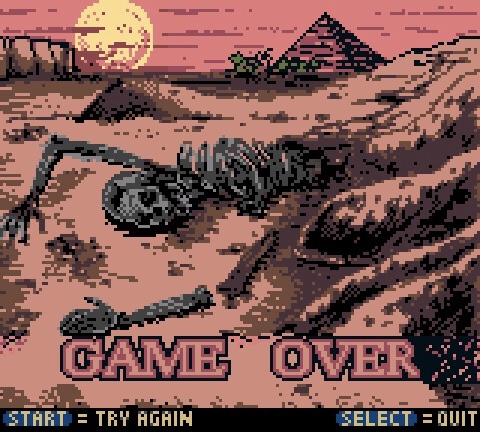
And that leads us very nicely to our next sight, and someone who’s just met a very grizzly end, so I’m sure would welcome a bit of heavenly serenity! It’s a spectacular place to go though, your skeletal remains spread out and almost consumed by the shifting sands of this mysterious landscape, to be watched over forever by one of the Seven Wonders of the Ancient World. So much detail coming from the lowly Game Boy Color’s screen too, with the horrifyingly lifelike skeleton amid the Egyptian desert textures, while the contrasting greens of the oasis lead to a really thoughtful representation of the Great Pyramid and a dramatic setting sun. Thoughtful use of colour too… If only everything that precedes this wonderful game over screen was equally thoughtful! You’d have thought I’d have learnt my lesson buying crappy movie tie-ins on the Spectrum a long time before this too, but no, it continued and even gathered pace when the Game Boy Advance in particular came along, which was very shortly after The Mummy Returns here arrived in 2001! It’s not terrible though – just terribly average – with mostly side-scrolling platforming with a bit of sword-fighting and even some first-person shooting kind of following the plot of the film. But while it doesn’t have the music of the the Shadow of the Beast one from earlier, it certainly knows how to tell you your time is done!
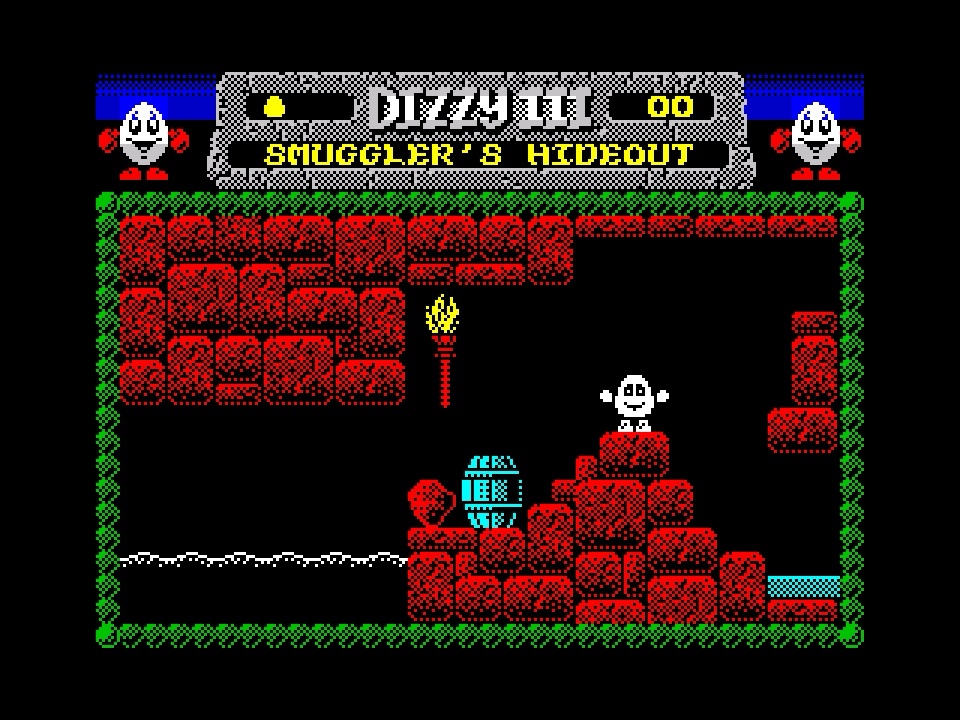
Our time is nearly done too – four to go, starting with Fantasy World Dizzy from 1989 on the aforementioned ZX Spectrum. Still astounds me that these things were budget titles, but anyway, this was the third instalment in the series, if we’re not counting Fast Food, which was more of a spin-off… You can’t go wrong with any of them though, especially this one, which kind of set the standard for all the others on all the systems that followed, with much-improved inventory management, a more straightforward three lives system and a first introduction to the Yolkfolk! Apart from those enhancements, it was the now-established puzzle-platforming format though, as you collect items to solve problems to help you progress to the next one, all to rescue your girlfriend Daisy from the clutches of King Troll. And early on in that adventure, you come across the smuggler’s hideout, representing what is probably the most diminutive sight on our journey today but stick with me! I’ve been fascinated by old-time smugglers since the first time I visited the Isle of Wight, and later Devon and Cornwall, as a kid. I’m also a product of the early days of video games when your imagination filled in the gaps the graphics weren’t able to. Now, while my impression of hidden caves and barrels of rum and illicit lantern signals might be somewhat romantic, this lowly screen in Dizzy is enough to transport me straight into a moment in history I’d love to see for real but I can’t experience otherwise! It’s simply a place I’d like to be, with the sea lapping at the entrance, lit by a flaming torch above the previous contraband, and I’ll happily fire up the game just to sit there for a while. Nice detail too, complete with shadows in the right places, and colour like you only get on the Spectrum adding the finishing touch!
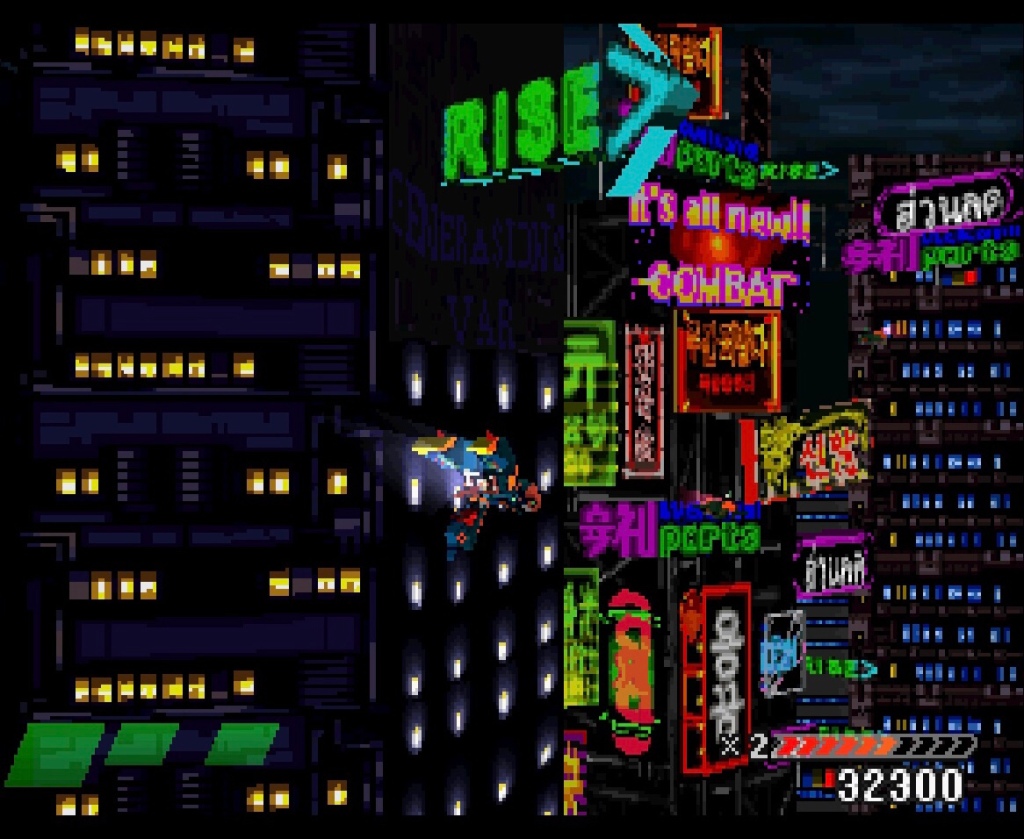
From centuries past to centuries into the future now, and was there ever a better-looking bit of neon in a game than in the first stage of Einhänder on the original PlayStation? It’s a horizontally-scrolling shoot ‘em up from 1997, whose name comes from the German word for a one-handed sword, and refers to the numerous destructive attachments you can pick up from fallen enemies, three of which you can have at your disposal, hanging off your ship, at any time. It’s 2D on a 2.5D or even 3D plane at times, as camera-angles regularly move to impressive dramatic effect, and there’s even full-motion video between stages. As is often the case with shooters from this era, the best of the visuals are front-loaded so the maximum number of players can see them, and there’s none better than this incredible multi-dimensional cyberpunk cityscape that swings from distant to right in your face in the smoothest of blinks of an eye, with searchlights lighting up the sky and massive video billboards hinting at the wash of electric colour about to hit you as the angle of view tilts towards almost 3D and you’re in Tokyo’s worst nightmare, neon signs everywhere, outdoing even the mass of explosions going on in the air all around them. And that crazy opera soundtrack (which soon gets very eclectic) is assaulting your senses on top! It’s fleeting and soon gives way to the multiplier-based score-chasing gameplay that still makes it a classic today, especially that weapon-switching, some prolonged set-pieces and some superb boss fights, but it’s all that neon I always remember first when I think of Einhänder… And yes, like those four games we started with, screenshots of it moving a full whack can’t really do this thing justice, but I spent so long trying you’re getting it anyway!
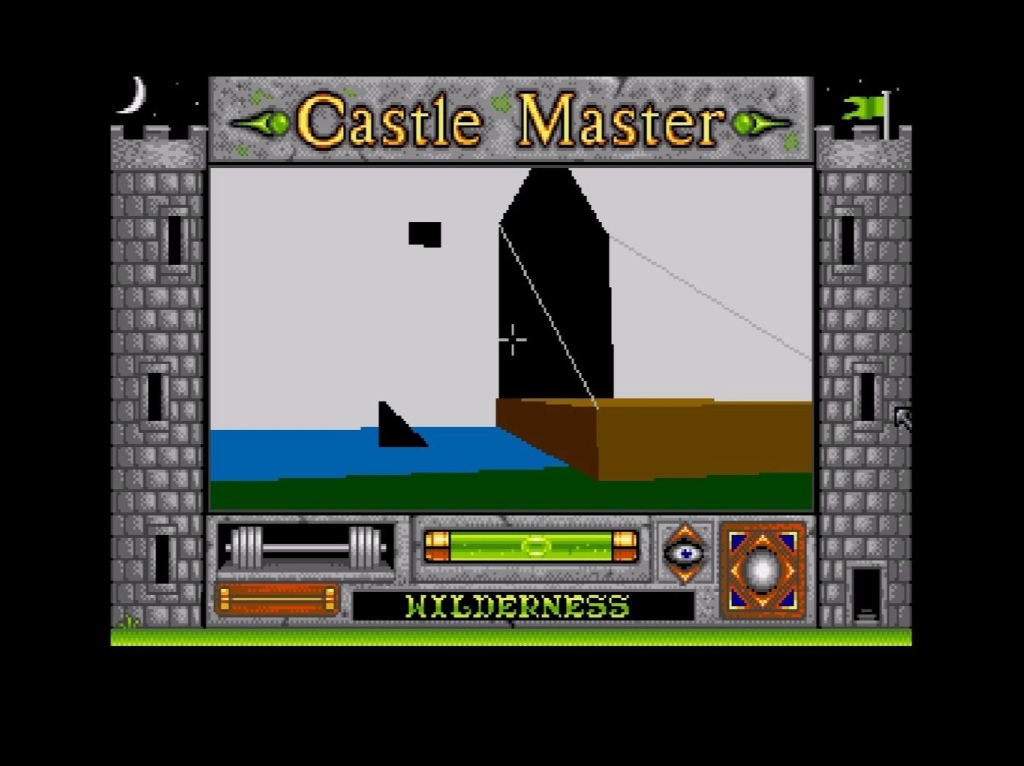
Similar to Einhänder, our penultimate sight is what I think of first whenever I think of Castle Master on the Atari ST, which I have a new -found fondness for because it was the very first game I tried after not very hopefully replacing what turned out to be dried out capacitors on its original power supply back in the summer of 2023! You can read all about that in the recent (as I write) deep-dive I was inspired to write as a result, where you’ll also notice the picture here is, unsurprisingly, the first thing you see there too! In a world so infatuated with frame-rates today, it’s hard to appreciate today quite how groundbreaking the Freescape technology it’s built on was at the time, but it truly opened up new possibilities in 3D world-building, movement and interaction, first with Driller in 1987, a sci-fi adventure that honestly I wasn’t really interested in enough to see it as any more than a very cool tech demo. Castle Master changed all that in 1990 though, and I was absolutely hooked and absolutely immersed in this spooky old castle the second I first loaded it up, with all its exploration and puzzles and things that go bump in the night, and it was like nothing I’d ever experienced before! But before any of that happens, the first thing you have to do is work out how to get in, because the castle has a moat, the drawbridge is up, and those things you’ve seen going round and around it since you first arrived turn out to be fins, meaning it’s also full of sharks! There is such a sense of foreboding and intimidation as you get up close, a tiny hole next to the raised drawbridge silently indicating that’s you’re only hope, and when you eventually work out what to do, there’s still so much trepidation because one false step and those sharks are still waiting! The incredible thing is, all of this is conveyed by almost as many polygons as you could count on one hand, and in even fewer colours! A supremely iconic piece of 16-bit graphical design…
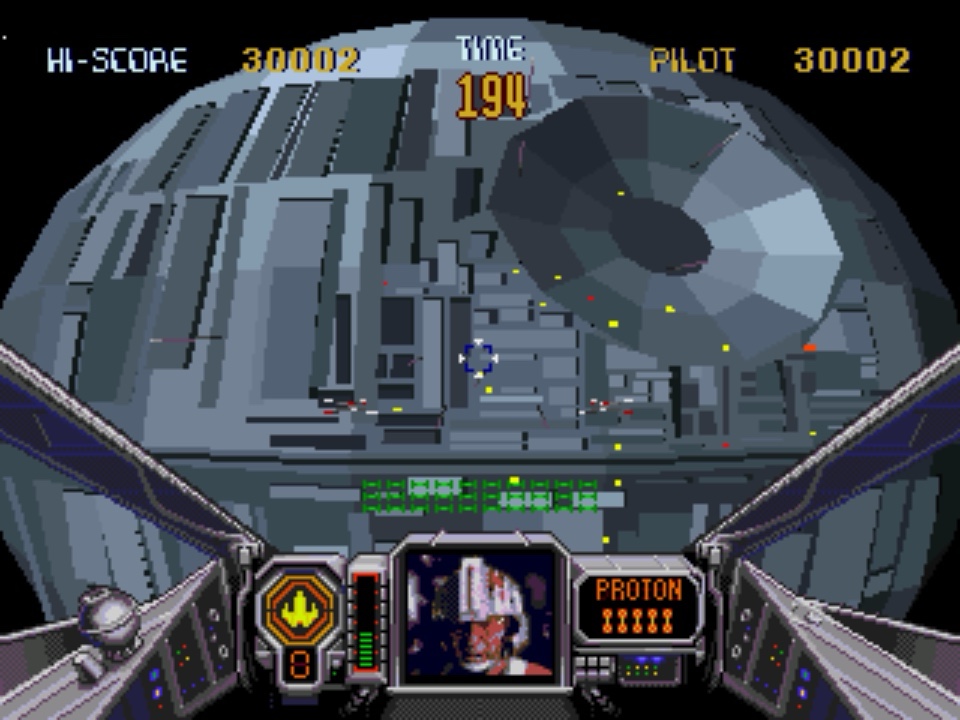
I’m not sure “iconic” is a word particularly associated with the 32X though, Sega’s stop-gap 32-bit “power expansion” for the Mega Drive or Genesis while they finished putting the Saturn together. It was, I believe, a flop, and I really wasn’t familiar with it (or its forty games) until very recently, but that’s precisely where we’re going to finish, with what’s arguably the best of what isn’t really a bad bunch at all on there, and it’s Star Wars Arcade. This was a launch exclusive in 1994, converted from the arcade game the previous year, which saw you piloting a Rebel spaceship across elements of both A New Hope and Return of the Jedi. Despite looking more like Virtua Racing (which it originally shared the same arcade hardware with), the gameplay feels very similar to Atari’s Star Wars arcade game from ten years earlier but with either an in-cockpit or third-person view. You could play two-player too, with one flying and one shooting, but either way it’s set over three levels, seeing you dogfighting with TIE-fighters in an asteroid field, then taking on an Imperial Star Destroyer, and finally assaulting the Death Star. It looks (and sounds) fantastic, and what’s there is really fun, but in reality there’s not lot there. But there is this wonderful sight that – unlike anything else we’ve seen so far – I only fully appreciated once I was reviewing a bunch of screenshots I took pretty randomly when I was first playing it a few months back! Given the choice, I’ll always take the cockpit view in anything (because I’m not a pervert), and here we are approaching the Death Star, and look at the size of that thing, with more polygons than poor old Castle Master could even dream of! The detail is superb too, with the super-laser’s ominous concave dish a reminder of the odds stacked against you, while all those tiny lights might also represent the thousands of people you’re about to blow to smithereens without warning! It’s so authentic, and even more so sitting behind that dashboard or whatever you call it in a spaceship cockpit! I’m not sure anything will ever match the exhilaration of climbing down into that original arcade cabinet from 1983 but it doesn’t get much more Star Wars than this!
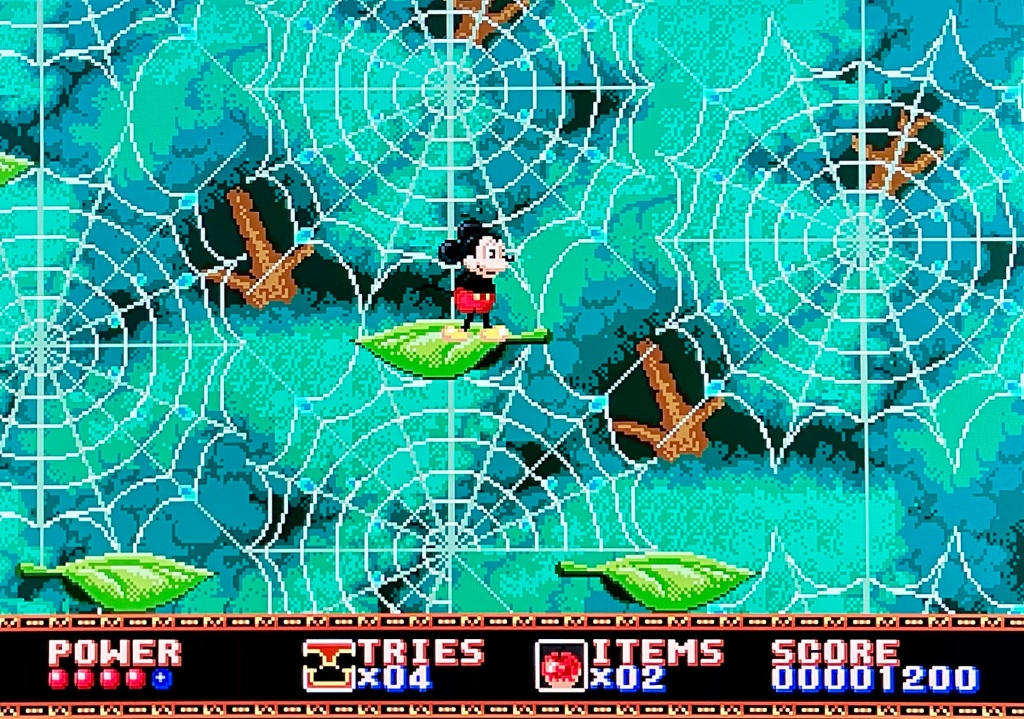
Quite predictably, I thought of several other things that should be here as I was putting this together, and I’m not quite done with that point-and-click book yet either, but I think we’ve had our fill for this instalment so I’m going to leave it there. And give myself a head-start for part four, where I can tell you there’s also more Mickey Mouse to come, as well a lovely example of an Amiga graveyard, a World War II shoot ‘em up and even a golf game! I think I’m having second thoughts about Batman: The Movie too, so look out for a deep-dive coming on that in 2024 as compensation… In the meantime though, I hope you’ve enjoyed having this sightseeing tour with me here today, and in case you haven’t already, be sure to check out Wonderful Sights in Gaming Part One and Part Two to keep you going until the next one!
 Retro Arcadia