
Back again for our regular Sunday roundup of quick-fire reviews and impressions of everything under the spotlight at Retro Arcadia this week, old and new and a bit of both…
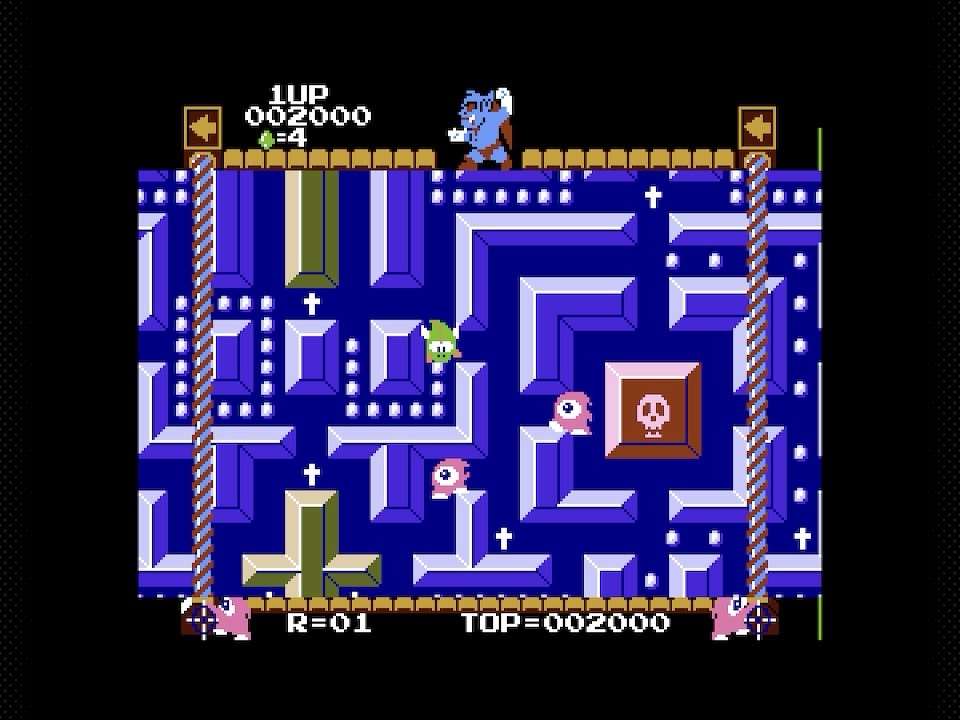
We’ll start with a bit of both this time too as a few new things have arrived in the Switch Online old system libraries of late, and while I can do without even more N64 Mario Parties, how have I never played Devil World before??? It’s actually by the Mario bloke, Shigeru Miyamoto, too, and came to the NES in 1984, playing like an occult Pac-Man as you guide your little dragon around the kind of maze that would have been censored outside of Japan at the time for its misuse of religious imagery! Anyway, as you might expect, you need to collect the dots and breath fire at your enemies but there’s a twist in the form of the Devil himself at the top of the screen, who’ll instruct his minions to move the entire maze up, down, left or right at random, meaning you’ve also got to watch out for getting squished by the moving walls as well as develop strategies for collecting stuff in a whole new dimension, not wholly unlike Pac-Man Championship Edition would do many years later. Everything about it is gloriously NES (or Famicom, I guess), and gloriously Miyamoto too, with as much polish to the gameplay as there is to the presentation. Real hidden gem and its clever, spooky twist on the formula has really got its hooks in me!

Last week I was all over Super Skweek for the Atari Lynx on Evercade, and said I was keen to try some of the other versions, which led me to the PC-Engine port of its 1989 Amiga predecessor, which I don’t think arrived on there until 1991, well after the sequel appeared elsewhere, although it’s all more or less the same regardless! Feels properly at home here though, with your little yellow furball doing his Q*Bert meets Chip’s Challenge thing and turning the tiles that make up the stages from blue to pink as he glides over them, blasting enemies, avoiding traps and doing a bit of fairly straightforward environmental puzzling. It’s all simple enough and is generous with lives but it takes some mastery to make much progress all the same, controlling intentionally fast and loose while demanding patience at the same time. And while the concept is fantastic wherever you play, this is as good as I’ve seen it looking, with the PC-Engine not only throwing out colours as only it can, but setting them off with some fantastic lighting and incredible attention to detail considering we’re mainly talking about little squares and a fuzzy little round thing!
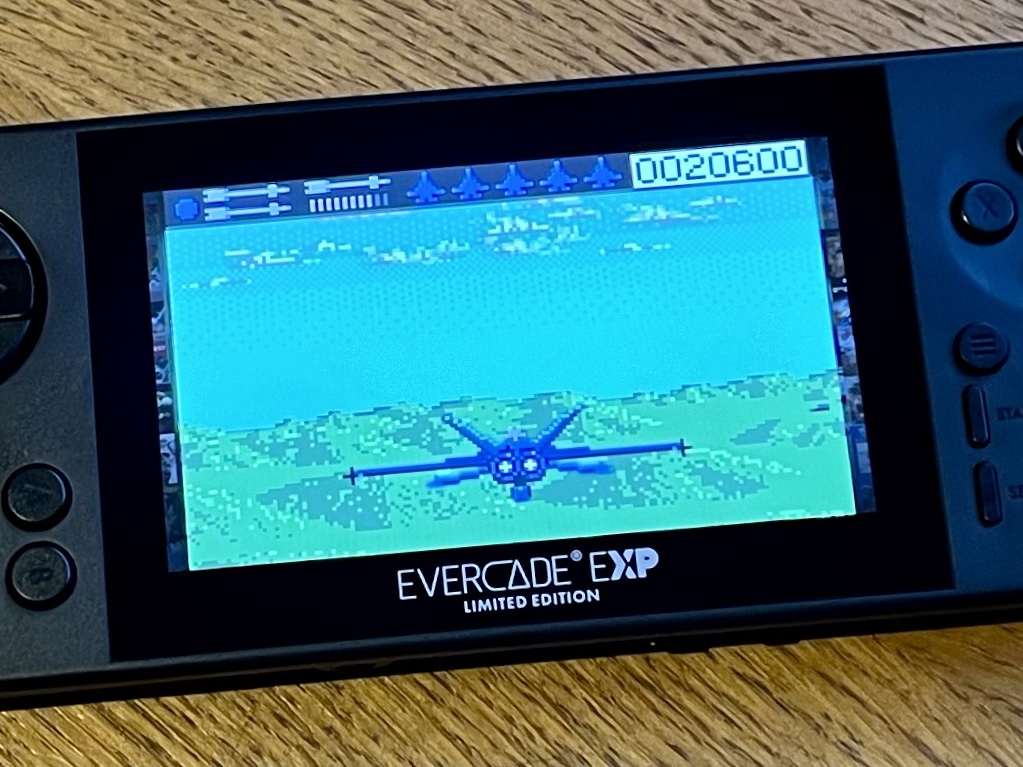
Back on the Lynx on Evercade, I’ve also been playing Blue Lightning on the Atari Lynx Collection 2 (together with the aforementioned Chip’s Challenge), developed by Epyx in 1989 as the Atari handheld’s answer to After Burner. I’m pretty sure it was a pack-in with my brother’s Lynx, and it was quite the showcase at the time – blew my poor old Game Boy out of the water! Anyway, you’re the pilot of a prototype fighter jet shooting down enemy planes or taking out ground targets over the course of nine increasingly intense although otherwise mostly repetitive missions over hostile territory. The action is viewed in a pseudo-3D perspective from behind your plane in an impressive variety of different environments, with way more going on in the air as well as on the ground than you’d ever expect from such a machine, with loads of detail and colour, and its sprite-scaling does an impressive job of throwing all those planes and missiles around at pace too, complemented by some cool explosions and animated takeoff and landing sequences. Still feels so good to play too, especially on the handheld Evercade EXP, making it a much closer approximation of how it was original intended. Quite the showcase for that system too!
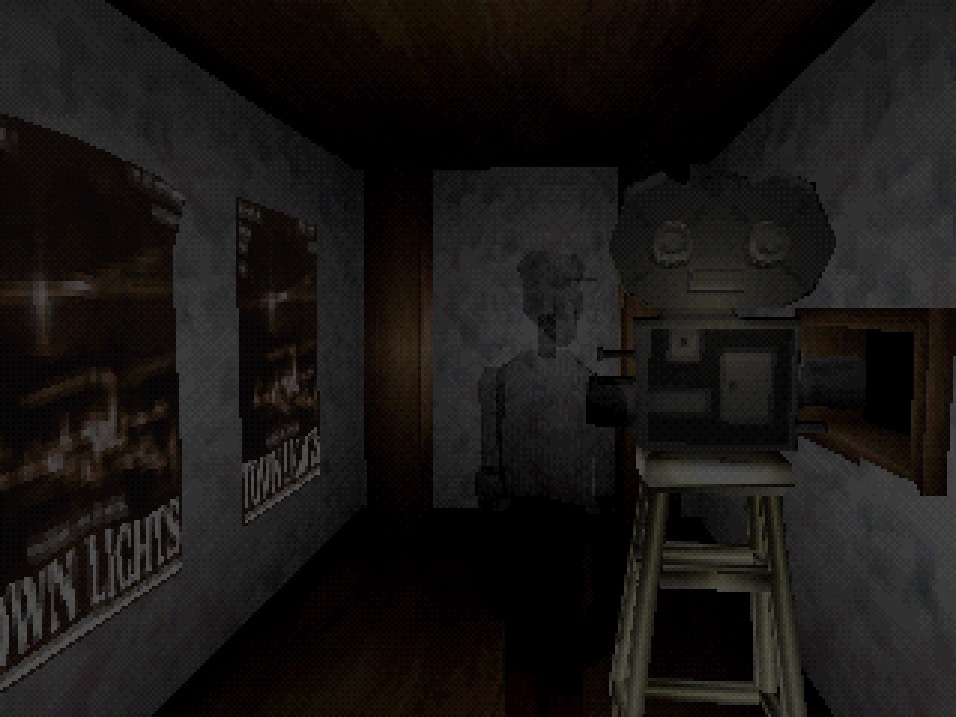
I fell in love with Echo Night the moment I saw its glorious, none-more-PS1 double-page screenshot in From Ants to Zombies, the new history of horror in video games from Bitmap Books, and actually playing it this week has done nothing to change my shallow little mind! It’s by none other than FromSoftware in 1998 but it’s certainly no Dark Souls! It is, however, a vaguely-Lovecraftian supernatural mystery mostly set on an opulent old Titanic-inspired (with a dash of Mary Celeste) cruise liner where you end up trying to move on the ghosts that are it’s only remaining occupants by learning what’s still tying them to the ship and fixing whatever that problem is, which generally involves being transported back to their past lives to do some digging. Having now spent about seven hours playing through its eight chapters, I can’t put it better than the book’s assessment that it plays like what we’d call a walking simulator nowadays, with a bit of back and forth exploring and puzzling at a nice measured pace, occasional mortal threat and a load of ghosts that look like Silent Hill’s more glamourous cousins! The past-life sections offer variety but it’s being onboard the ship that I absolutely adore, with this incredible sense of melancholy and atmosphere like you only got on the original PlayStation, where jagged edges and dimly lit locations seem more like a design decision to me today than any “limitation” – not that it ever was at the time! I’ll hopefully be doing a deep-dive on this when the dust has settled and I’ve played through it again with a more objective eye sometime in 2024. By the way, the in-game version of that image in the book that so entranced me is at the top of the page!
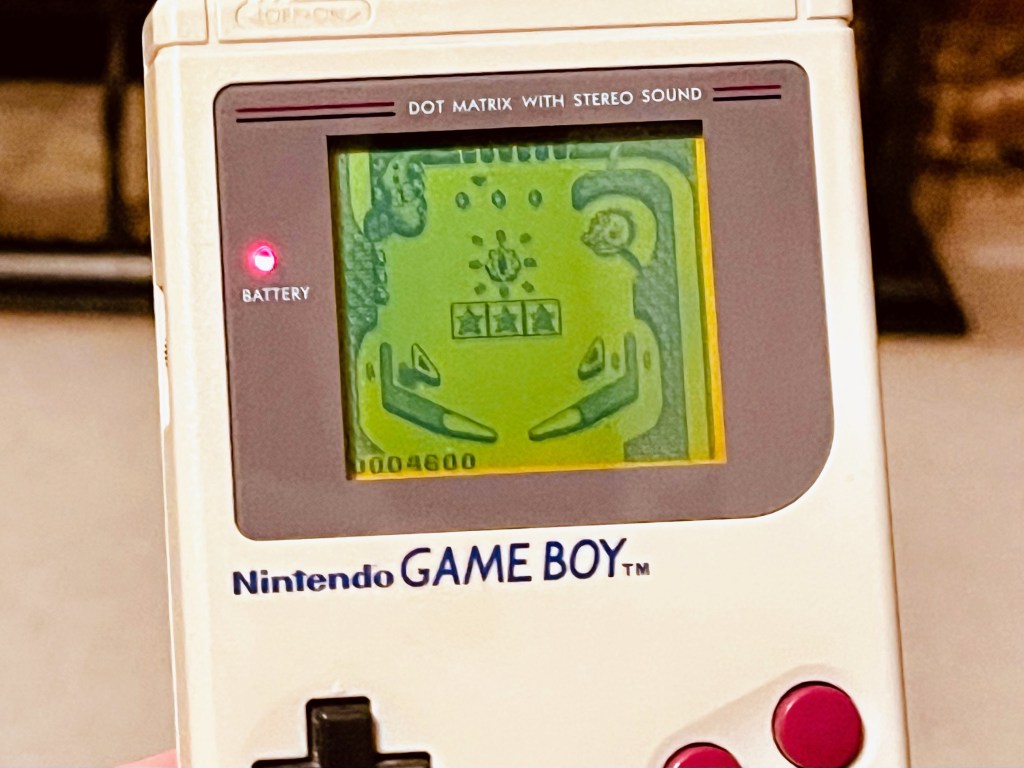
I’ve still got my third play-through of Resident Evil 4 Remake on the go, and I’m now deep into Game Boy Color (on Switch) Legend of Zelda: Oracle of Ages, which I talked about last week and will report back on again when I’m hopefully done, so I reckon we’ll leave it there for this time. In case you missed it last Wednesday, be sure to check out my review of From Ants to Zombies: Six Decades of Video Game Horror, then next Wednesday, we’re going to be digging out some original hardware and discovering Pinball: Revenge of the ‘Gator on Nintendo Game Boy, so I’ll hopefully see you then!
 Retro Arcadia