Back again for our regular Sunday roundup of quick-fire reviews and impressions of everything under the spotlight at Retro Arcadia this week, old and new and a bit of both… And yes, I know we’ve reached a hundred of these, but on the basis I did absolutely nothing for my own fiftieth birthday last year because I don’t like fuss about anything, I decided it as okay to do the same here, so it’s business as usual!

And there’s no more business as usual than me saying I’m still really enjoying Diablo IV on Xbox Series X! I’m very close to the end now too but I’ll save any further thoughts until then. However, this time last week I did promise to go beyond first impressions on Starfield, after a paragraph slating all sorts that’s wrong with it but there being something there I liked enough to keep going all the same, even if I didn’t know what it was. Which also sounds like every Bethesda game that ever came before it! Anyway, funny story… Main missions often force a companion on you but they’re mostly unobtrusive and just follow you around or shoot at enemies doing no damage whatsoever. In the middle of one of these missions, we (meaning me) are collecting something in a kind of scummy futuristic shopping centre when suddenly I get arrested – no idea why because I’m not doing anything more than trying to get my bearings (because no maps). As a result I’m whisked away to some interrogation centre on a high security detention spaceship somewhere in orbit, and after answering a load of questions I’m told I’m being moved, so I get up, turn to face the door… And there’s my companion! Not only religiously still following me but they’ve obviously done it through my whole journey to the nick, into the interrogation area, and now as I’m escorted onwards – through corridors, down lifts, passed on to other NPCs – and none of them bat an eyelid or seem to have even noticed! Which, of course, they haven’t, but that’s Starfield! Seemingly imaginary friends and what turned out to be a vast and apparently very pressing side mission I’ve managed to totally ignore ever since aside, I guess I’ve played about fifteen hours now and there’s increasingly that something there despite the jank, the glitches and the lack of real immersion or engagement with a lot of what it’s trying to do, but I’m still not entirely sure what it is! And as such I’m honestly not sure that’s enough to keep me going much longer, let alone sixty or whatever hours, because surely there’s only so long you can enjoy something so intangible. We’ll see, but until then I’ll leave Starfield here until I’ve got something new to say to avoid boring you with it every week!
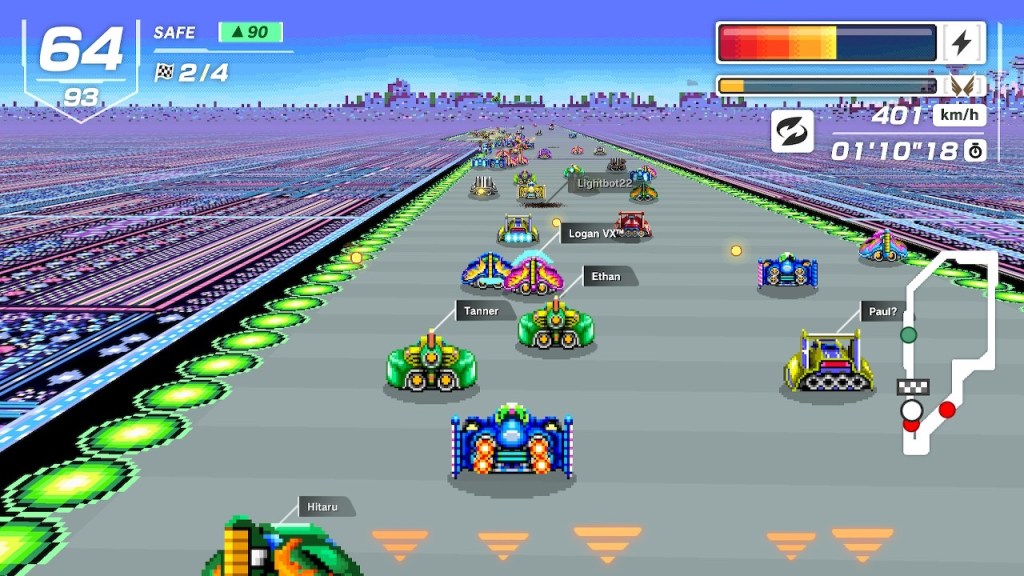
Next up is the wonderful chaos that is F-Zero 99, announced at last Thursday’s Nintendo Direct and released “free” on the Nintendo Switch Online service the same day. It’s a twist on the original SNES game, with familiar tracks, a similar but much larger scaled (to accommodate ninety-eight other players) visual style, updated music and new features like a spin attack and sparks to collect to boost you onto a temporary higher-speed elevated skyway. There’s a few modes, special events, level progression and other rewards for doing well but it’s mostly pick a race, vote for a track then enjoy the carnage of an impossible number of racers mainly just trying to survive to the end of the race – or at least through the next cutoff point at the end of each lap – as your energy constantly drops, either from using it to boost or just hitting things, which is inevitable! I’ll never win a race but I’m having a lot of fun just being in it for now!
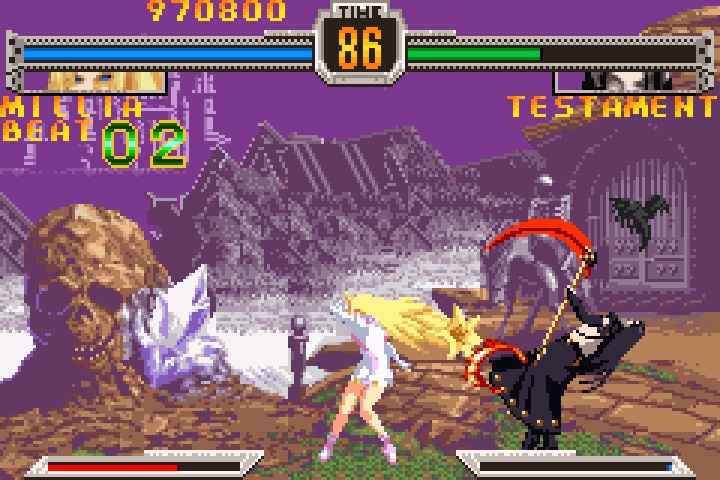
After finishing off Mortal Kombat 11’s story mode (also covered last time), I fancied a bit more 2D fighting but something a bit simpler too, so jumped over to Guilty Gear X Advance Edition on Game Boy Advance from 2002. It’s a surprisingly fully-featured version of the arcade game from a couple of years earlier that I know better on PS2, where it was a proper stunner too! It’s not quite that here, but looks fine on a small screen, with some garish colours in some varied backgrounds probably compensating for the GBA’s screen darkness, while characters are detailed and sufficiently well animated. Every location has its own chip-tune synth-rock soundtrack too, which do vary in quality but there’s a few really good ones. You’ve got fourteen characters plus alternates to unlock, pretty much all the moves (making it pretty sophisticated as a result) and there’s even modes here not present on other versions, such as tag and 3-on-3, in addition to regular arcade, versus and survival. The trouble is, however you play, it’s way too easy as standard, and even ramping it up to very hard isn’t going to keep you challenged for that long. I had fun playing through arcade mode with a bunch of different characters all the same though, and it’s still a nice, mindless thing to jump into now and then.
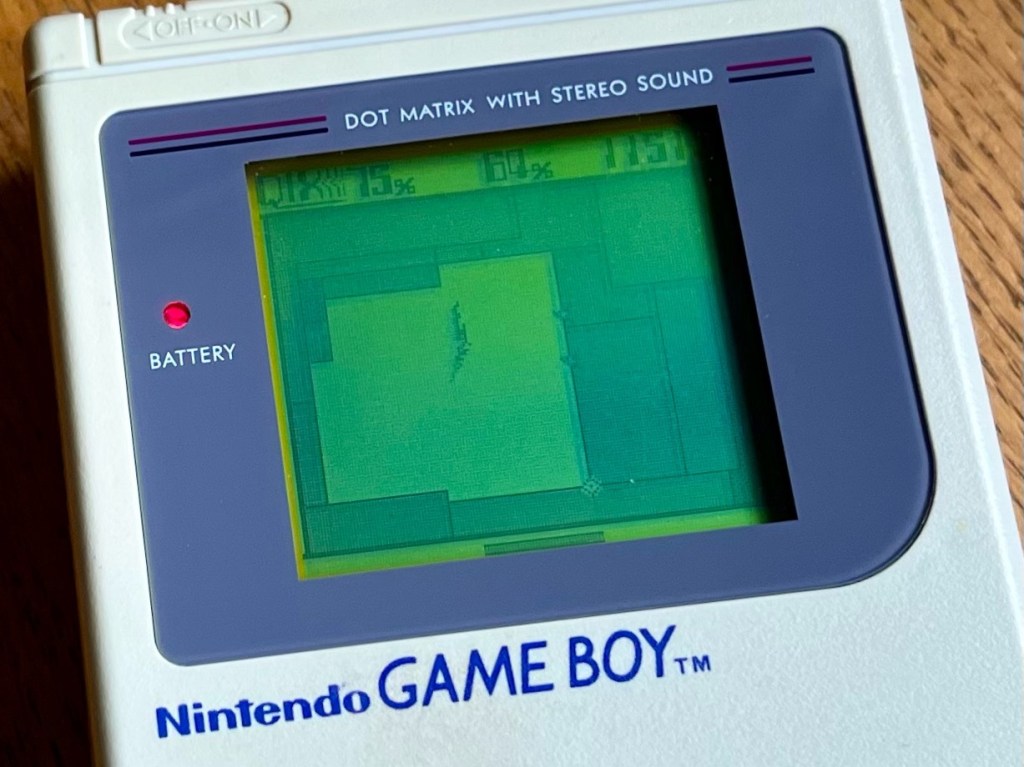
Qix is a 1981 line-drawing arcade game by Taito that I’ve covered in reviews of both the Taito Milestones compilation on Nintendo Switch and the Taito Egret Mini II cabinet. I’ve always so close to really liking it too, but my colourblindness has rendered the little cursor thing you move almost impossible for me to see, while the little guys that patrol the lines you draw to fill the specified percentage of the screen to beat the level are totally impossible! Such a great, simple concept that sounds like so much fun if you can actually see what’s going on… Which you can on the Game Boy version because it’s got no choice but to go all-in with a handful of shades of beautiful green! I had no idea this even existed until fairly recently but since I found out I’ve played it to death using emulation on my PocketGo, and now I can play on original hardware too because I just got hold of the cartridge! Obviously it’s the same brilliant action-puzzler wherever you play but nothing like playing for real, and it’s another step towards this becoming a real all-time favourite!
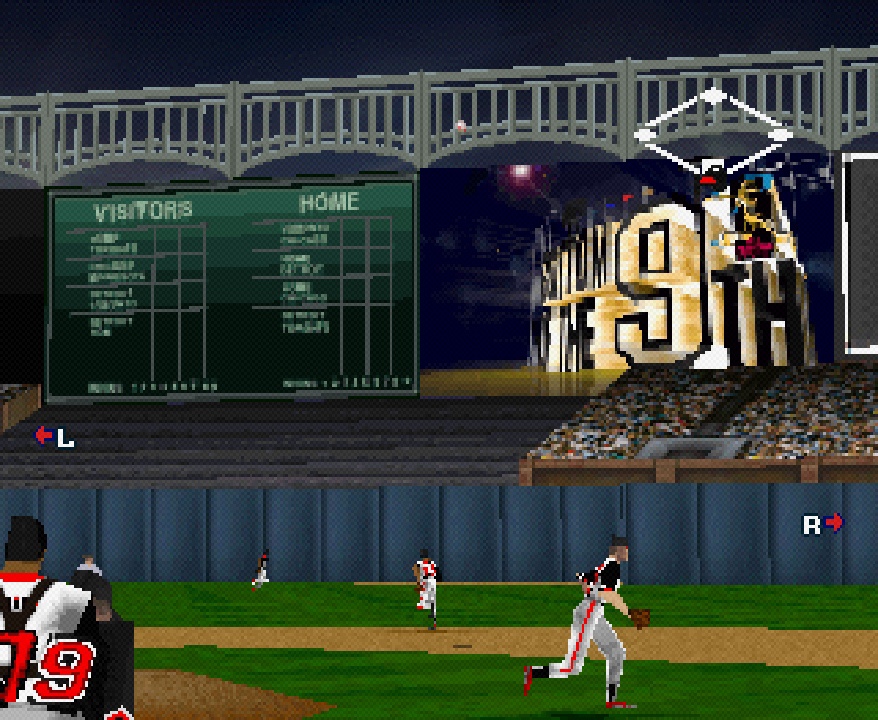
Having spent a lot of time playing either 8-bit or arcade baseball games of late, I’ve been after a new one to sink my teeth into with more realistic presentation without feeling like watching a game on TV, and being more fully-featured without feeling like a simulation. I came up with a list of about twenty-five, from Atari ST to Sega Saturn and everything in-between, had a quick go on every one to turn it into a shortlist of ten, then had a proper go on each of those to come up with three – one to start with and two as either backups in case it didn’t turn out as planned, or to come to next. Those two were Bottom of the 9th ‘99 on the original PlayStation (pictured above) and Triple Play Baseball on PS2, but for now I’ve settled on MLB Slugfest 2003 on Nintendo GameCube, which I’ve spent the whole week getting to know, after spending the whole weekend getting to it in the first place!
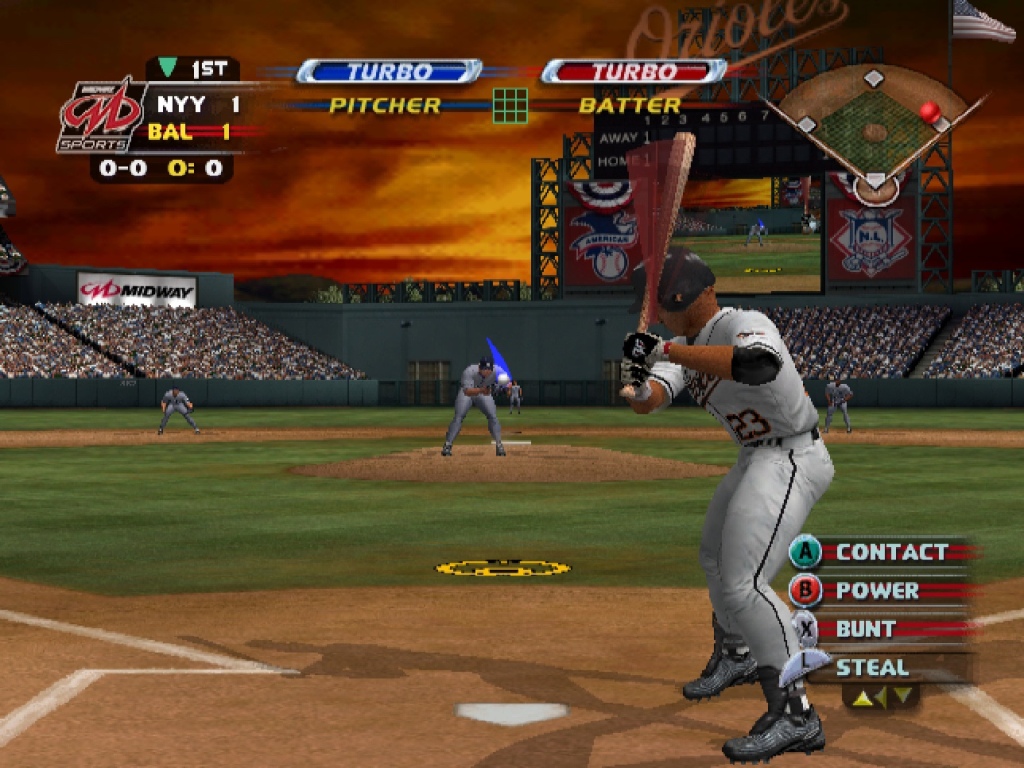
It was released in 2002 and was the first of four annual releases in the series from Midway, featuring a Major League Baseball license covering leagues, teams and players, plus authentic stadiums and proper baseball action, although exaggerating elements of it with a more arcade feel and applying a “street-style” urban aesthetic, including whacky but rarely unwelcome commentary and some very lads-mag of the time female enhancement, shall we say! The whole thing is a weird mix that just works though, with gameplay veering from mostly realism to occasionally (and intentionally) outrageous, with turbo-powered throws and pitches, blistering hits, acrobatic diving catches and general violence by jacked-up representations of real players from the time. It’s never too over the top for long though, resulting in well-paced and well-balanced but unpredictable games that always feel fair no matter the outcome. The controls took a bit of getting used to, particularly fielding, which involves a few button presses you need to be able to string together without thinking to be effective, but within a few games of my first proper season it was genuinely all I wanted to play all week! Awesome presentation overall too, especially the (relatively) pixel-perfect renditions of the stadiums, often set against some dramatic sunset, or in the pouring rain, or just effectively floodlit, and the players are detailed, with decent animation and lifelike individual mannerisms, and the all-important scoreboard is easy to read alongside the current plays available to you whether batting or pitching. Maybe not for the purist but for everyone else this is a great way to play!
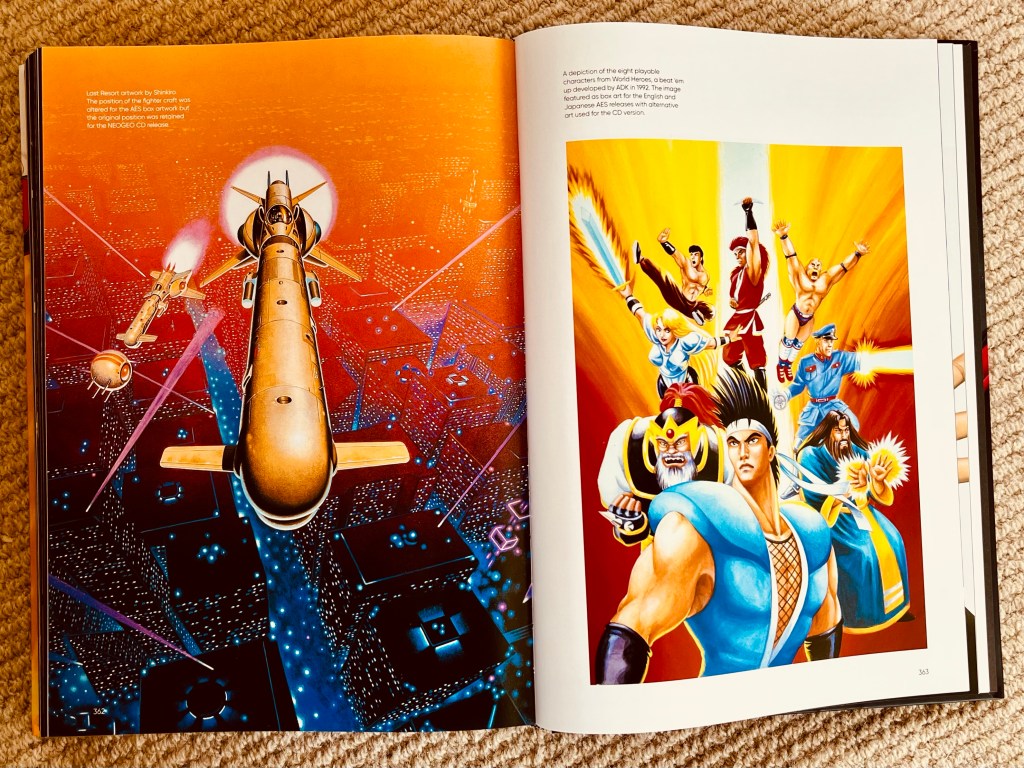
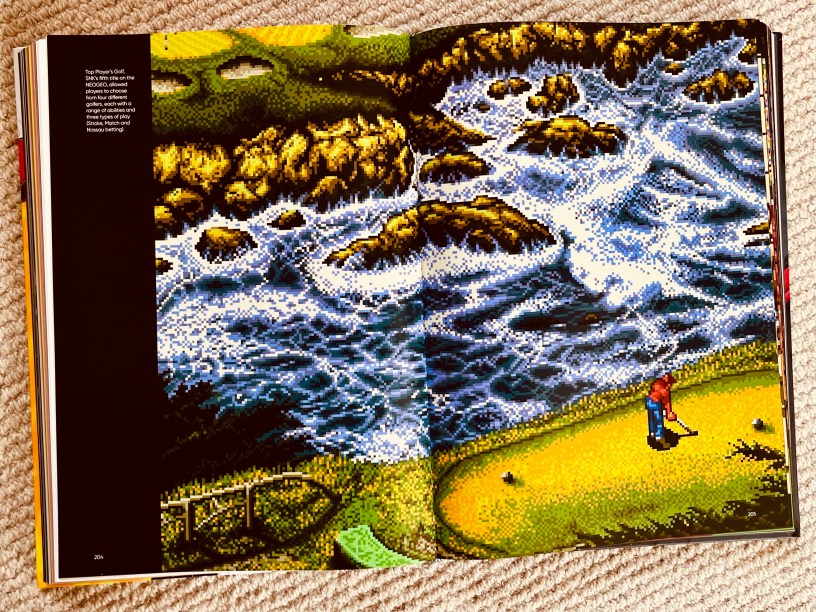
I’ve done a bunch of reviews of stuff by Bitmap Books but never got around to NEOGEO: A Visual History, which I think first came out in 2017 then got a reprint last year, when I got it for Christmas. Having finally got around to reading it properly though, I wanted to close this historic Weekly Spotlight with a quick mini-review of this 400-page, luxurious hardback beast! It’s a pictorial celebration of all things NEOGEO, crammed full of beautiful images split into dedicated chapters, such as Hardware, Box Art, Character Art, Concept Art and Pixel Art. It’s absolutely stunning too, not to mention exhaustively collated and exquisitely photographed. There’s also a very comprehensive written history of this mystical nineties arcade meets home console behemoth from SNK, as well as its pocket counterpart, and all the games are covered, and there’s key staff interviews and all sorts of other stuff. As always with these, it’s a pricey read but you get what you pay for, and what you’re getting here is as high quality as it is fascinating, and it’s worth every penny.

Well, it wasn’t much of a celebration but, as said, that’s really not me, and I hope you enjoyed it all the same! In case you missed it last Wednesday, there was the first of what I hope will be a regular new feature as we delved into some Summer 2023 Retro Arcadia Gaming Pickups, with new old games, consoles, magazines and other curios all getting a look-in! And be sure to check back next Wednesday for a more traditional Retro Arcadia deep-dive as we discover the arcade version of G-LOC: Air Battle on Nintendo Switch. See you then!
 Retro Arcadia