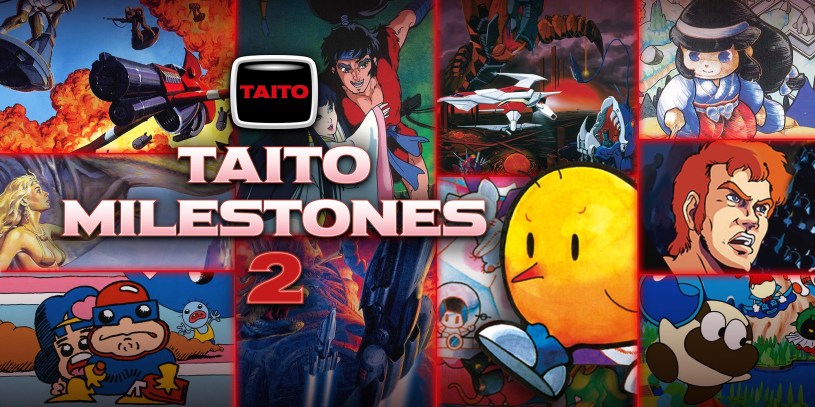
It’s always interesting to go back to a compilation way after the event to see how much of which games you actually ended up playing after the initial rush, and in the case of the first Taito Milestones collection, which first appeared on Nintendo Switch back in April 2022, of the ten games included I have gone back to a few, albeit not necessarily the versions on there! For example, Elevator Action sits painfully just outside my top ten favourite games of all time, so it goes without saying I play that all the time all over the place, although more often than not it’s the standalone Arcade Archives release on Switch. Similarly, despite knowing there’s another potential favourite there, I’ve always had a colourblindness problem with the original version of Qix, but since reviewing that first collection I’ve discovered the Game Boy version, where the monochrome screen solves my problems and I still play that loads. That leaves primitive, brutal and really fun skiing game Alpine Ski and very forward-thinking shoot ‘em up Halley’s Comet as the main reasons I regularly fire up Taito Milestones, although I do still intend to spend more time with The Ninja Warriors and The Fairyland Story sometime, but as it stands, that’s the long-term return £34.99 would have given me had I not received a review copy.
I should mention I also received a review copy of Taito Milestones 2 from ININ games, which also retails at £34.99 (and I think is Switch-only) and features another ten “entertaining classics” from Taito’s history, filling most of the gaps I highlighted during the first collection review, and once again spanning a decent variety of genres and themes, this time from 1984 to 1992. With that, let’s quickly have a look at what you’re getting here before jumping into each and every one of the games! Firstly, of course I could pick out even more gaps and say I’d love an Operation Wolf or a Battle Shark, but actually, at first glance this seems like a pretty good list, and while several of them do appear on the Taito Egret II Mini console or have had Arcade Archives releases, I reckon you’ve got to go all the way back to the Taito Legends compilations for PlayStation 2 for the last time a couple of the others made an appearance. And in the case of Dino Rex, I don’t think it’s appeared on home consoles outside of Japan at all before now! As I said, we’ll come back to each of the games properly (and you don’t want to miss that one!), but first let’s have a quick look at how they’re presented and what else the compilation offers.
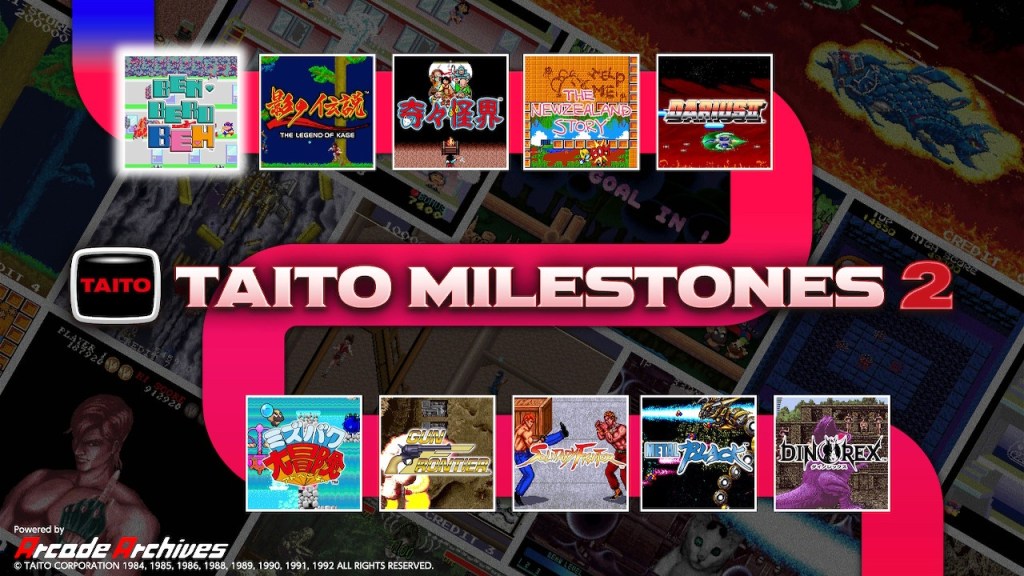
The “Powered by Arcade Archives” logo at the bottom of the title screen will become apparent to anyone who’s ever bought one of those releases before, the instant you click on a game icon, with their very distinctive summary of controls preceding the game proper. Same for the settings menus, where you can “create interrupt save data” as well as mess around with the display settings, button mapping and game settings, which include original game-specific DIP-switch settings for difficulty, lives and so on, as well as audio and online rankings settings. You get a neat Arcade Archives-styled manual for each game too. I’m not a fan of the save system with these, and there’s no rewinds, and the wallpapers are barely worth the bother, but the rest is pretty much all you could ask for. Which isn’t really the case for a modern-day compilation from a giant like Taito – no bonus content, image galleries, media players or similar; just the games. Bit more Japanese than I was expecting on that game select screen too – lazy when we’re only talking icons, and for some pretty ubiquitous games. Okay, enough nitpicking, let’s take a look at each of the games, which I’m giving you in the order I played them…
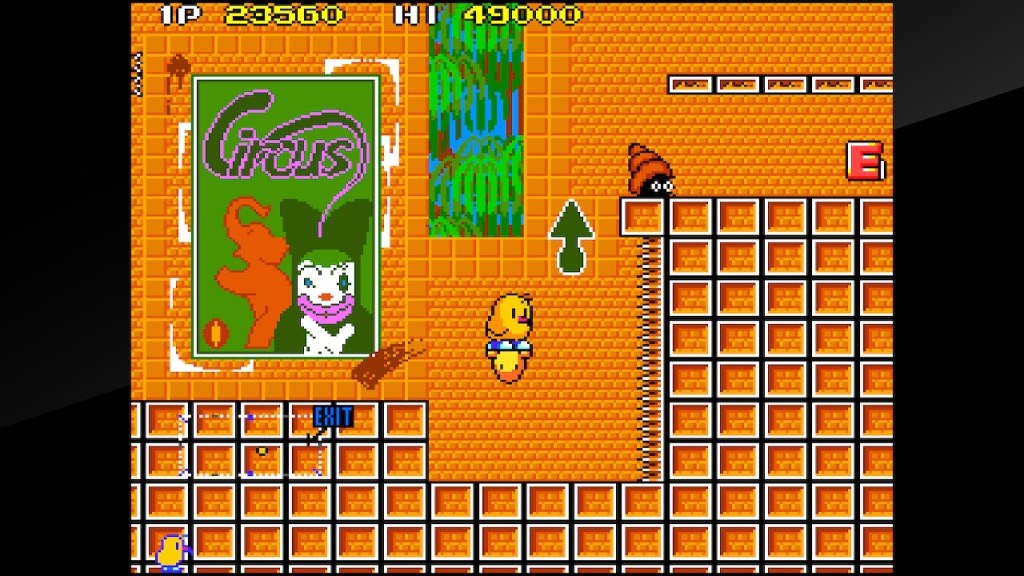
The New Zealand Story. I looked at this in-depth a while back, when I finally got my hands on the Atari ST version over thirty years after first setting my heart on it! I’ve had this original arcade version from 1988 all over the place in the meantime though, so seeing it here again isn’t quite the thrill it might once have been! Your kiwi brethren have been kidnapped and locked up all over the place, so being flightless, you’re running, jumping, swimming, shooting spitting water at enemies and generally hijacking things to help you reach the caged bird in each section of the iconic yellow zoo and then various other locations around New Zealand. This game is such a joy, with possibly the best graphics I ever saw on an Atari ST (and definitely the most yellow!), and dare I say it, possibly the best of what’s here too! Then there’s the music, the effortless movement and the staggering depth for expert players. This is a beautiful game to start with even if you’ve probably got it elsewhere (including a very recent Arcade Archives release).
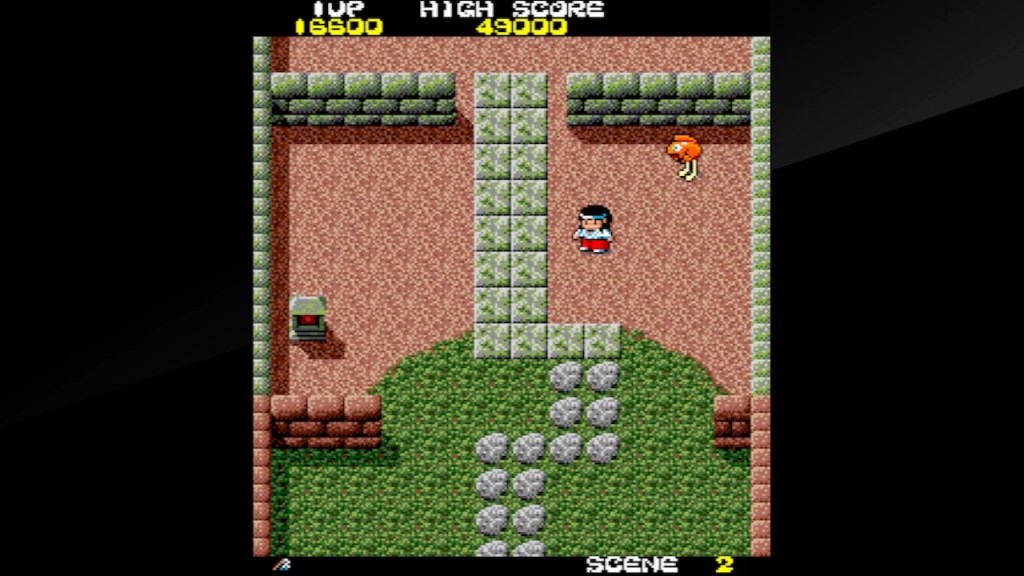
Kiki Kaikai. Less widespread, this 1986 top-down run and “gun” and sometimes slash, set in Feudal Japan and steeped in Japanese mythology, is probably better known to many of us for its 1992 SNES sequel, Pocky & Rocky. It’s familiar territory if you’ve played that too, with your young shrine maiden, Sayo (or Pocky), out to rescue seven Gods of Fortune who have been spirited away by some ne’er do well. I’ve ne’er really found this or any of the series it spawned especially inspiring – it looks like an old-school JRPG and plays like a less frantic Ikari Warriors. It’s alright though, even if it won’t be making an appearance if I’m ever talking about the games on this compilation I’m still playing if and when Taito Milestones 3 comes along!
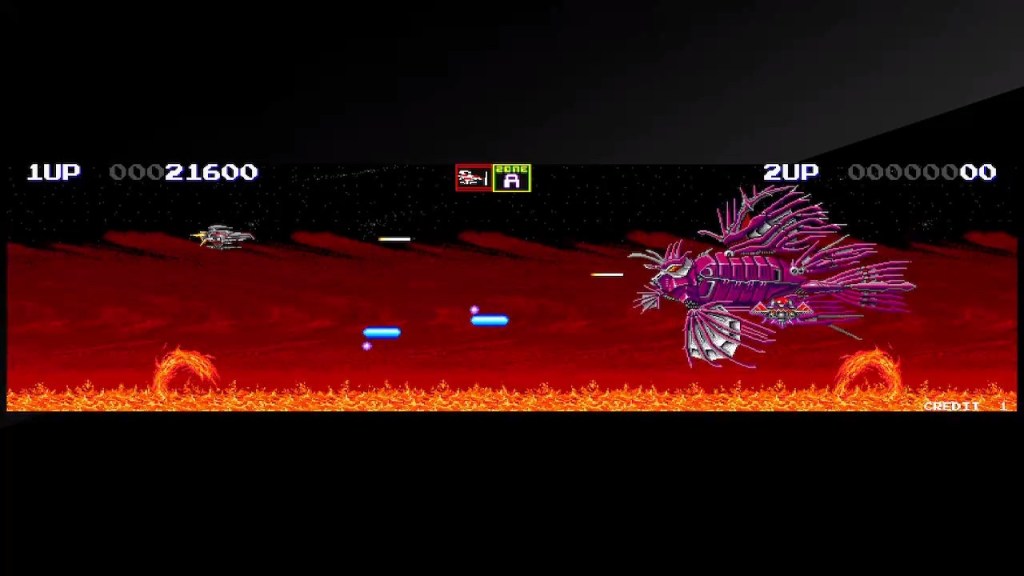
Darius II. I don’t think I’ve ever played this before. Cool! Actually, I think it was known as Sagaia on the Game Boy, which I have played, but it’s not quite the same because this is the 1989 arcade sequel to the original Darius, which would go on to spawn all sorts of side-scrolling shoot ‘em ups with giant robo-fish bosses, including one of my all-time favourites, G-Darius. Not just a regular arcade version either – it’s the first ever port of the wild three-screen edition! Does mean everything is a bit stretched out here though, which does sometimes make what’s going on hard to see if you’re playing handheld; I think it takes some of the visual impact out of the bosses too. That aside, great entry into the series with some overall gorgeous visuals, same for the soundtrack, loads of weird speech, all the regular Darius branching paths, power-ups and ludicrous story beats, plus a few tricks of its own like the introduction of mini-bosses into the series. I’m really glad they went for this one over something like the more well-trodden (branching) paths of Darius Gaiden, for example, as marvellous as that might be!
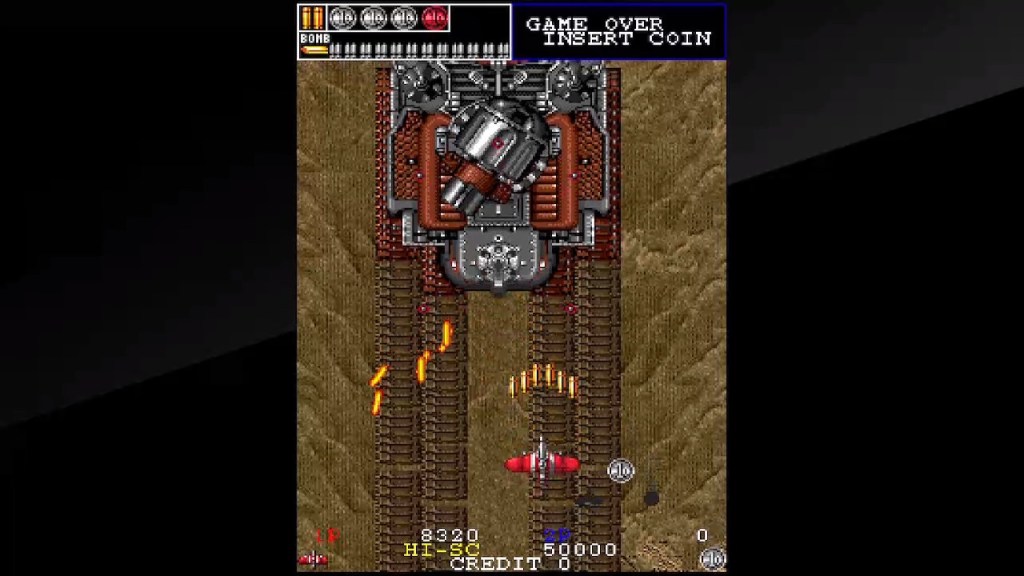
Gun Frontier. This 1990 vertical shooter is one of the games that sold me on the Taito Egret II Mini, where it also has one on my favourite splash-screen descriptions on there… “Battle the bandit gang “Wild Lizards” over the skies of Gloria to protect the frontier!” I’ve been playing it since Taito Legends 2 on PS2 though, and there’s an Arcade Archives release on current-gen too, but if you have none of any of the above then apart from that single wallpaper looking especially lacklustre on a portrait mode game, this is as good a place to play as any, and you really should! It’s presented as a space-Western, but in reality you’ll be flying over a variety of gorgeous backdrops, full of animation and literally full of life – in particular, there’s a bit over the edge of a waterfall with a flock of wild birds flying below you that will never get old! The music and sound effects in general are excellent too, often veering on the epic, and, most importantly, so is the gameplay, with a great level of challenge and some cool power-up mechanics. Another headline act for this compilation even if it’s hardly an exclusive.
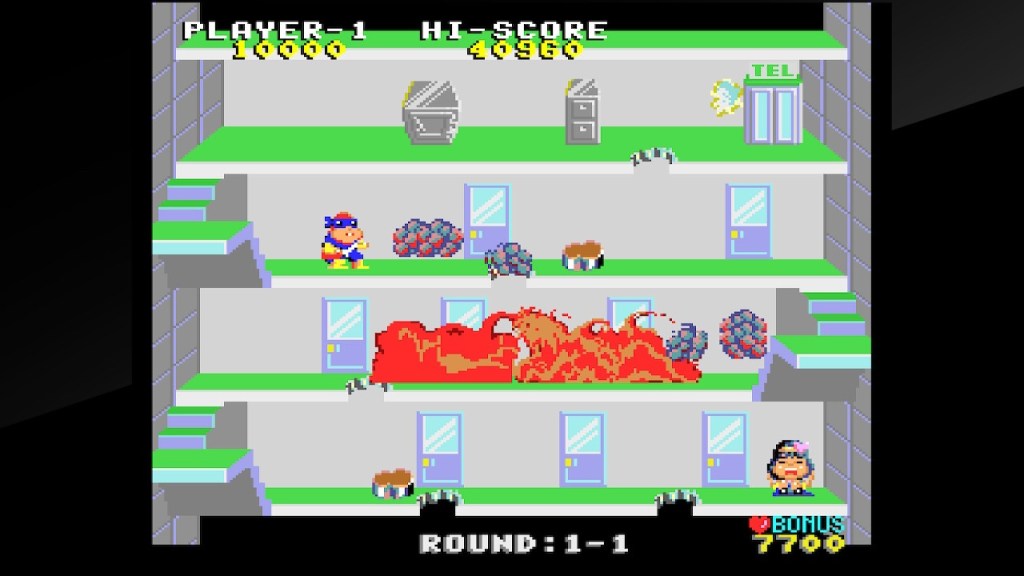
Ben Bero Beh. This 1984 platformer is a bit more exclusive, although I think it has had the Arcade Archives treatment too, which I do mention yet again because they’re about £7 a pop, and if this was the only game on here you really fancied then that’s an awful lot cheaper than the whole compilation is! Anyway, you play as superhero Dami-chan, trying to extinguish the flames in his burning apartment block to rescue his girlfriend, Nao-chan. You need to jump over collapsing floors and gas explosions, as well as deal with various nasties. It’s visually similar to Elevator Action (and you might even spot some characters from that too!), meaning simple but full of personality, with jaunty music and sound effects and loads going on to try and deal with. Actually, so much so that you’ll be lucky to get off the first level without tearing your hair out and throwing your controller at the wall as it keeps taking you back to the start – proper 1984 brutal! I like it all the same though, and while I’m not sure how long it will be a keeper for, it definitely is for the time being!
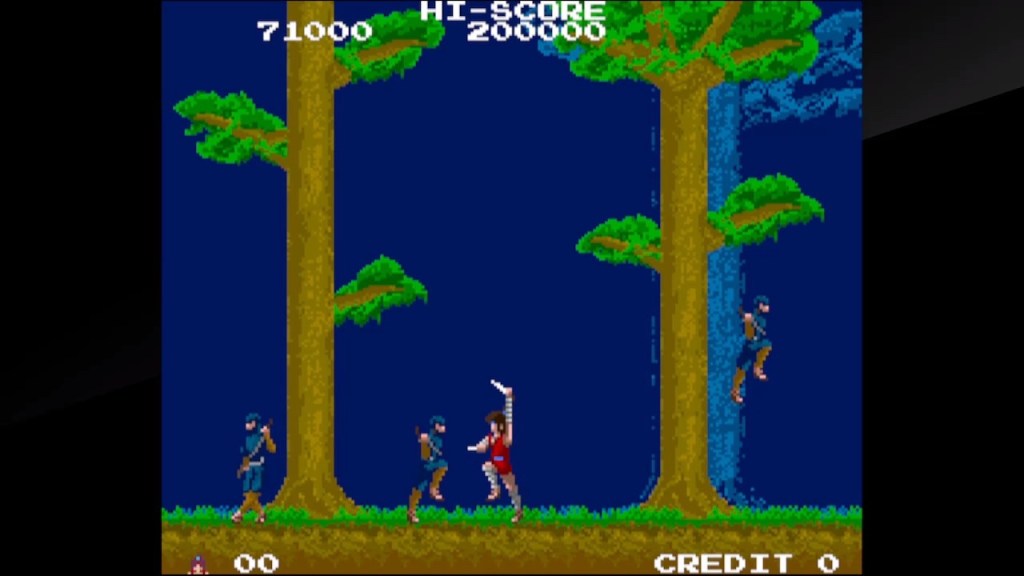
The Legend of Kage. Platforming was getting marginally more forgiving by 1985, as we’re about to find out! Your ninja guy’s girlfriend has a habit of getting kidnapped in the forest so you have to fight your way through the trees, tunnels, sewers and castles to rescue her. Repeatedly! If she wasn’t such an idiot there’d be no game though, and that would be a shame because it’s great! So stylish in all respects as you hack and slash and jump way higher than the side-scrolling screen, while seasons change around you as you adapt your magical martial arts prowess to the different demands of the five stages and their enemies. I’ve been playing this since the Spectrum conversion but there’s nothing quite like the original and it’s a perfect fit for this compilation.
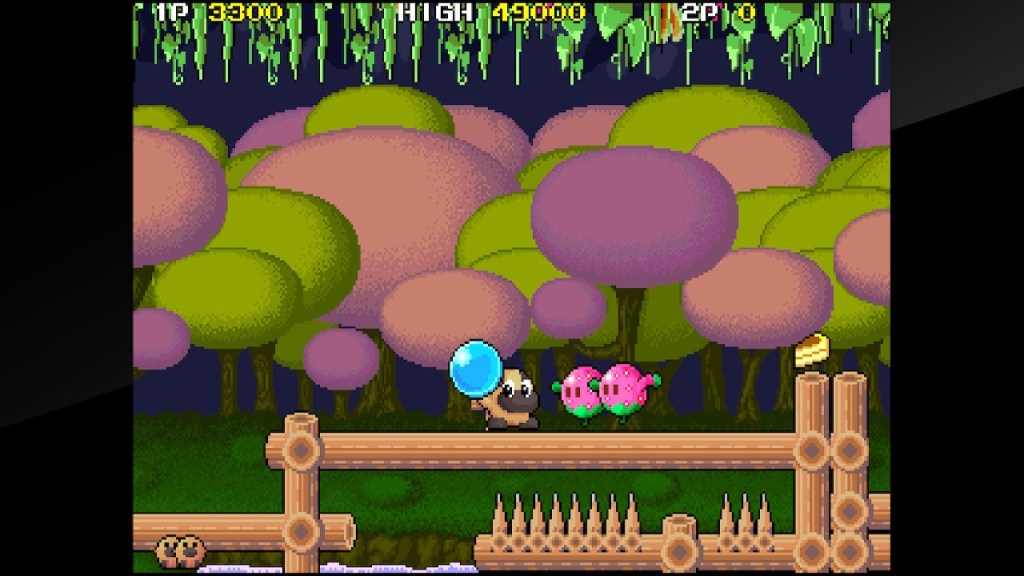
Liquid Kids. Taito was good at cute, and while it might not be its most famous offering in that area, this side-scrolling platformer from 1990 (that’s also known as Mizubaku Adventure) is one of its best! It starts out like a pastel Wonder Boy but quickly develops its own identity (or at least goes classic Taito) as your little hippo uses his water magic to stun enemies so they can be kicked into oblivion… If you’ve played Bubble Bobble et al you know what I mean! Gorgeous cartoon graphics, same for the soundtrack, and a very solid platformer that’s very much its own thing despite its obvious heritage. Untranslated from Japanese is my only complaint but very good game all the same.
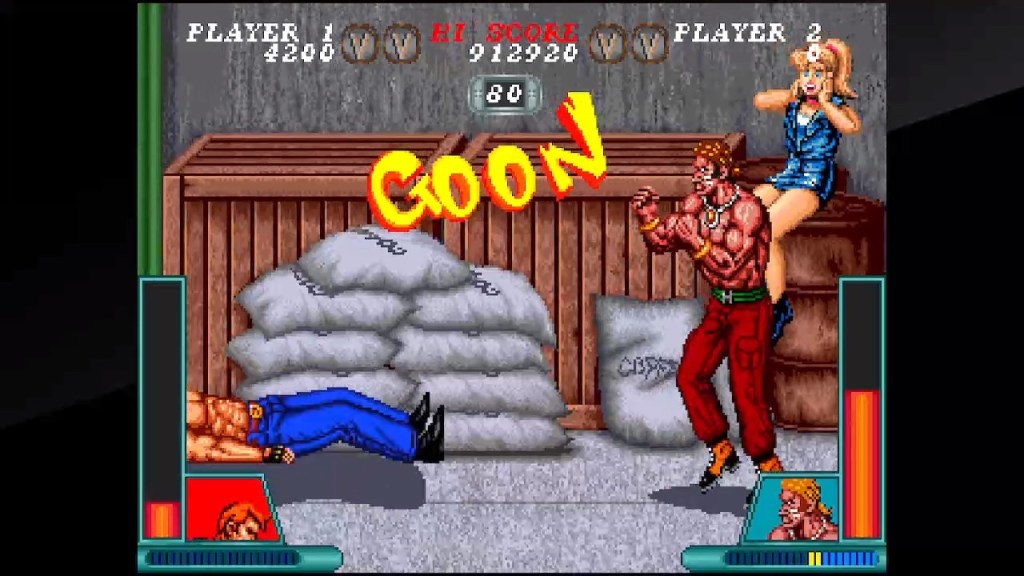
Solitary Fighter. It took me a while to put two and two together with this one-on-one 2D fighting game from 1991, but it’s an update of 1989’s Violence Fight, which is another I’ve owned on several compilations over the years but never this version. It was originally planned as a full-on sequel – and you can even see “Violence Fight II” still written on some of the backgrounds – but what we ended up with for whatever reason was the same game with two new characters and some knife-wielding prostitutes that periodically attack you! Same wonderful story too! “In the early part of the 1950’s in the USA, a game called “Violence Fight” was in vogue among Mafia, reckless drivers and general businessmen. The “Violence Fight” was the game to struggle for “No. 1 quarreller” with fighters who were gathered from all parts of the USA speaking boastingly of their strength.” It’s rough around the edges but it’s pretty accessible, and I like the big, detailed cartoon style graphics even if they do sometimes move like crap. You’ll have fun getting to know it for a while, I guess.
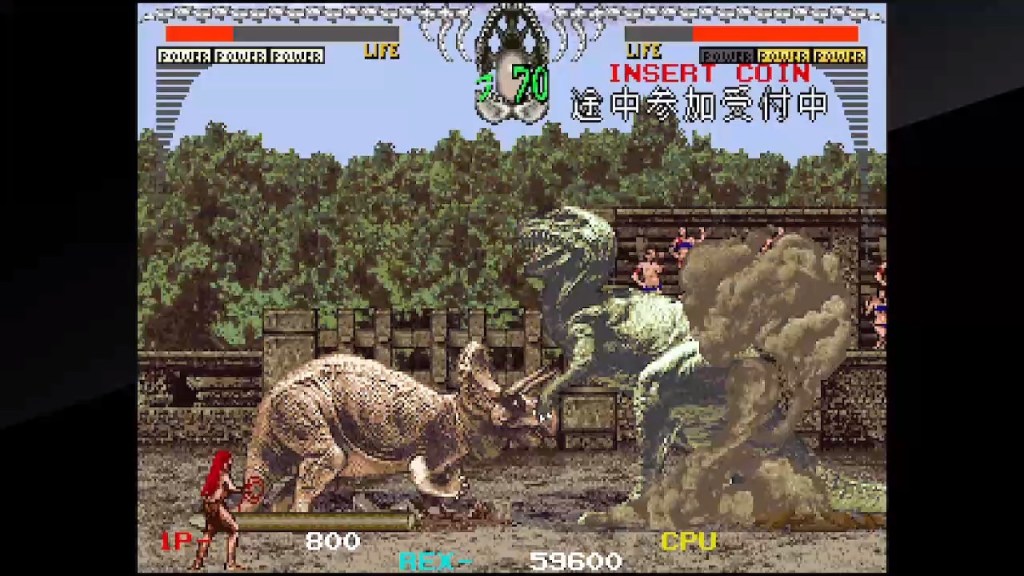
Dinorex. Or Dino Rex… I’m not going to argue because either way this is one of the worst games you’ll ever play! “Set in a world where humans and dinosaurs coexist, this fighting game tells the story of the Amazons… In prehistoric South America, young men pit their tamed dinosaurs against each other in order to win the title of King “Dinorex”, rule the world and marry the very sought-after Queen of Amazonia.” If you know Primal Rage, it’s similar, although in its defence it’s two years earlier, but that’s all I’ve got to say in its favour! The digitised sprites and sampled sounds stink almost as much as the gameplay, with its over-complicated controls (such as up then quickly down for jump), terrible collision detection and stupid difficulty. Now we know why it’s taken this long to get a console release!
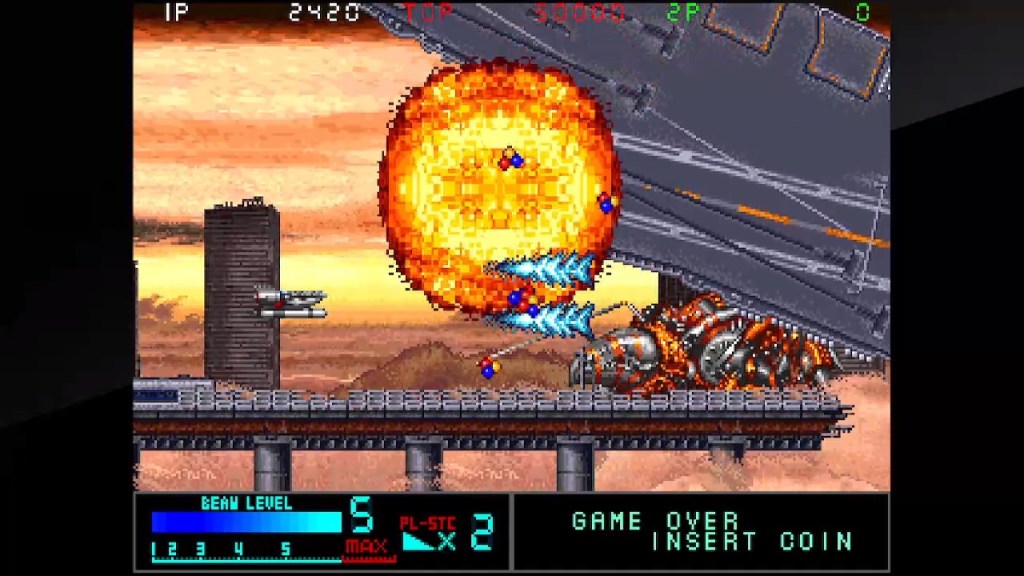
Metal Black. At least I can finish on a high with that out of the way! This originally went by the name of Project Gun Frontier 2, but while it ended up with the loosest of connections to the Gun Frontier we looked at earlier, this is another fantastic shoot ‘em up! The story is something along the lines of asteroids being pushed towards Earth by a Jupiter companion star, whatever that is, and while we’re weakened from the barrage some heinous aliens have decided to take advantage. Doesn’t matter. All you need to know is it’s stunning and it’s a delight to play… At least until it gets too hard for me a couple of levels in! The detail and colour in both the backgrounds and a lot of the bigger enemies in particular is incredible (especially the stage two boss), and there’s some lovely psychedelic special effects, impressive set pieces and one of the great schmup soundtracks. A top tier conclusion to our journey here.

Six out of ten of these games are absolute essentials. Three of them less so but no arguing they deserve their place here. And the other one is genuinely one of worst games I’ve ever played, which I guess might be kind of endearing in its own way! The thing is, while I said at the start it looked like a good lineup, and can confirm it is now I’ve spent a lot of time with it, I’m not sure I’m the target audience for this compilation after all… Most of what I want to play here is also on the Taito Egret II Mini and I probably want to play it on there instead, although I can’t deny I’m more than happy to have New Zealand Story and Legend of Kage available to play on the Switch as well. All the same, I think I’m down to only Darius II as proper justification for owning this compilation on that console, which is a stretch when it costs £34.99! Obviously, I didn’t pay for it though, so you can do your own calculations, but I do still wonder who the target audience actually is because I can’t imagine it’s anyone outside of my own demographic, meaning they’re probably more or less in a similar situation, owning most if not all of these – probably several times over – and possibly also on this very console thanks to Arcade Archives. Maybe the physical release is more appealing, which reminds me, Strictly Limited is doing several editions of a bundle of both volumes if you are interested, as well as a single one for this release on its own. And if any of this has helped you decide if any of these are for you, then my work here is done!
 Retro Arcadia
Great review, as always.
I took a pass on the first compilation, but this one is probably coming home at some point when the physical release gets discounted on a sale. These are better games, and this time the Switch portability will be decisive, because as you said most of them are already on the Egret II Mini, a gadget I own and love.
Now they announced Taito Milestones 3, so it’s time to stop buying individual Arcade Archives Taito releases and wait for the line-up to be announced. I think it’s kind of a chronological thing, though, and the third compilation will contain games from 1990 onwards? What do you think about that?
Aside from that, it disappoints me that the Arcade Archives treatment isn’t completely here, as the Hi-Score and Caravan modes, addictive and great for training, seem to be absent.
LikeLiked by 1 person
Thanks a lot! Yes, it’s only the minimum Arcade Archives treatment which is a shame. The whole compilation is minimum effort really though, but it’s a good set of games if you don’t have them elsewhere. It really has made me think twice about Arcade Archives releases too though, as I’ve now got several on these two compilations. Was the same with the Neo Geo Color Pocket collections though. I think there’s still a few gaps from the late eighties but I reckon you’re right, early nineties for the next.
LikeLike